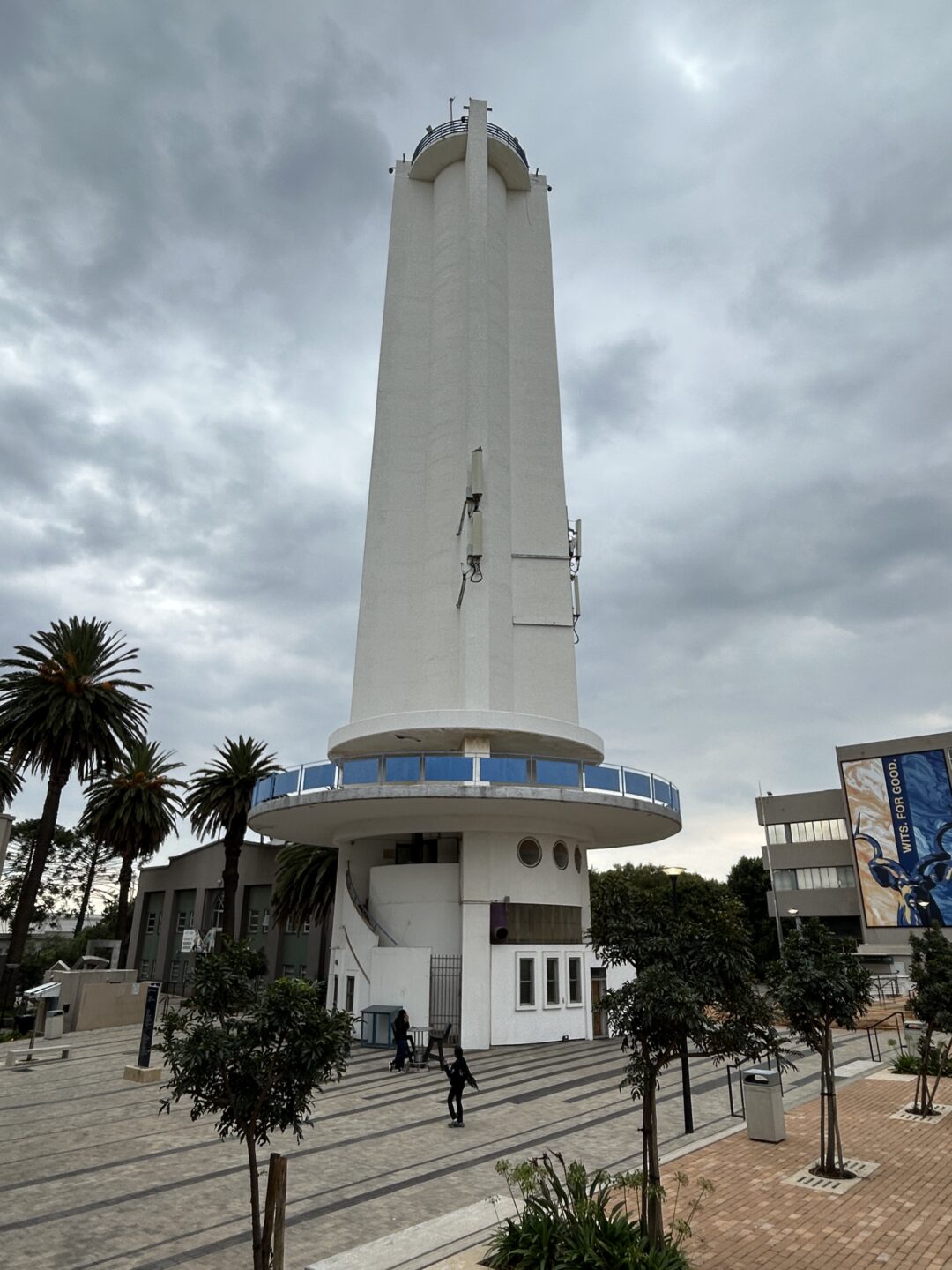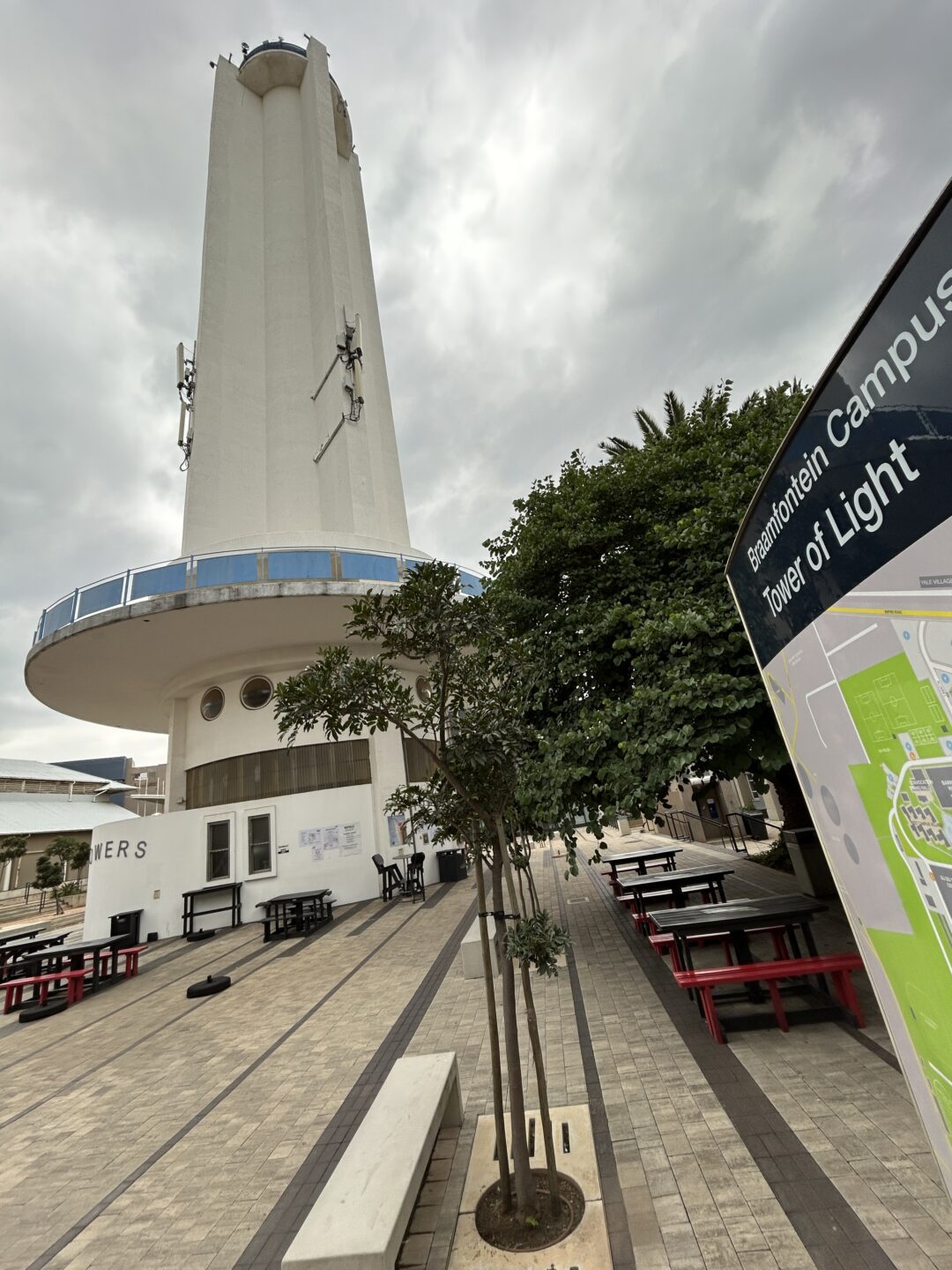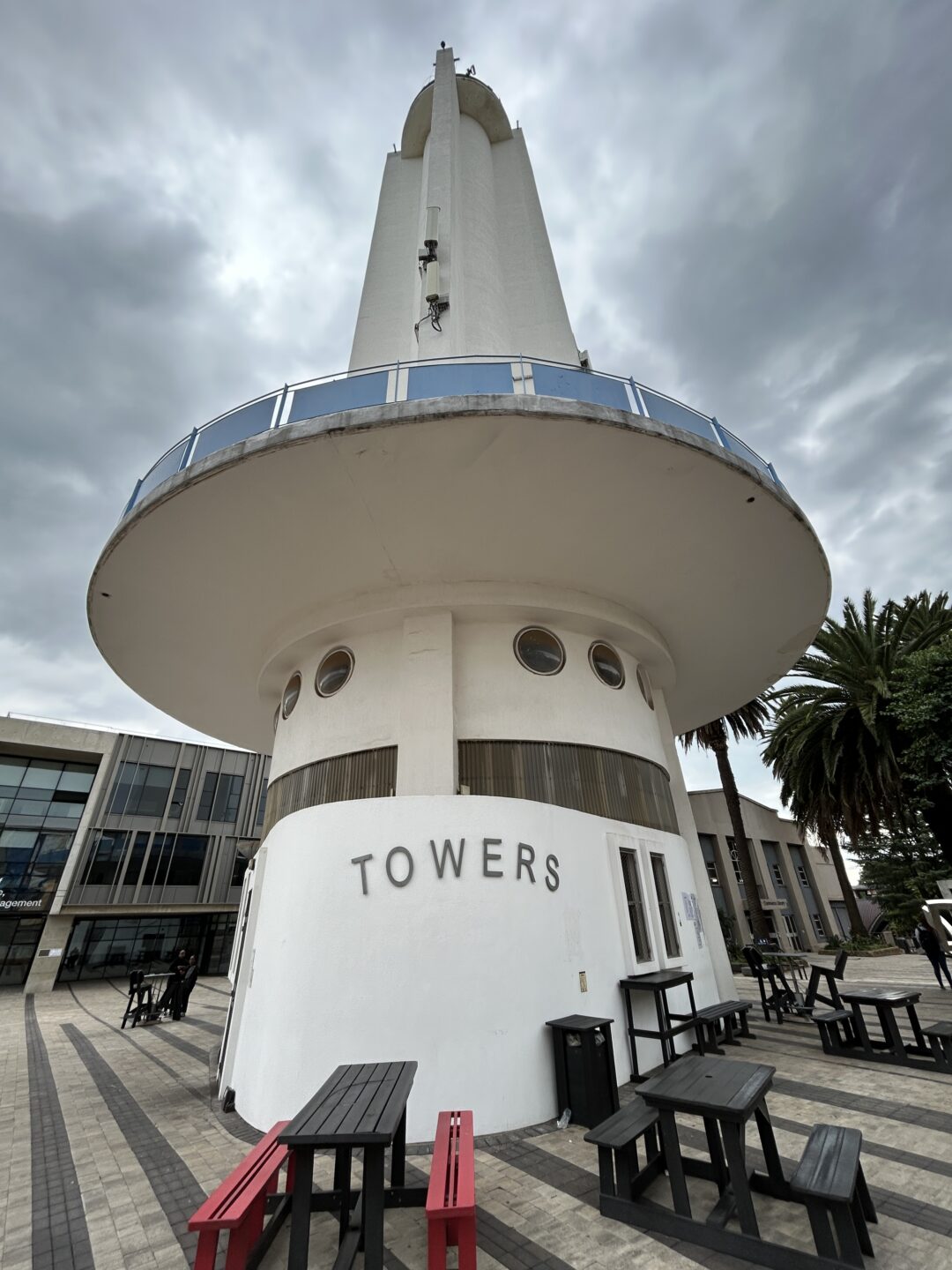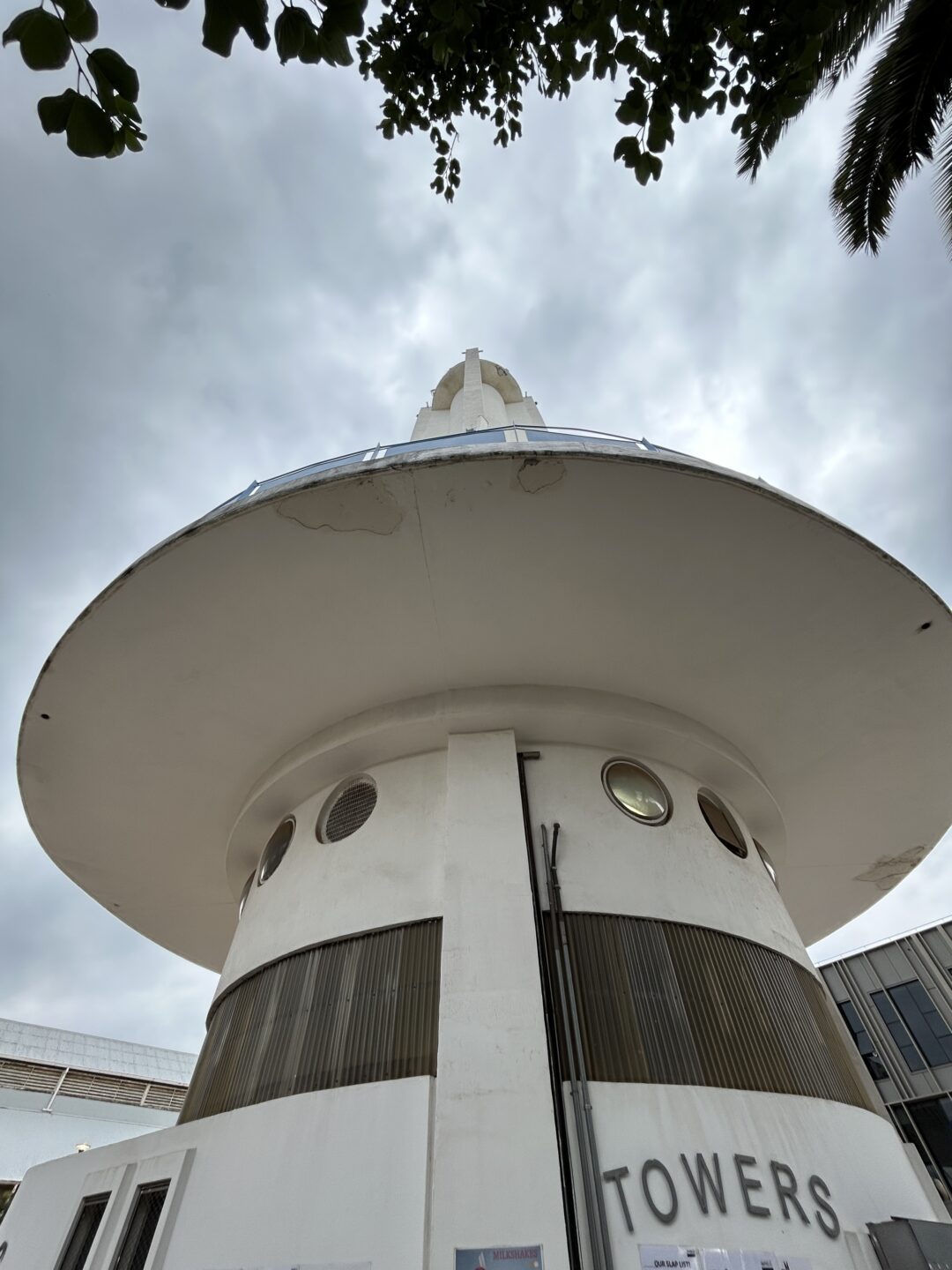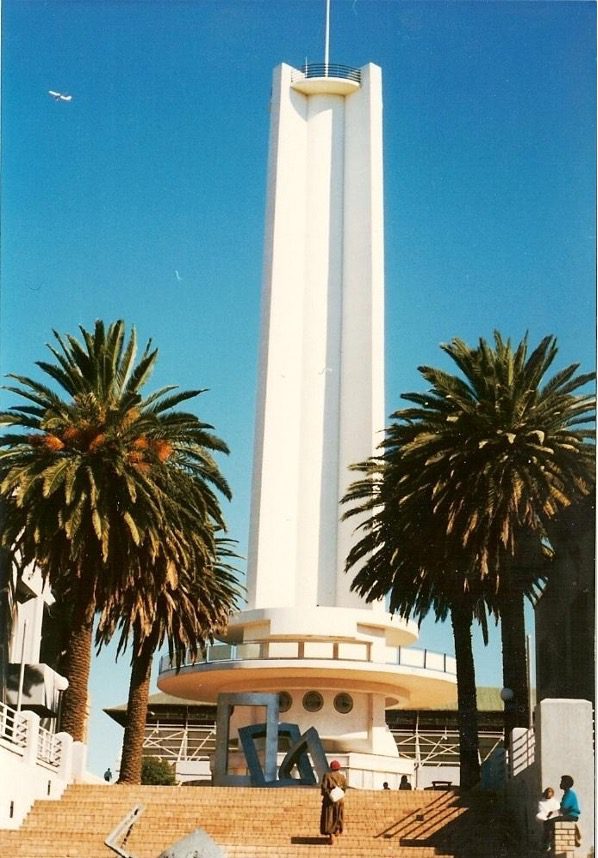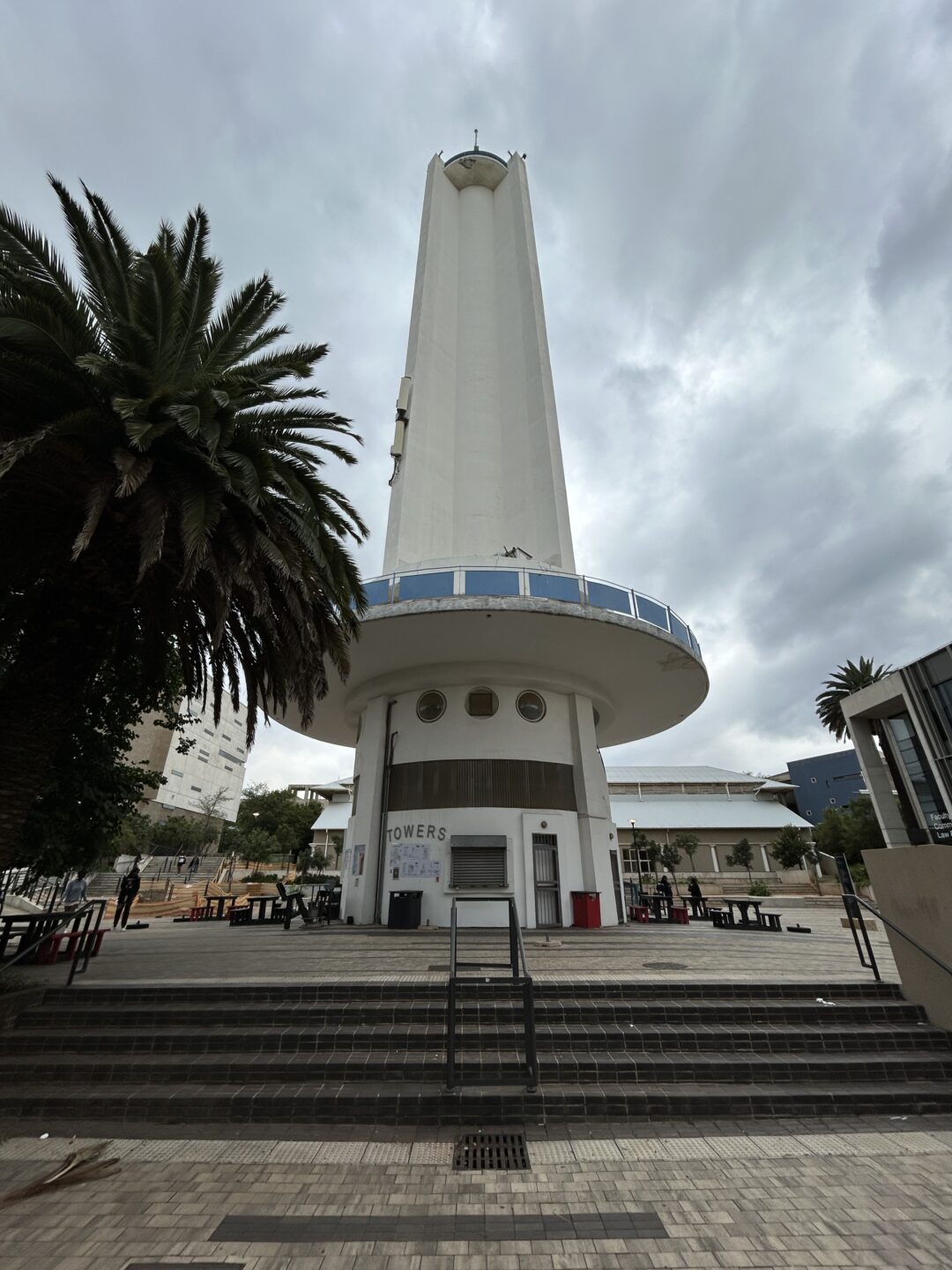
The Tower of Light is a fine example of a ‘deco-moderne’ building – conceived and designed by an important South African architect in what was then a bold new international architectural style. It was designed as the focal point of a large Exhibition layout, and was to be the beacon visible from all points within the grounds, and in fact from the surrounding suburbs. Sited at the highest point of the central axis through the Exhibition Grounds it provided an anchor for the layout of the rest of the grounds.
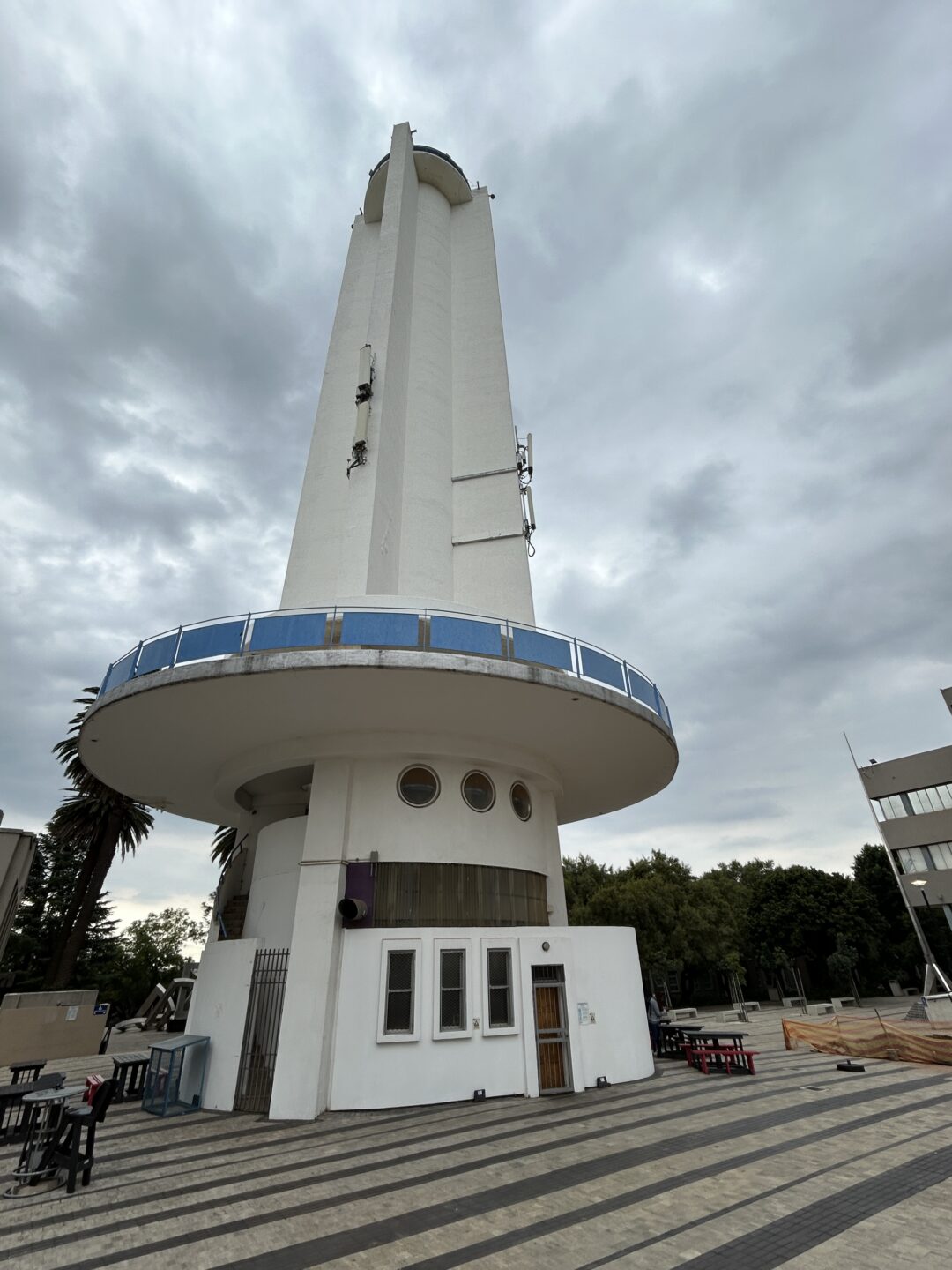
The tower consists of a hollow circular reinforced concrete shaft of large diameter with four substantial concrete fins attached on each of the four diagonals. The fins rise from the ground plane with a nominal taper and terminate at a short distance above the full height of the shaft. The overall effect is one of a soaring verticality and power.
A raised circular cantilevered viewing platform was originally provided at the base of the tower. The curved outer edge of this platform was slightly recessed behind the faces of the four fins and was protected with a wrought iron deco-style balustrade. Circulation around the viewing platform was made possible with door ways let through each of the fins at their junction with the curved face of the tower. Access to the viewing platform was via an attached, curved open stair on the west side of the tower, set between two of the fins.
Access to the top of the tower (for staff) was provided via a narrow wrought iron cat-ladder fixed to the internal face of the column shaft in line with the northeast fin. The ladder terminated at a trap door in the upper platform. Access to this level was required in order to service the flagpole and the light fittings.
The tower shaft was capped with a circular cantilevered upper platform, which intersected with, and was supported by, the four fins. The four fins rose about 1 200 mm above the level of the platform but did not extend onto the platform further than the inside face of the circular shaft and became four free standing piers, joined by the wrought iron balustrade at the curved slab edge. A tall flagpole was installed at the centre point of the upper platform.
At the time of completion, it was the third tallest structure in Johannesburg (Escom House being the tallest at 225 feet, followed by Ansteys, and then the Tower of Light)
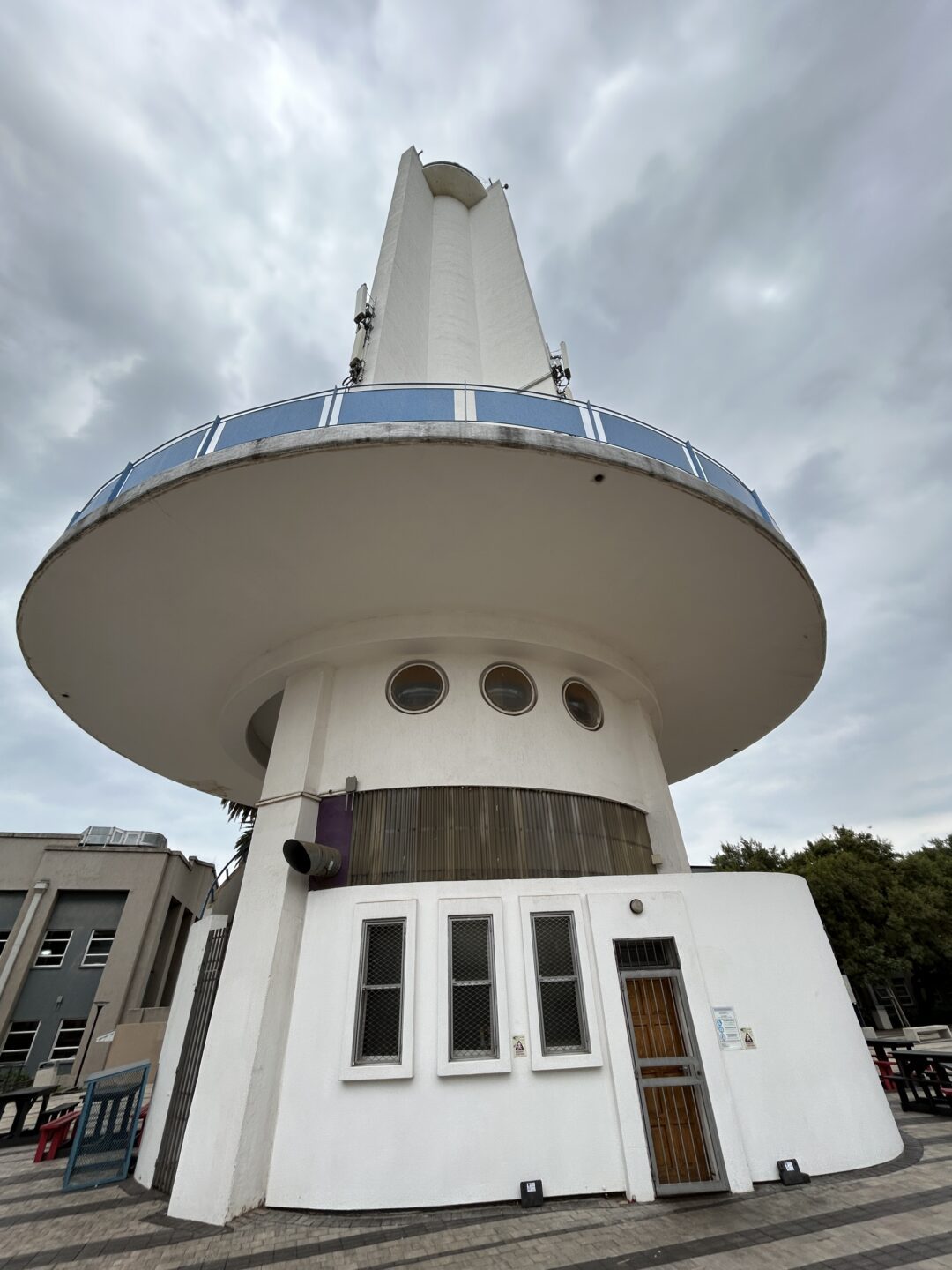
In 1964 the exhibition grounds were provided with a suspended cable car system whereby the small cable cars travelled up and down the central north-south axis. The Tower of Light was used as the point of return for the cable cars. A large circular reinforced concrete cantilevered canopy was then installed as the loading platform and a second smaller canopy was installed overhead to support the cables.
Since Wits University took over the show grounds the cable car system has been removed and the Tower of Light now accommodates a small tuck shop at ground floor, and the West campus Security offices on the upper level. Circular Perspex windows have been installed to provide light within the security office.
Despite the minor modifications made to the building, it is an extraordinarily important urban marker, and an unusual example of Deco Moderne architecture. It should be retained, conserved and valued as an important part of the architectural heritage of Johannesburg, and indeed, South Africa.
The Tower of Light was commissioned by the Victoria Falls and Transvaal Power Company (precursor to Eskom) and built of reinforced concrete using Pretoria Portland Cement (PPC) for the Empire Exhibition in 1936. It was the focal point of the Showgrounds standing at the top of the main axis (later Victory Road) and remained the icon of the Rand Show until the Showgrounds were moved and the land was given to the University of the Witwatersrand.
Designed by Professor Geoffrey Eastcott Pearse (according to Bernard Cooke who worked on the drawings), it is a simple soaring circular tower with fins. Chipkin calls it “a major futuristic monument.” Professor W. G. Sutton of WITS engineering consulted on the structural design.
It was apparently never completed to its full height. The original design was 200 feet (61m) which was reduced to 150 feet (46m). According to Bernard Cooke this was due to time constraints, but it was likely due to budgetary pressures..
Over 60 years old protected by Section 34 (c)
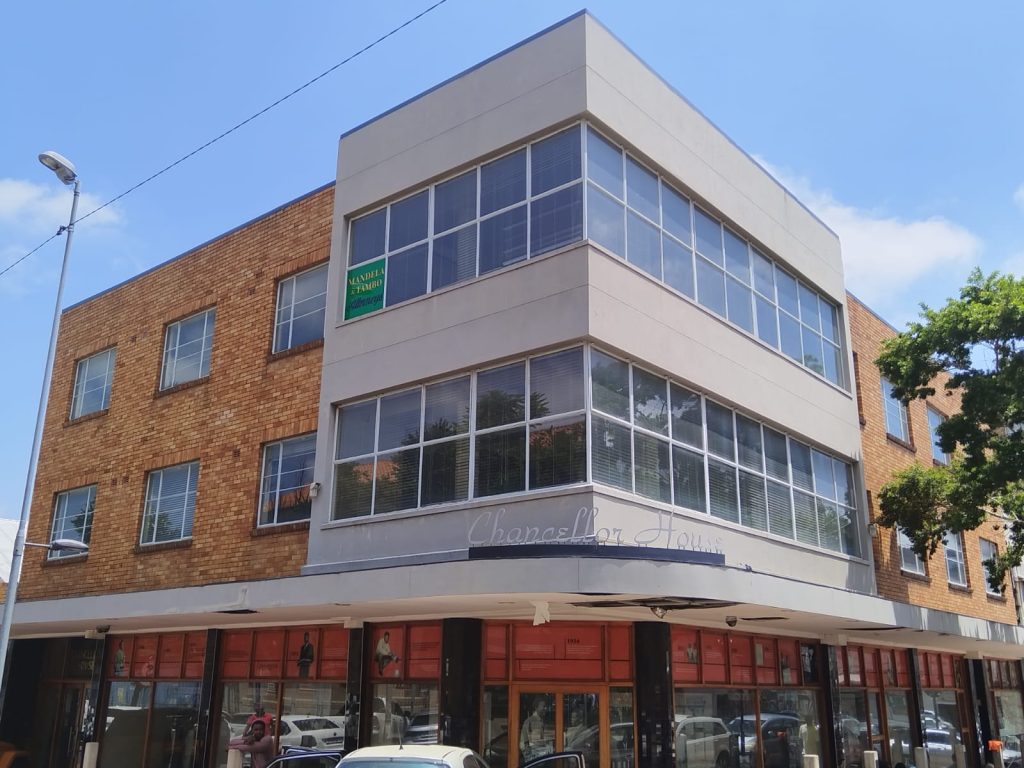
A culmination of research gathered over many years, the Online Johannesburg Heritage Register is being launched on Nelson Mandela Day 18 July 2025.
Among the many heritage sites featured is Chancellor House, the downtown offices of Mandela and Tambo Attorneys in the 1950s. After having been vacant and shuttered for more than a decade, this iconic building is being revived and brought to life once again as offices for the Community Development Department, which oversees the City’s Arts, Culture & Heritage Services.