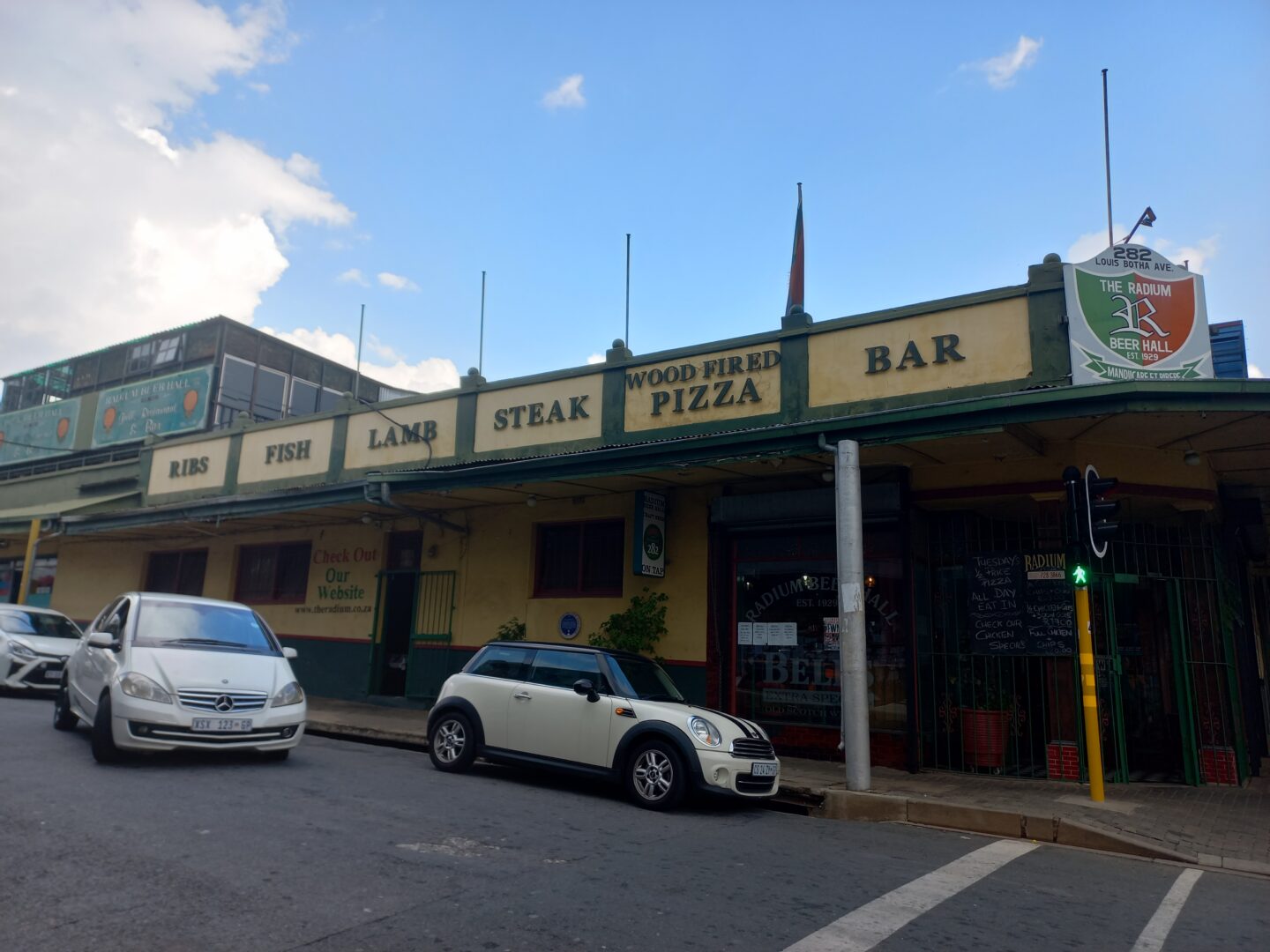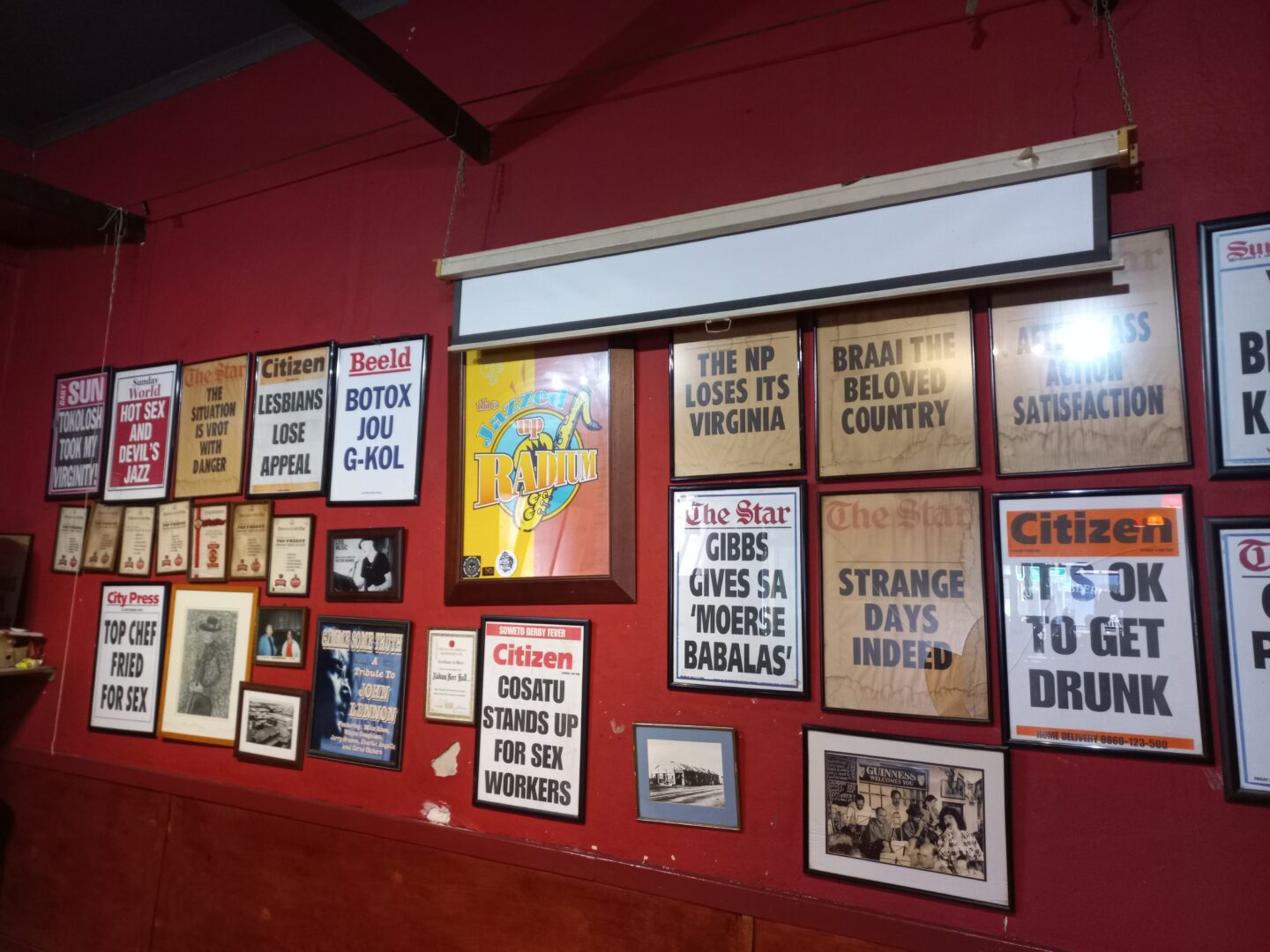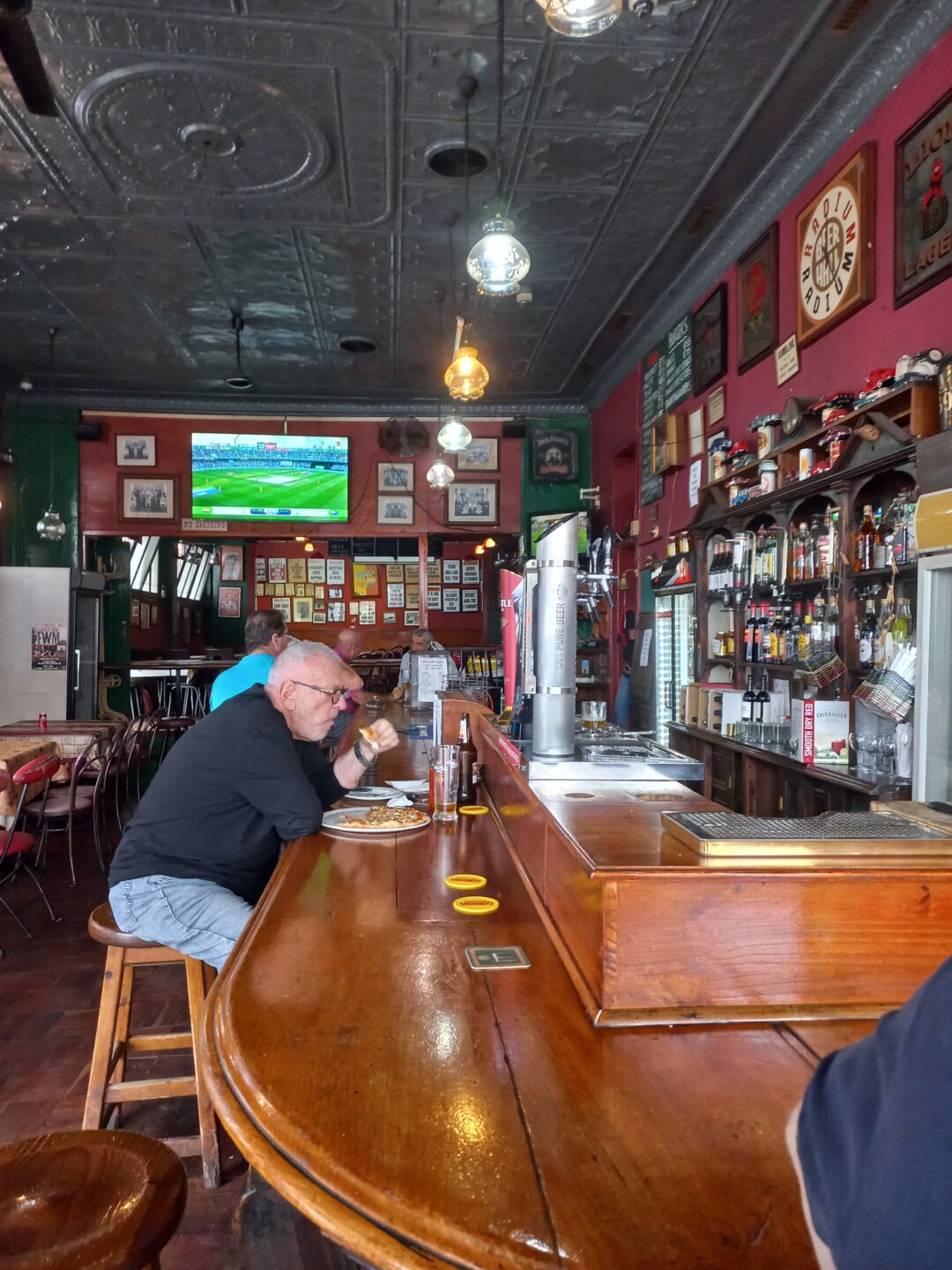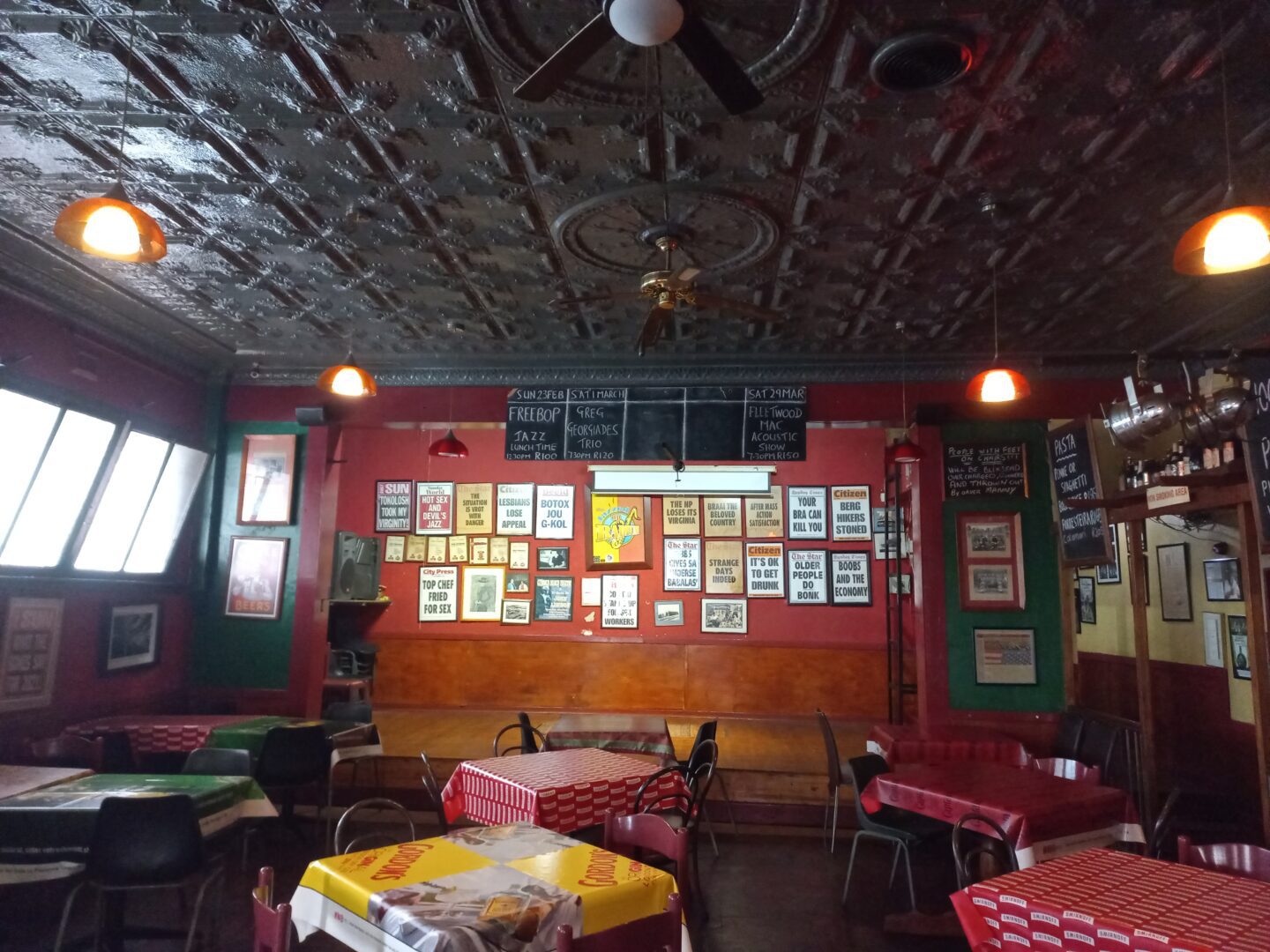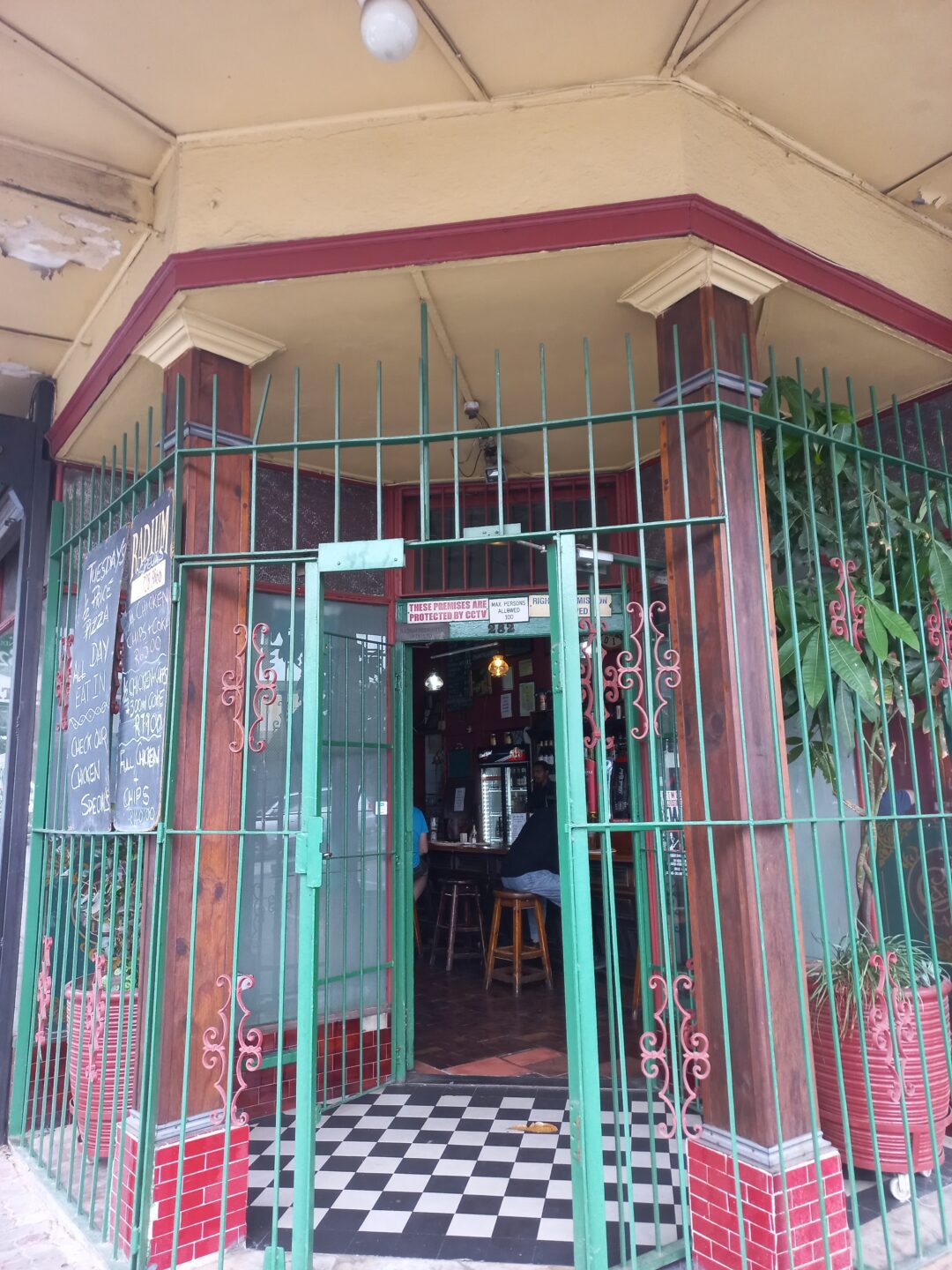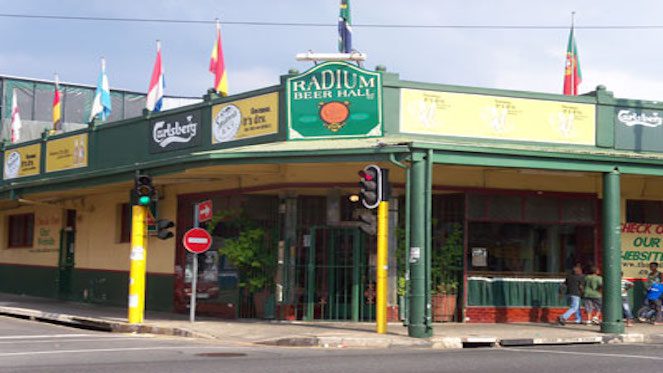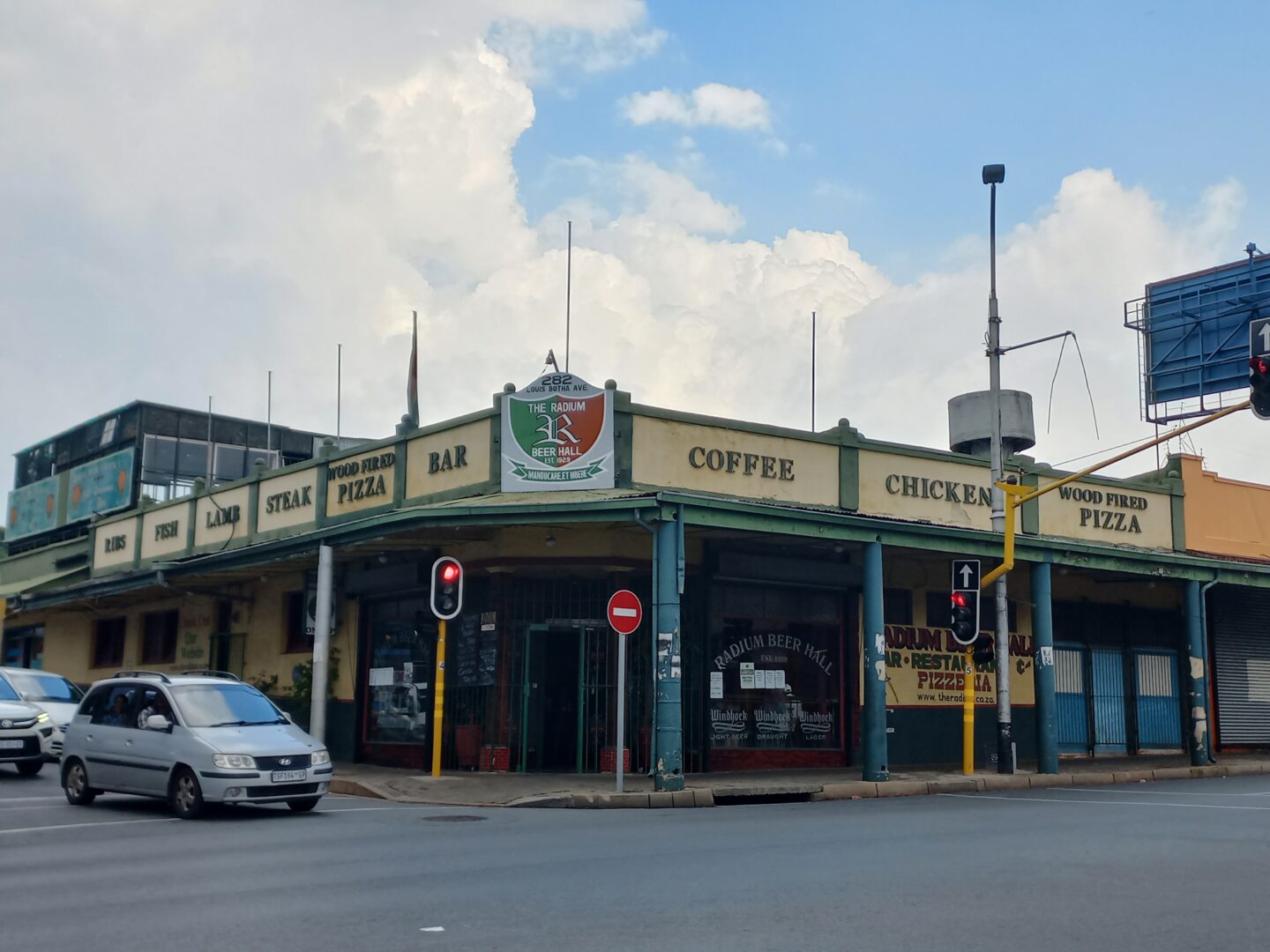
The Radium Beer Hall stands as a local landmark, located prominently on a corner site. The walls are covered in memorabilia, from photos of pre-war soccer teams and jazzmen who have played there, to vintage posters and press clippings that record the Radium’s history. The glossy embossed pressed steel ceiling adds further to an interior that is full of character.
The Radium Beer Hall is the one of the oldest surviving bars in Johannesburg, with an authentic historic ambience. Opened as a tearoom by Kalil family in 1929, the Radium had a double life as a shebeen. It sold liquor to black customers who were barred from drinking “white man’s booze” in that day and age.
After 13 years, a wine and malt licence was acquired and the Radium Tearoom became the Radium Beer Hall. The ancient scarred bar, which is now more than 100 years old, was rescued from the demolition of the Ferreirastown Hotel. During the 1913 Strike, workers were egged on by passionate speeches delivered by activist Mary Fitzgerald who stood on that very bar, brandishing the weapon which got her the nickname “Pickhandle Mary.”
In 1944, Joe Barbarovich – one of the players in the Thirties on the soccer photos on the Radium’s walls - took over the wine and malt licenc e. The Radium began to develop a legendary reputation; it was a community pub, and an Orange Grove landmark at the corner of Louis Botha and Ninth Street. Many tales are told of this era, about the exploits of the eccentric customers and obstreperous barmen.
The spit and saw dust era ended in 1986 with the advent of Manny Cabeleira, a colourful, gregarious character who added some Portuguese flair and replaced the billiard room with a restaurant. It was a new Radium, anticipating the new South Africa by the quite a few years with a vibrant cosmopolitan mix of new customers, included blacks and women, who had been banned during the height of the apartheid era. Then came live music, TV shoots and the start of a Radium Tradition – the Fat Sound 19- piece jazz band on the first Sunday of every month. Now the jazzed-up Radium has live performances by different artists on Saturday nights . Since 1994 it has won an international reputation, featured in overseas travel guides as a genuine South Africa experience, and a “must” for tourists passing through Johannesburg.
Manny Cabeleira died in 2021, and his widow, Lina, continues to run the Radium. She hopes to keep it going until 2029, when it will be 100 years old.
General Protection: Section 34(1) Structures under the National Heritage Resources Act, 1999.
A culmination of research gathered over many years, the Online Johannesburg Heritage Register is being launched on Nelson Mandela Day 18 July 2025.
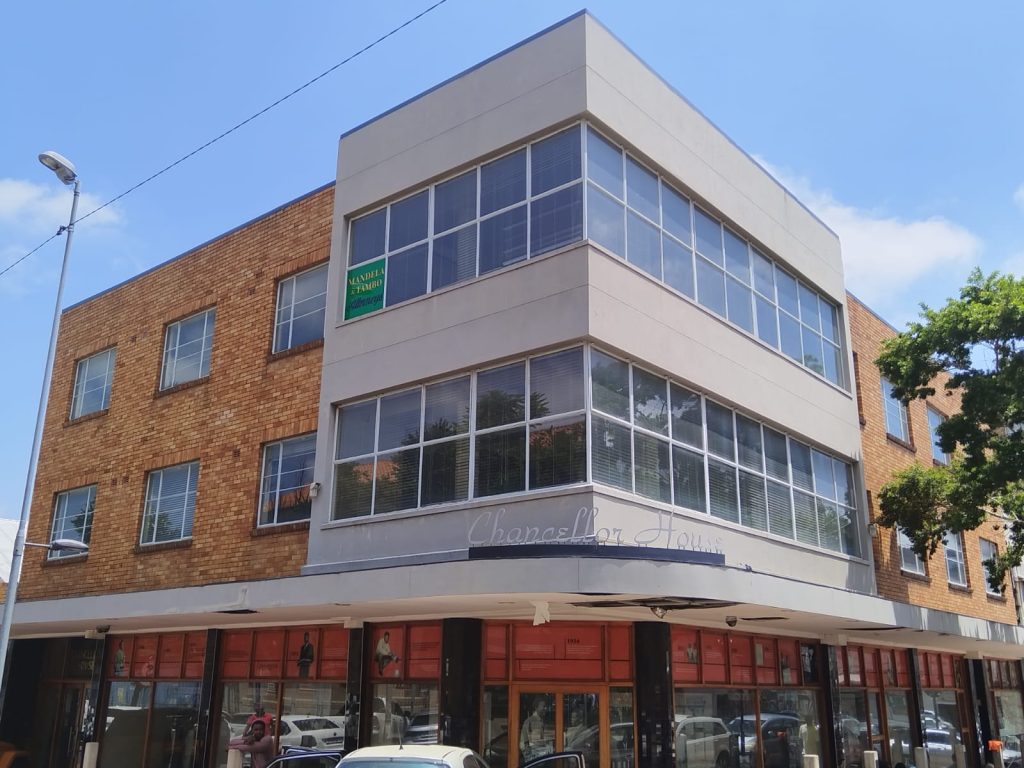
Among the many heritage sites featured is Chancellor House, the downtown offices of Mandela and Tambo Attorneys in the 1950s. After having been vacant and shuttered for more than a decade, this iconic building is being revived and brought to life once again as offices for the Community Development Department, which oversees the City’s Arts, Culture & Heritage Services.