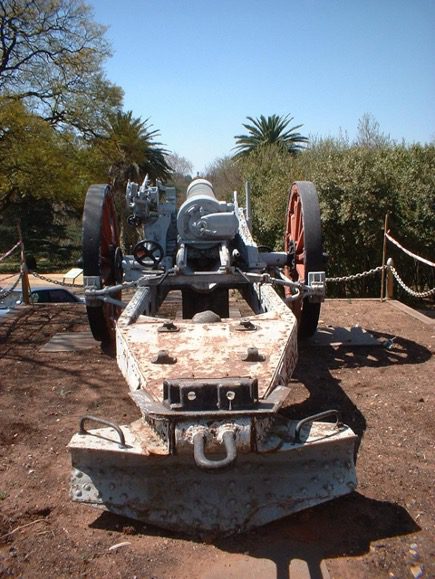
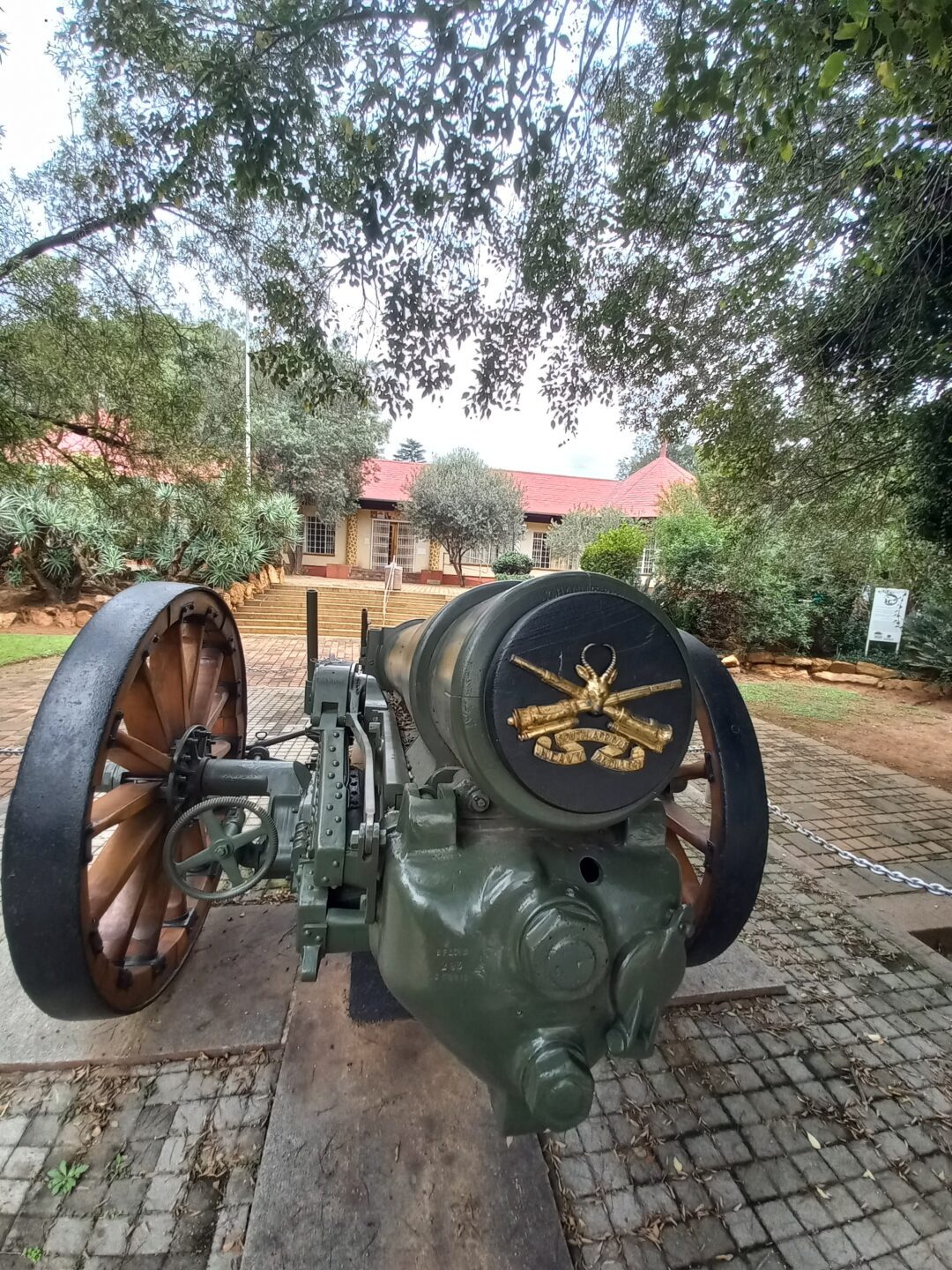
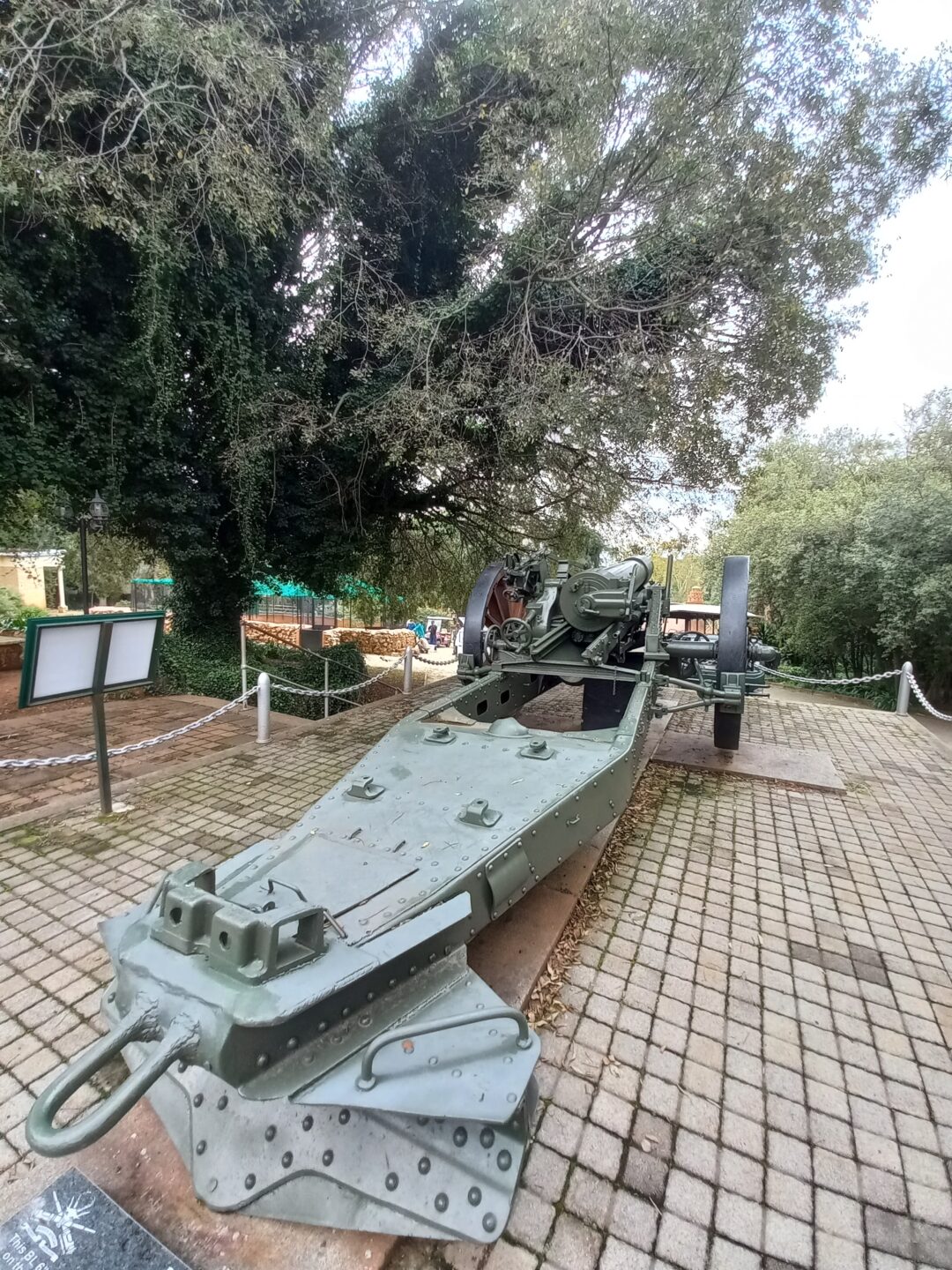
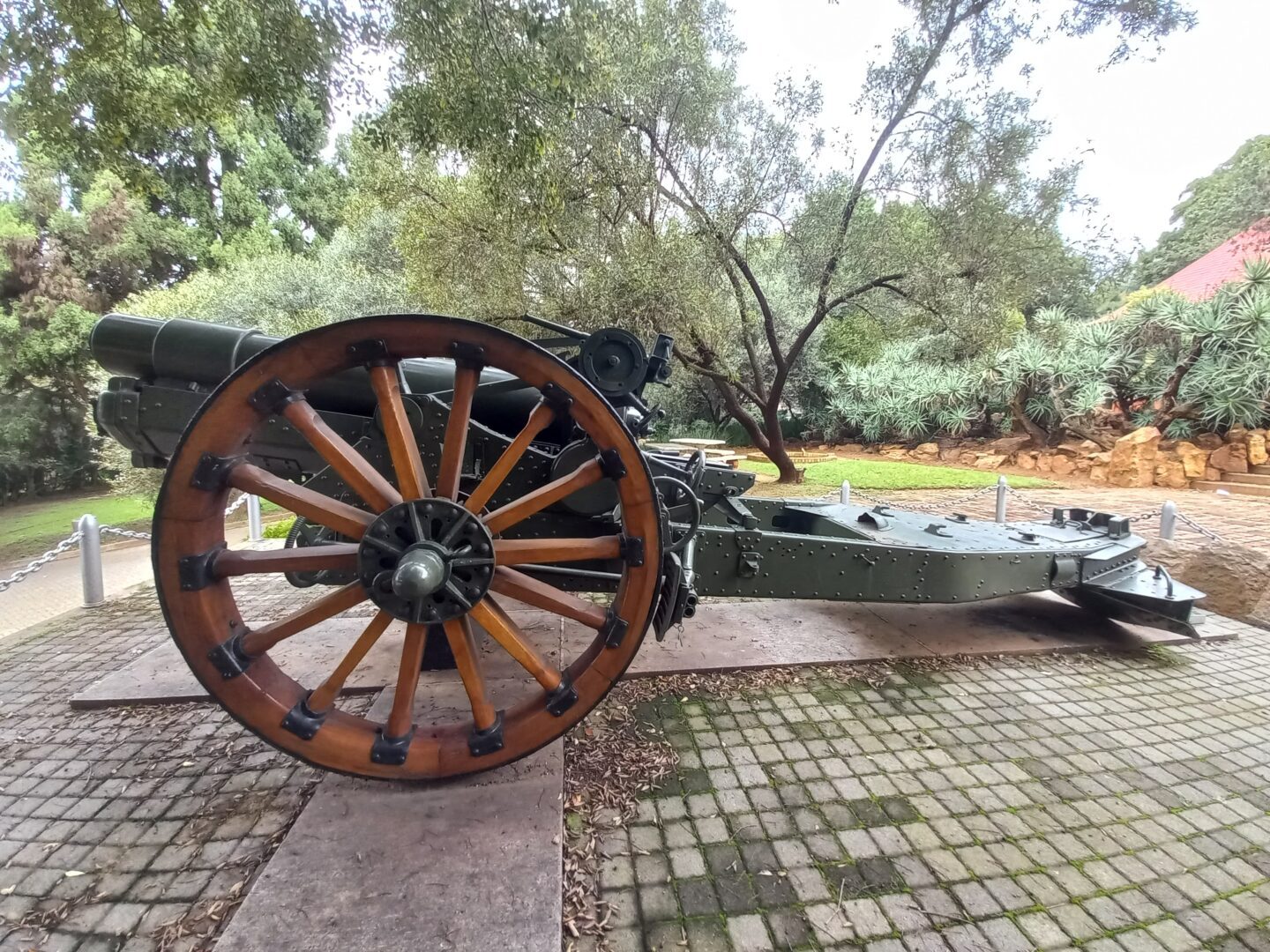
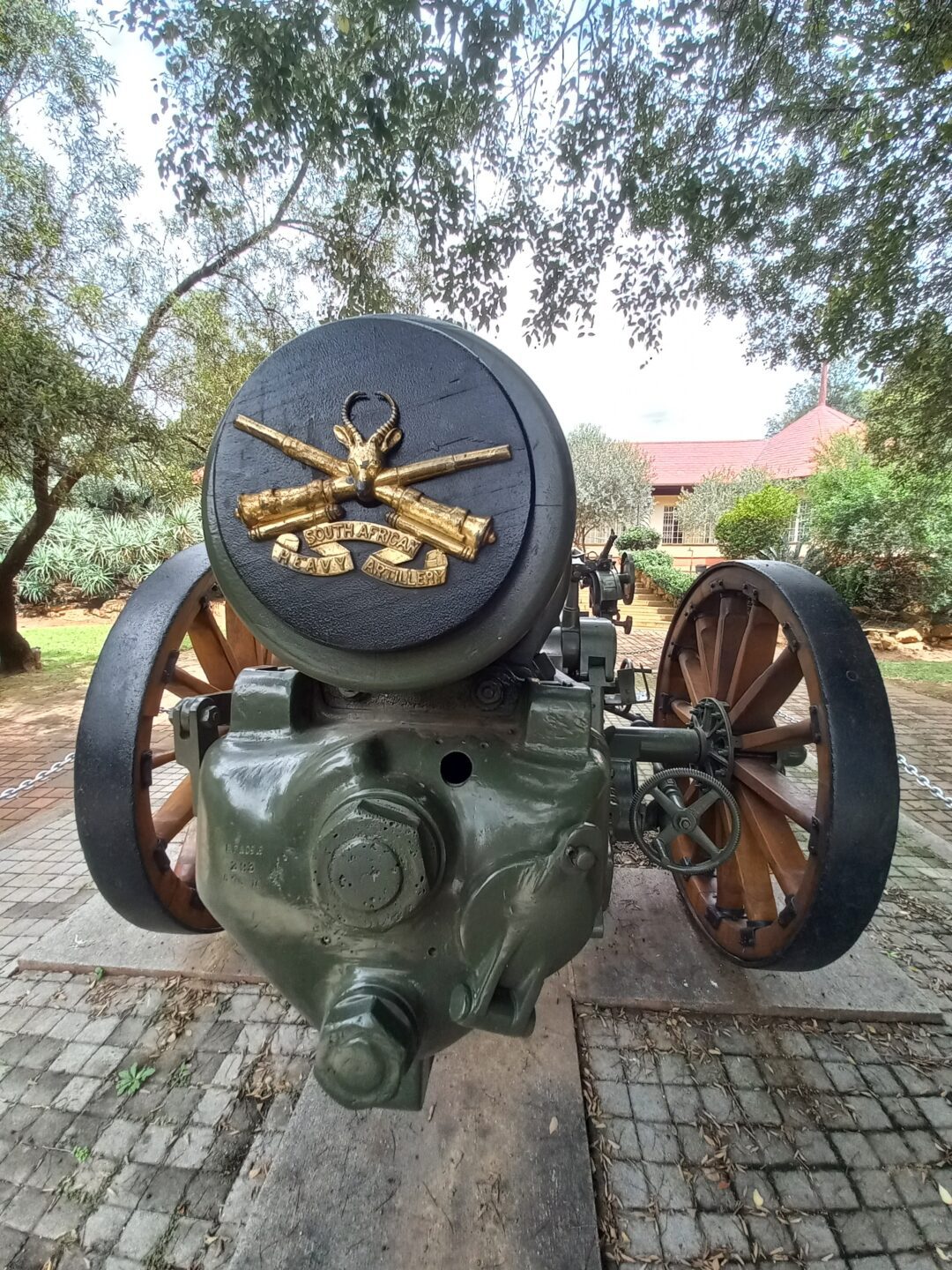
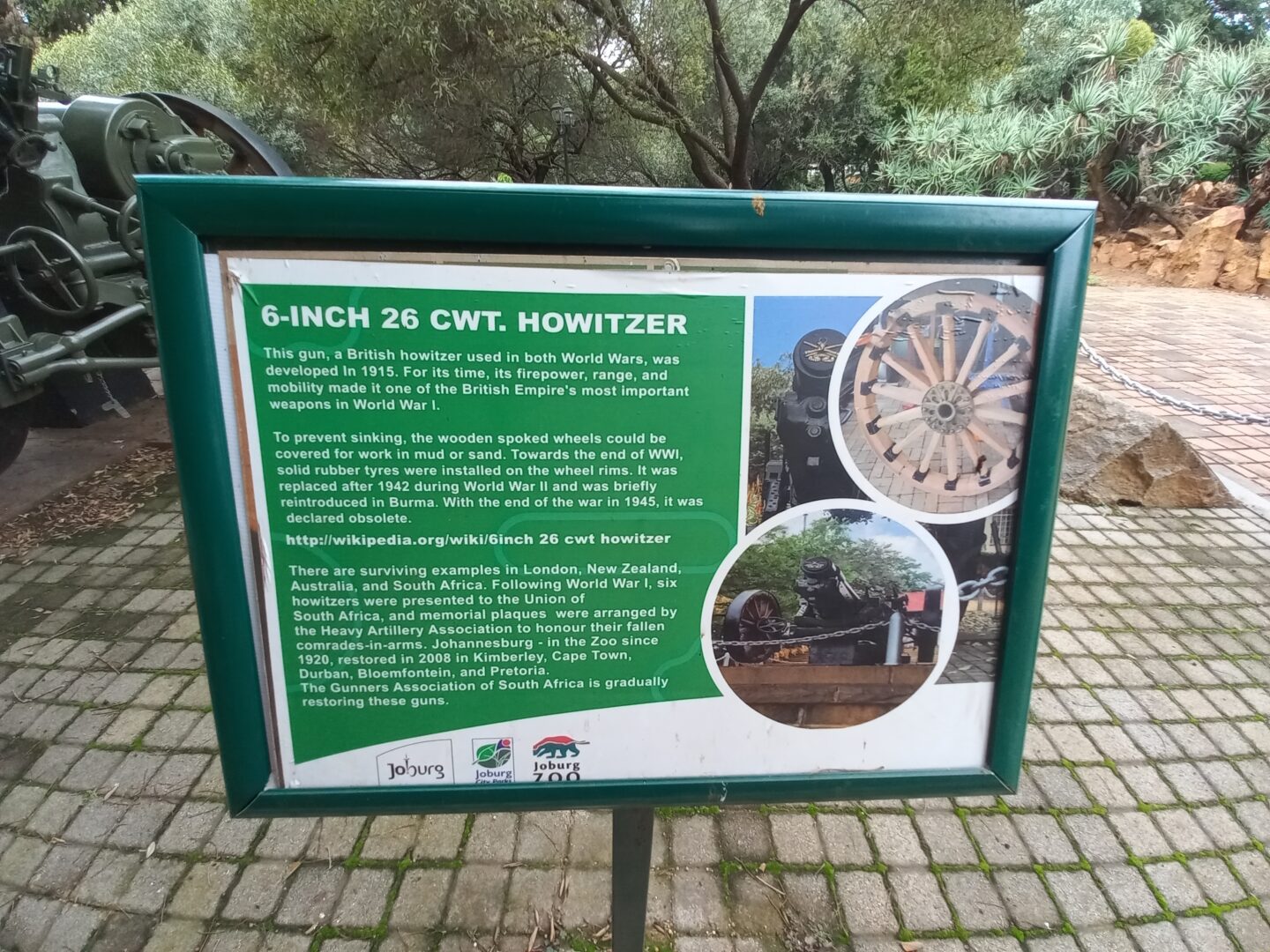
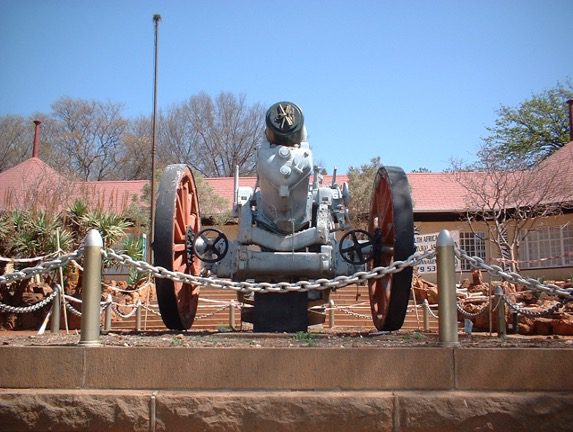
This is one of six howitzers presented to the Union Government by the Government of Great Britain after the First World War and was allocated to Johannesburg by the Union Government. The other five howitzers are scattered around the country: the entrance to the Union Buildings in Pretoria; the Company’s Garden, Cape Town; Warriors’ Gate (MOTH) Durban; Park Museum, Bloemfontein; and the Kimberley Museum.
The Town Council discussed the placement of the gun with the SA Heavy Artillery Brigade, and it is probable that Sir Percy Fitzpatrick was involved. His eldest son Nugent served in France with a SA Heavy Artillery unit and achieved rapid promotion to Major. Nugent was bitterly opposed to the South African Heavies being split up and assigned to different sections. He told General Smuts that the units should be brought back together again as in the South West Africa campaign, and this was done later. The son of Sir Percy Fitzpatrick was in a position to get his ideas across. He must have mentioned them to his father in letters. This would explain why Sir Percy felt so deeply about a special memorial for the SA Heavy Artillery Brigade in Johannesburg in addition to the one at the Union Buildings in Pretoria.
Major Nugent Fitzpatrick was killed by a stray long range shell at Beaumetz on 14 December 1917. Deeply affected by his son’s death, Sir Percy was greatly concerned that all the young men who had lost their lives should be properly remembered. It was his idea to observe the two minute’s silence on Armistice Day and he was the prime mover behind the Delville Wood Memorial.
The selection of the site for the gun was probably Fitzpatrick’s proposal. His company (Rand Mines) had donated the land for the South African War Peace Memorial at the east end of the diagonal vista, the highpoint of the area around the Hermann Eckstein Park. His youngest brother, George Fitzpatrick, is listed in the Roll of Honour for the Imperial Light Horse Regiment.
The Howitzer is placed at the west end of the vista so that the memorials of the two wars speak to each other. The steps of the kiosk were altered “to permit the howitzer being trained along the road that leads to the South African War Memorial.”
The Artillery Brigade bore the costs of creating the plinth while the Town Council paid for the bronze plaque which records the names of all the men of the SA Heavy Artillery Brigade who died in the 1914-1918 war. Ironically Major Nugent Fitzpatrick’s is not one of them.
During the Second World War (according to the records of the Johannesburg Zoo) the gun was taken to Potchefstroom for training a new generation of gunners and returned in 1945.
In March this year the howitzer was removed for restoration by Frank Louw, Past National Chairman of the Gunner’s Association, to his workshop Techire in Wadeville.
Protected under Section 37 of the National Heritage Resources Act: Public Monuments and Memorials. “Public monuments and memorials must, without the need to publish a notice to this effect, be protected in the same manner as places which are entered in a heritage register …”. Since the South African War Memorial is older than 60 years, it is also protected in terms of Section 34 of the same Act.
A culmination of research gathered over many years, the Online Johannesburg Heritage Register is being launched on Nelson Mandela Day 18 July 2025.
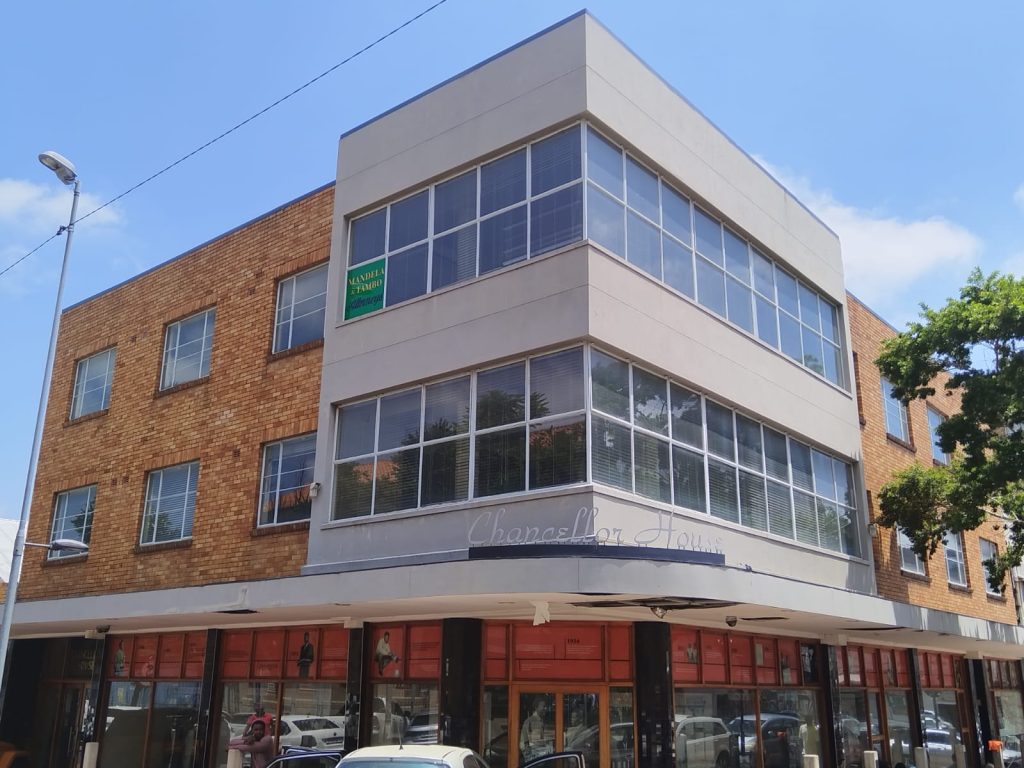
Among the many heritage sites featured is Chancellor House, the downtown offices of Mandela and Tambo Attorneys in the 1950s. After having been vacant and shuttered for more than a decade, this iconic building is being revived and brought to life once again as offices for the Community Development Department, which oversees the City’s Arts, Culture & Heritage Services.