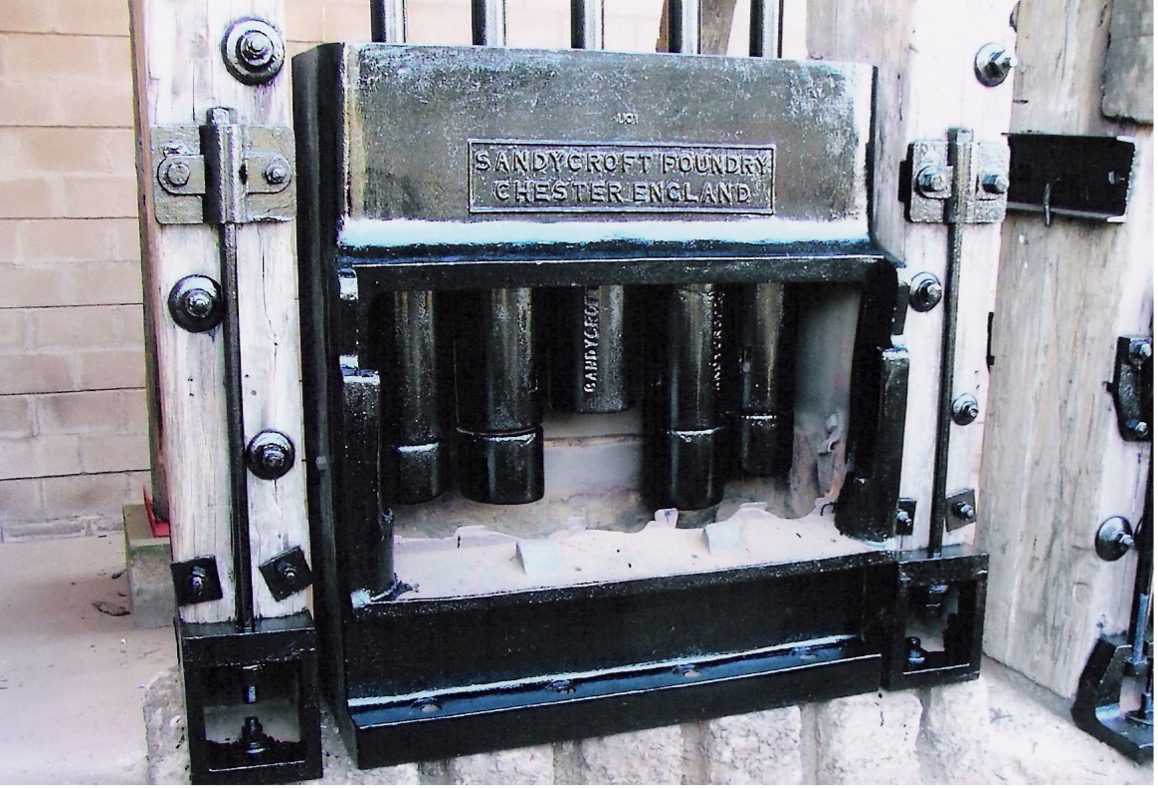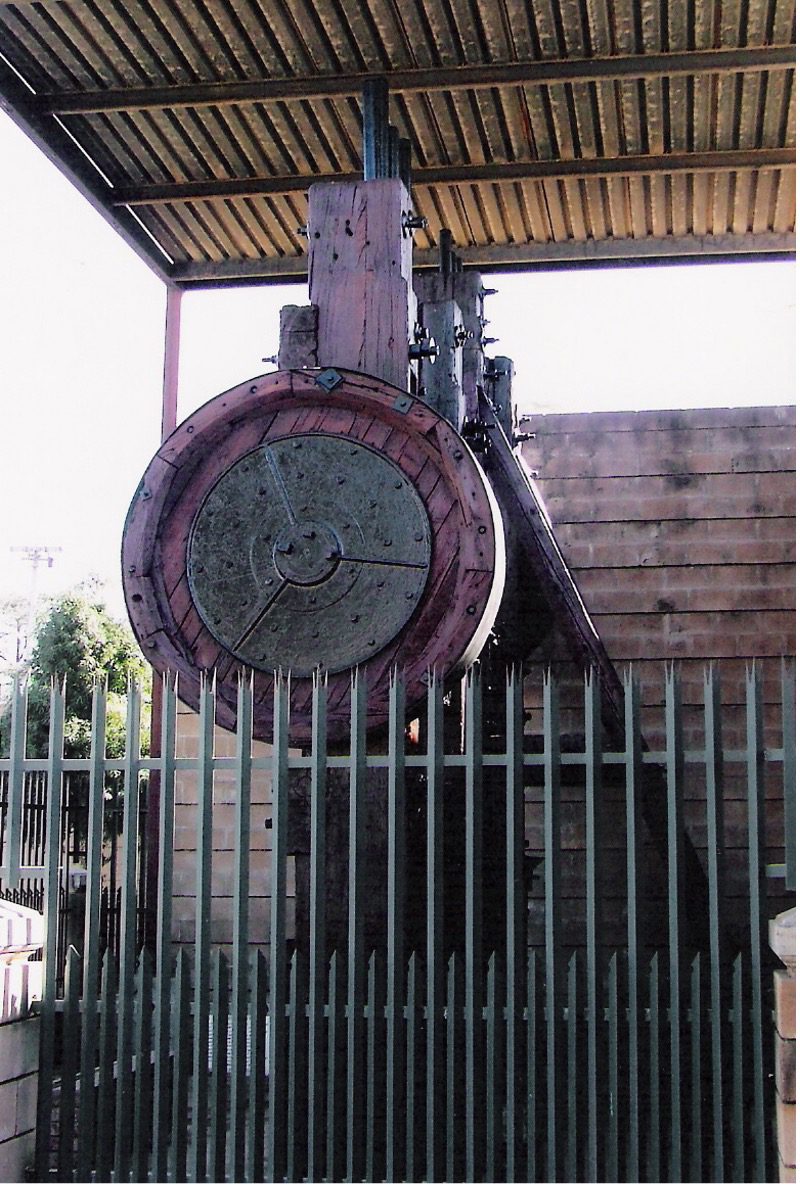
These exhibits consist of two distinct five-stamp batteries. The differences between the two stamp batteries are clear, viz:
Historically, the Roodepoort stamp batteries are associated with the old Confidence Reef Mine in the Kloofendal Nature Reserve. The stamps are believed to have been used by the Struben brothers at Confidence Reef, where the first payable gold was discovered from 1884.
The brothers Fred and Harry Struben prospected for gold in the West Rand area, where they claimed to find payable gold on the farm Wilgespruit in 1884. Their mine was named Confidence Reef by Fred Struben, because of his confidence that it would lead to a gold mining industry employing thousands of miners.
The Strubens’ high hopes were disappointed as the mine yielded poor results. The gold was present in a quarts intrusion and the first assay values showed 913 ounces per ton. As is often the case with quarts intrusions, it was soon worked out.
Nonetheless, other prospectors were attracted by the Strubens’ optimistic claims. Even though the brothers did not discover the Main Reef, their strike attracted a rush of gold prospectors to the Witwatersrand, and led eventually to the discovery of the Main Reef at Langlaagte in 1886.
The book Romance of the Golden Rand by William MacDonald has the following footnote on the five stamp battery used by the Struben brothers (p. 79):
“It may be of interest to recall the names of the manufacturers of the first battery erected on the gold-fields of the Witwatersrand; and also of the engine that supplied the motive power for the mill. Struben’s five stamp battery was made by the Sandycroft company; while, as the author has recently pointed out (Rand Daily Mail, August 2 1932), the engine that drove this gold-crushing mill was a horizontal portable 10-h.p. steam engine manufactured by Messrs. Ransomes, Sims and Jeffries, Ltd., Of Ipswich.”
The former head of the Roodepoort Museum, Elizabeth Viljoen, had the foresight to preserve the old stamp batteries. According to Elizabeth Viljoen’s research:
“Although the Struben’s battery was not the first erected on the Witwatersrand (Hammerschlag had erected one at Tweefontein some six or seven months previously), it nevertheless played an important part in the early development of the Witwatersrand Gold Fields, for many of the early pioneers brought their ore to Wilgespruit for crushing”.
In 1983 the old mineshafts in the Kloofendal Nature Reserve were declared a national monument (now a provincial heritage site).
Section 32 of the National Heritage Resources Act (1999)

A culmination of research gathered over many years, the Online Johannesburg Heritage Register is being launched on Nelson Mandela Day 18 July 2025.
Among the many heritage sites featured is Chancellor House, the downtown offices of Mandela and Tambo Attorneys in the 1950s. After having been vacant and shuttered for more than a decade, this iconic building is being revived and brought to life once again as offices for the Community Development Department, which oversees the City’s Arts, Culture & Heritage Services.