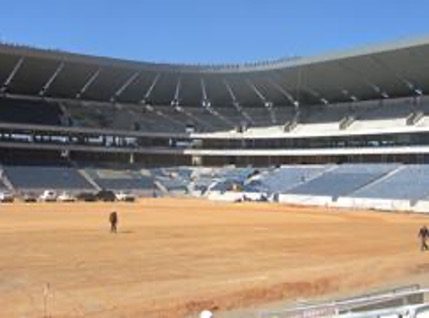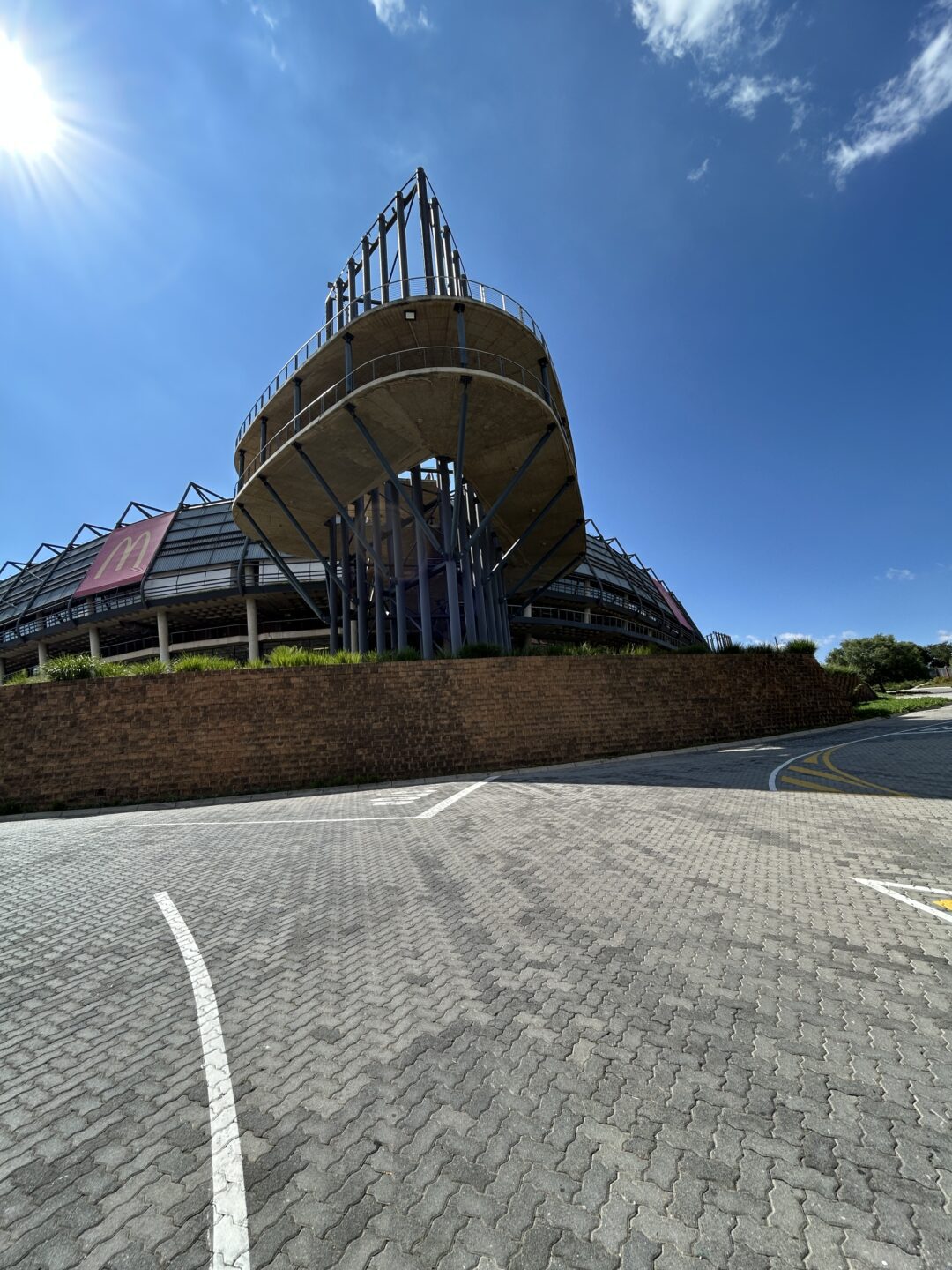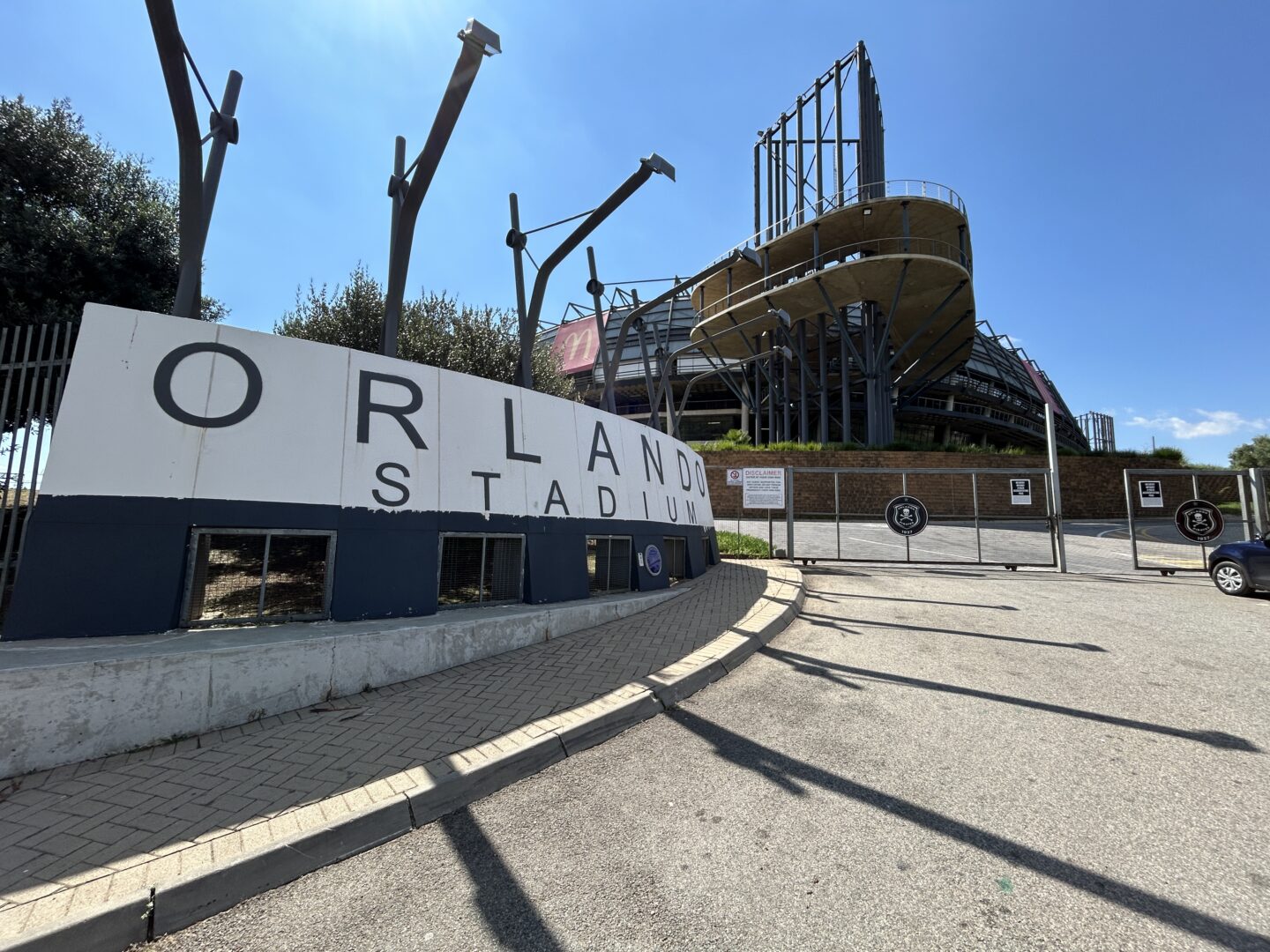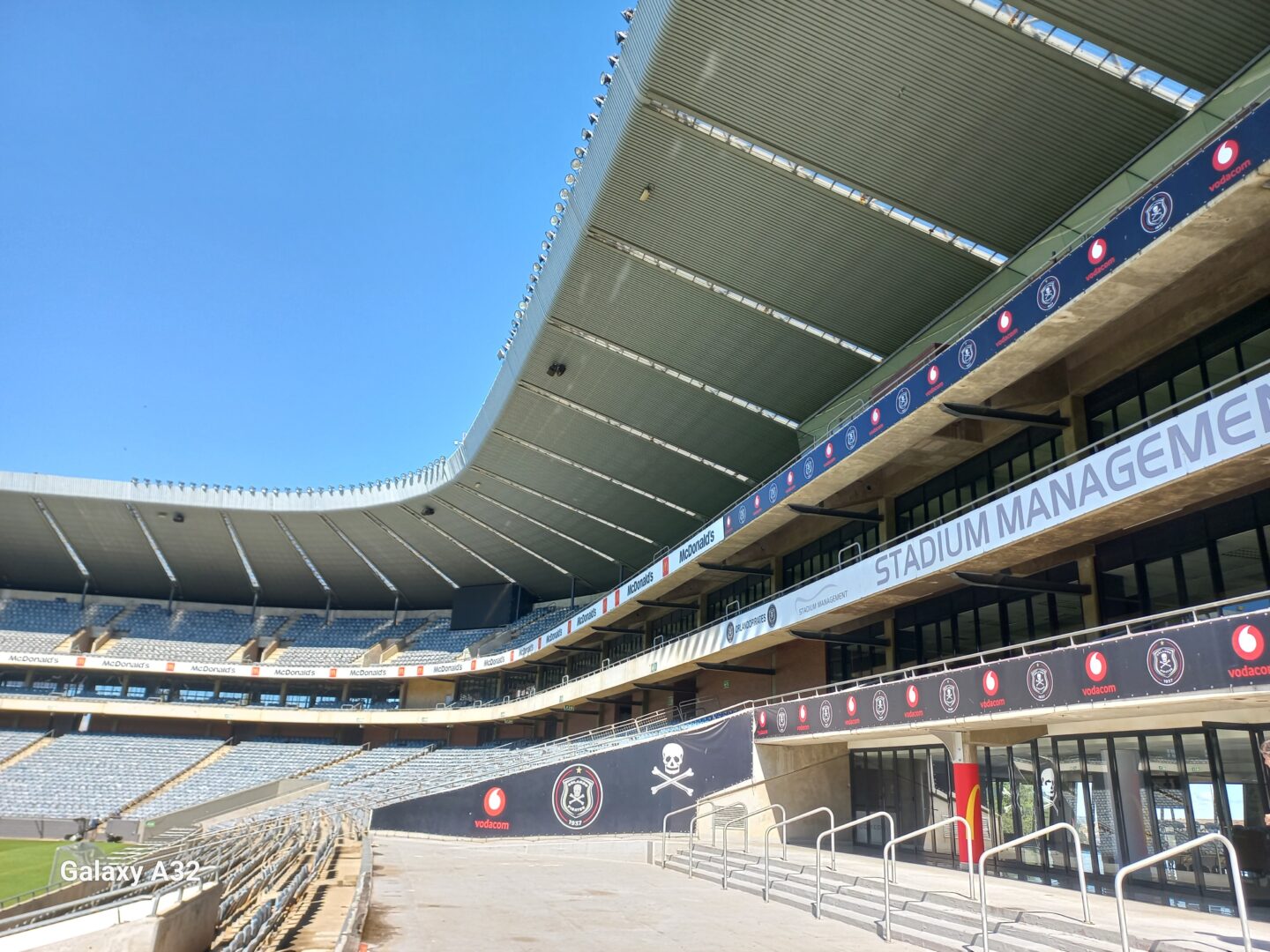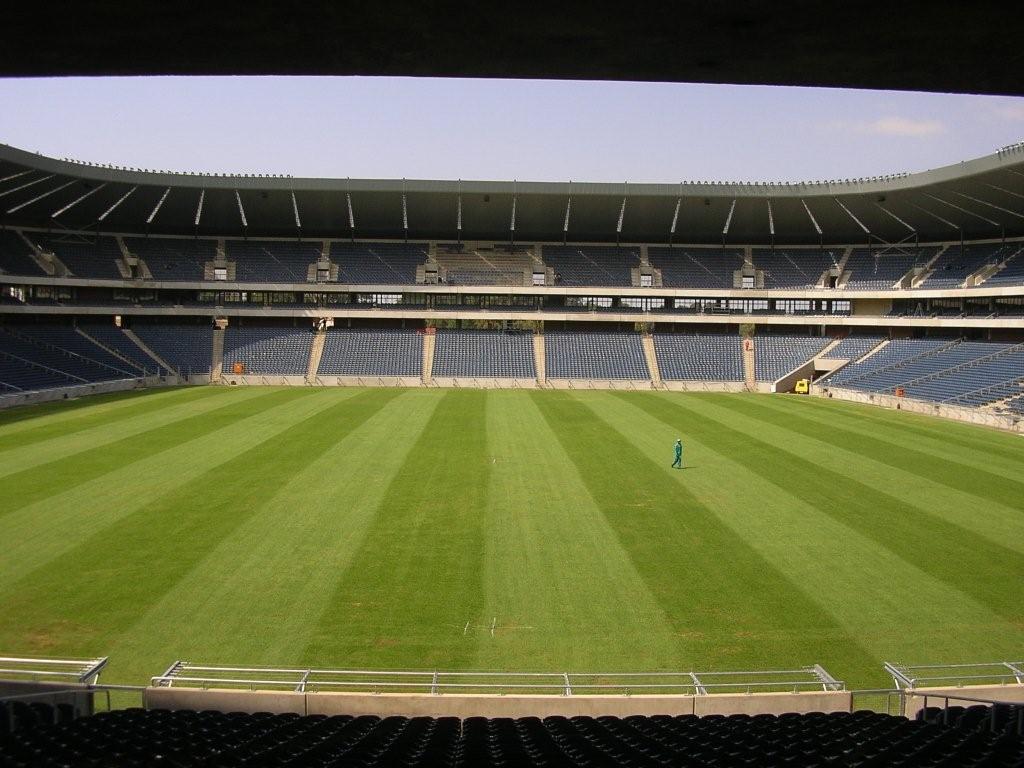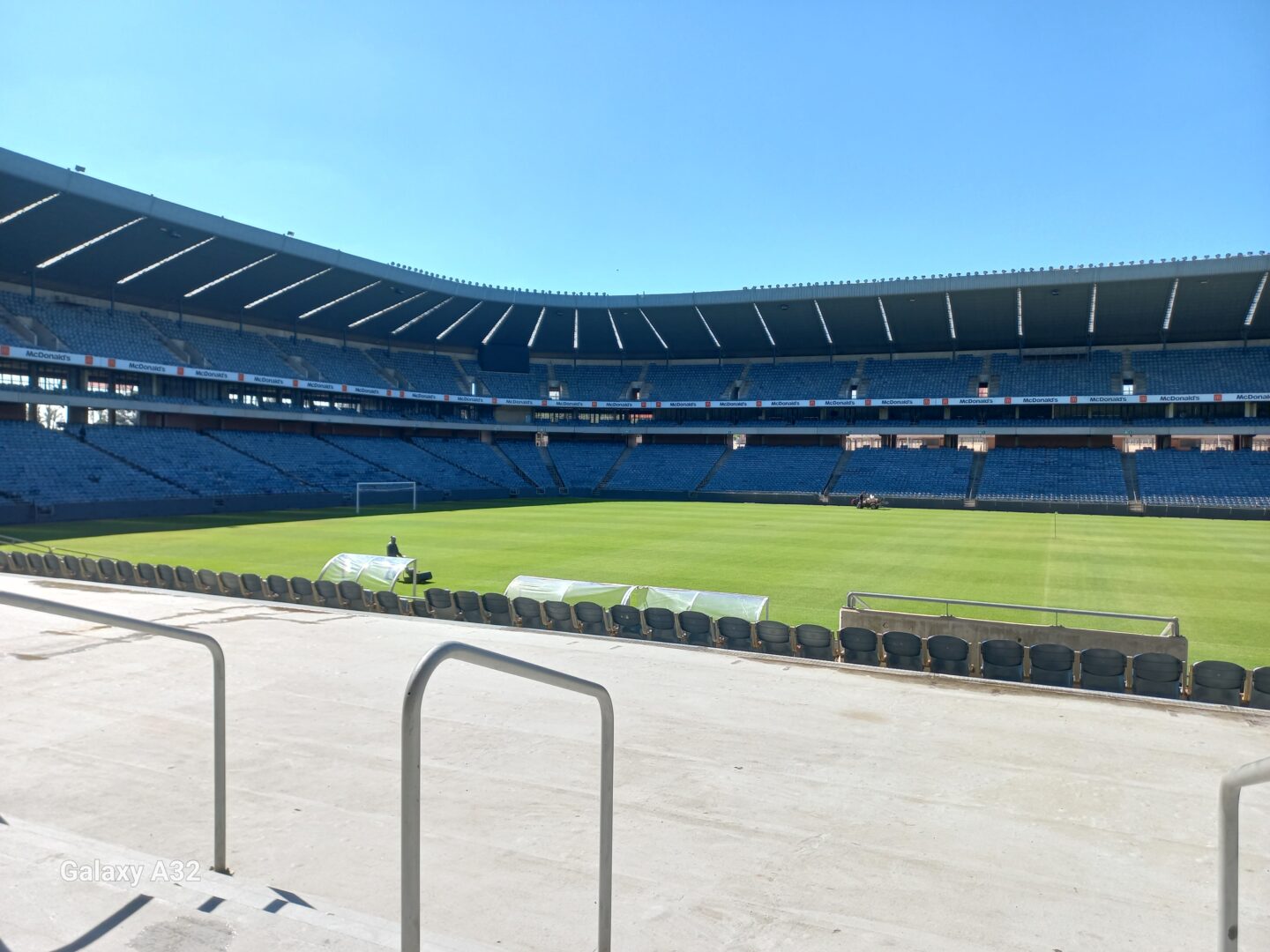
The new stadium seats 40 000 people, partially enclosed by an impressive encircling roof that covers more than 70 percent of spectators. Modern amenities include private hospitality suites, conference facilities, meeting rooms, a gymnasium, a fan shop, office space, video and security facilities including CCTV cameras.
The farm Klipspruit 318 on which the stadium is situated was originally owned by Consolidated Main Reefs and Estates Limited who sold the farm to the City Council of Johannesburg in 1930. Orlando Stadium would later be located on RE portion 1 of the farm.
In 1950 residents of Orlando drew up a memorandum for the construction of a stadium to reduce juvenile delinquency. By 1956 the City Council of Johannesburg voted £15 000 towards the construction of Orlando Stadium. Various firms and organisations also signified their desire to contribute towards the construction of the stadium and went on to raise substantial amounts, the biggest donor being OK Bazaars.
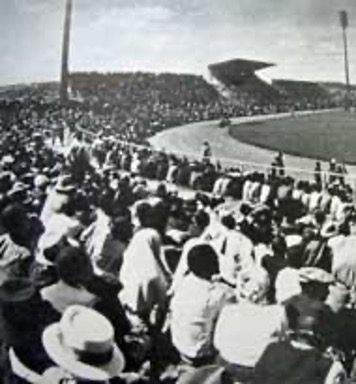
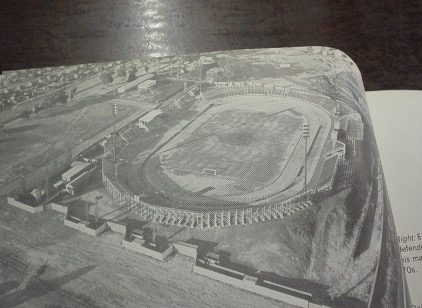
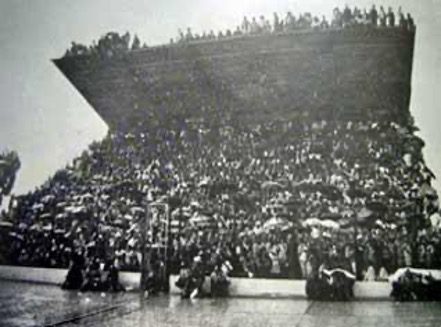
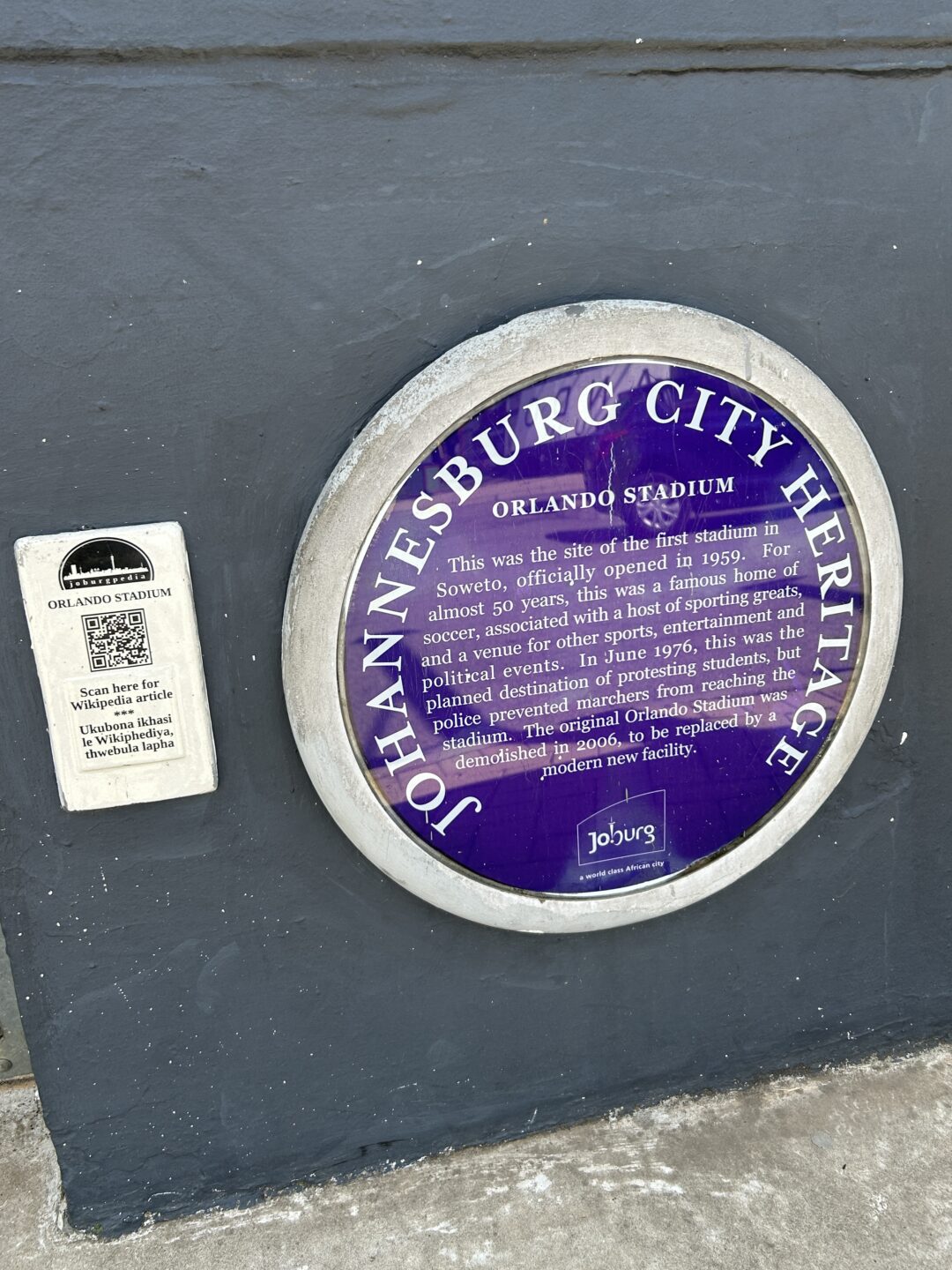
The construction of this first stadium in Soweto began in October 1956. Officially opened in 1959, the stadium offered sports fields, a triple-grandstand able to accommodate 900 people, a concrete cycling track, an athletics track and dressing rooms. Orlando Stadium was described in Bantu World (7 March 1959) as the “grandest stadium ever built in a Non-European area”.
The size and location of Orlando Stadium made it an attractive location for popular soccer games every weekend. For many years a focal point of soccer, it was associated with Orlando Pirates and from 1997 onwards, Moroka Swallows, who made it their home ground in 1997.
As the number of spectators grew, improvements were made to the stadium, in 1972-3, and in 1999. An amount of R 97 000.00 was made available by the City Council in 1972 for the renovation and upgrading of the stadium. The money was used for high-rise stands around the ground, dressing rooms, the addition of turnstiles and other improvements. Then in the run-up to the All Africa Games to be held there in 1999, major renovations worth over R 7 million were carried out to bring the stadium to international standards.
Besides football, Orlando Stadium also served as a venue for other sports, entertainment and political events.
The Stadium hosted 80th birthday celebrations for Johannesburg in September 1966. The gala event included firework displays, brass bands, gumboot dancing, vaulting displays, eurythmic exercises and a soccer match.
In the June 1976 Soweto Uprising, students arranged to march to Orlando Stadium where they were going to convene and hold a mass meeting. However, because the stadium was cordoned off by police, the students were unable to hold their meeting there.
After having been banned and driven underground, the ANC Youth League was officially re-launched at Orlando Stadium on 27 October 1990.
Orlando stadium was again in the political spotlight, when the memorial service for ANC leader Walter Sisulu was held there in 2003.
When South Africa won the bid to host the 2010 soccer world cup Orlando Stadium was chosen to be a training ground for one of the teams. For that to happen it had to comply with FIFA requirements, which included the reorientation of the stadium so that the axis is closer to the north –south to prevent the sun from dazzling the players.
In May 2005, soccer legends who had once played at Orlando Stadium returned to celebrate the R 200 million re-launch of the football stadium. The demolition of the stadium began that same day and construction was scheduled to start in July 2006.
Over R200 million has been made available for construction of the new Orlando Stadium. The capacity of the stadium was increased from 24 000 to 40 000, and provision made for disabled spectators was developed. Besides serving as a training venue for the 2010 FIFA World Cup, it also hosted the FIFA World Cup Kick-Off celebration concert on 10 June 2010 featuring international music artists.
A culmination of research gathered over many years, the Online Johannesburg Heritage Register is being launched on Nelson Mandela Day 18 July 2025.
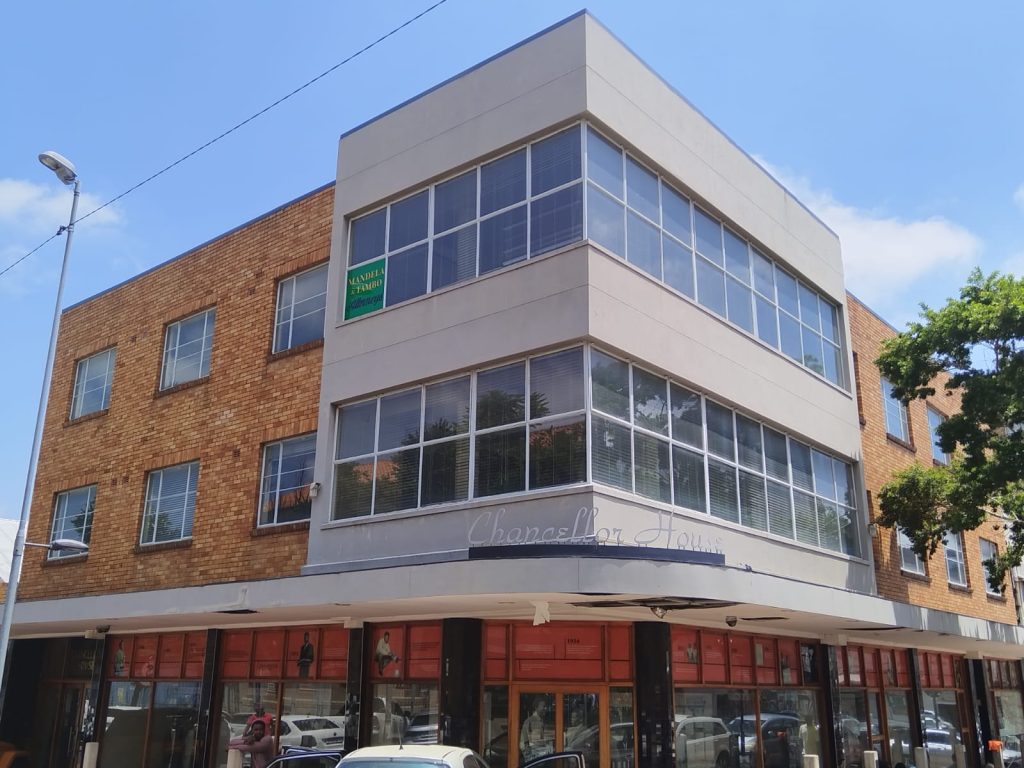
Among the many heritage sites featured is Chancellor House, the downtown offices of Mandela and Tambo Attorneys in the 1950s. After having been vacant and shuttered for more than a decade, this iconic building is being revived and brought to life once again as offices for the Community Development Department, which oversees the City’s Arts, Culture & Heritage Services.