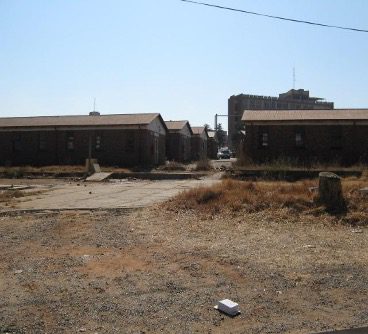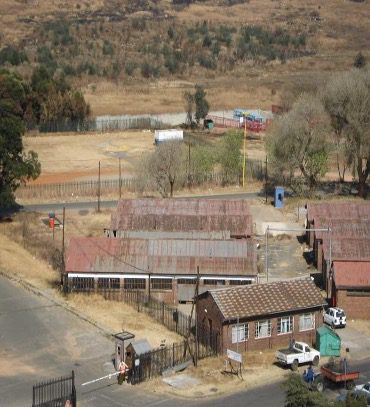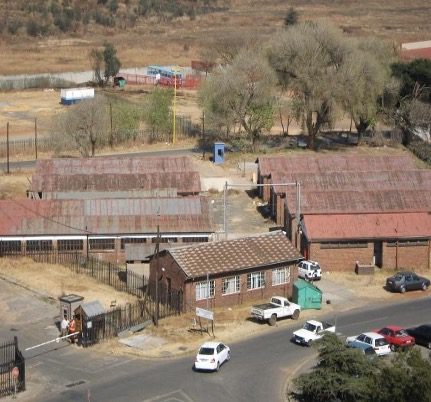
The site consists of eight separate blocks of single-storey military barracks-style buildings and they are grouped or arranged parallel to each other. The original military buildings were made out of brown-like face brick and consist of old model metal pitched roofs.
The Hospital takes its name from the area where it was built. It was named after John Albert Baragwanath, a Cornish trader who established a store and inn l where the Uncle Charlie free-way intersection is today.
Although South Africa was far removed from the World War 2 battlefields in Europe and North Africa, it played an important role in providing health services to wounded soldiers, with 28 000 South African and Allied soldiers receiving treatment at military hospitals in South Africa.
Baragwanath Hospital traces its origins to the early years of the Second World War when the British military authorities urgently needed a hospital to treat soldiers wounded on the Middle East battlefronts. Construction of the army barracks-style buildings started in 1941 and the first patient was admitted on 28 May 1942.
At first, the 1 544-bed hospital dealt with medical and surgical cases and with soldiers who needed occupational therapy. After 1943, a growing number of soldiers who had contracted tuberculosis were sent to Baragwana th Hospital. These were mostly British soldiers, some German prisoners of war, and a few South Africans.
In 1947, Baragwana th was an important venue for the Royal visit, when King George VI presented medals to troops still recovering in South Africa.
Having served its purpose as a military hospital, Baragwanath was taken over by the Transvaal Provincial Administration in 1948 to serve the medical needs of African communities. During the apartheid era, it became the largest hospital for black patients in South Africa, and the largest hospital in Africa. The facility went on to experience unprecedented growth, to the point where today the Hospital has 3 200 beds and about 6 760 staff .
The hospital occupies an area of some 173 acres, with 429 buildings. Approximately 70% of all admissions are emergences, with some 150 000 inpatient and 500 000 outpatient cases each year. The department of opthalmology, the St John’s Eye Hospital, has 111 beds, with around 50 000 patients a year. Some 60 000 patients are admitted to the maternity section each year. It is a teaching hospital for the University of the Witwatersrand Medical School, and the Charlotte Maxeke Academic Hospital, the Helen Joseph Hospital and the Rahima Moosa Mother and Child Hospital in Johannesburg. It is a referral hospital for the country, and southern Africa.
General Protection: Section 34 (1) Structures under the National Heritage Resources Act, 1999
A culmination of research gathered over many years, the Online Johannesburg Heritage Register is being launched on Nelson Mandela Day 18 July 2025.
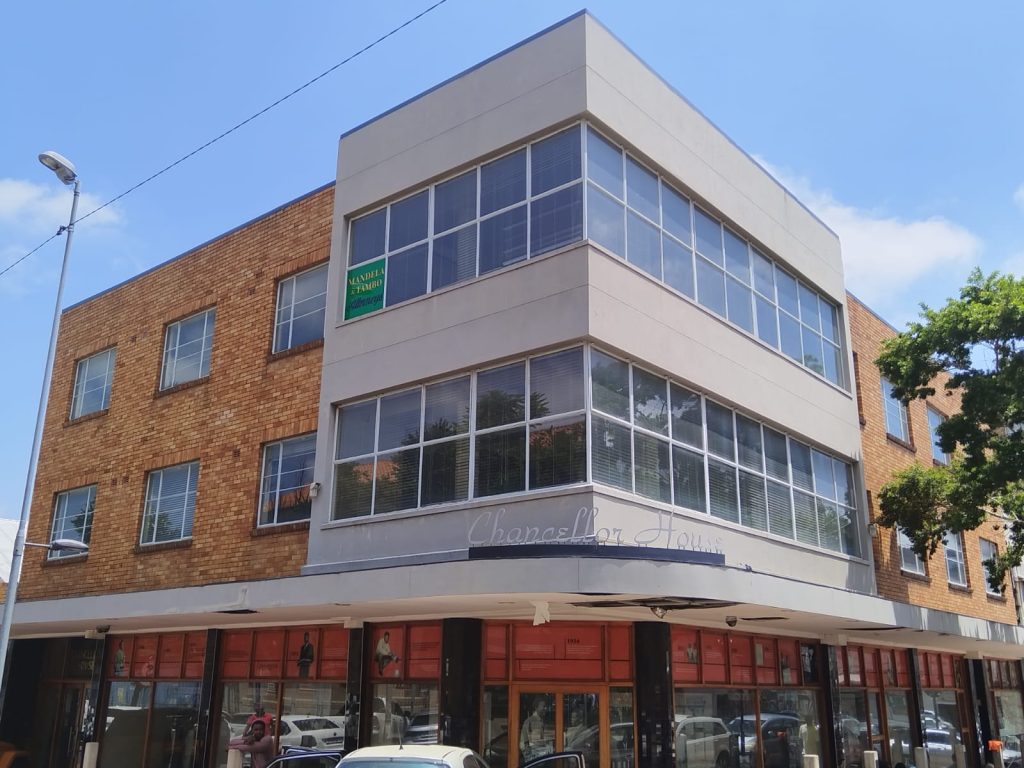
Among the many heritage sites featured is Chancellor House, the downtown offices of Mandela and Tambo Attorneys in the 1950s. After having been vacant and shuttered for more than a decade, this iconic building is being revived and brought to life once again as offices for the Community Development Department, which oversees the City’s Arts, Culture & Heritage Services.