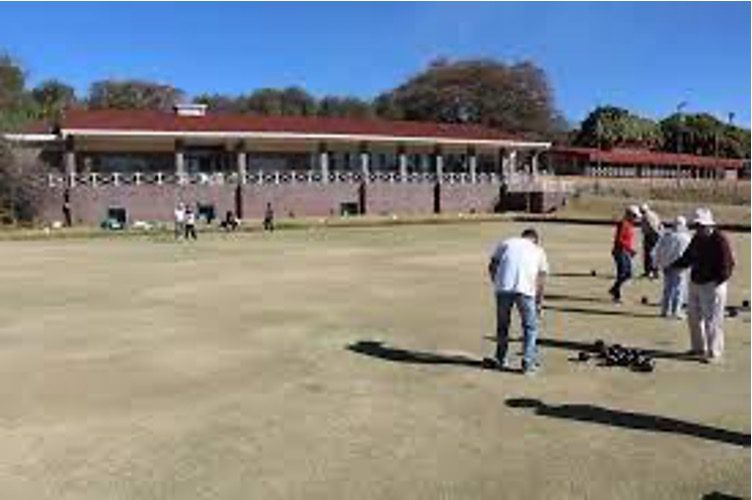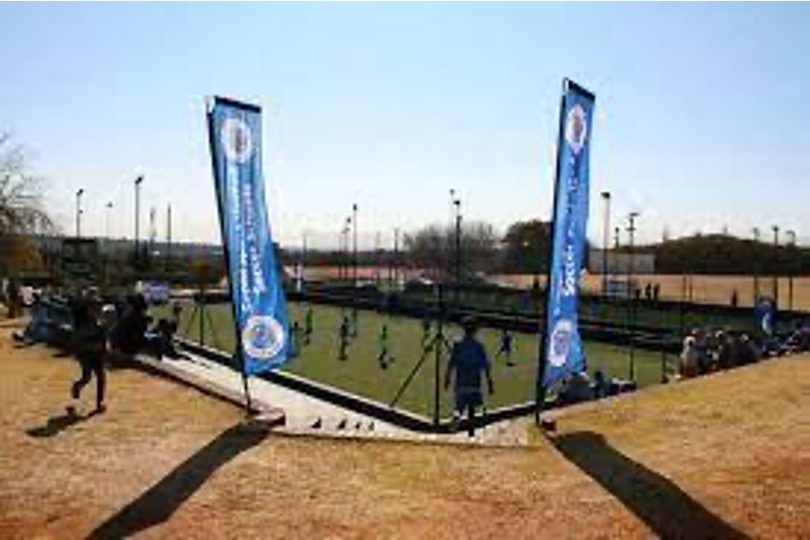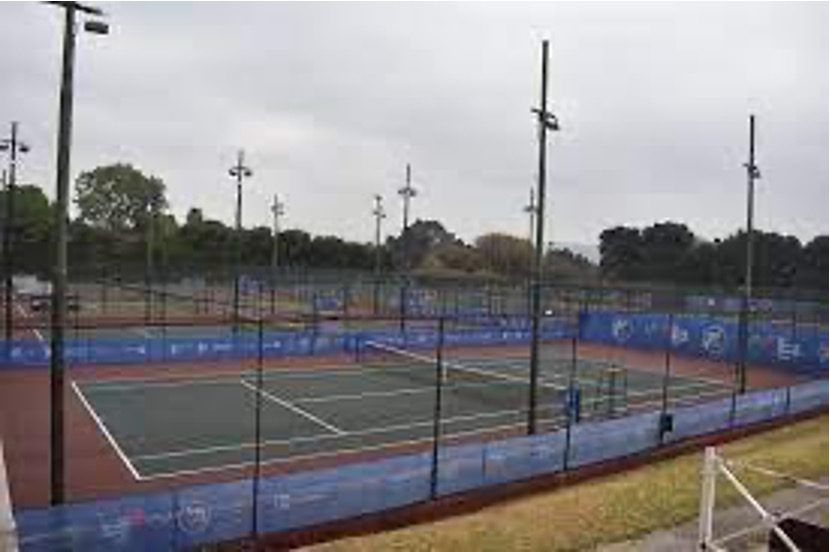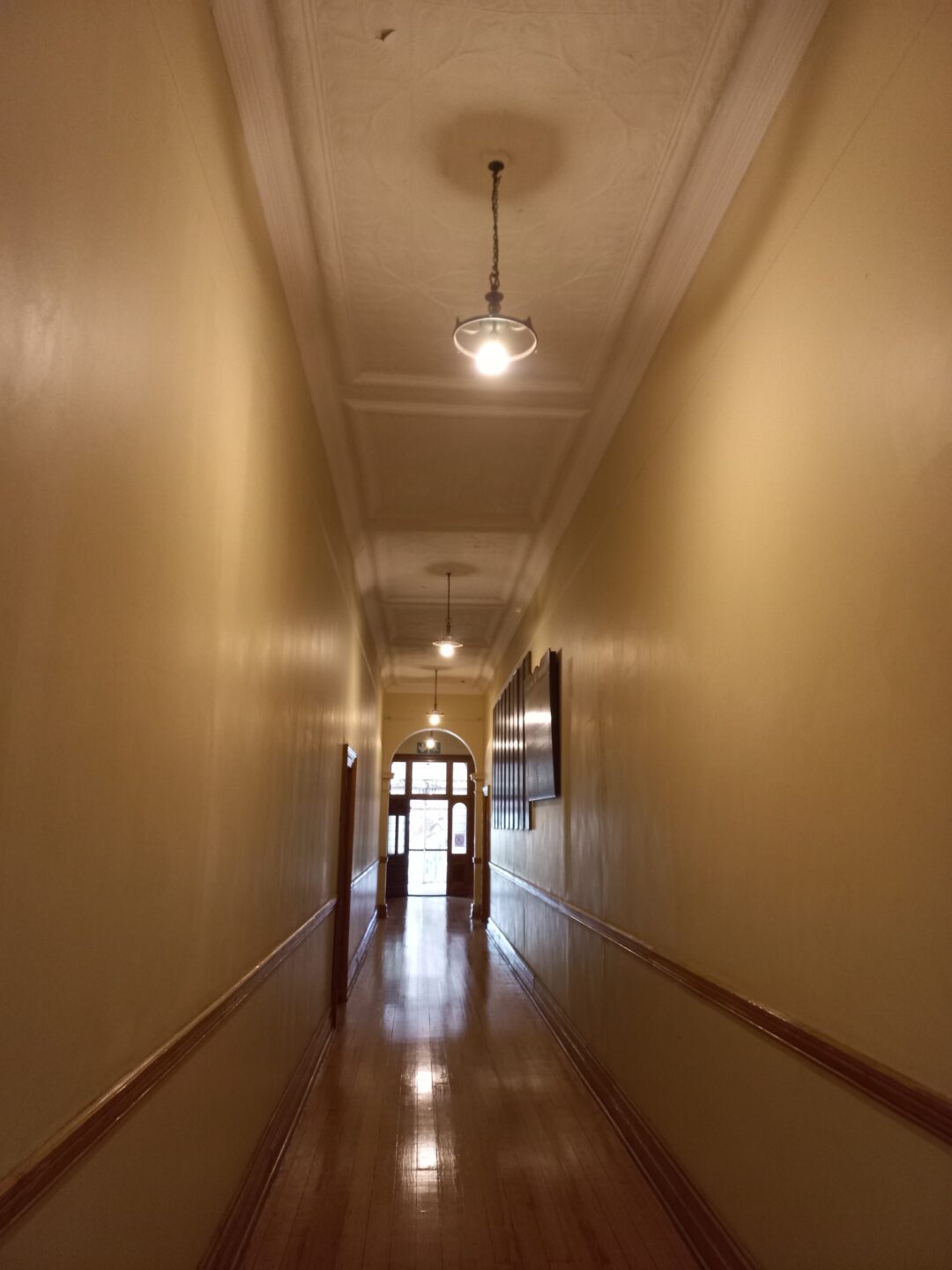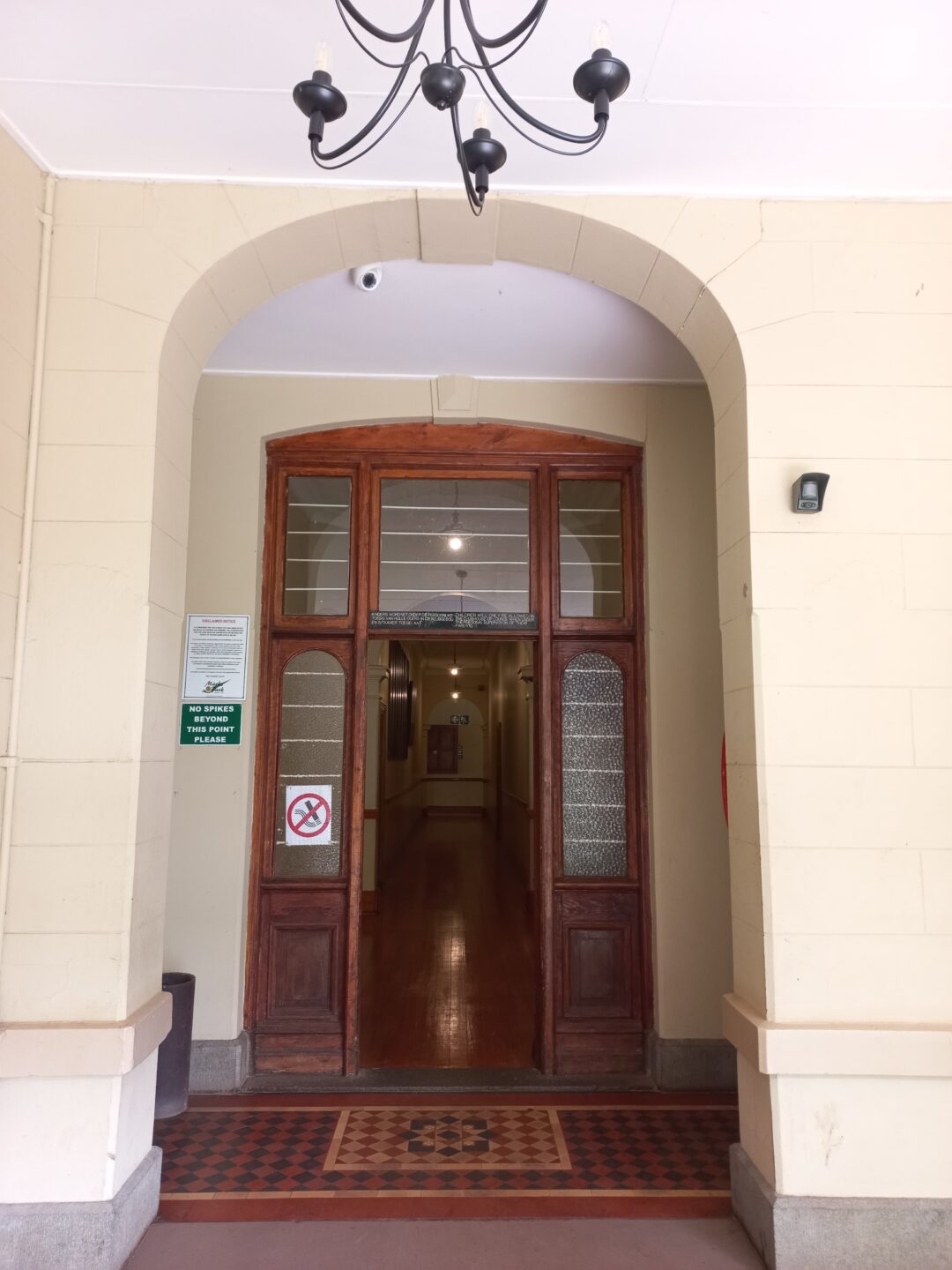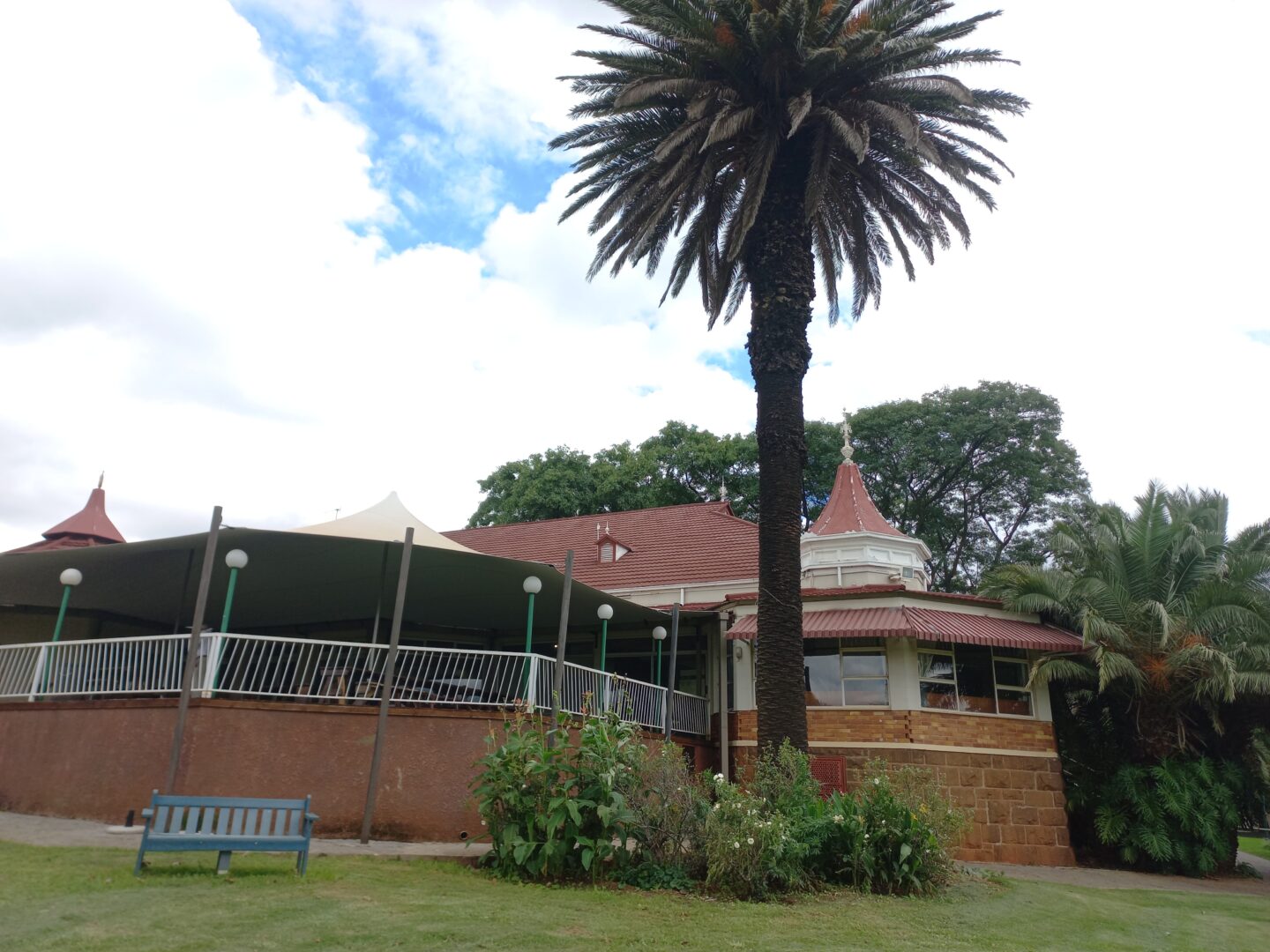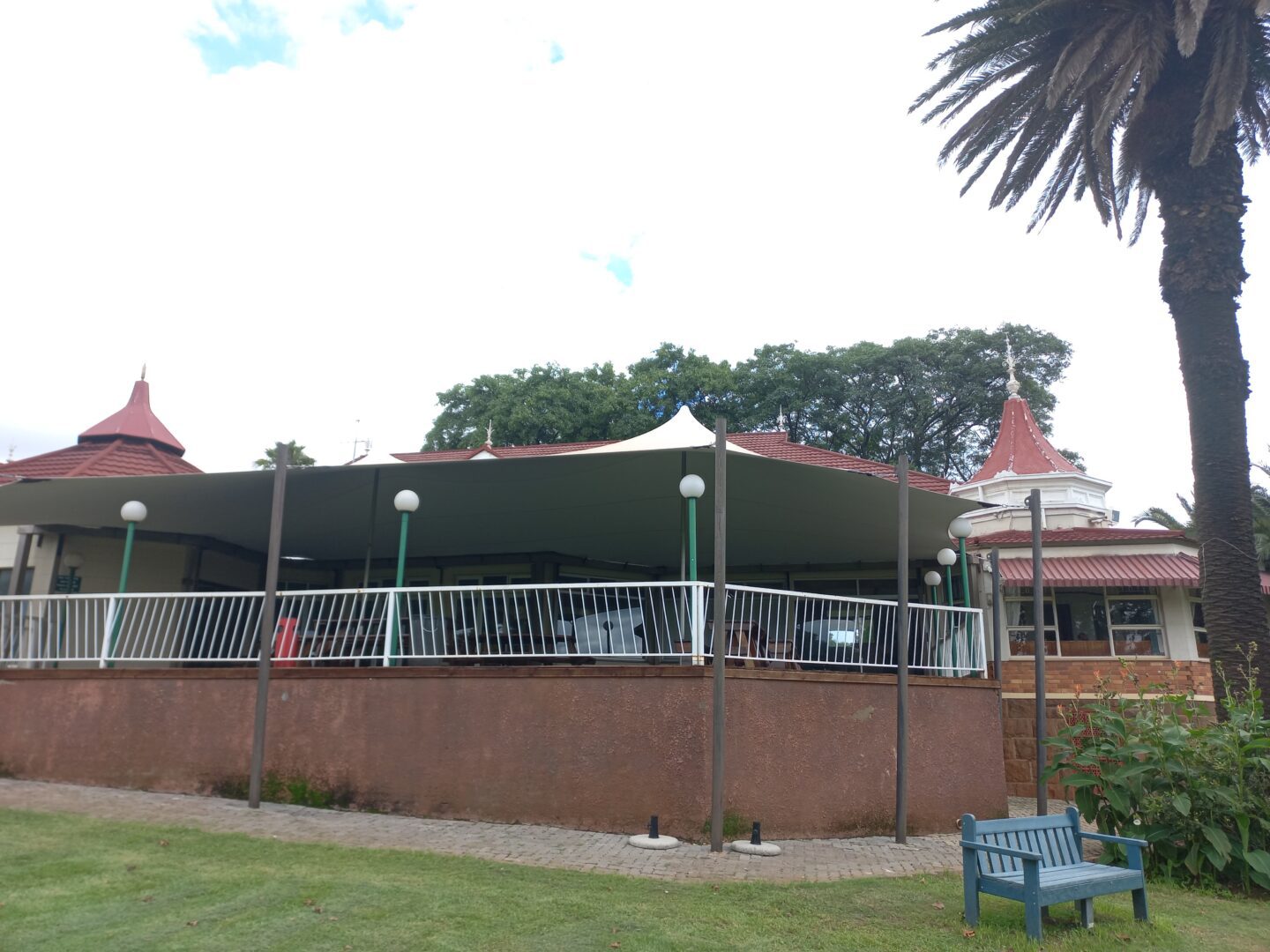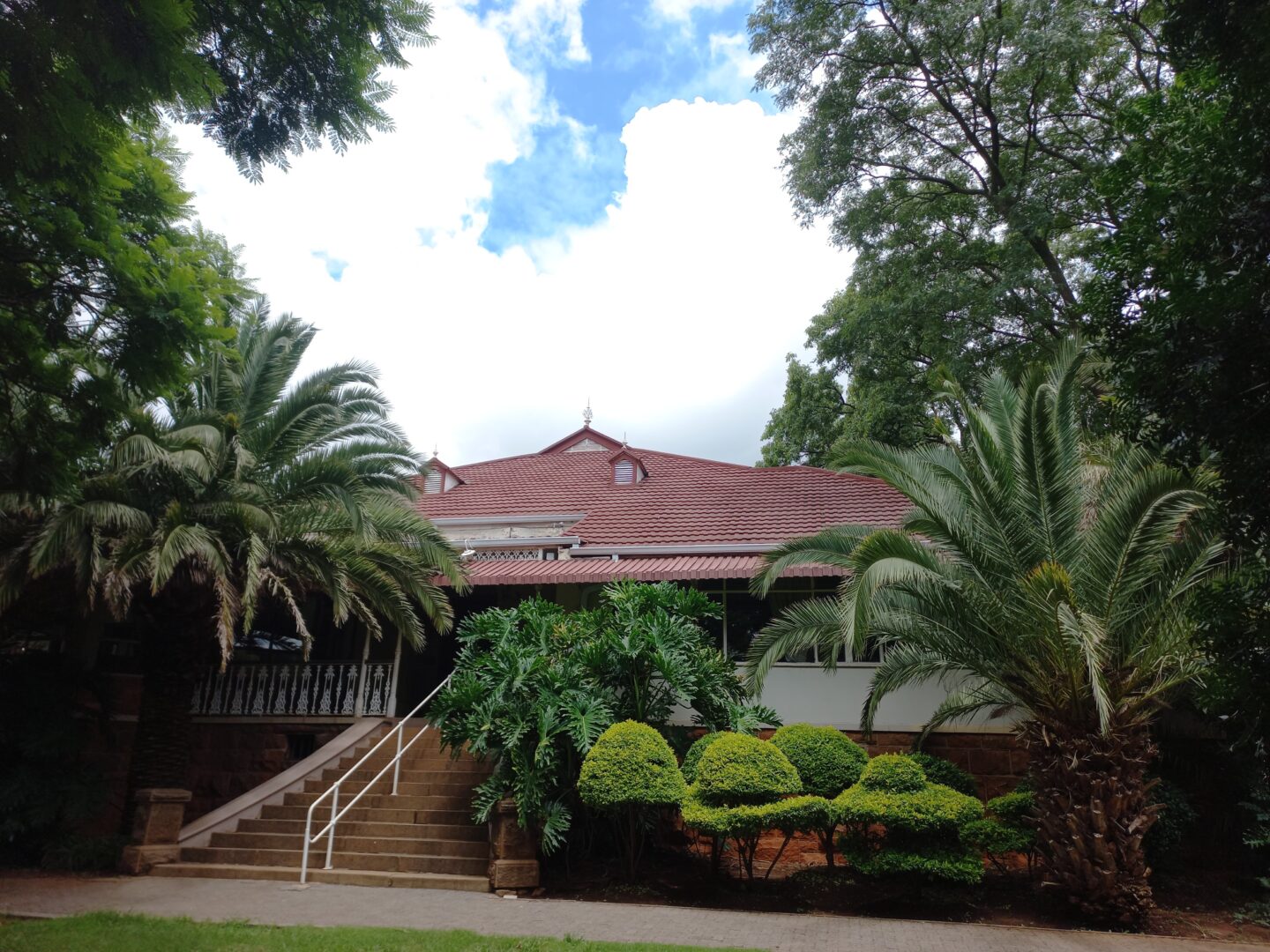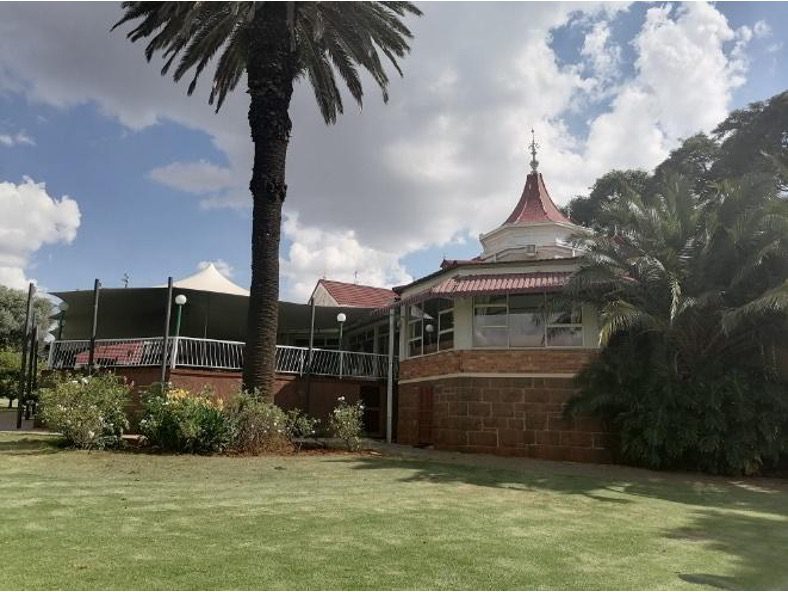
The original Farmhouse has had extensions and is mainly being used as administration block as well as venue hire. The sports grounds with two soccer fields, tennis courts amongst an array of other sports grounds and activities, surround the farmhouse and are used by the public on a membership basis.
In 1858 Gerrit Bezuidenhout was granted title of the farm Braamfontein, an area of 3 500 hectares. Braamfontein was a large farm, stretching from Victory Park around to Rosebank in the north, Killarney in the north-east down to Commissioner Street in the east, over to Mayfair and Coronationville in the south-west, and up to the base of the Northcliff ridge.
The farm was sub-divided several times and the eastern part bought by Lourens Geldenhuys (Louw's father) for £4 500 in 1886, the year the main gold reef was discovered in Johannesburg. He planted vegetable gardens down the valley, and in 1902 he provided landless Boer war veterans with work by getting them to construct Emmarentia Dam at the bottom of his property. He settled 100 of these men on smallholdings on his farm, on the present day Emmarentia, Linden and Greenside.
Lourens was hoping to strike gold. He did try – if you go on the guided walk around Melville Koppies Heritage Site and Nature Reserve, the remains of his failed attempts are still there to see. But there was no gold to be found on the northern side of the Witwatersrand ridge and he took to farming instead.
Lourens had three sons, two of whom, Frans and Louw, built farmhouses in the area. In 1891 Frans and Louw registered the subdivision of their farms, the boundary being Orange Road. Louw married Emmarentia Margaretha Botha and their farmhouse still stands in Greenhill Road. The graves of some of the early residents of the area can be seen at the small cemetery in Hill Rd, opposite Emmarentia Primary School.
The Marks Park Clubhouse, on the slopes of Melville Koppies, was originally the home and farmhouse of Frans Geldenhuys and Judith (Grobbelaar), which still exists today as the main clubhouse. It was only in 1951 that the club moved to its present premises. Marks Clubhouse was founded on 19th December 1938 under the chairmanship of the then Town Clerk of Johannesburg, Mr I Marks with some 1 200 members. Activities at the club commenced at the headquarters of Patterson Park, with various sections being spread all over the city.
In 1950, the department constructed two new greens for the municipal sports club. These were built at a very low cost of £883 pounds each, the use of heavy and light mechanical equipment made this accomplishment possible. In 1952, two bowling greens, nine tennis courts, three sports fields and grassing of two previously hard-surfaced sports fields was accomplished. By 1953, Marks Park received grassing of its cricket oval and establishment of a new-turfed wicket. The two soccer or alternatively cricket fields were completed, south of the cricket oval. And preliminary development of lawning the surrounds of the farmhouse was started.
Today the sports park boasts several different sports and clubs such as kettlebells, cricket, rugby, run/walk for life, soccer, social club, taekwondo, tennis, gym, archery, the Argentinian Association, baseball, chamber running, croquet, darts, dog training, wrestling, croquet, squash, padel and a five-a-side soccer.
A culmination of research gathered over many years, the Online Johannesburg Heritage Register is being launched on Nelson Mandela Day 18 July 2025.
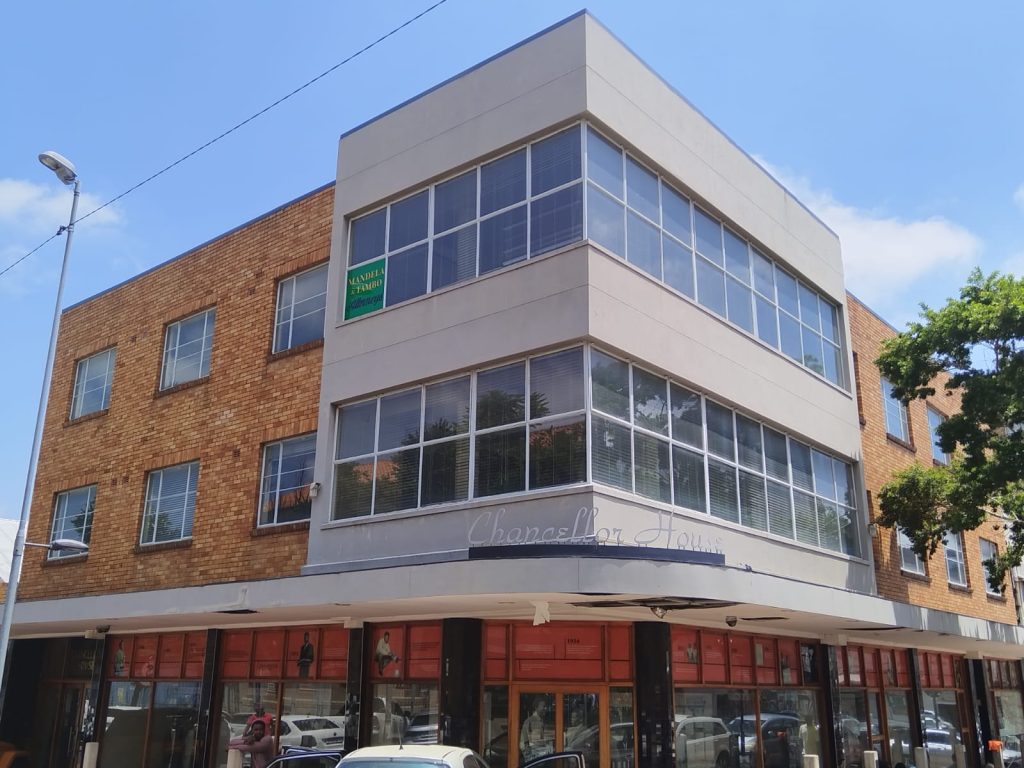
Among the many heritage sites featured is Chancellor House, the downtown offices of Mandela and Tambo Attorneys in the 1950s. After having been vacant and shuttered for more than a decade, this iconic building is being revived and brought to life once again as offices for the Community Development Department, which oversees the City’s Arts, Culture & Heritage Services.