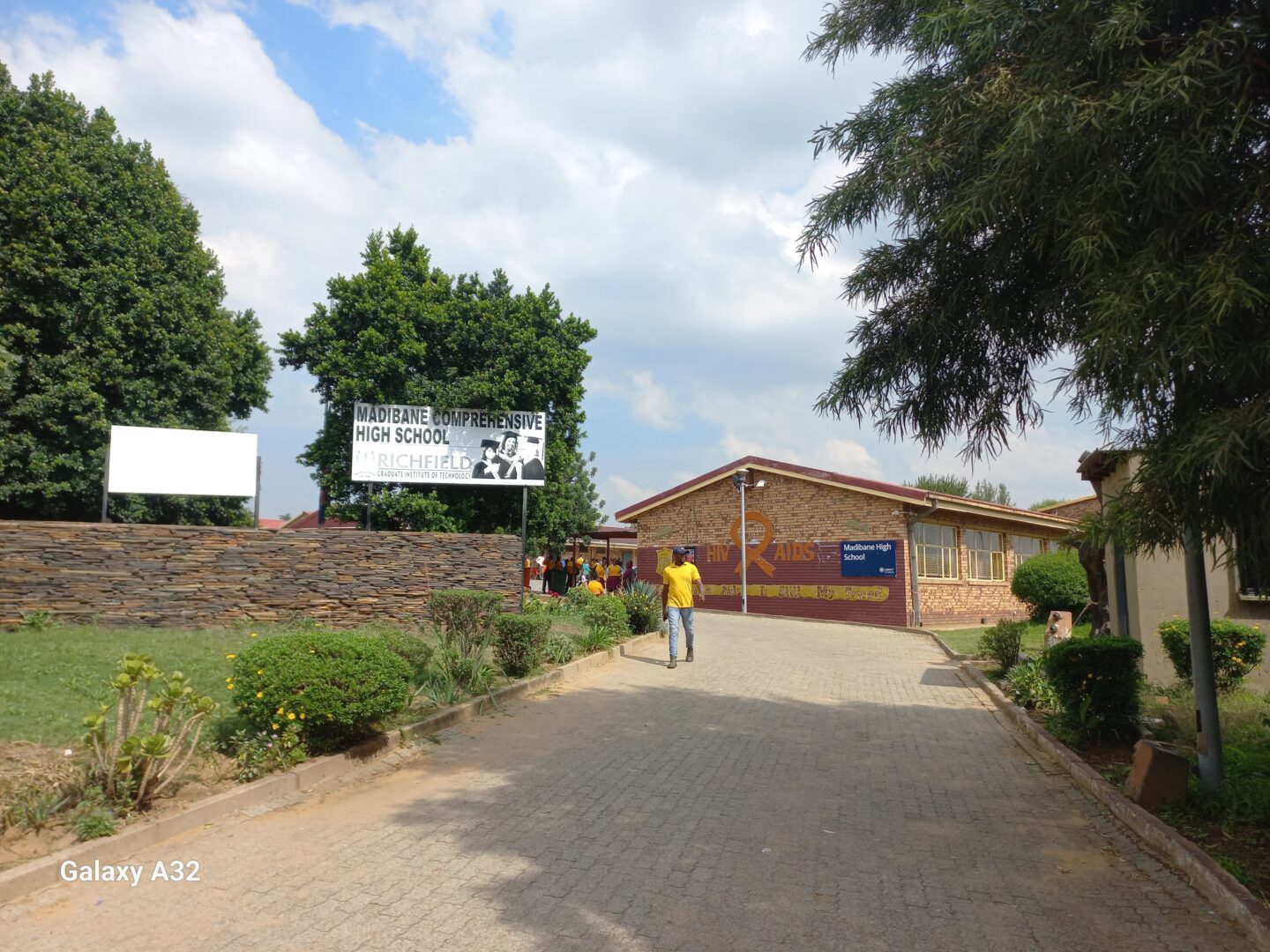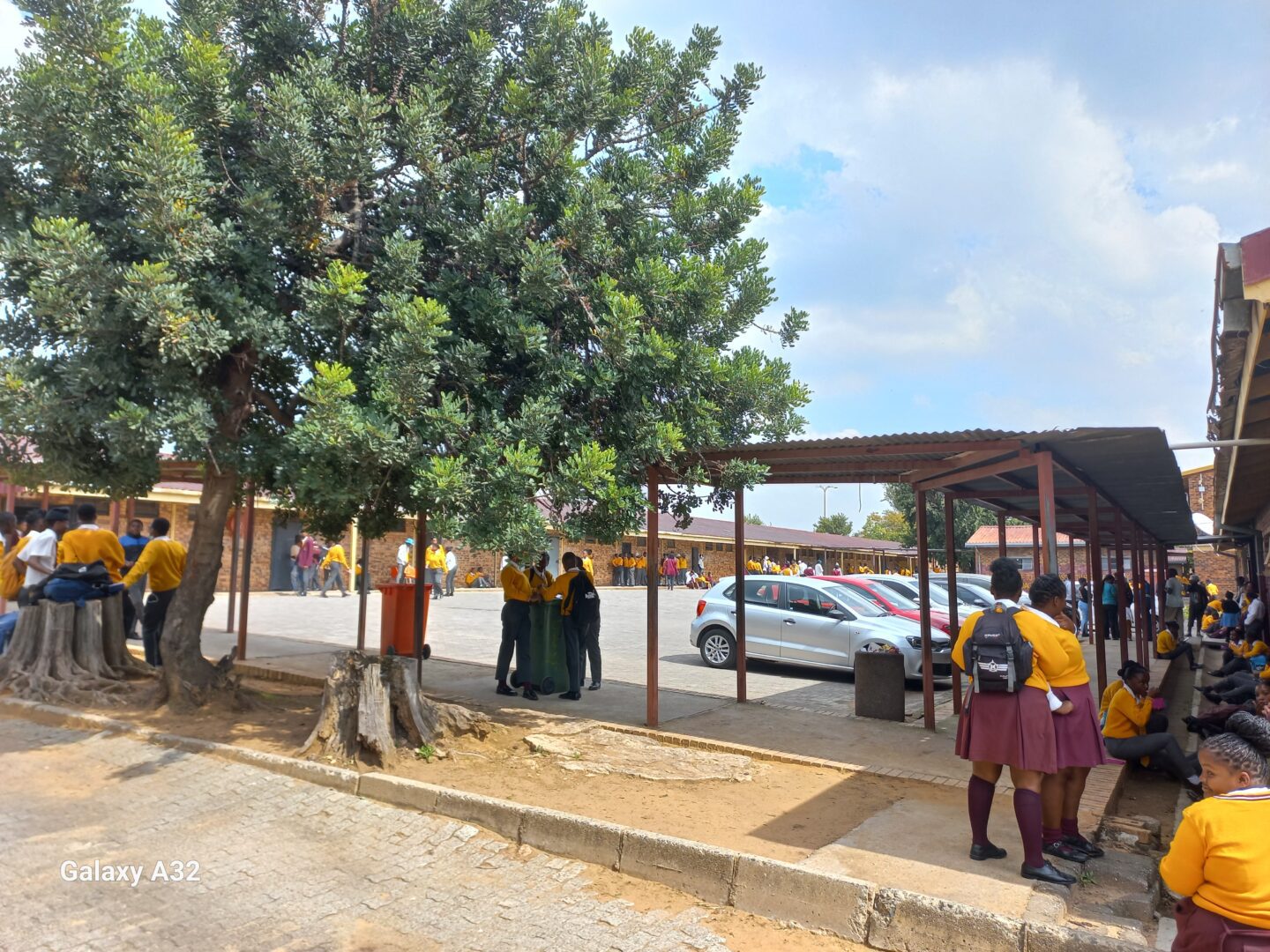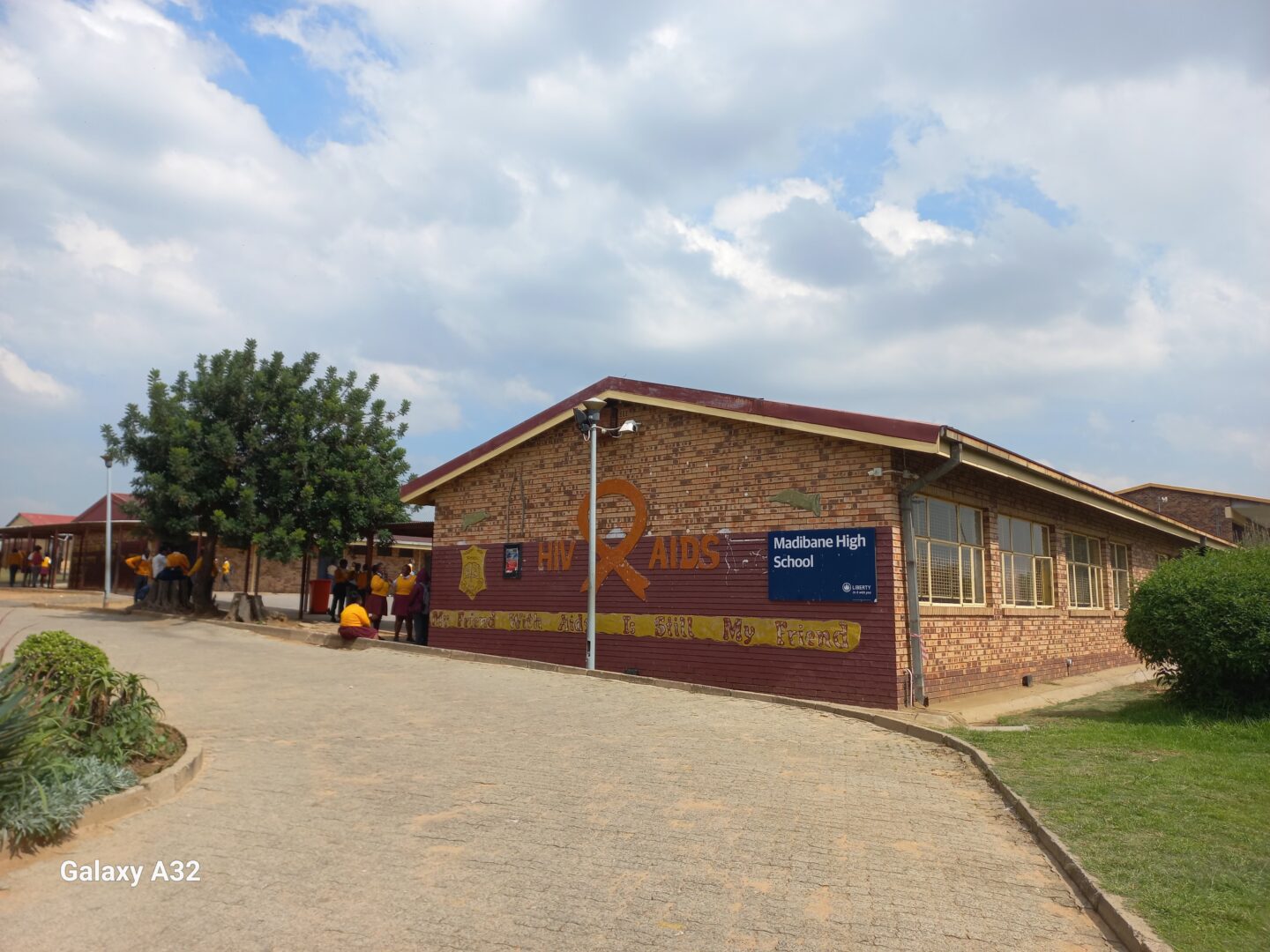
The architectural design of the school classrooms is divided into two parts:
At the back of the left block from the u-shaped classrooms there are sports facilities.
Now a public school located in Diepkloof, Soweto, Madibane High School was founded in Sophiatown in 1939 as the Johannesburg Bantu School, before the school moved to Diepkloof around 1960.
Anglican cleric and human rights activist Desmond Tutu began his schooling at Johannesburg Bantu School in 1945. It is said that Bishop Desmond Tutu met English anti-apartheid cleric Bishop Trevor Huddleston for the first time at Johannesburg Bantu School in Sophiatown, where Huddleston used to hold daily assembly devotions. The school allowed Tutu to sit for his Joint Matriculation Board examination in 1950 even after he missed a portion of his studies through illness. Bishop Tutu passed and followed in the footsteps of his father by going on to do a teacher’s diploma. After he completed his diploma in teaching, Tutu returned to the Johannesburg Bantu School as a teacher in 1955.
Previously known in Sophiatown as the Johannesburg Bantu School, Madibane High has survived the onslaught of such apartheid laws as the Group Area Act, evictions, relocation, and change of names. As one of the progressive schools serving the multi-cultural Sophiatown community, Johannesburg Bantu School felt the brunt of forced removals that destroyed Sophiatown during the period 1955-1961. In this chaotic period of evictions, the school experienced relocations and name changes until 1960, when it moved permanently to Diepkloof, Soweto.
The school was named Madibane High School in honour of Harry Percival Madibane, the first principal of Johannesburg Bantu School.
During its formative years, Madibane High School gained a reputation for producing top results and began to attract students from around the Rand area, now part of Gauteng province. The school has produced high achievers in such fields as sports, law, education, television, media, business and politics. For example, Mokgoatlheng is a judge at the Johannesburg high court. Mokgoatlheng is also a former soccer player who played for Orlando Pirates and Kaizer Chiefs respectively. Nomsa Nene and Peter Sephum, both went on to have highly commendable television careers. Abe Pitse was a producer of stories, such as Matswakabele, which played on the SABC Encore channel on DStv.
Madibane High School has extramural activities such as music and debating and sports like netball and soccer, in order to nurture talent amongst their learners. Fortunately, the school has supportive teachers who readily give their time even though they are not remunerated for extramural teaching, as it is a culture they believed in and saw as part of the fabric of the school. It achieves a matric pass rate of 90% and above. The school is in first place in Soweto for soccer and netball - pupils train at nearby fields and courts.
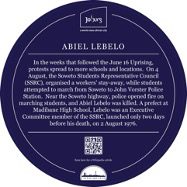
Madibane High School is amongst the ‘struggle schools” in Soweto where students participated prominently in the student uprising of 1976. The role of learners from Madibane High School was to close the Soweto highway to prevent workers from going to work. Student leader Abiel Lebelo played a prominent role along with others, including Joy Rabotapi, Trofomo Sono and Matthews Mabelane. They faced arrest in clashes with the apartheid police. Mabelane was killed at the infamous John Vorster Square police station, with police claiming that he fell to his death from the high-rise building.
A little distance from Madibane High, near the Diepkloof Mall, stands the Silverton Three Monument, created by acclaimed sculptor Pitika Ntuli. The monument was erected in 2013 in honour of the three Umkhonto we Sizwe members known as the Silverton Trio. The three – Humphrey Makhubo, Stephen Mafoko and Wilfred Madela – were former learners of Madibane High School. On 25 January 1980, the police intercepted the trio while they were on their way to sabotage a petrol depot in Waltoo, Pretoria. In the ensuing attempt to escape, they took refuge in a Volkskas Bank in Silverton, Pretoria, where they held about 25 civilians hostage. Over the years the learner roll of the school has been reducing drastically and the school is struggling to increase its roll; many educators have left and the school continues to strategize to increase its roll.
General Protection: Section 34 (1) Structures under the National Heritage Resources Act (NHRA), 1999.
A culmination of research gathered over many years, the Online Johannesburg Heritage Register is being launched on Nelson Mandela Day 18 July 2025.
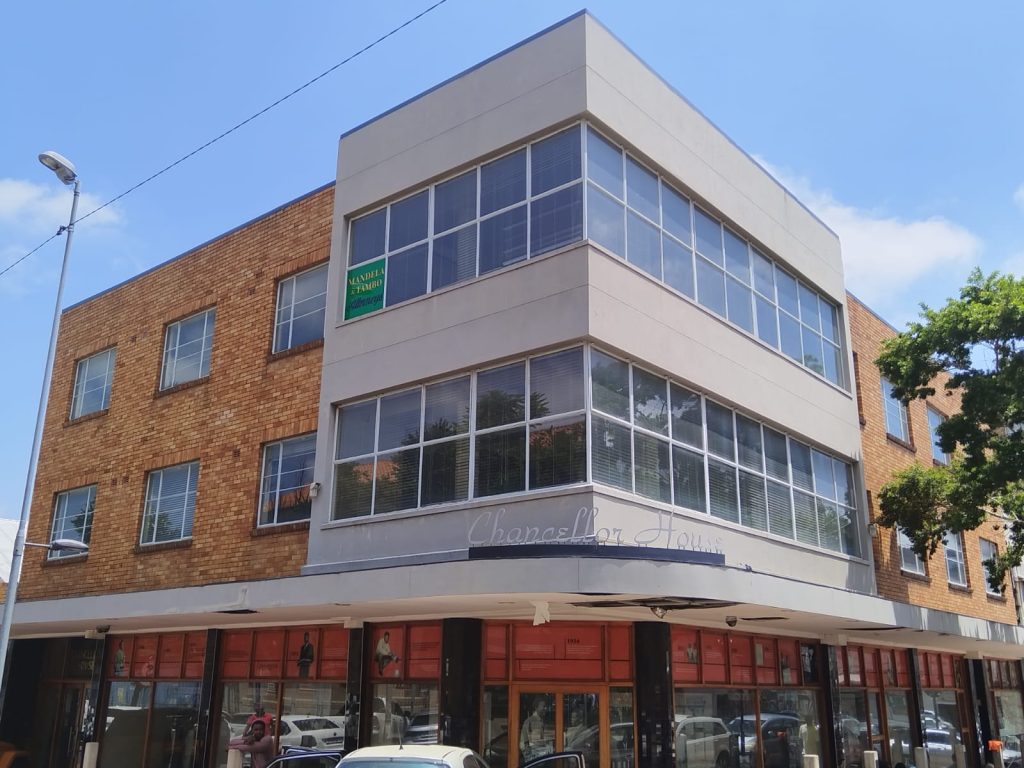
Among the many heritage sites featured is Chancellor House, the downtown offices of Mandela and Tambo Attorneys in the 1950s. After having been vacant and shuttered for more than a decade, this iconic building is being revived and brought to life once again as offices for the Community Development Department, which oversees the City’s Arts, Culture & Heritage Services.