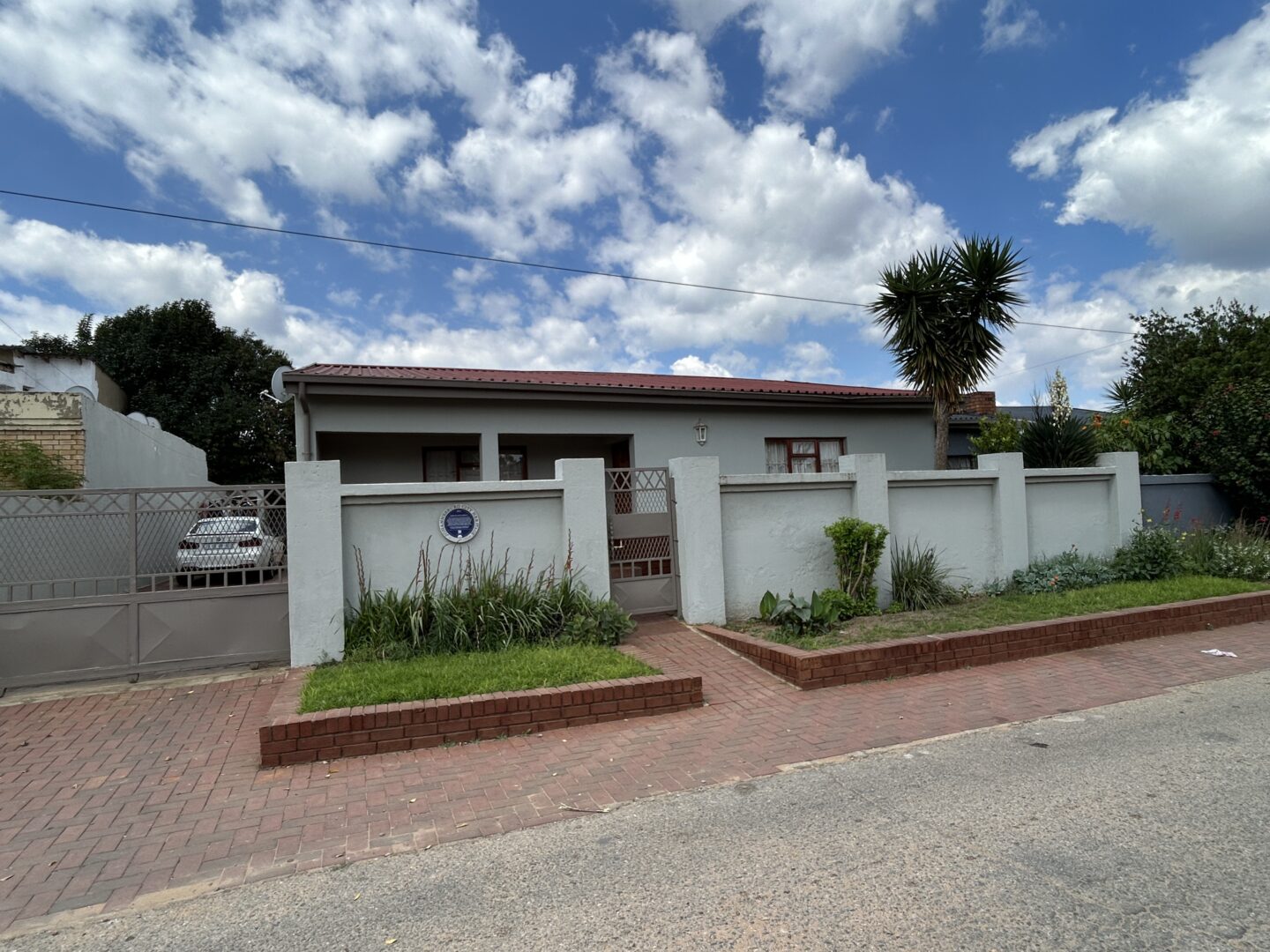
The Mbulu house has been modernised and enlarged, with a modern kitchen, with open-plan dining room and lounge, and rented rooms added at the back of the property
Letta Mbulu was born in Imzinto, Kwazulu-Natal, and was brought to the house at Molahloe Street in Orlando East when just ten days old. This became her childhood home, to which she would return after a long and successful musical career in exile.
From a young age she was singing in the neighbourhood, performing for passers by in the street outside her home. Soon, she was singing at local halls in Orlando East. At age 13, her singing caught the attention of James Mabena, who invited Letta to join his singing group of four boys. They rehearsed at the Donaldson Hall and became the Swanky Spots, comprising the four boys together with Letta.
The young Letta won First Prize at a talent competition at the Donaldson Hall, and later performed at the Johannesburg City Hall (more specifically at the Selbourne Hall).
During her teens, she toured South Africa and then England playing a small part as a schoolgirl in the musical King Kong, She returned to South Africa at the end of the tour, and while staying once again in Orlando East, she continued to perform in productions associated with Dorkay House, and the Union of SA Artists.
Letta left for the United States in 1964 to join her husband and fellow-musician Caifus Semenya , whom she had met while touring with King Kong and married in a traditional ceremony at the age of 18.
In the US she was welcomed into the South African exile community which included Miriam Makeba, Hugh Masekela and Jonas Gwangwa – all alumni of King Kong.
While in the US, she was invited to tour with jazz legend Cannonball Adderly and soon thereafter joined forces with Harry Belafonte. Over a period of 13 years, Letta did several world tours with Harry Belafonte, who played a prominent role in the civil rights movement, and in this way added her contribution to the freedom struggles of the time.
Letta Mbulu appeared in the blockbuster television series Roots for which she received an Emmy award. Her other screen appearances include A warm December with Sidney Pottier and the Oscar-winning film The Colour Purple.
She is a founding member of the South African Artists United (SAAU) an organisation which was established in 1986. This organisation launched the musical Buwa that carried a political and historical theme with Letta in the leading role.
Letta Mbulu returned to South Africa after 26 years in exile. Once back in the country, in 1991 Letta and Caiphus Semenya performed in the Heal Yourself Concert, sharing a stage with other musicians on home soil for the first time in many years. In 1992 she released a new album entitled Not Yet Uhuru, arranged and produced by her husband Caiphus. The title song Not Yet Uhuru was conceived at Letta‘s Orlando home after having spent some time in Alexandra, where she was touched to see the continuing poverty afflicting Africans .
Letta Mbulu has an impressive discography of over 20 albums, and in 2001 she was honoured with a South African Music award (SAMA). In 2009 Letta Mbulu was awarded the Order of Ikhamanga in Silver by President Jacob Zuma.
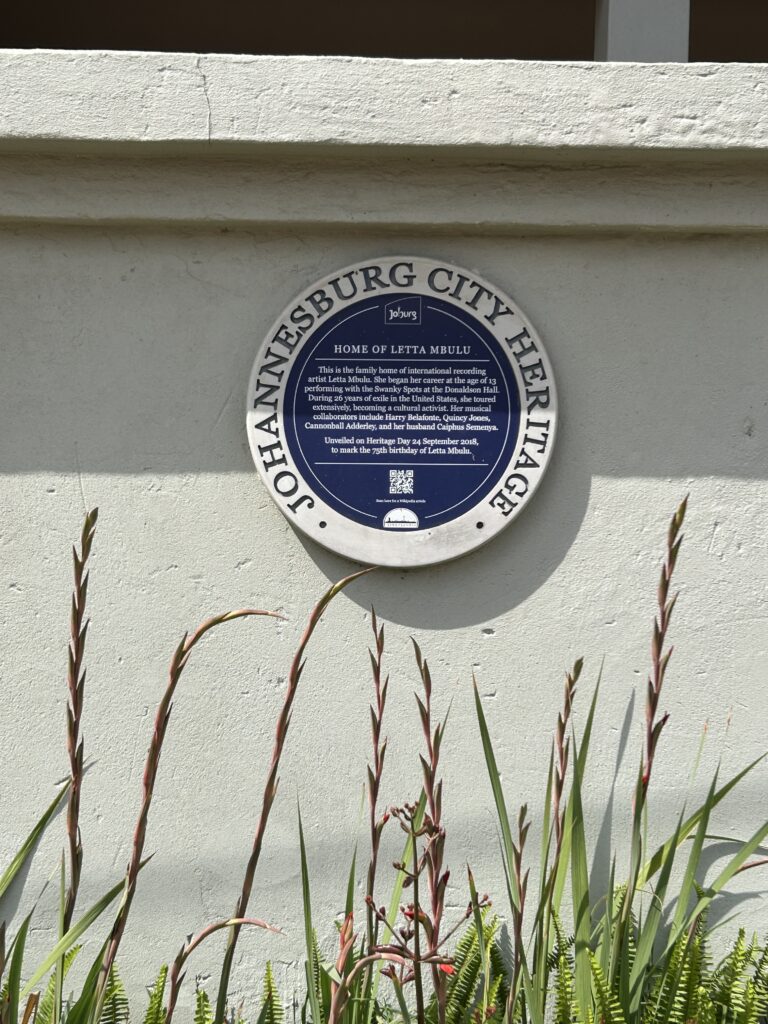
General Protection: Section 34 (1) Structures under the National Heritage Resources Act, 1999.
A culmination of research gathered over many years, the Online Johannesburg Heritage Register is being launched on Nelson Mandela Day 18 July 2025.
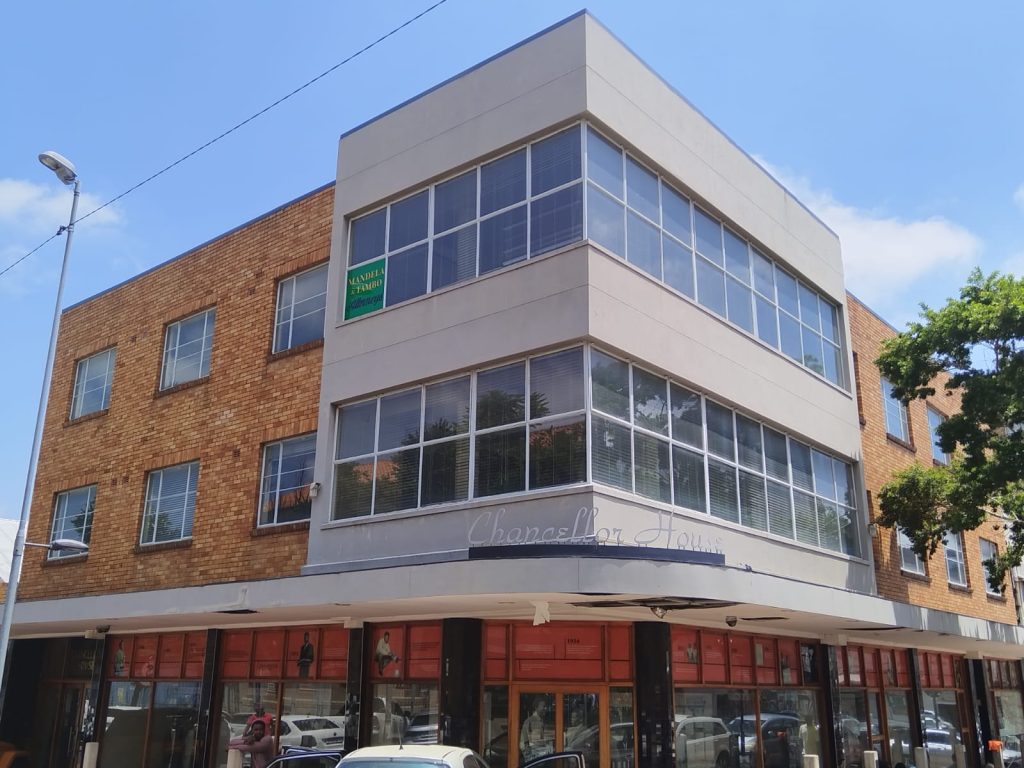
Among the many heritage sites featured is Chancellor House, the downtown offices of Mandela and Tambo Attorneys in the 1950s. After having been vacant and shuttered for more than a decade, this iconic building is being revived and brought to life once again as offices for the Community Development Department, which oversees the City’s Arts, Culture & Heritage Services.