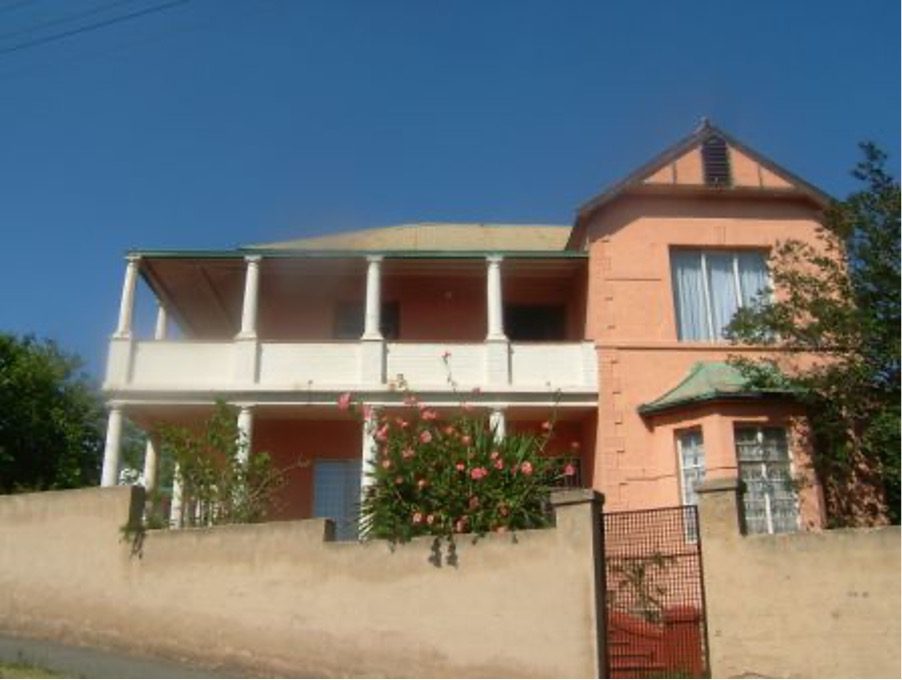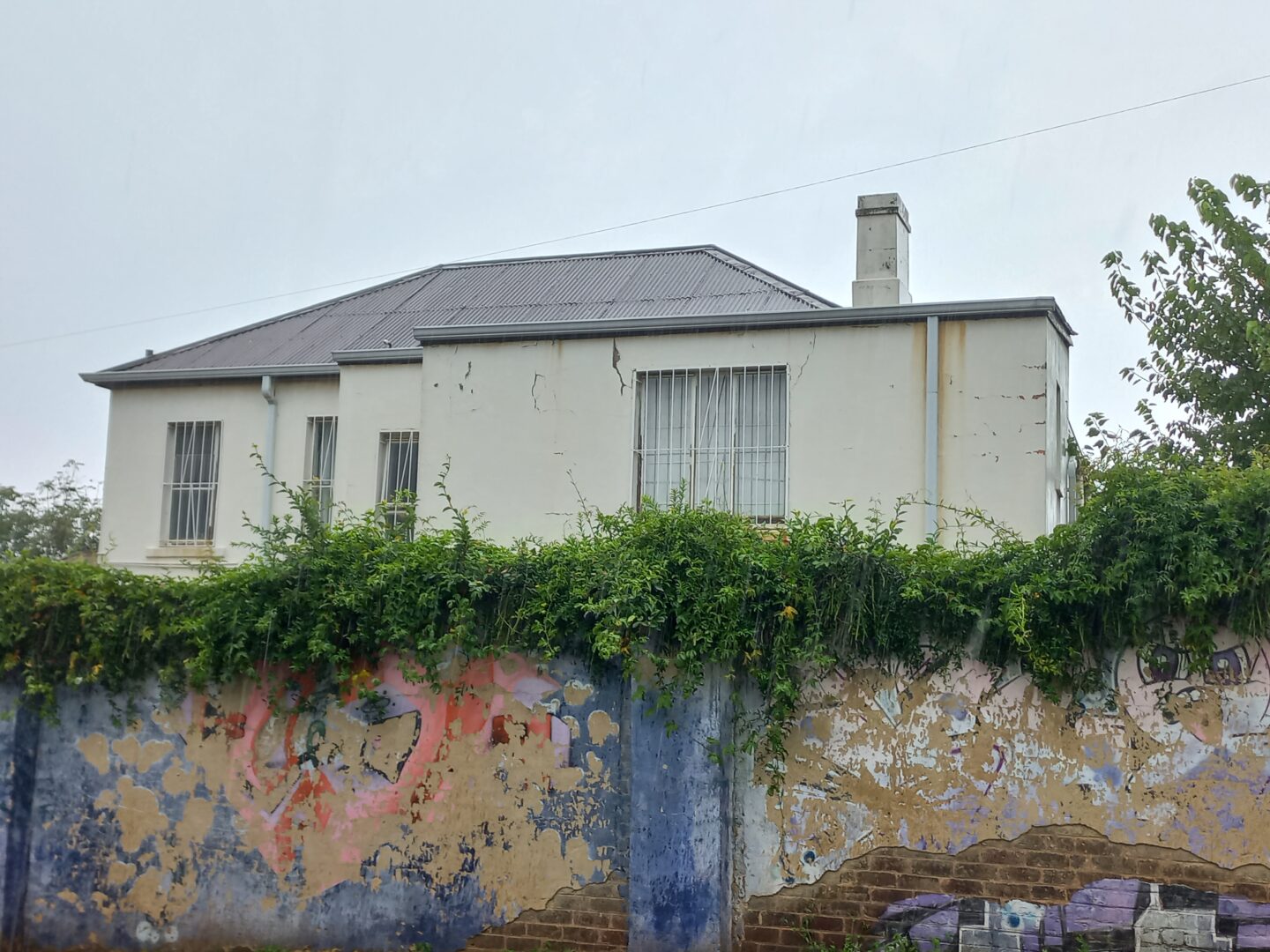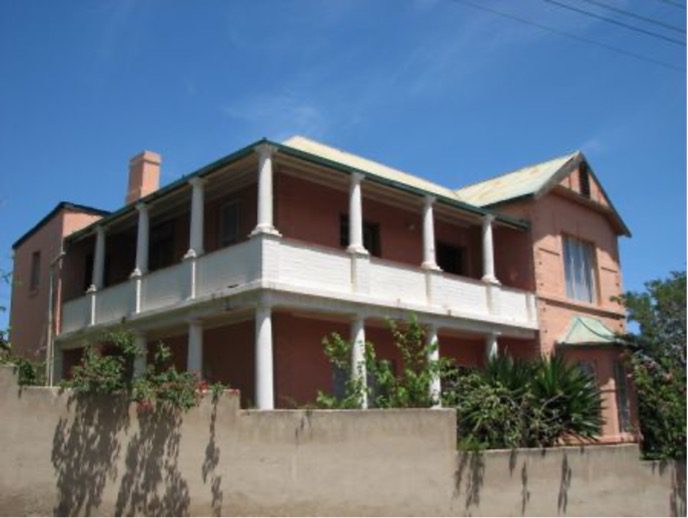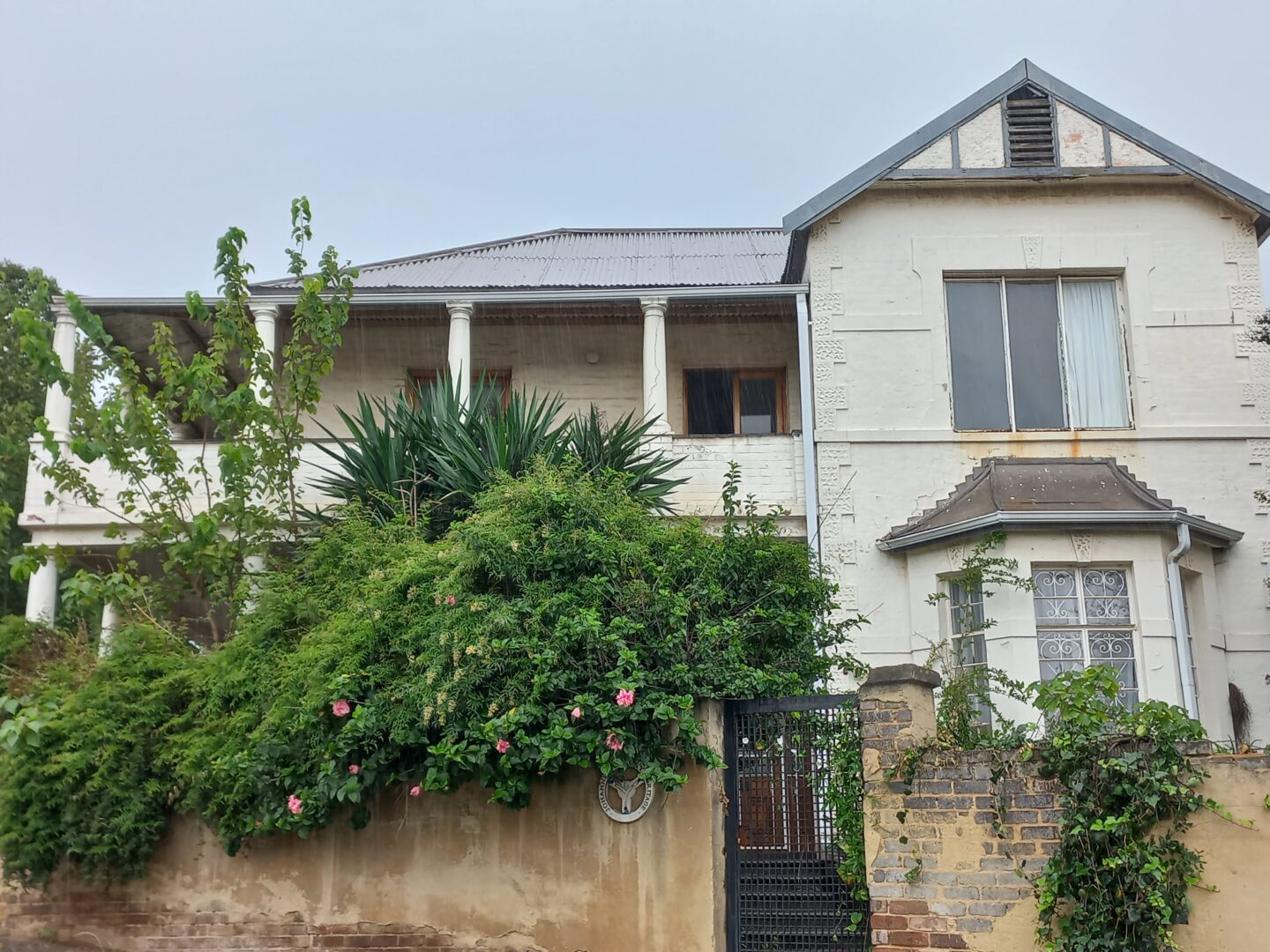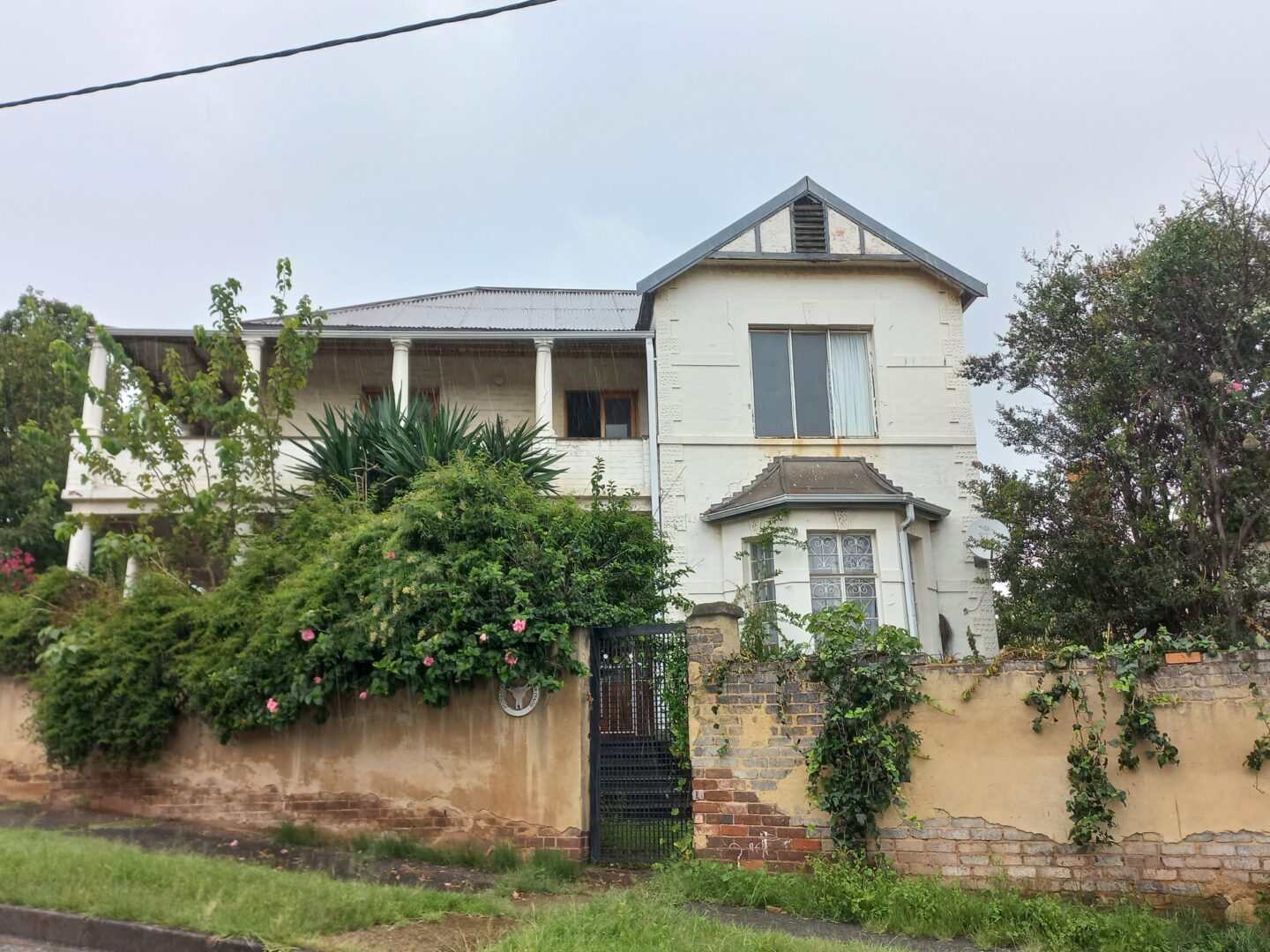
Large square double-storey Victorian house facing east with upstairs balcony. Built on a triangular stand.
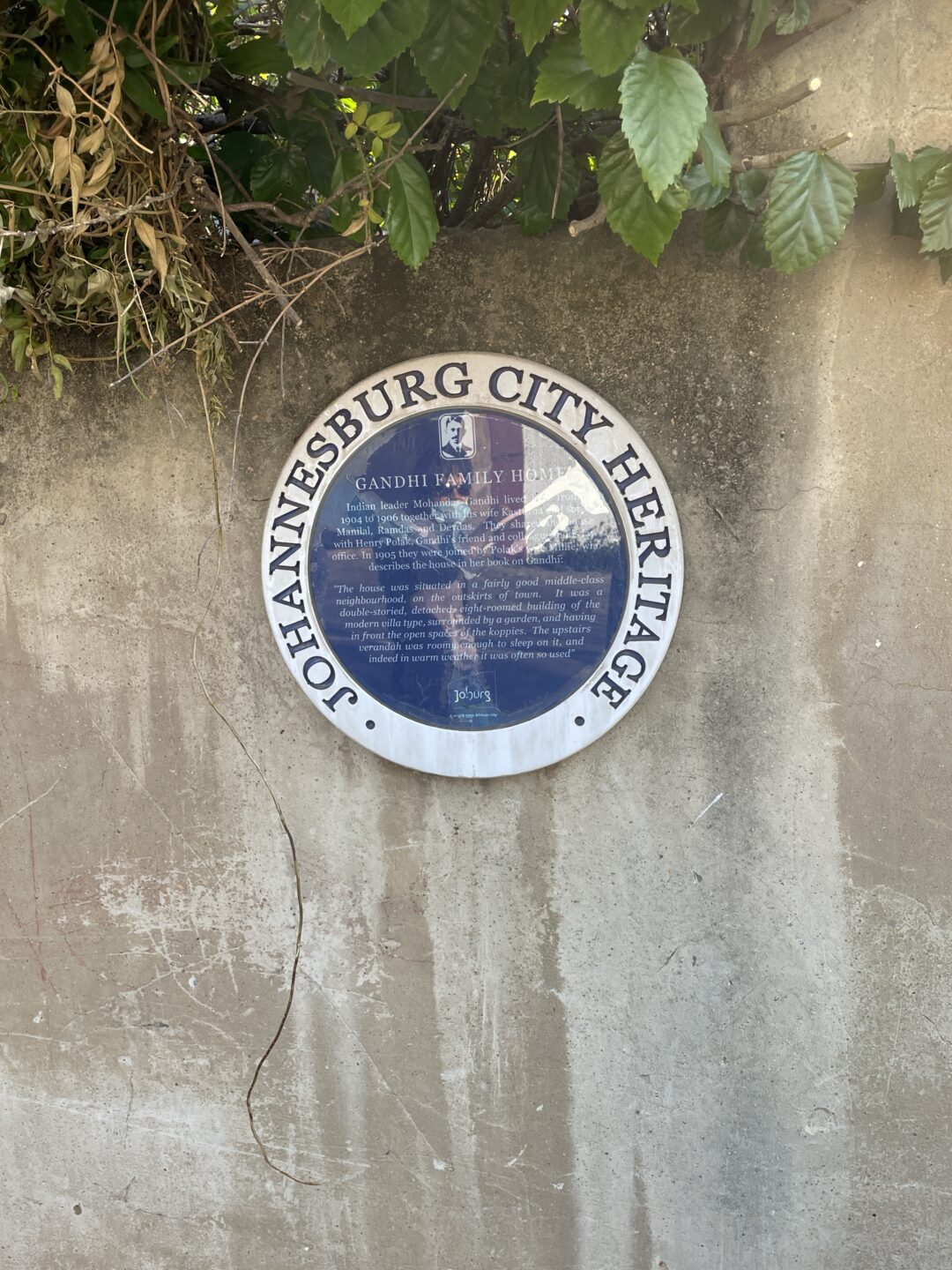
The house at 11 Albemarle Street was the family home of the Indian leader M K Gandhi 1904 to 1906, and the first house occupied by him in Johannesburg. Gandhi moved to Troyeville with his family in late 1904, after they joined him in Johannesburg. Before coming to Troyeville, Gandhi’s first home in Johannesburg was a back room behind his law office in Rissik Street where he stayed while the family were in India.
Gandi occupied the Troyeville house from 1904 to 1906, together with his wife Kasturba and sons, Manilal, Ramdas and Devdas. The house was located in a white suburb, at what was then the eastern limit of Johannesburg. Rental was arranged by Charles Kew of Thurston and Kew Estate Agents. Kew wrote to Gandhi in 1947, recalling how Troyeville residents had tried to keep Gandhi out of their suburb: Displaying “considerable indignation”, writes Kew, “they tried before you took possession to offset the tendency but the owner of the house supported me, and in a few weeks the agitation died down”.
Gandhi’s family shared the house with Henry Polak, Gandhi’s friend, fellow activist and colleague in his law office. In 1905 they were joined by Millie Graham, Polak’s bride-to-be. Arriving from England on 30 December, she married Polak the same day, taking their vows in the Troyeville house with Gandhi as best man.
In her book Mr Gandhi: The Man, Millie Polak describes Gandhi’s house:
“The house was situated in a fairly good middle class neighbourhood, on the outskirts of town. It was a double-storied, detached eight roomed building of the modern villa type, surrounded by a garden, and having in front the open spaces of the kopjies. The upstairs verandah was roomy enough to sleep on it, if one wished to do so, and, indeed, in warm weather it was often so used”.
The Gandhis left Troyeville around May 1906, as a result of the Zulu Resistance in Natal (the Bambatha Rebellion). Gandhi left to raise a stretcher –bearer corps for the British forces, while moving his family to his settlement at Phoenix north of Durban.
Gandhi’s son Manilal visited 11 Albemarle Street in 1952, confirming it as his childhood home. Born in 1952, Manilal was twelve years old in 1904 and fourteen years old in 1906, so he was able to remember the house well. Accompanied by the African-American clergyman Homer Jack, Manilal, then sixty years old, walked through the house room by room, recalling the people and events from his time there. Their tour is recounted in Homer Jack’s article In the Footsteps of Mahatma Gandhi, published around 1953. The article mentions that the Gandhi house “ turned out to be the parsonage of a Methodist of a Methodist missionary, and so we were well received.” Plans for additions to the house confirm that 11 Albermarle Street was owned by the Wesleyan Methodist Missionary Society.
Another house on Albemarle Street was for many years mistakenly identified as the one lived in by Gandhi. Like Number 11, the supposed Gandhi house at Number 19 is a double-storey balconied structure. The architecturally splendid Art Nouveau house at Number 19 was declared a national monument in 1994, partly because of its supposed value as a Gandhi house. Claims that 19 Albemarle Street was occupied by Gandhi have however since been conclusively disproved. Designed by Swiss Architect Eugene Metzler, this house was built too late for Gandhi to move in. Metzler submitted plans for his house in May 2005, and the foundations were only inspected on 15 March 1906. After the house was completed later that year, there would hardly have been time for Gandhi to move in.
The house at Number 11 is of earlier construction, and would have been practically brand new when Gandhi began renting it around October 1904. Plans were submitted by Mr T J Ellis on 7 July 1903, and were approved on 10 July.
NHRA: Declared as a Provincial Heritage Site in 2011.
A culmination of research gathered over many years, the Online Johannesburg Heritage Register is being launched on Nelson Mandela Day 18 July 2025.
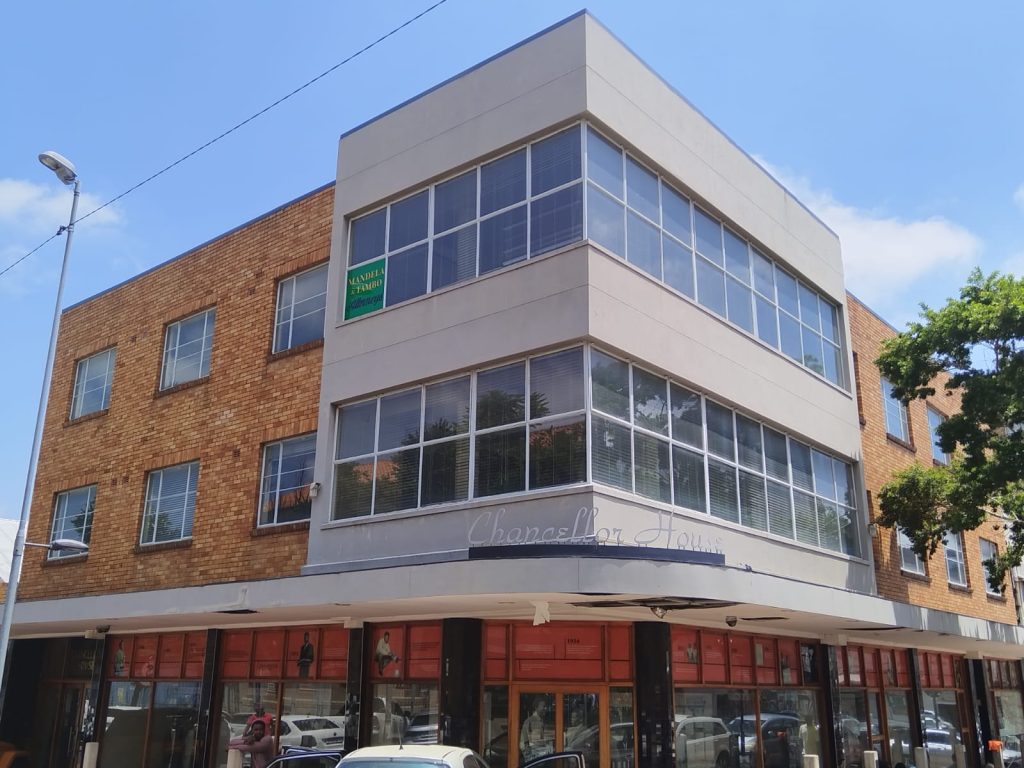
Among the many heritage sites featured is Chancellor House, the downtown offices of Mandela and Tambo Attorneys in the 1950s. After having been vacant and shuttered for more than a decade, this iconic building is being revived and brought to life once again as offices for the Community Development Department, which oversees the City’s Arts, Culture & Heritage Services.