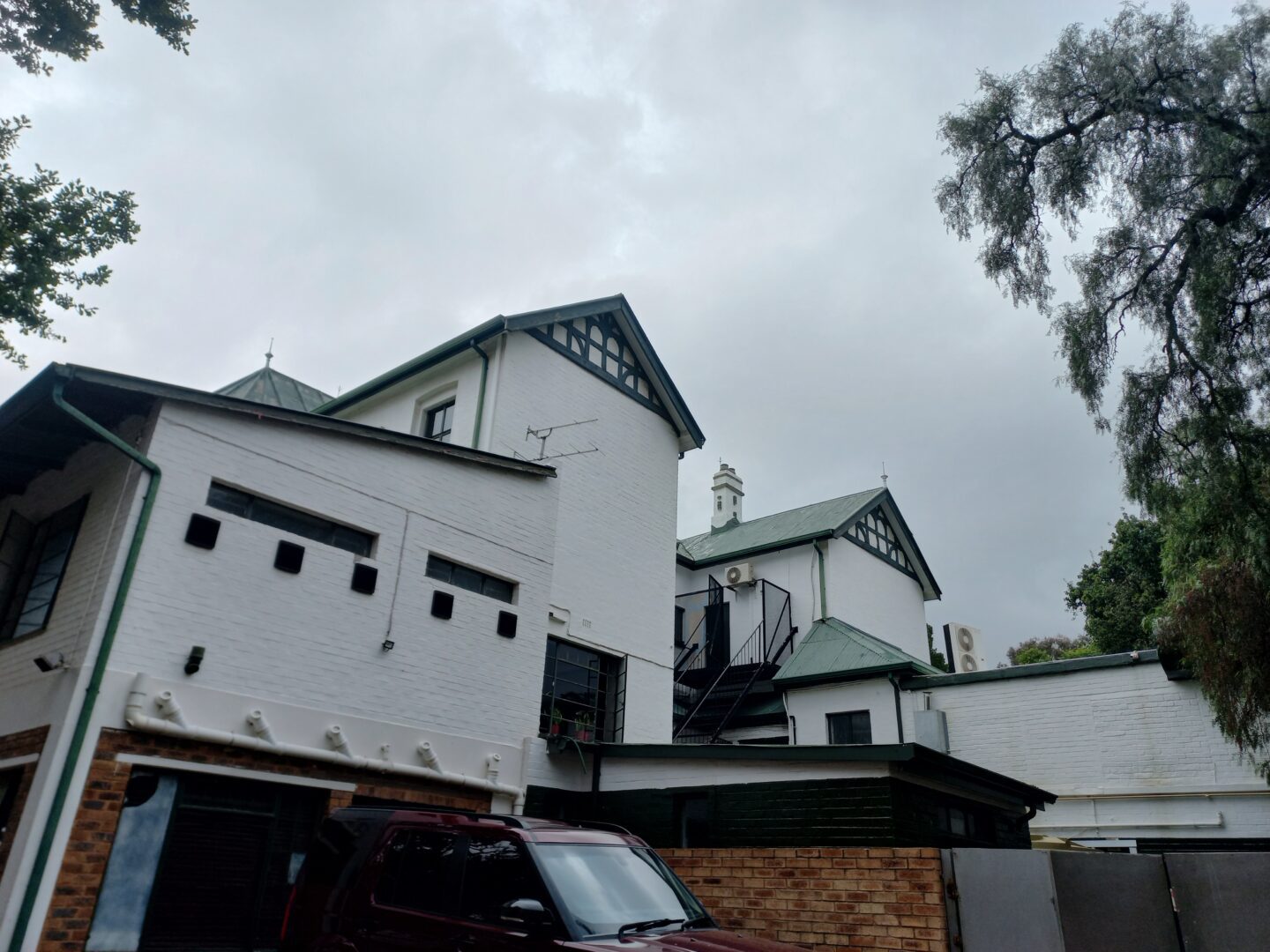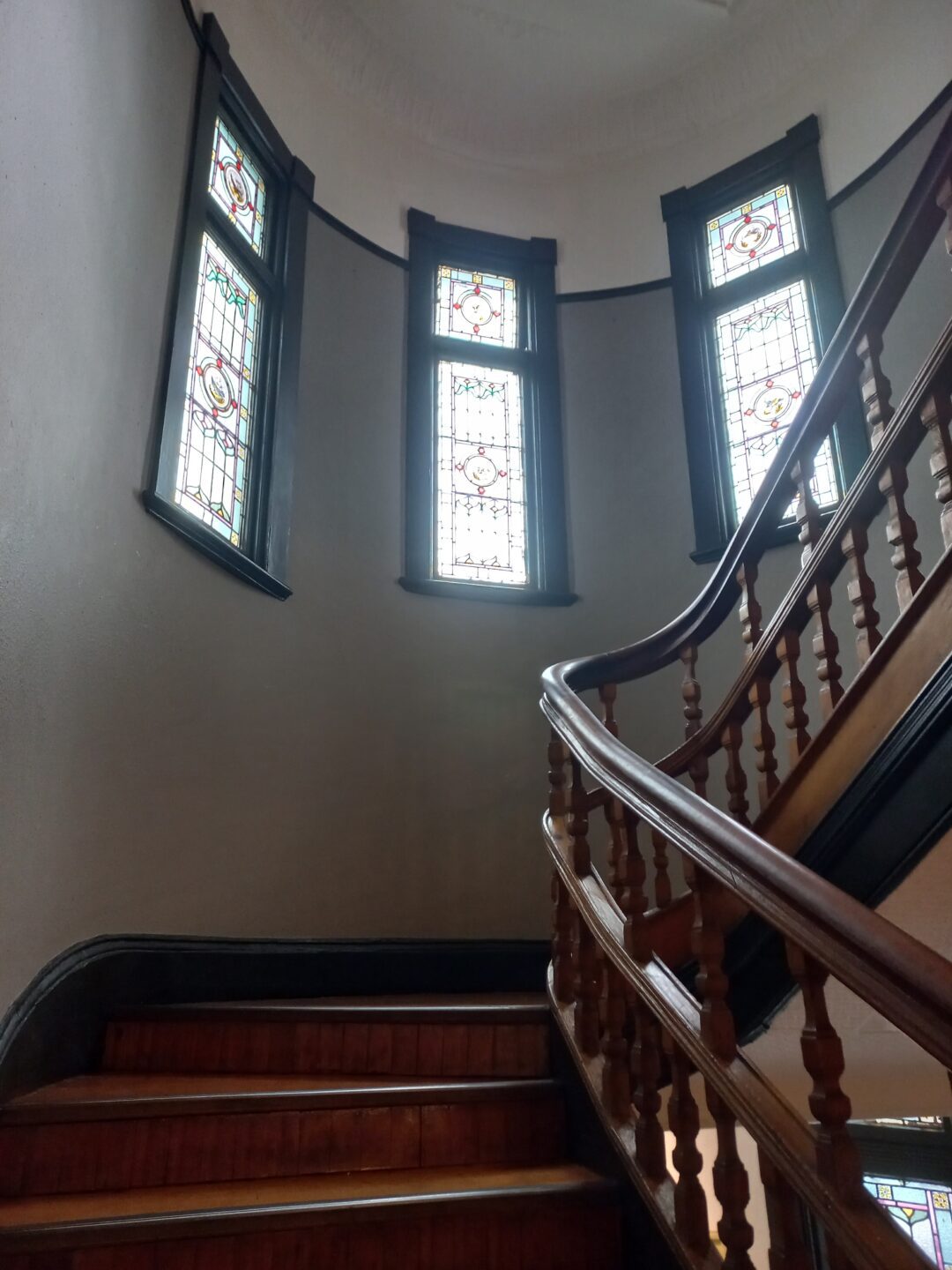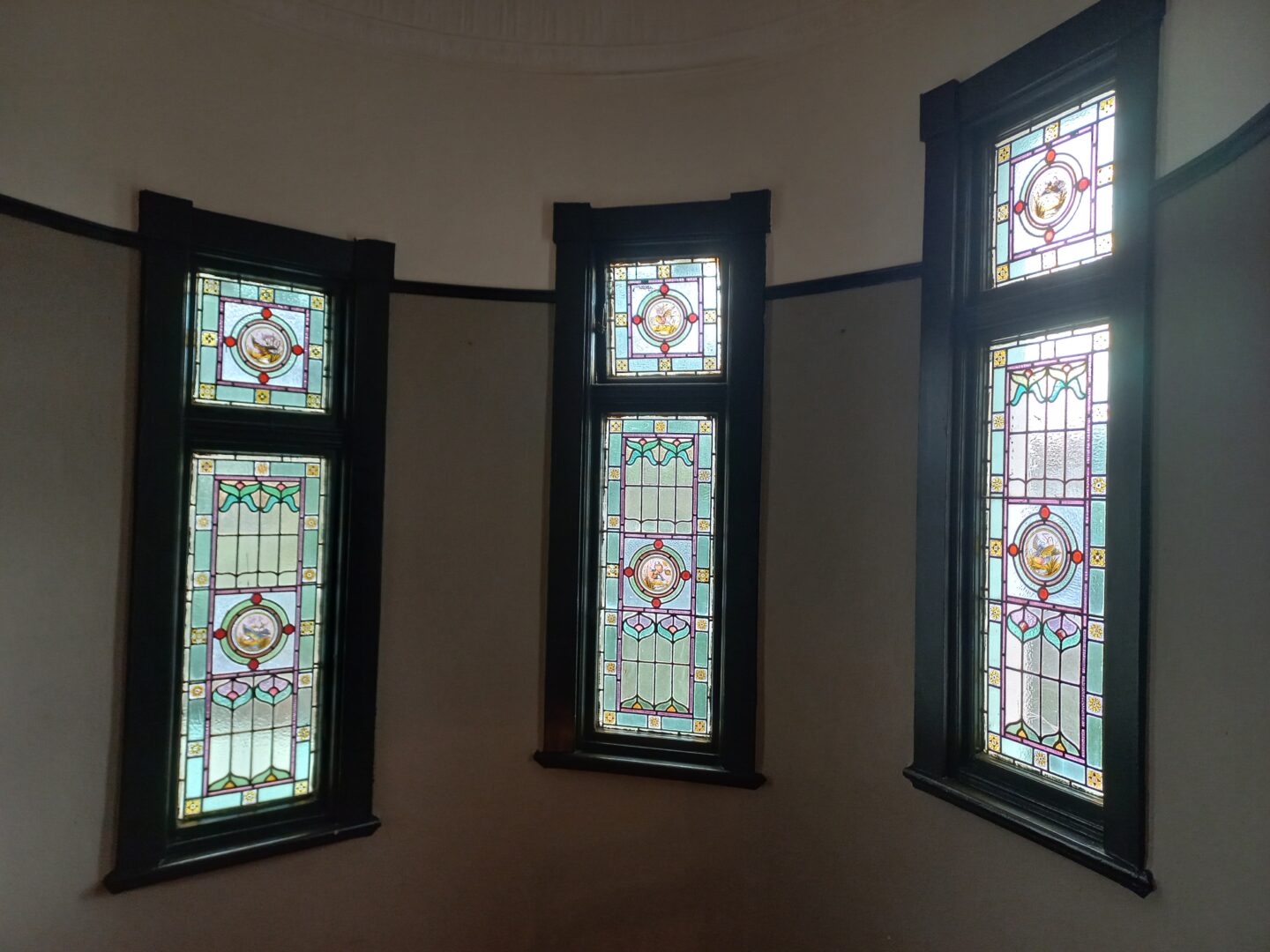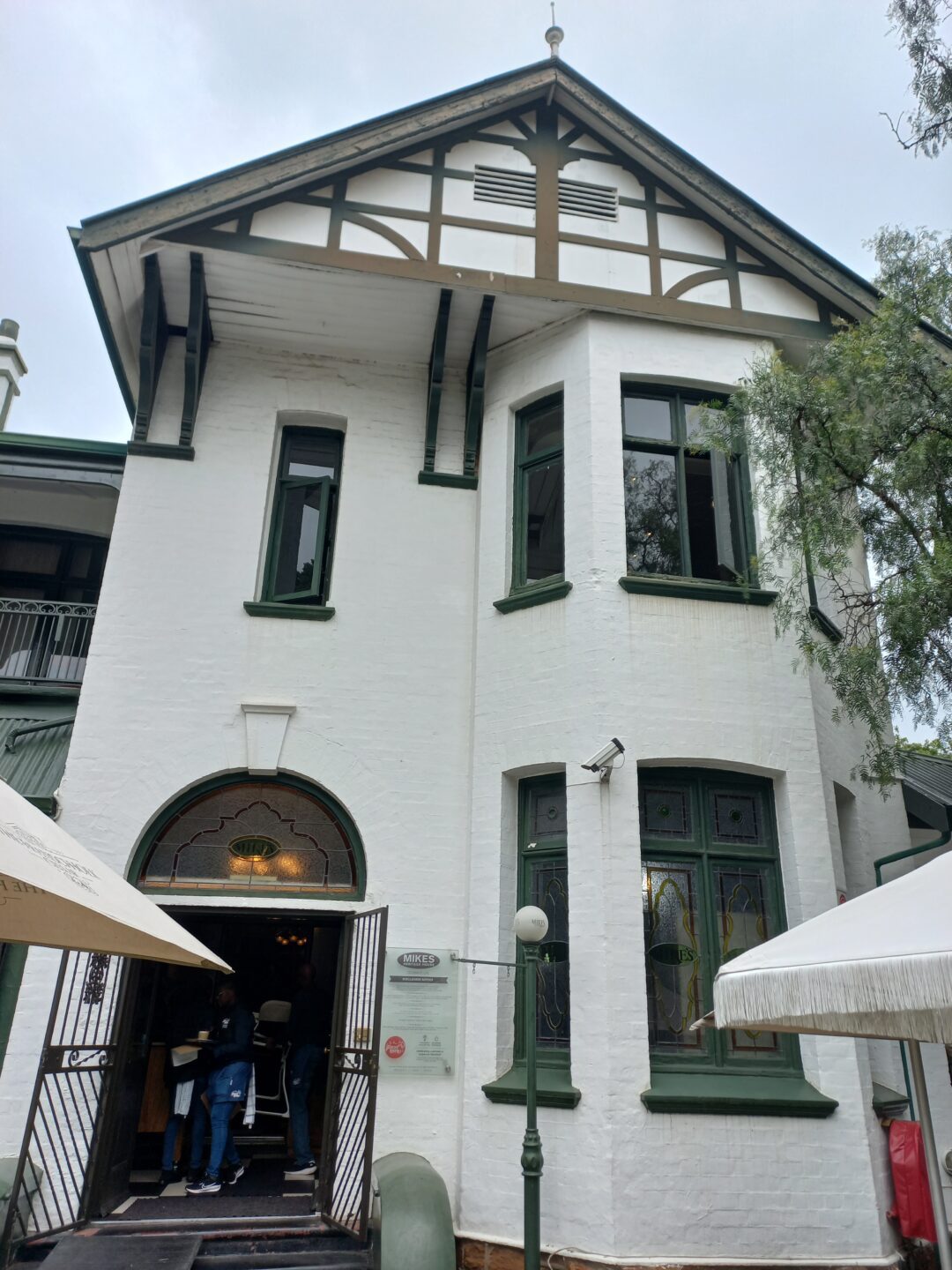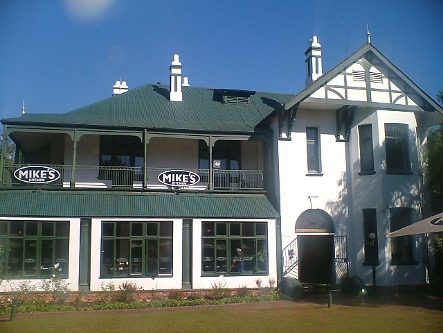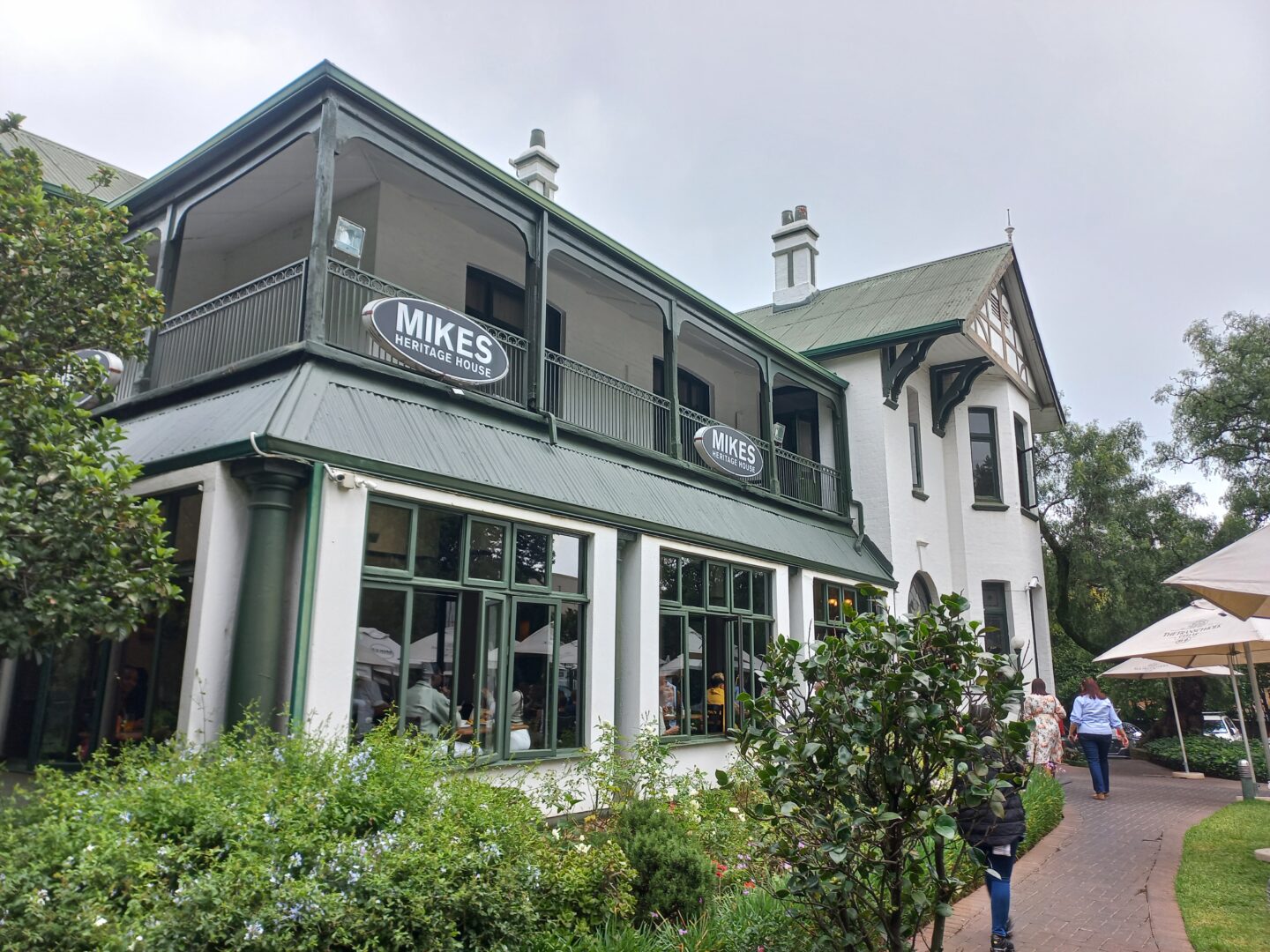
The House was designed by the architect JB Nicholson as a family home for James Goch and his wife Mary Hannah and children in 1904/5. It had 12 rooms, a coach-house and stables and a long driveway lined with oak trees which gave it the name Eikenlaan. It also had a tennis court on the west side of the property, behind the old house.
It is a double-storey house in brick on a hammer-dressed koppie stone plinth with a corrugated iron roof, wide verandah on two sides and an asymmetrical half-timbered gable above a bay window. The large overhang of the gable is supported on massive decorative timber brackets.
The finial on the standing seam lead roof to the stairwell is intact as is the roof itself – a rare survivor of this roofing technique.
Little is known about the architect.
NICHOLSON, John B (fl. 1897 - 1915/1916), was an architect who practised in Johannesburg from about 1897 until approximately 1915/1916. Only one other building has so far been ascribed to him: House A Jeffreys, Glenacre in Parktown, Johannesburg in 1902. TIA.
(Aron 1972; Longland's Jhb & SAR dir 1897; RIBA Kal 1915/16)
SAHRA Architectural Directory
Formal Protection status under the National Heritage Resources Act, 1999. Gauteng Provincial Gazette Extraordinary, vol 17, no 150 of 13 July 2011. Notice 1866 of 2011.
In 1989 it was provisionally declared a National Monument in response to a petition from the public.
The City of Johannesburg had acquired it for a park and ride site, imposed a large road widening servitude on the property and rezoned it to Business 4 with FAR of 0, 9 and 30% coverage.
That protection lapsed after five years and the structures are currently protected only by s34(1) of the National Heritage Resources Act, the 60-year clause.
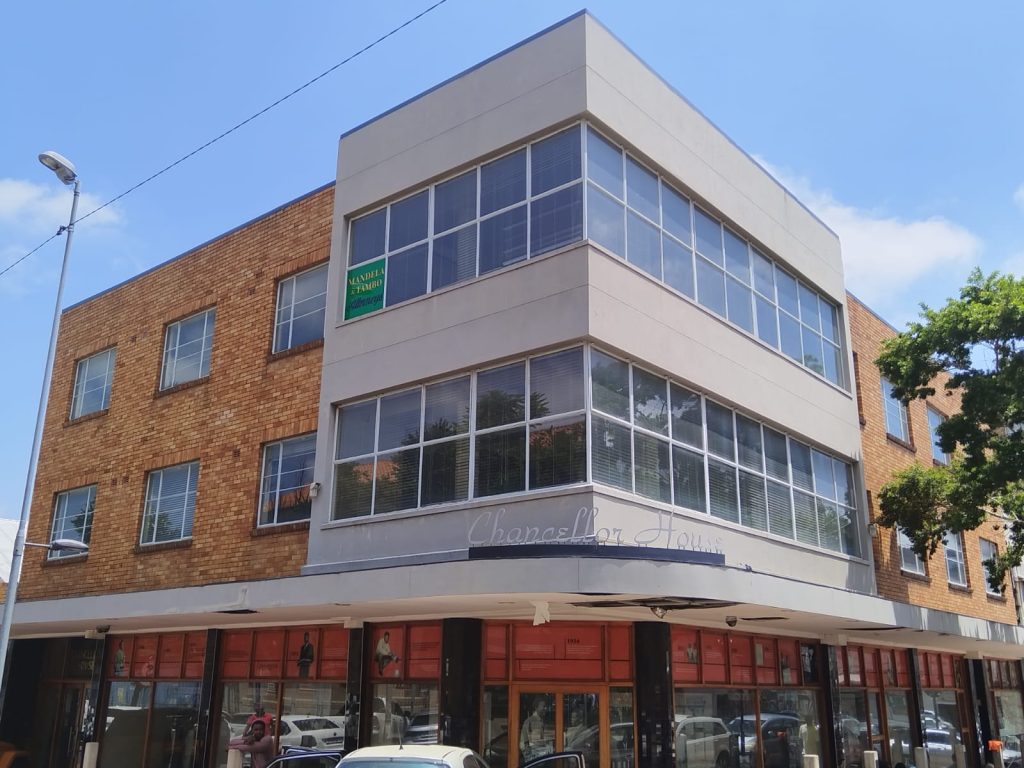
A culmination of research gathered over many years, the Online Johannesburg Heritage Register is being launched on Nelson Mandela Day 18 July 2025.
Among the many heritage sites featured is Chancellor House, the downtown offices of Mandela and Tambo Attorneys in the 1950s. After having been vacant and shuttered for more than a decade, this iconic building is being revived and brought to life once again as offices for the Community Development Department, which oversees the City’s Arts, Culture & Heritage Services.