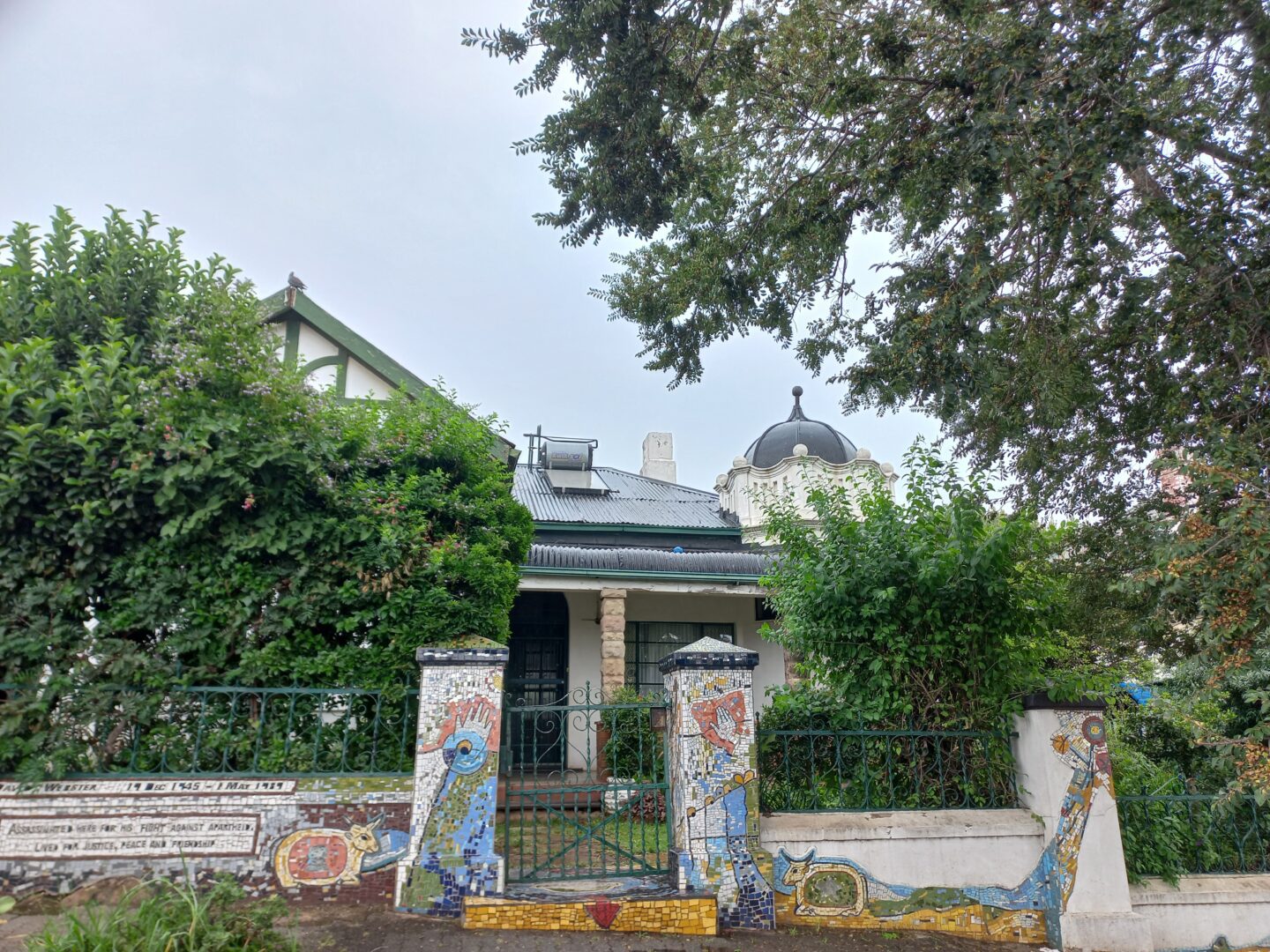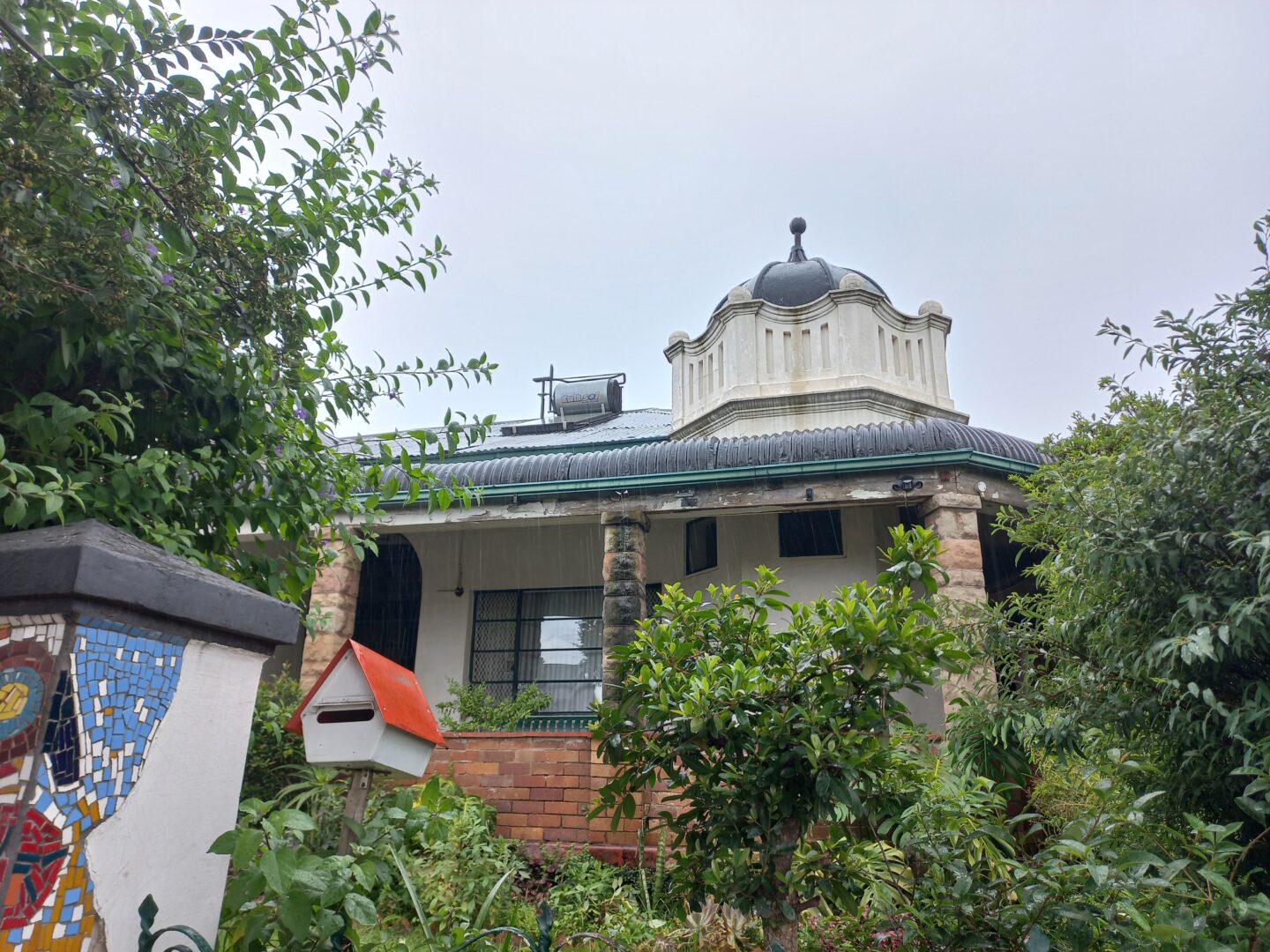
A modest free-standing brick house built circa 1904 on a property of 495 square metres. The main house has three bedrooms, a lounge and an open plan kitchen/ living area. The roof is corrugated iron.
The house has stone foundations with a verandah in the front and along one side with the sitting room opening onto the verandah. In one corner is a turret with a hexagonal base, which was opened up internally in about 2000. Within the turret is a bathroom with extraordinary mosaic tiling.
The original Oregon pine floors run through most of the house. There are high pressed ceilings on top of which are original wooden ceilings in some places. There is one remaining fireplace in the sitting room, which has a working anthracite heater installed.
The garden has been developed, with a mature walnut tree in the back garden. A small cottage exists in the back yard.
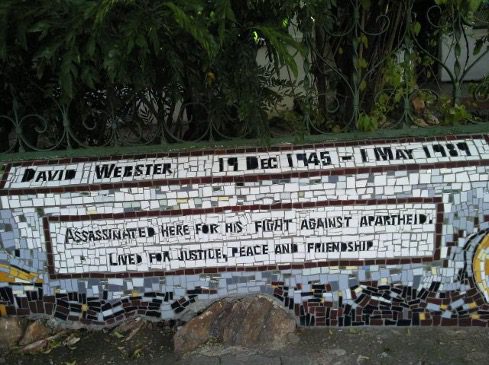
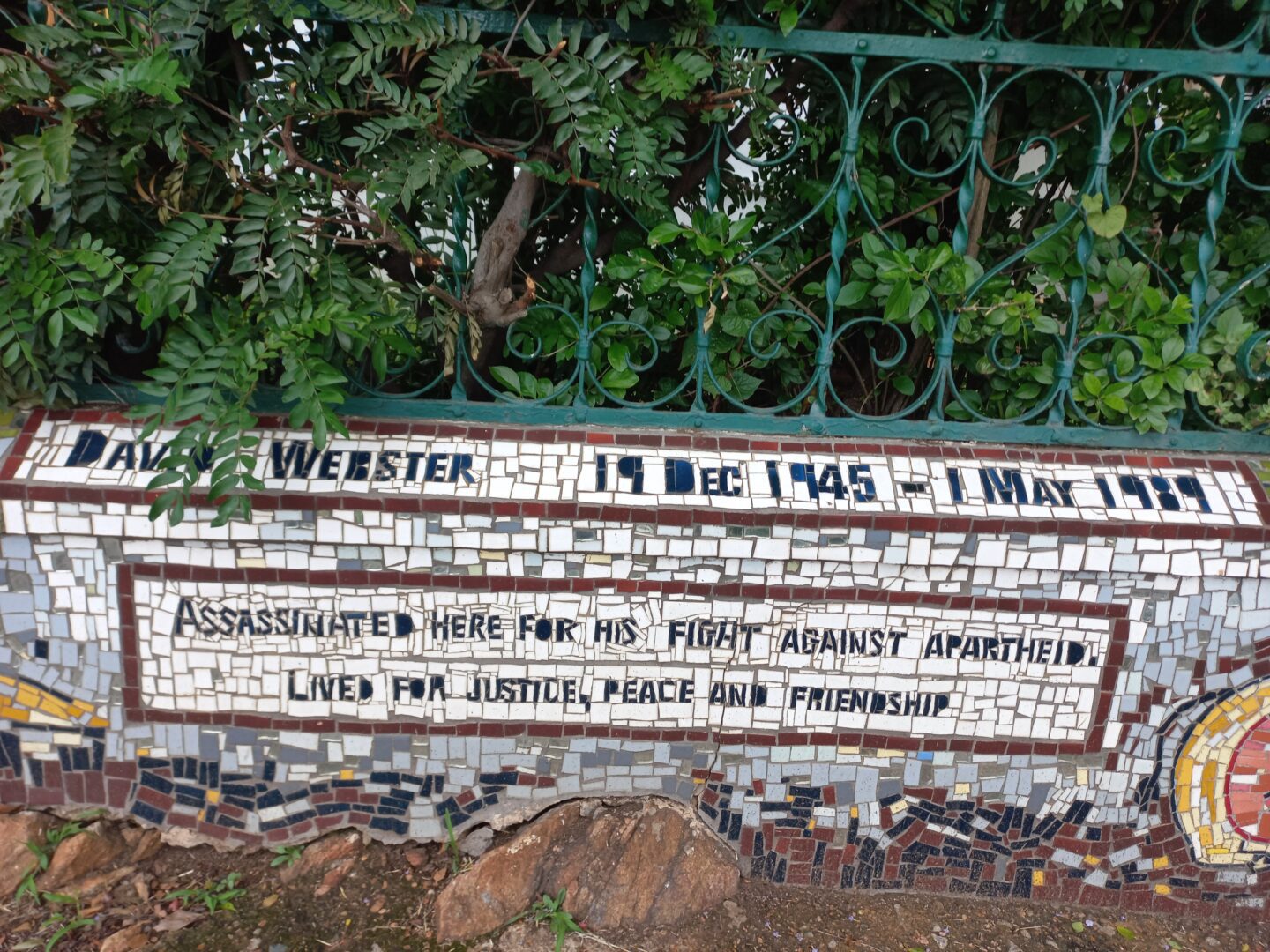
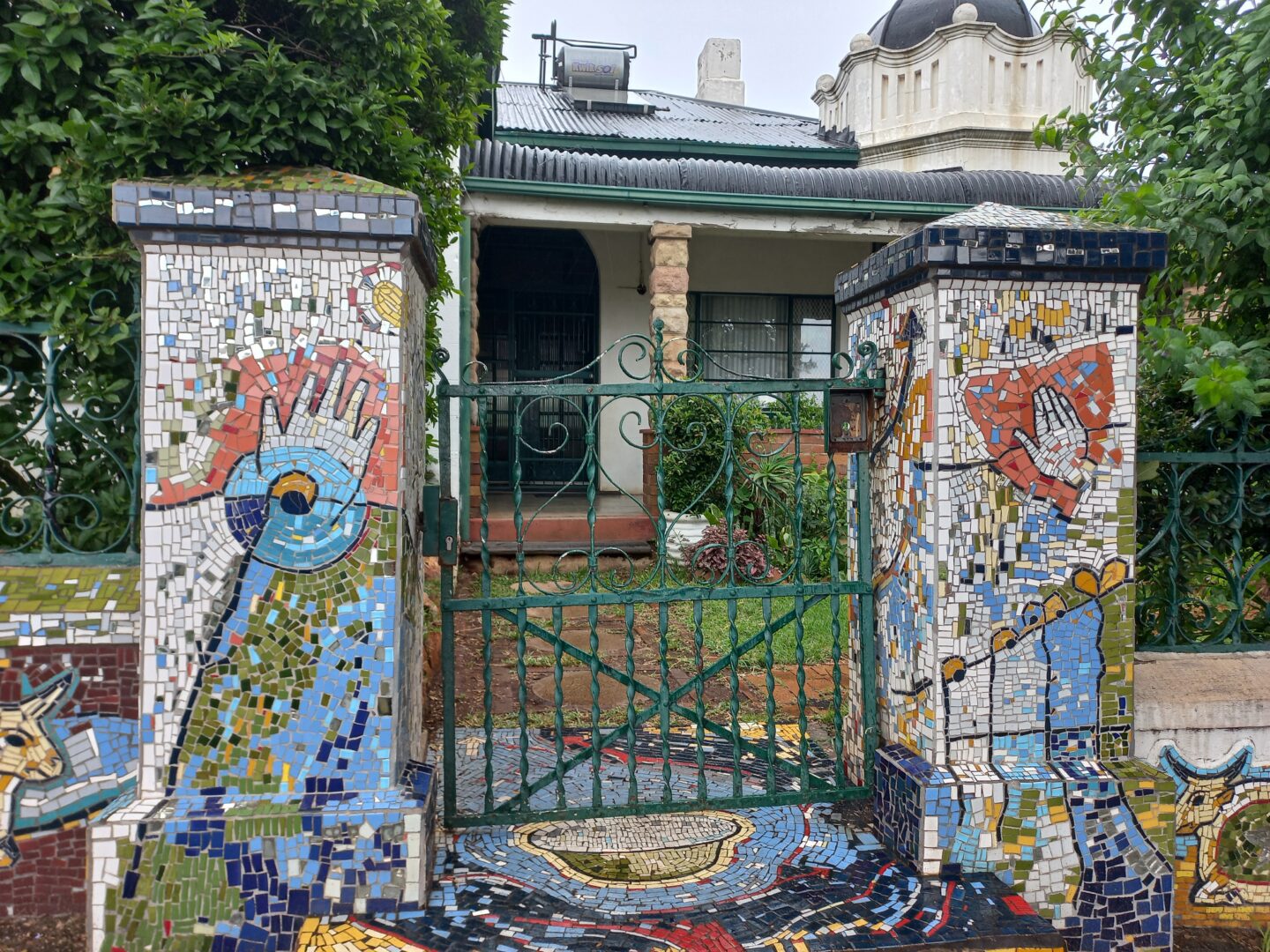
The mosaic on the outside wall conveys the different aspects of David’s life, for example, his love of soccer and his involvement with rural communities, and has a generally life-affirming theme. It was designed by local mosaic artist Ilse Pahl. On the spot where David died, a large rock has been placed.
The house itself underwent some renovations in 1991 to modernise the interior and convert the seriously deteriorated garage in the backyard into a cottage. The façade of the house was restored to include some of the original features of the house that had been destroyed in previous renovations. Sash windows through most of the house were restored.
The house was purchased in 1986 by Maggie Friedman, who moved into the house together with her partner David Webster in August of that year.
David Webster (1945 – 1989) was born in Zambia, then Northern Rhodesia. He attended Rhodes University where he obtained a BA majoring in Social Anthropology, and it was here that his social awareness began. David spent an extended period in Mocambique doing research amongst the Chope people which formed the basis of his doctorate. He joined the Department of Social Anthropology at the University of the Witwatersrand as a lecturer.
From the beginning of the 1980 s, returning from 2 years as a visiting lecturer at Manchester University, David became an activist against apartheid. When his friend Neil Aggett died in detention, with others he founded the Detainee Parent Support Committee (DPSC) an advocacy organisation against detention without trial and other human rights violations by the apartheid government, and the Detainee Education and Support Committee (DESCOM) which gave support to detainees and their parents.
During the 1980 s David was heavily involved in the United Democratic Front (UDF), assisting in the formation of many organisations that affiliated to it. Amongst these organisations were musicians, writers, artists and sportsmen and women. He was active in the Johannesburg Democratic Action Committee (JODAC), and was an active supporter of the End Conscription Campaign.
Later, he co-founded the Five Freedoms Forum and became one of the leaders of this organisation, which was formed as a home for white people who wanted to make a contribution to the struggle by raising awareness and support amongst the white community.
As a member of the DPSC, David worked very hard on behalf of detainees often coming into direct contact with the security forces. One of the means of disseminating information, gathering information and organising support for the families of detainees was through ‘tea parties’. These were usually held in church halls or community halls and happened around the country. Often they would be disturbed by the security forces who would attempt to intimidate the gathering.
David’s academic work took him to the Kosi Bay area in north east KwaZulu Natal where he did research among the community there. In the course of this work, he came across illicit activities of the security forces organising gun running of weapons from Mozambique. This became significant in the light of what happened to David.
These activities that David Webster was engaged in attracted the attention of the security forces. He was quite visible, often on public platforms and on the radio as well as appearing on international television espousing the cause of the UDF.
On 1 May 1989, David Webster was gunned down in front of the house at 13 Eleanor Street by a shotgun fired from a passing car. He died on the pavement. The assassin was later revealed to be Ferdi Barnard of the apartheid regime’s Civil Cooperation Bu reau (CCB).
The government was unable to ban or restrict David’s funeral as it did those of other activists at the time, due to his standing in the social, political, and academic communities, and it was widely covered in the international media. Later in 1989, the year of his death, dramatic revelations were made by former ‘askari’ Almond Nofamela and Dirk Coetzee about the state-sponsored ‘hit squad’ activities, blowing open the state’s role in the brutal torture and killing of many activists. More of these activities came to light during the course of the Truth and Reconciliation Commission. In 1999, Ferdi Barnard, a member of the security forces in 1989, was convicted of the assassination and given a life sentence.
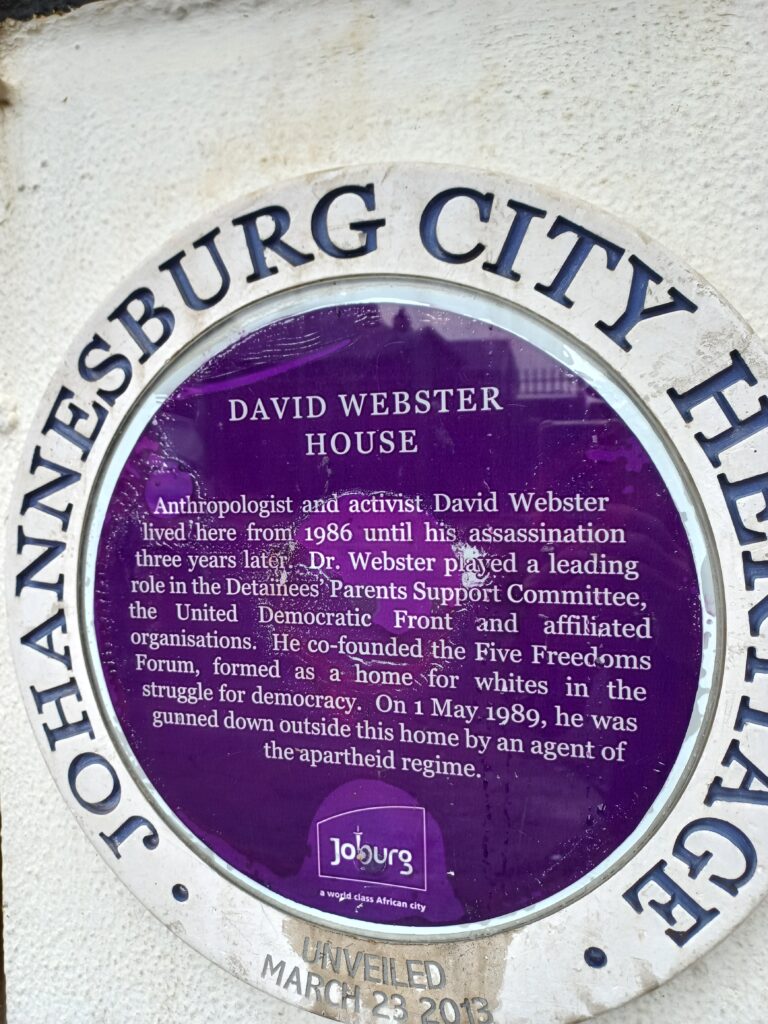
Provisional Protection under Section 29 of the National Heritage Resources Act (NHRA, 1999). Provincial Gazette Extraordinary vol 18, no 164, 13 June 2012.
A culmination of research gathered over many years, the Online Johannesburg Heritage Register is being launched on Nelson Mandela Day 18 July 2025.
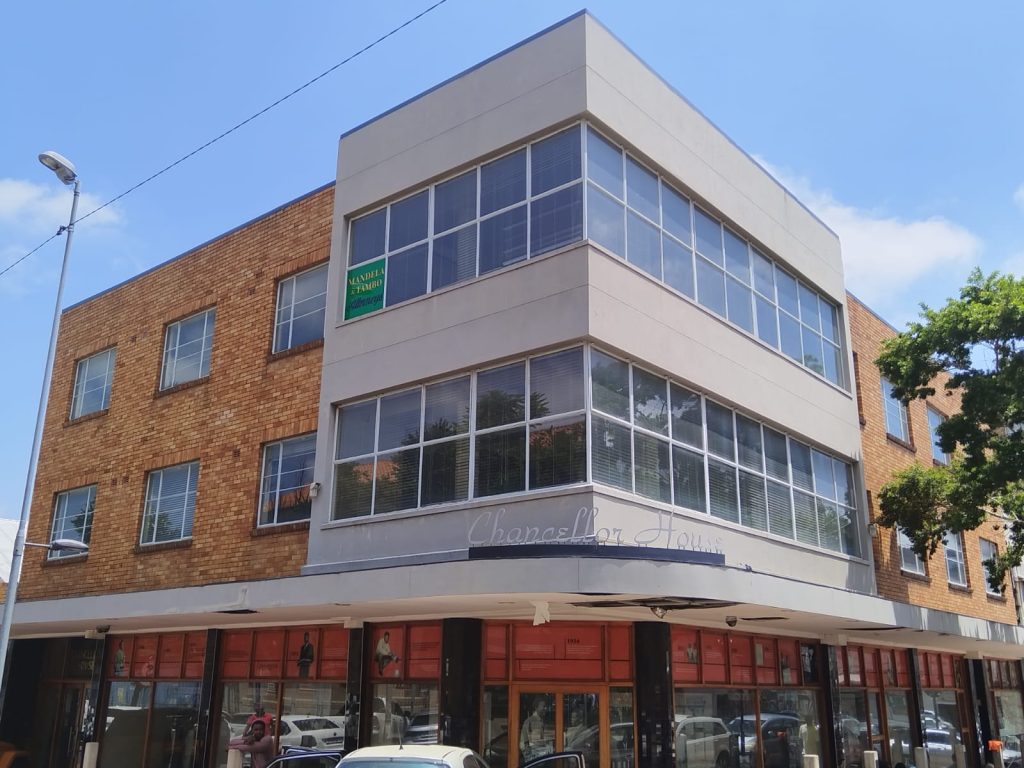
Among the many heritage sites featured is Chancellor House, the downtown offices of Mandela and Tambo Attorneys in the 1950s. After having been vacant and shuttered for more than a decade, this iconic building is being revived and brought to life once again as offices for the Community Development Department, which oversees the City’s Arts, Culture & Heritage Services.