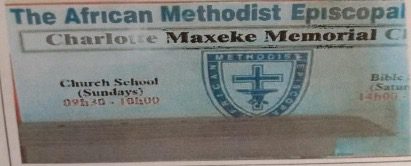
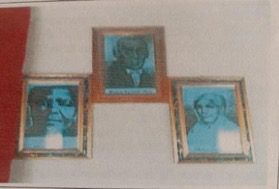
This a small modest church of brick construction with tin roof, little changed from the early 20th century. The church building houses old signage and other memorabilia associated with Charlotte Maxeke.
Charlotte Maxeke (1874-1939) was a pioneering political activist, religious leader and a social worker, and a founder of Bantu women’s league of South Africa.
Maxeke was politically active throughout her adult life. She helped organise anti-pass protests in Braamfontein in 1913. By 1918, she established the Bantu women’s league which later became part of the African National Congress women’s league. She was active in establishing industrial and commercial unions (ICU) in 1920. She became the president of the National council of African Women (NCAW) in 1937.
Having gone to the United States on a tour with her church choir in 1894, Charlotte Maxeke stayed on to study at the Wilberforce University in Cleveland Ohio, where she was taught under Pan-Africanist W E du Bois. Wilberforce University was controlled by the African Methodist Episcopal Church (AMEC), an African- American church. From here, Maxeke graduated with a bachelor of science degree in 1905, becoming the first African woman from South Africa with a u niversity degree. Charlotte Maxeke’s husband, Rev Marshall Maxeke, was also a graduate of Wilberforce University and a minister of the AMEC.
At the Wilberforce University, Maxeke was greatly influenced by AMEC, and effected contact with that church and the founder of Ethiopian church in South Africa through Rev M M Mokone. This led to the founding of AMEC in South Africa. This episode in Maxeke’s life earned her the unofficial title of “mother of the AMEC in South Africa”.
A dedicated church-goer, Maxeke was the president of the women’s missionary society in the AME. In 1928 Charlotte Maxeke was a representative of the A M E church to the general conference in America.
The A M E church grew rapidly across Southern Africa and already by 1910, its membership numbered close to 40 000, with churches in many towns across South Africa. Founded in 1905, the small church in Kliptown remained one of the leading congregations of the AMEC. The church was dedicated to Charlotte Maxeke just before her death at age 65 on 6 October 1939, as is recorded on a granite plaque laid near the entrance.
According to The Times (16 May 1014, AME church was a place of refuge for Nelson Mandela: “Nelson Mandela held meetings and hid at the AME church, also known as the Lilydale Community School, which was shut by the present government due to a shortage of funds”.
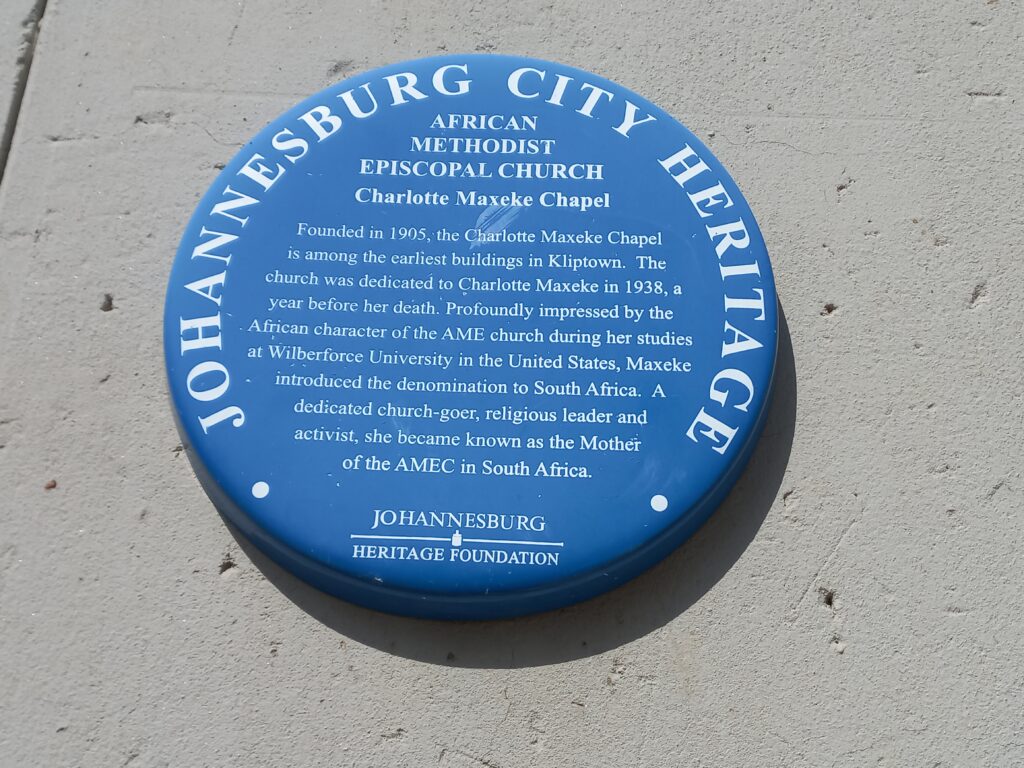
General Protection: Section 34 (1) Structures under the National Heritage Resources Act (NHRA), 1999.

A culmination of research gathered over many years, the Online Johannesburg Heritage Register is being launched on Nelson Mandela Day 18 July 2025.
Among the many heritage sites featured is Chancellor House, the downtown offices of Mandela and Tambo Attorneys in the 1950s. After having been vacant and shuttered for more than a decade, this iconic building is being revived and brought to life once again as offices for the Community Development Department, which oversees the City’s Arts, Culture & Heritage Services.