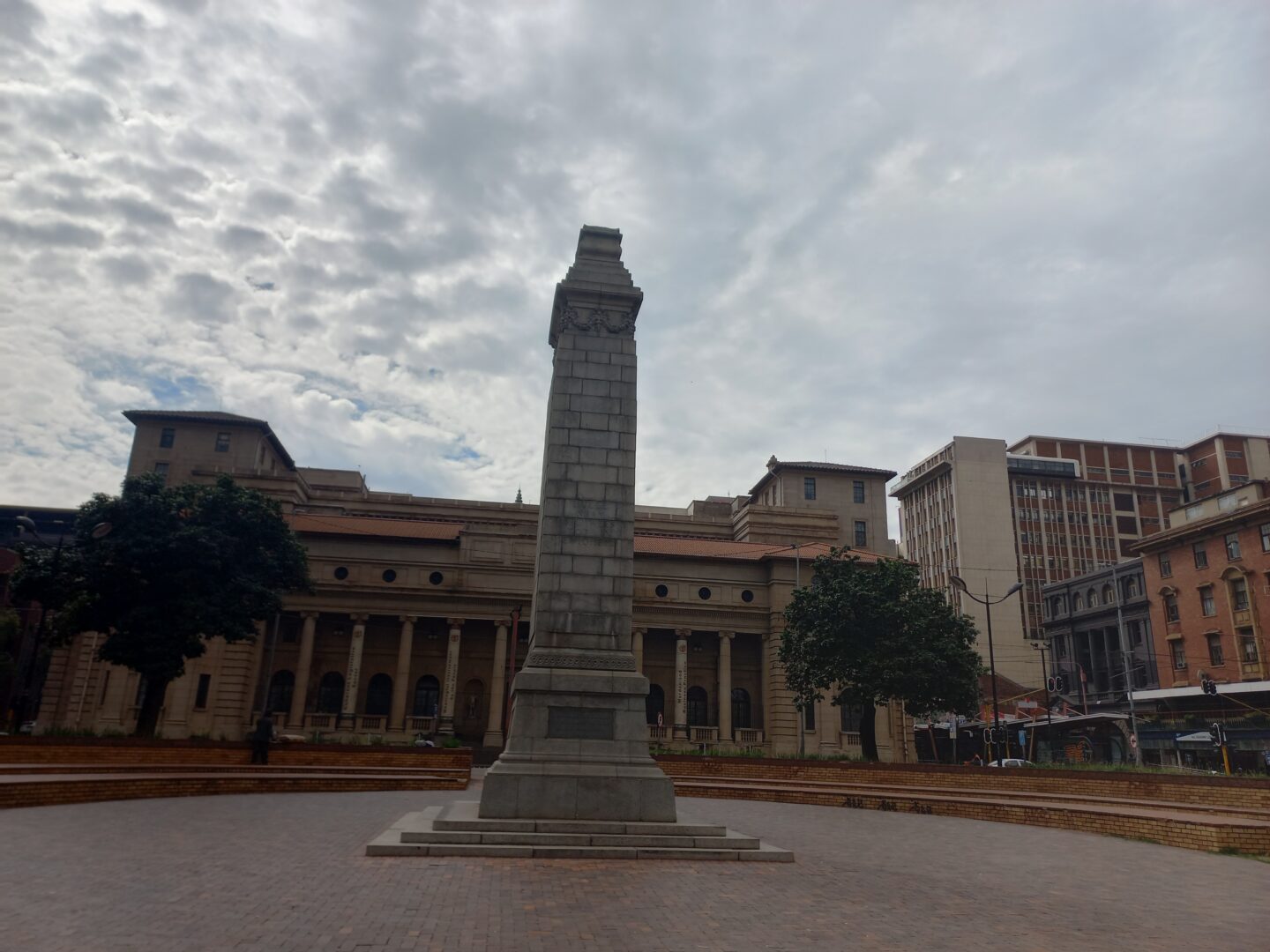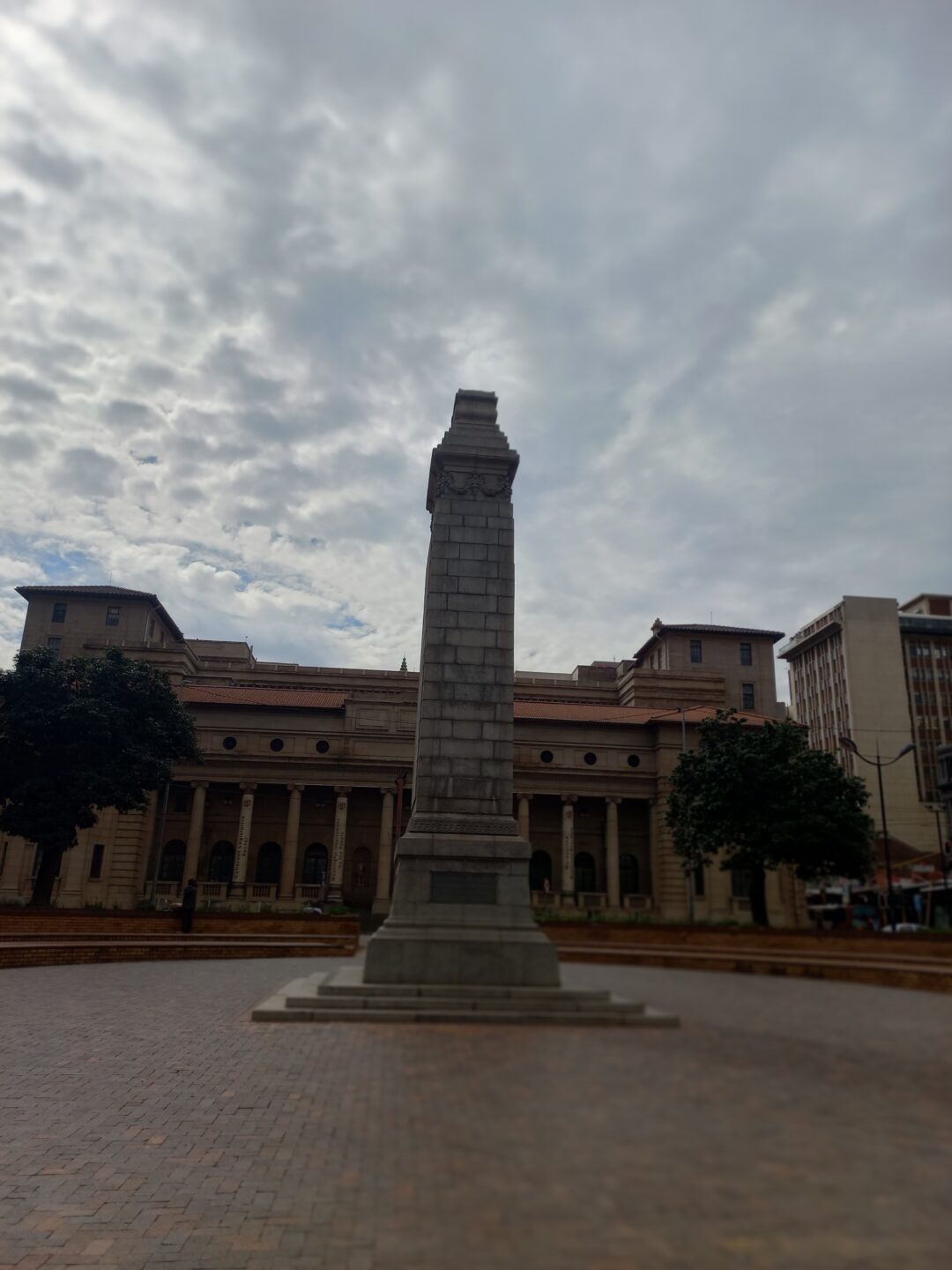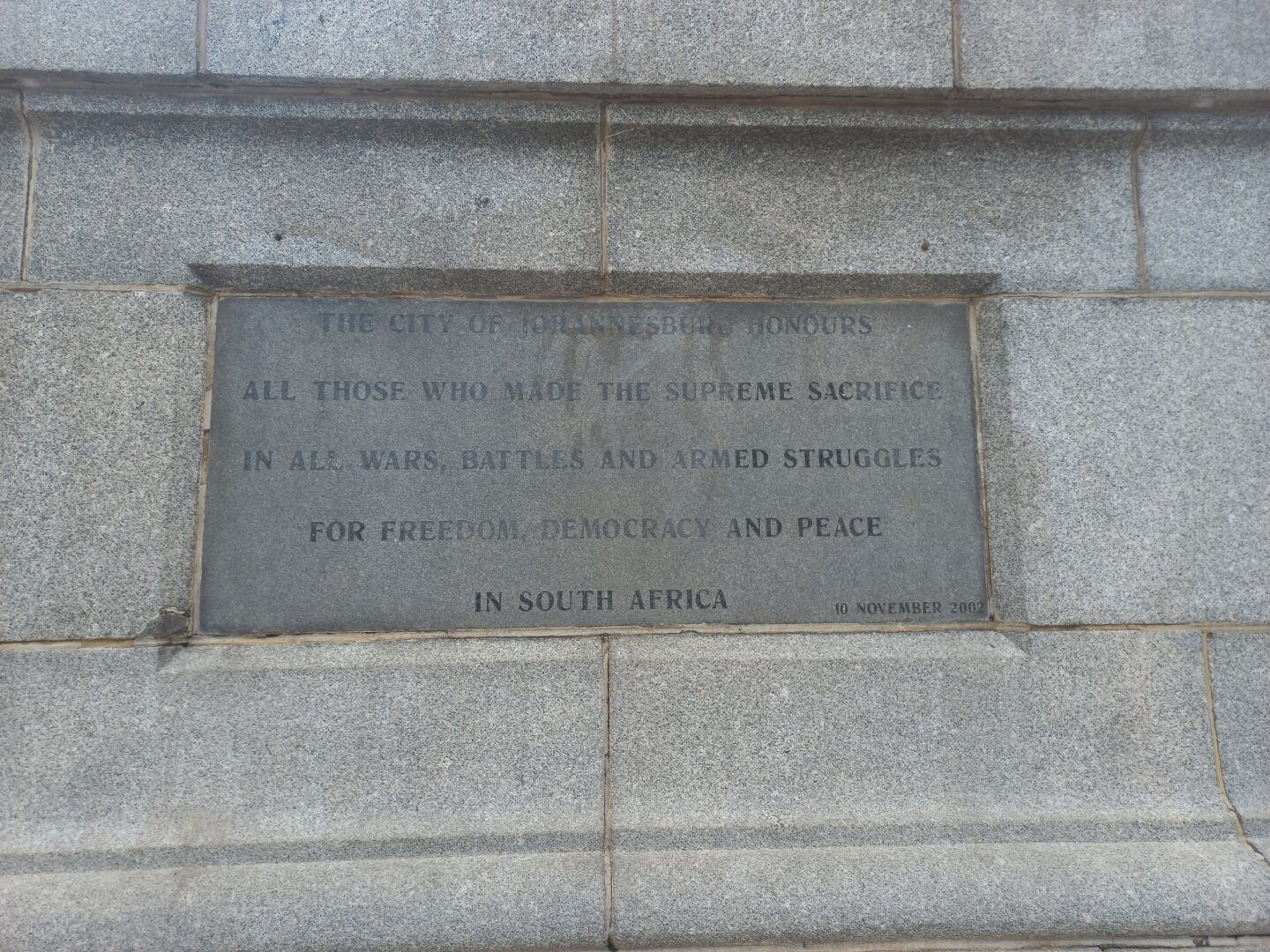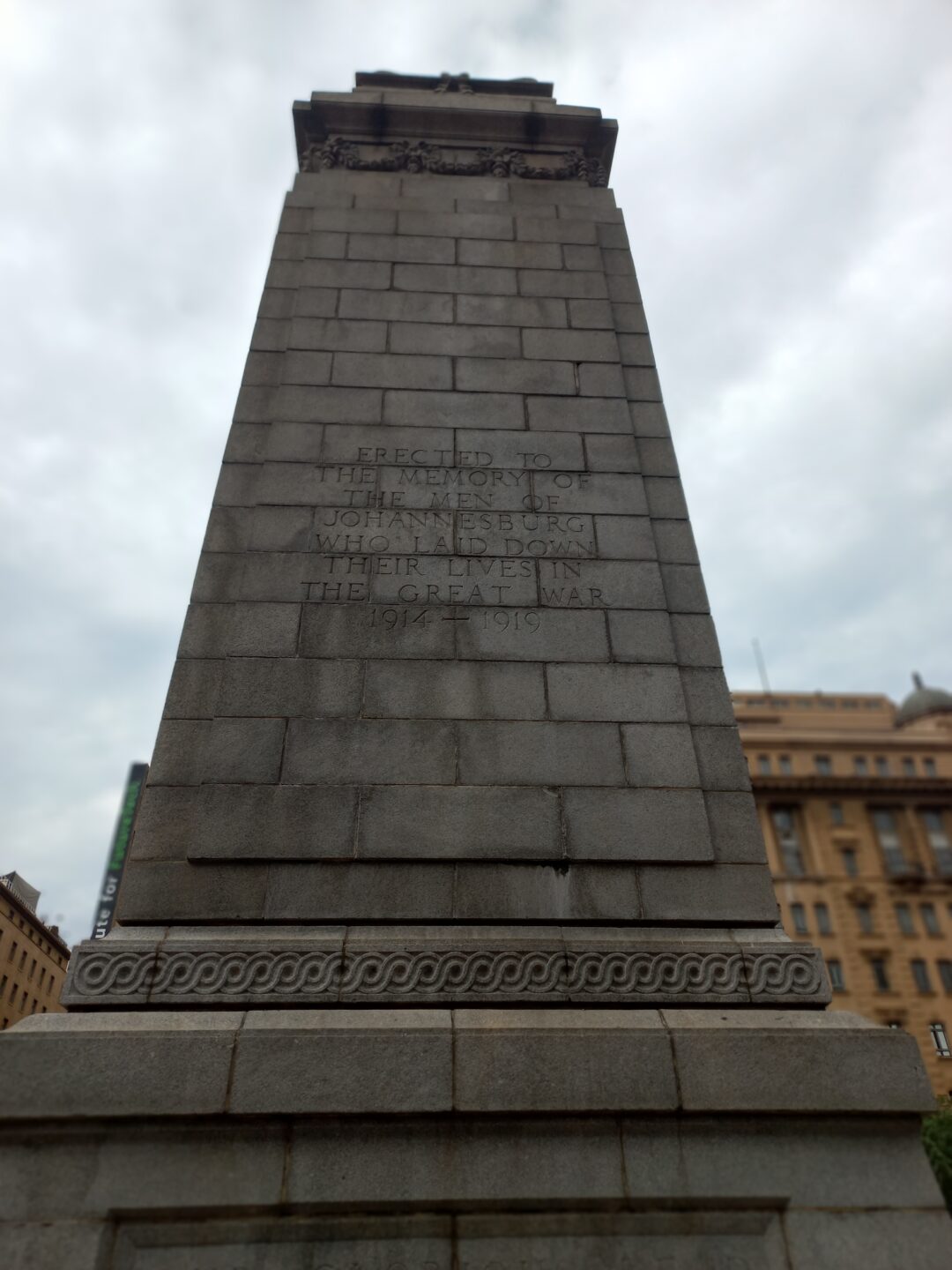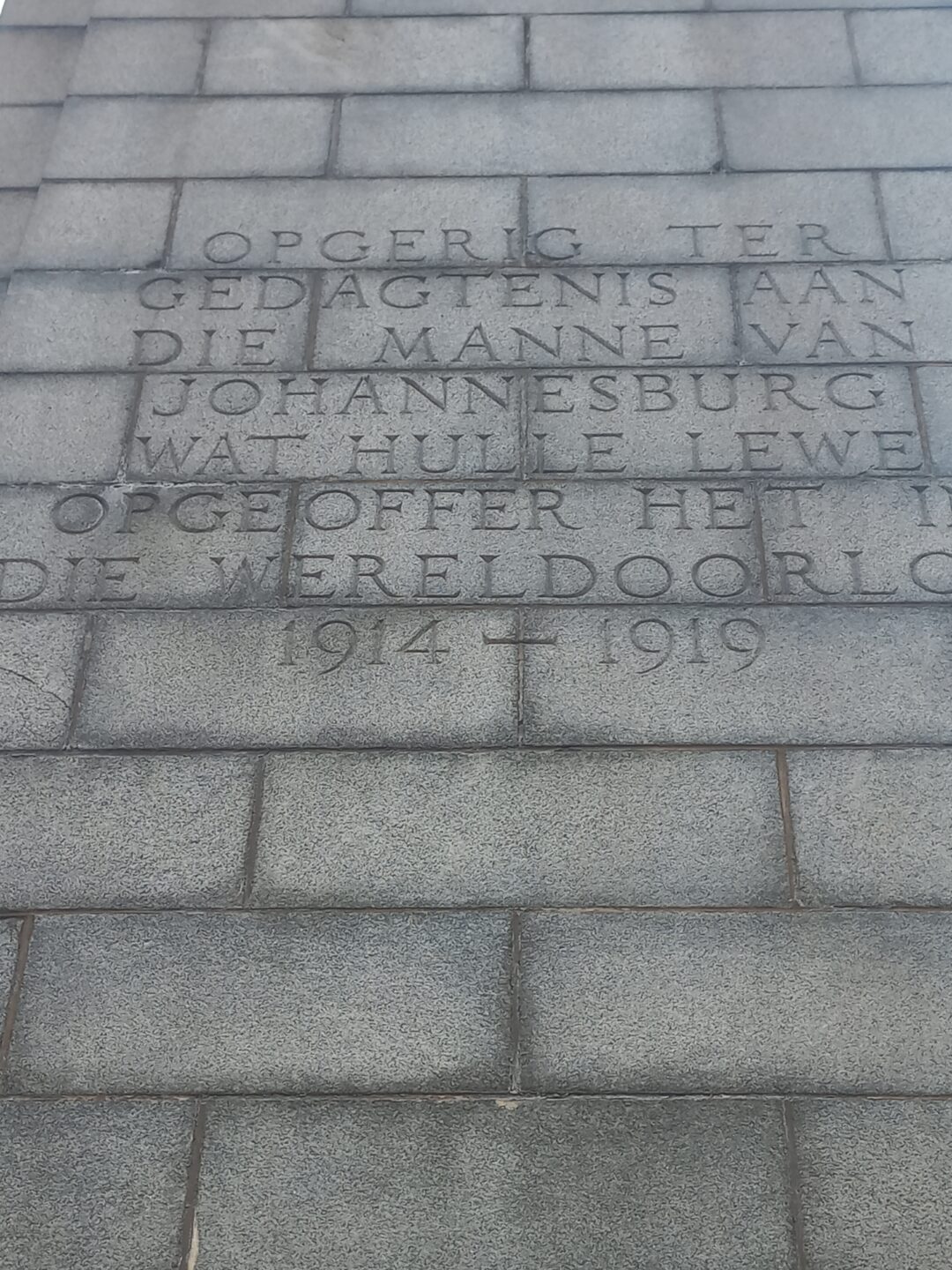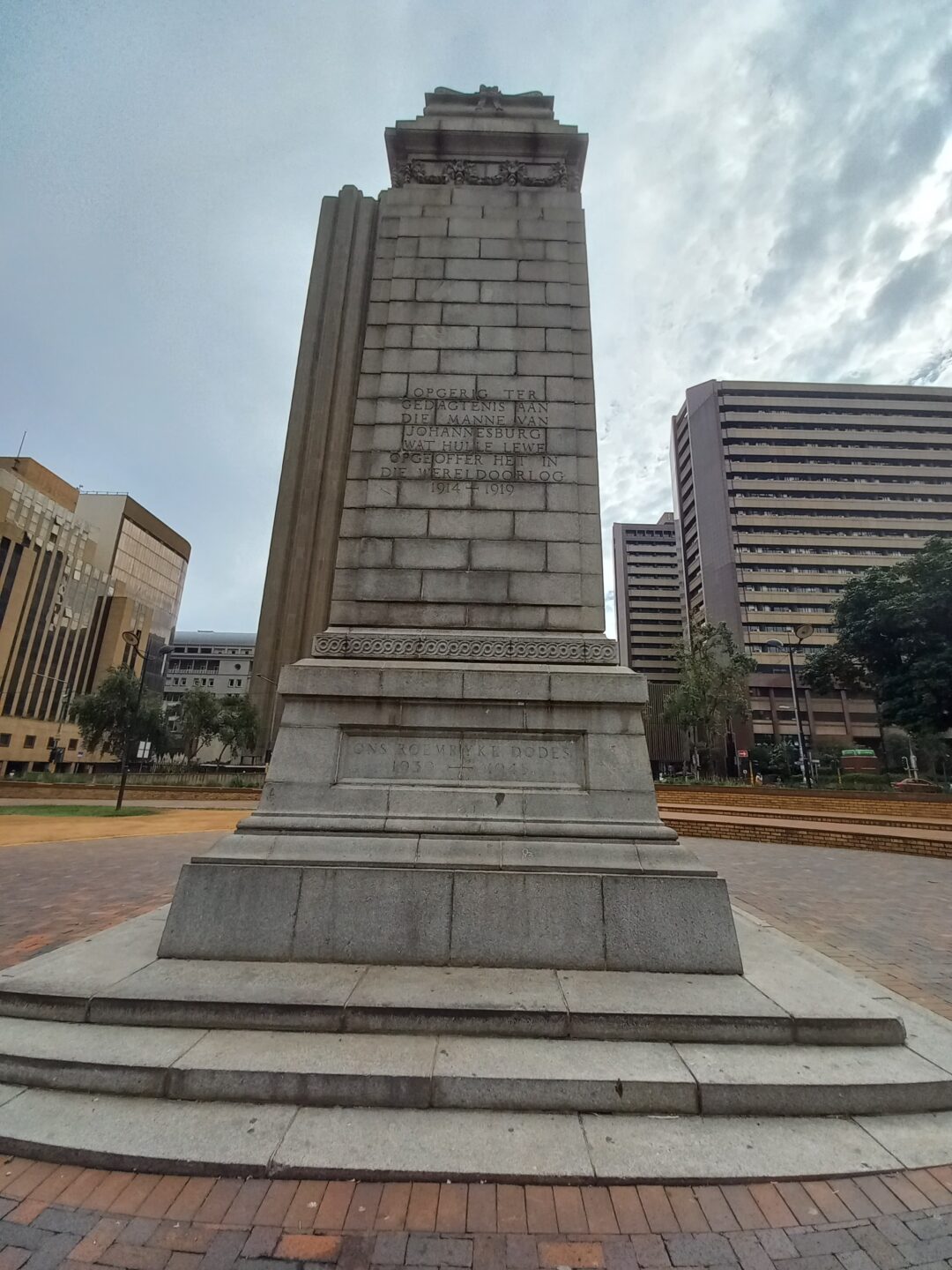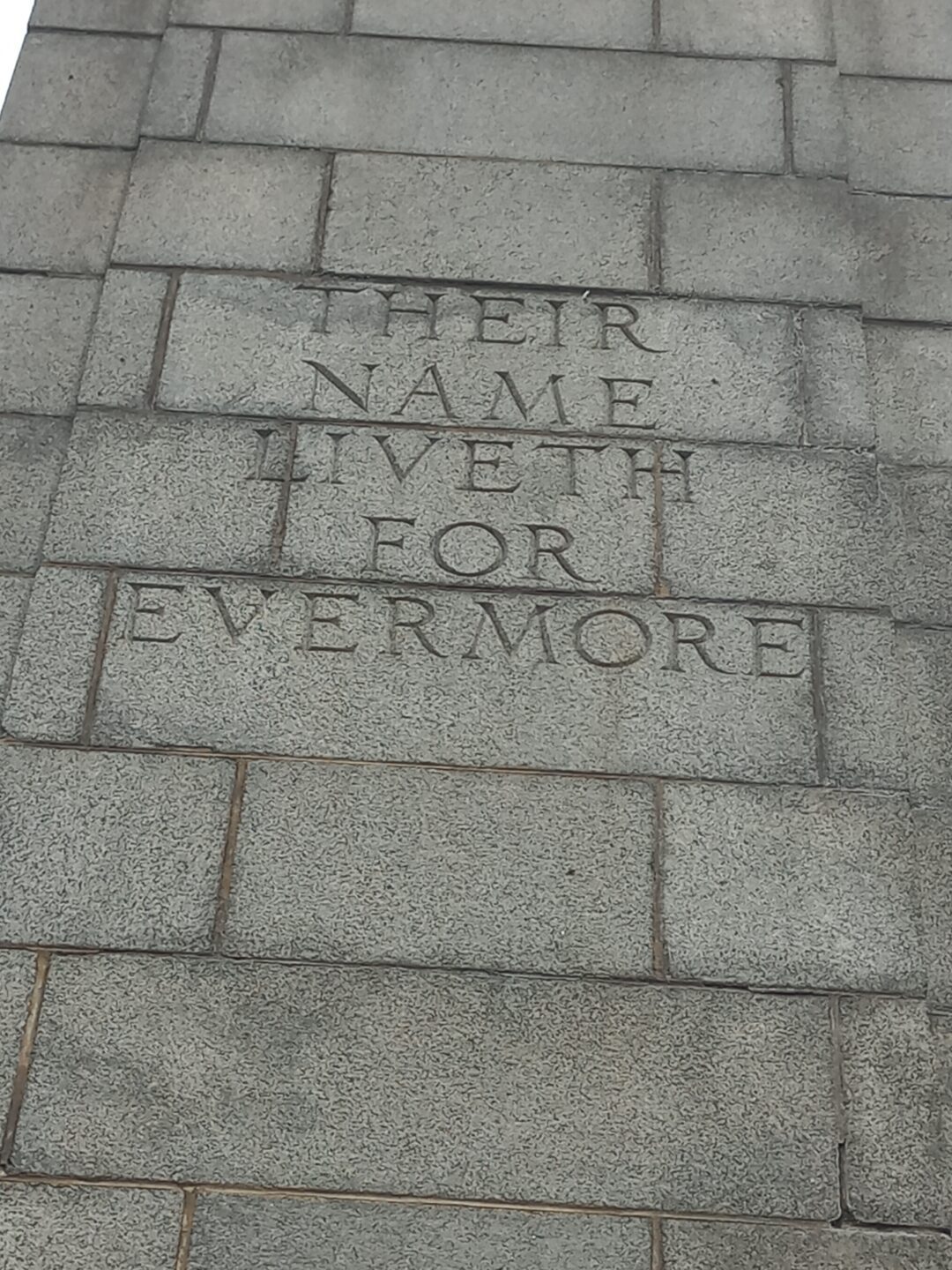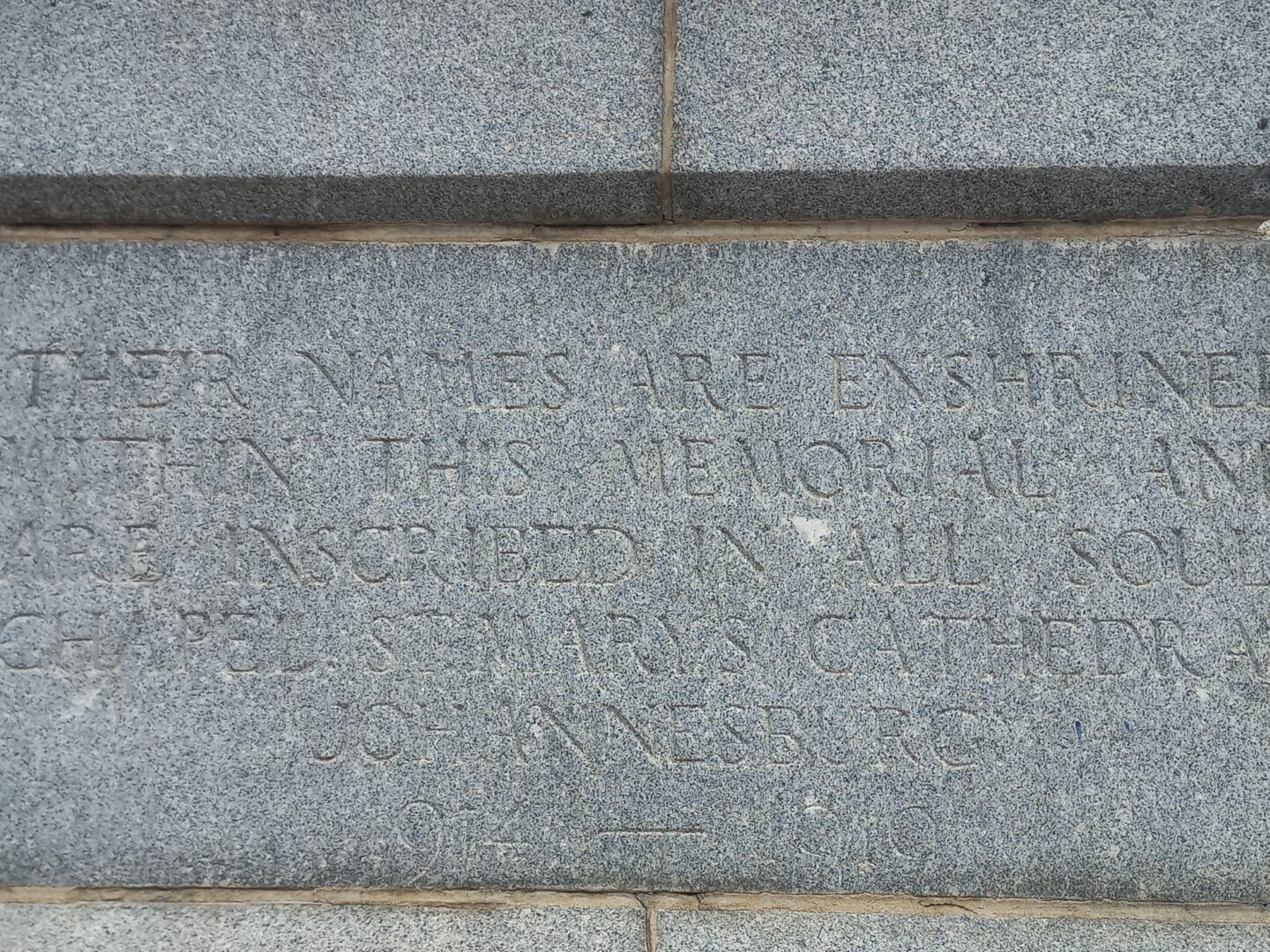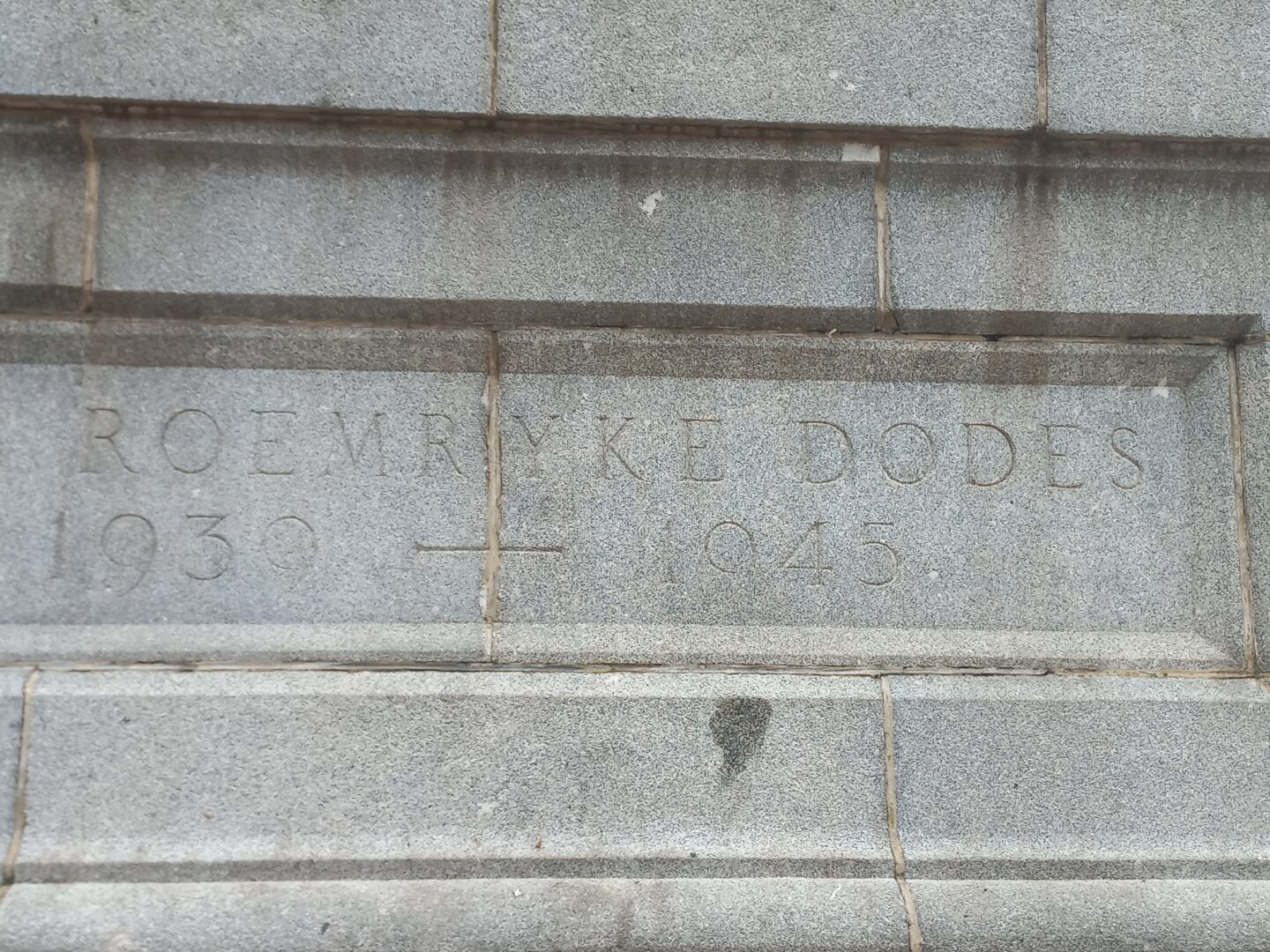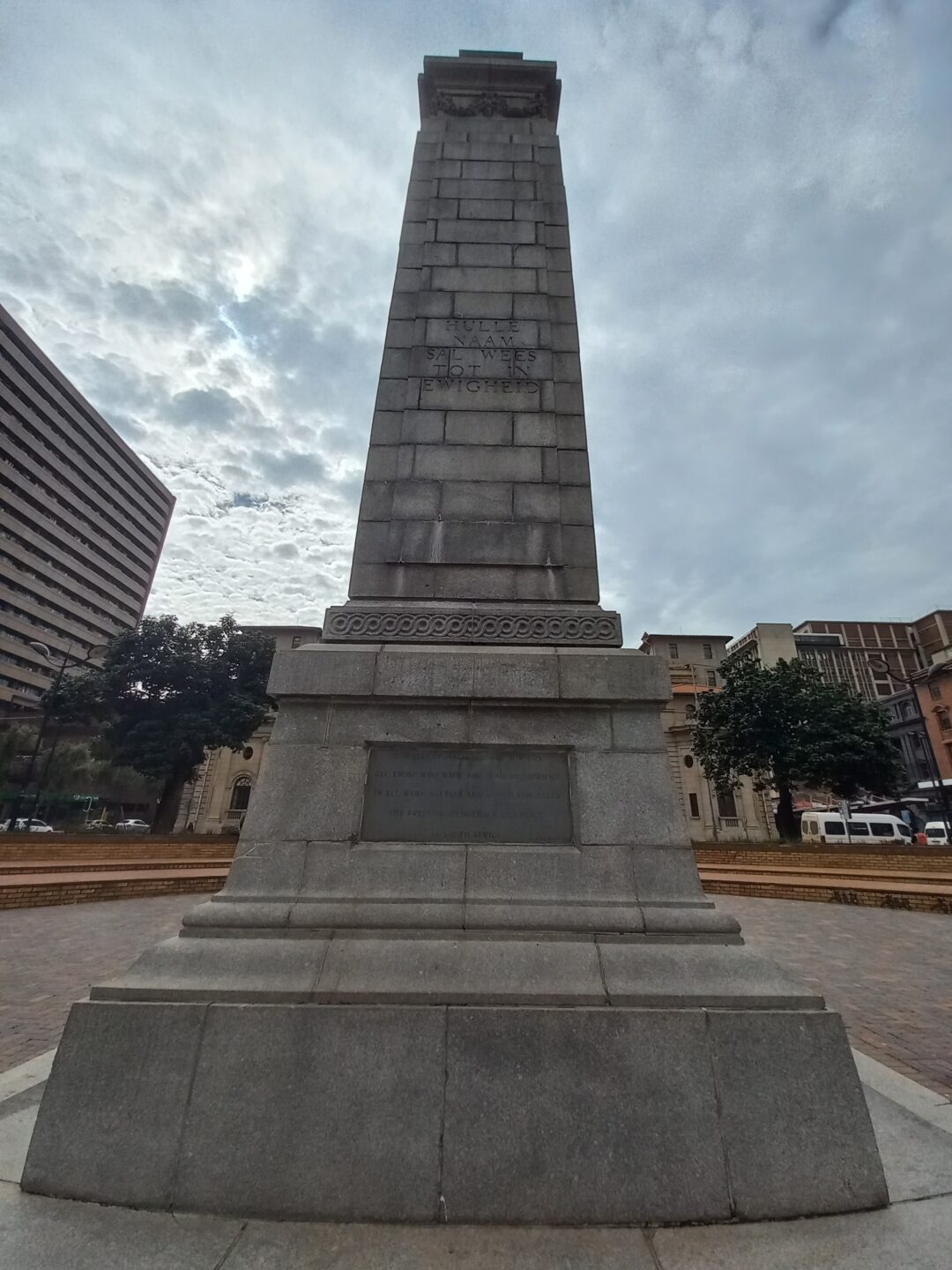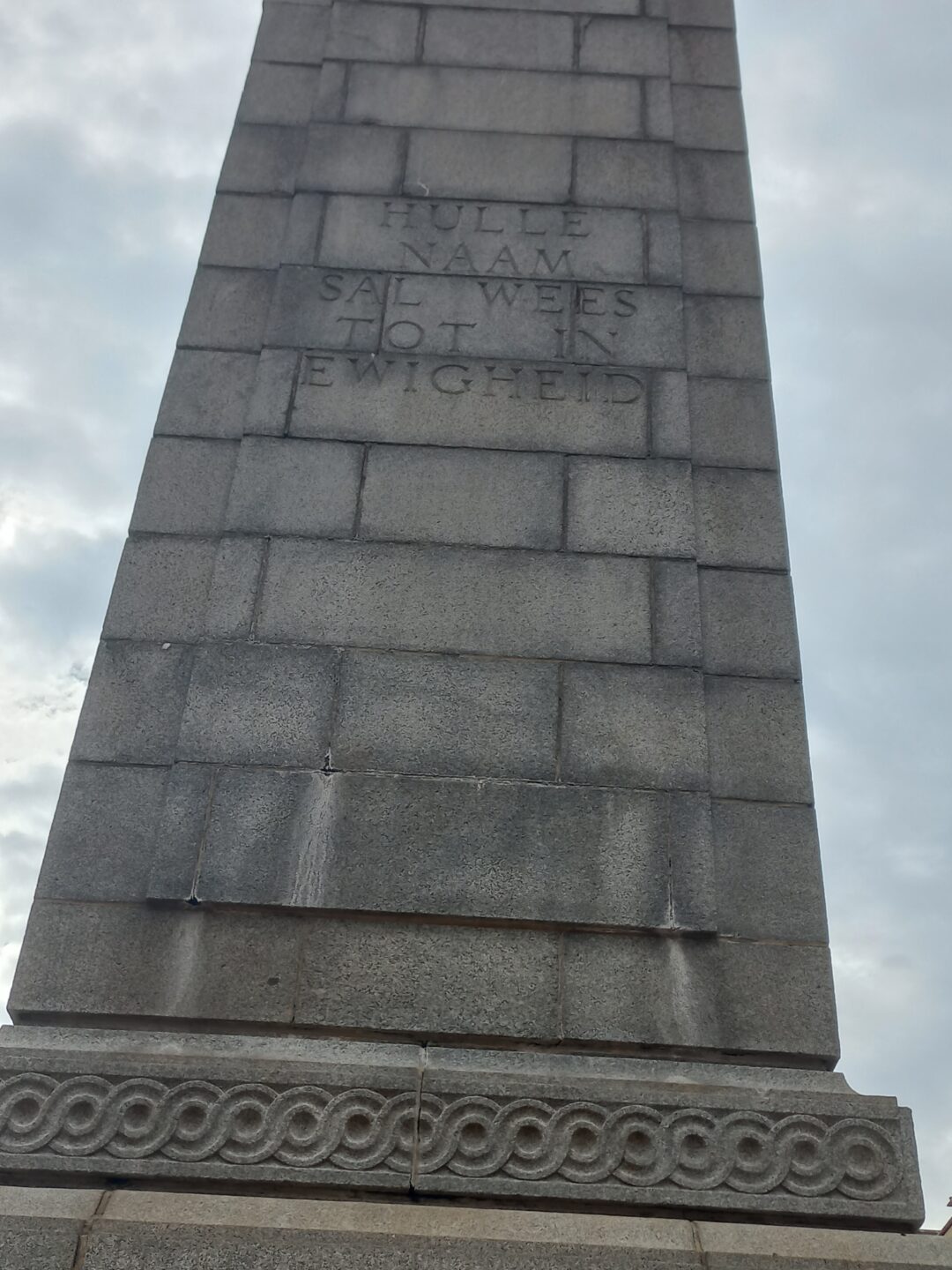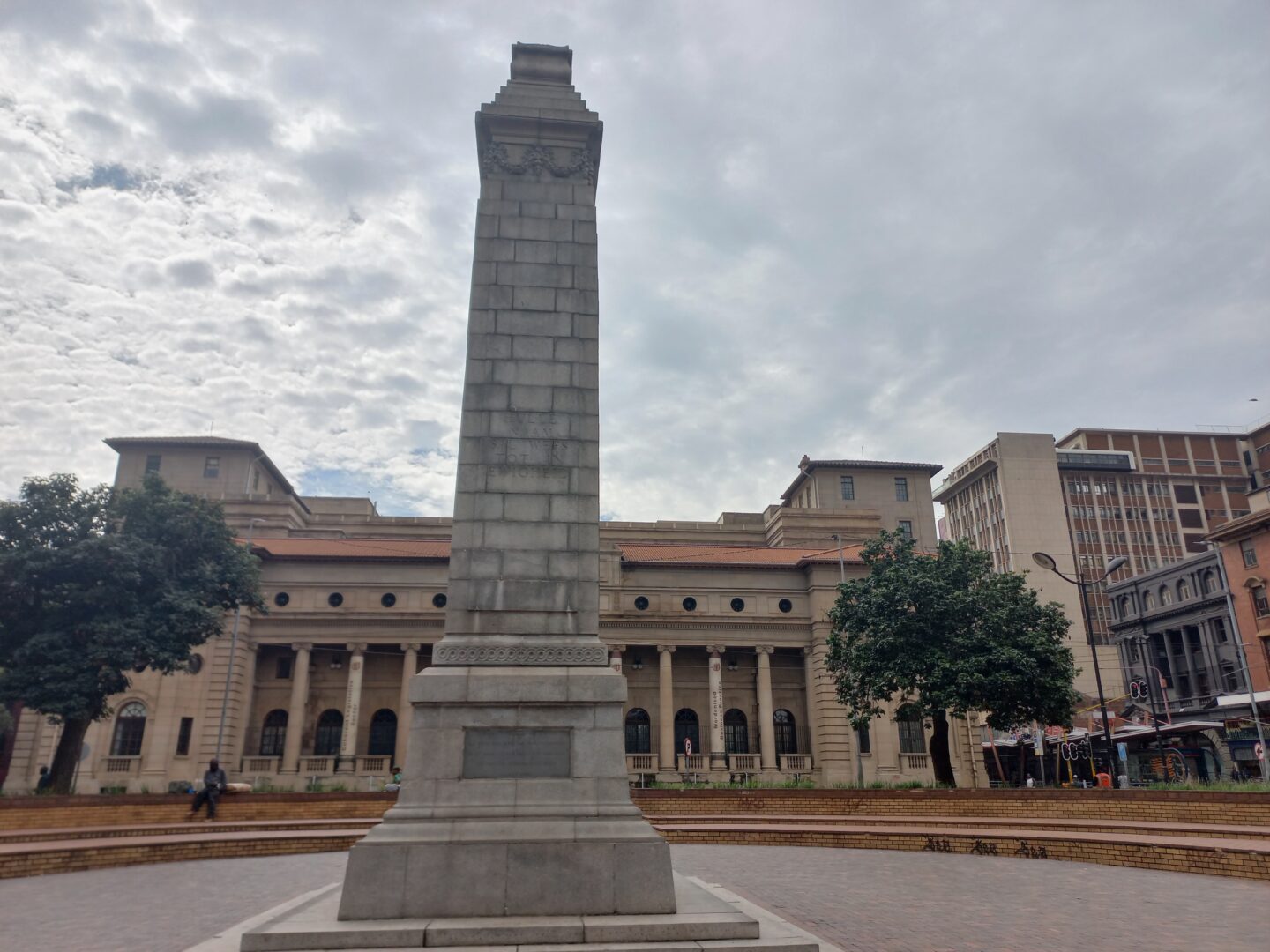
The Cenotaph is constructed of grey granite with inscriptions v-cut into the stone. It occupies the center of the eastern portion of Beyer’s Naudé Square.
“While it is very tall and beautifully finished the Cenotaph fails to impress. It is not sturdy enough to form a visual bond between the City Hall and the Library, and it does not stand out well enough against its immediate environment to make a powerful statement …” (Van der Waal)
On 10 October 1926, the Cenotaph was unveiled by the Governor-General, the Earl of Athlone. The monument is a replica of the Cenotaph in Whitehall, London, designed by Edwin Luytens. It was hoped that the memory of the Great War would somehow prevent such slaughter from happening again. The day after the Market Square ceremony, a leading article in The Star expressed the hope that if the two memorials would “strengthen our determination to prevent as far as is humanly possible, the repetition of the tragedy, then the War would not have been a waste of precious lives”.
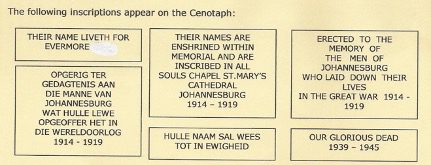
But 21 years later on 18 February 1947, The Star carried a picture illustrating one of the ironies of history: a mason preparing the stone of the Cenotaph for the dates of another world war! The stone mason was chiselling away the inscription 1914-1919 to make place for the dates of another bloody conflict – the Second World war of 1939- 1945. The inscription was replaced by the words, “Our Glorious Dead, 1939-1945” and the dates 1914-1919 were placed higher up on the Cenotaph under the inscription “Erected to the memory of the men of Johannesburg who laid down their lives in the Great War”. During the Royal visit of April 1947, King George VI unveiled new inscriptions commemorating those who had died in World War 2.
At the time of the construction of the Harry Hofmeyr Underground Parking in 1966, the Cenotaph was removed. After completion of the work in 1968, the Cenotaph was returned to its site west of the City Hall, where memorial services resumed in its vicinity.
In 1968 the idea of moving the Cenotaph was mooted to the area east of the City Hall, but the National Monuments Council was opposed: “The historical significance of the Market Square as the heart of the City explains its location. The Cenotaph relates to the western facade of the City Hall which was an important entrance to the Mayoress’s parlour. It is also a reminder of the City’s participation in the First and Second World Wars”.
In 1996 the Cenotaph was rededicated in honour of all South Africans who died in wars and conflicts, including the struggle for democracy.
Protected under Section 37 of National Heritage Resources Act: “Public monuments and memorials must, without the need to publish a notice to this effect, be protected in the same manner as places which are entered in a heritage register …”. As the Cenotaph is older than 60 years, it is also protected in terms of Section 34 of the same Act.
A culmination of research gathered over many years, the Online Johannesburg Heritage Register is being launched on Nelson Mandela Day 18 July 2025.
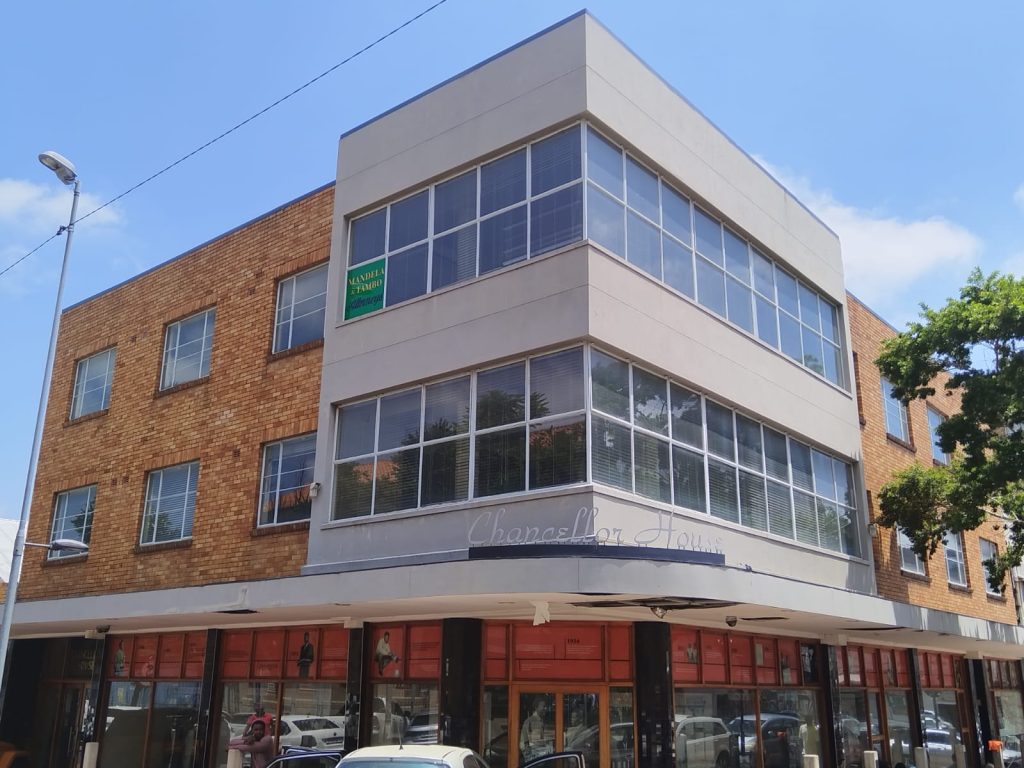
Among the many heritage sites featured is Chancellor House, the downtown offices of Mandela and Tambo Attorneys in the 1950s. After having been vacant and shuttered for more than a decade, this iconic building is being revived and brought to life once again as offices for the Community Development Department, which oversees the City’s Arts, Culture & Heritage Services.