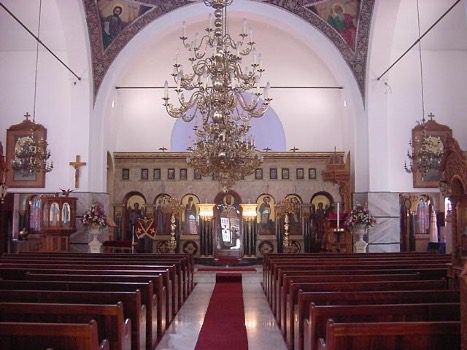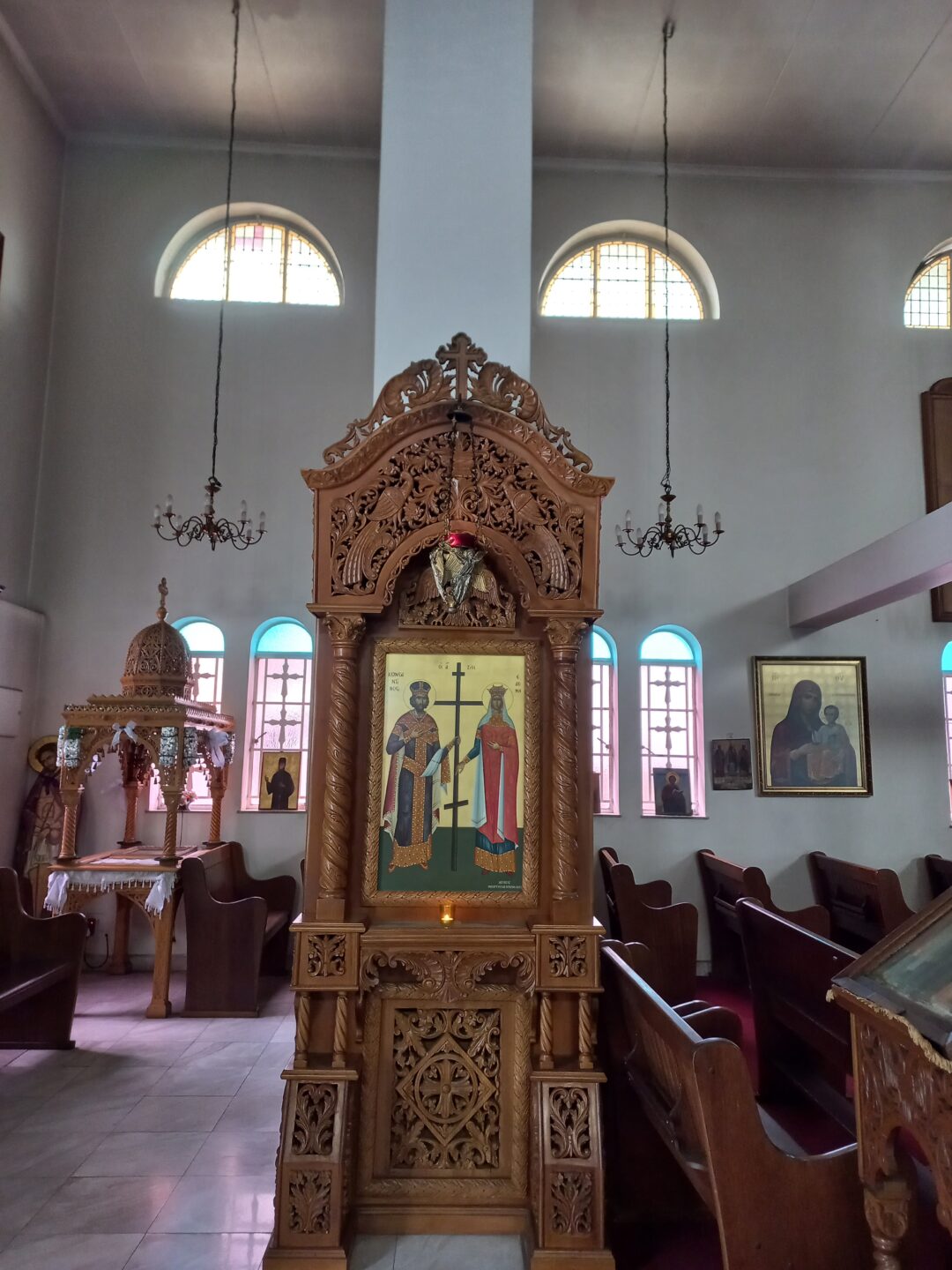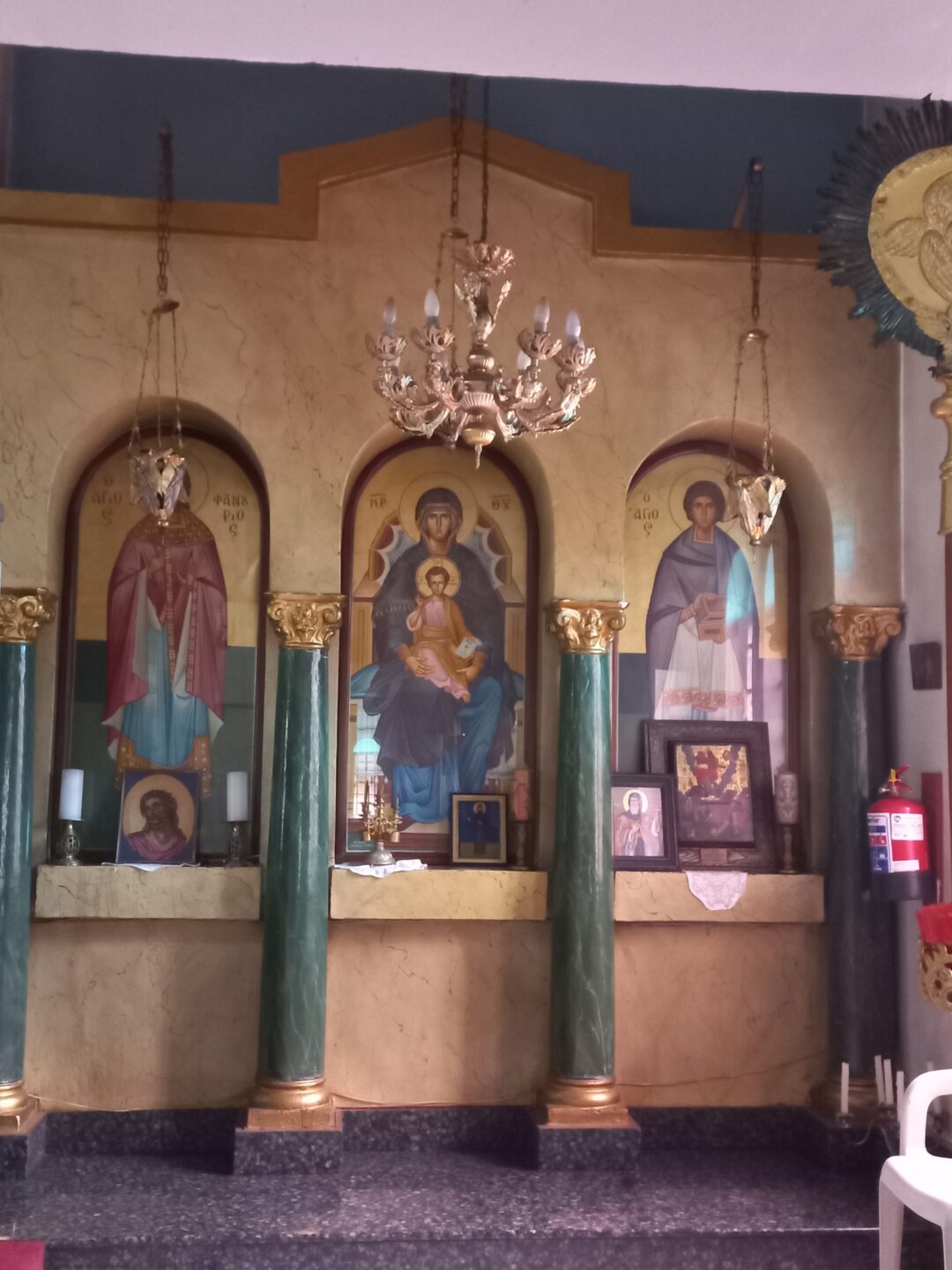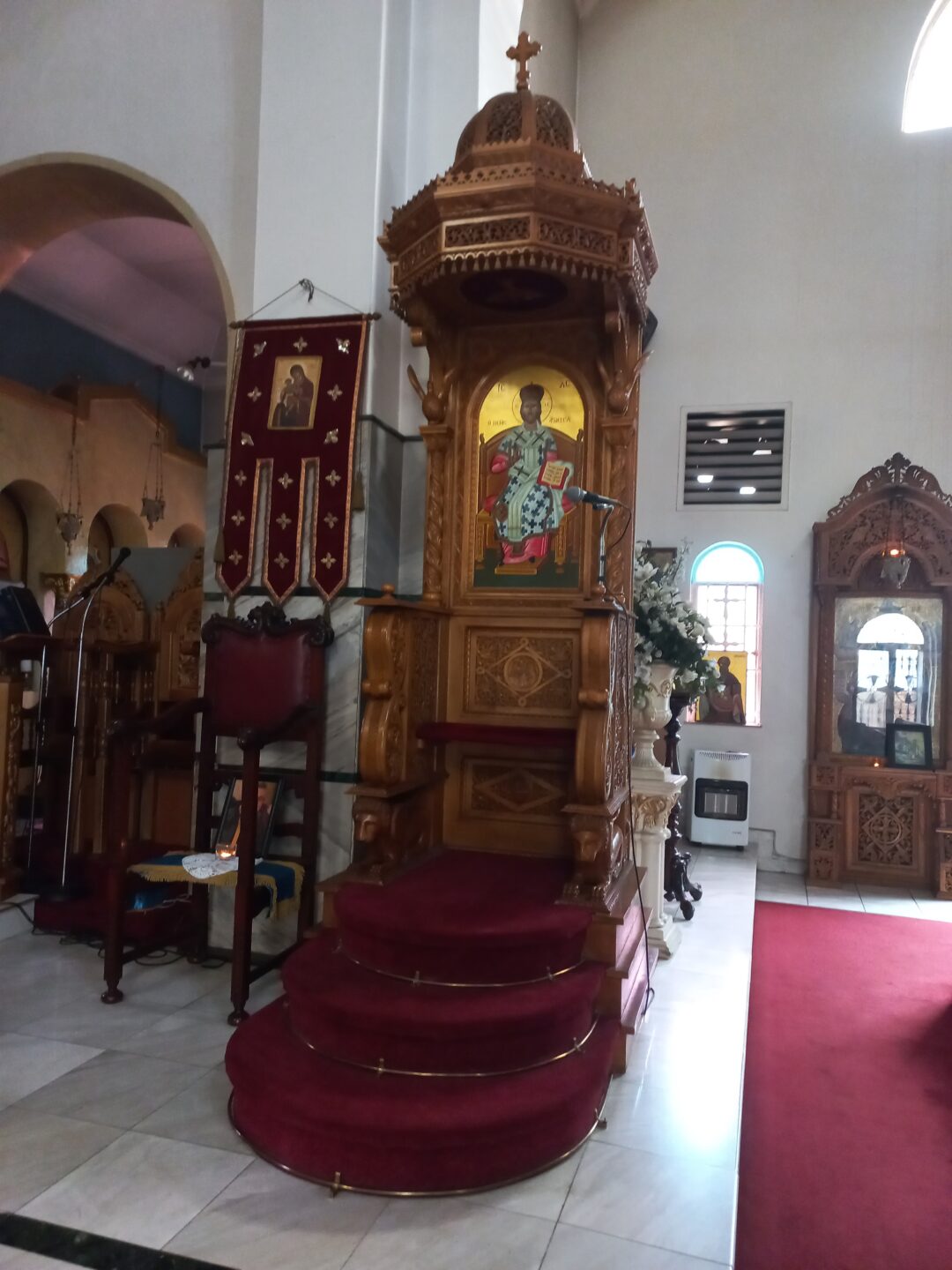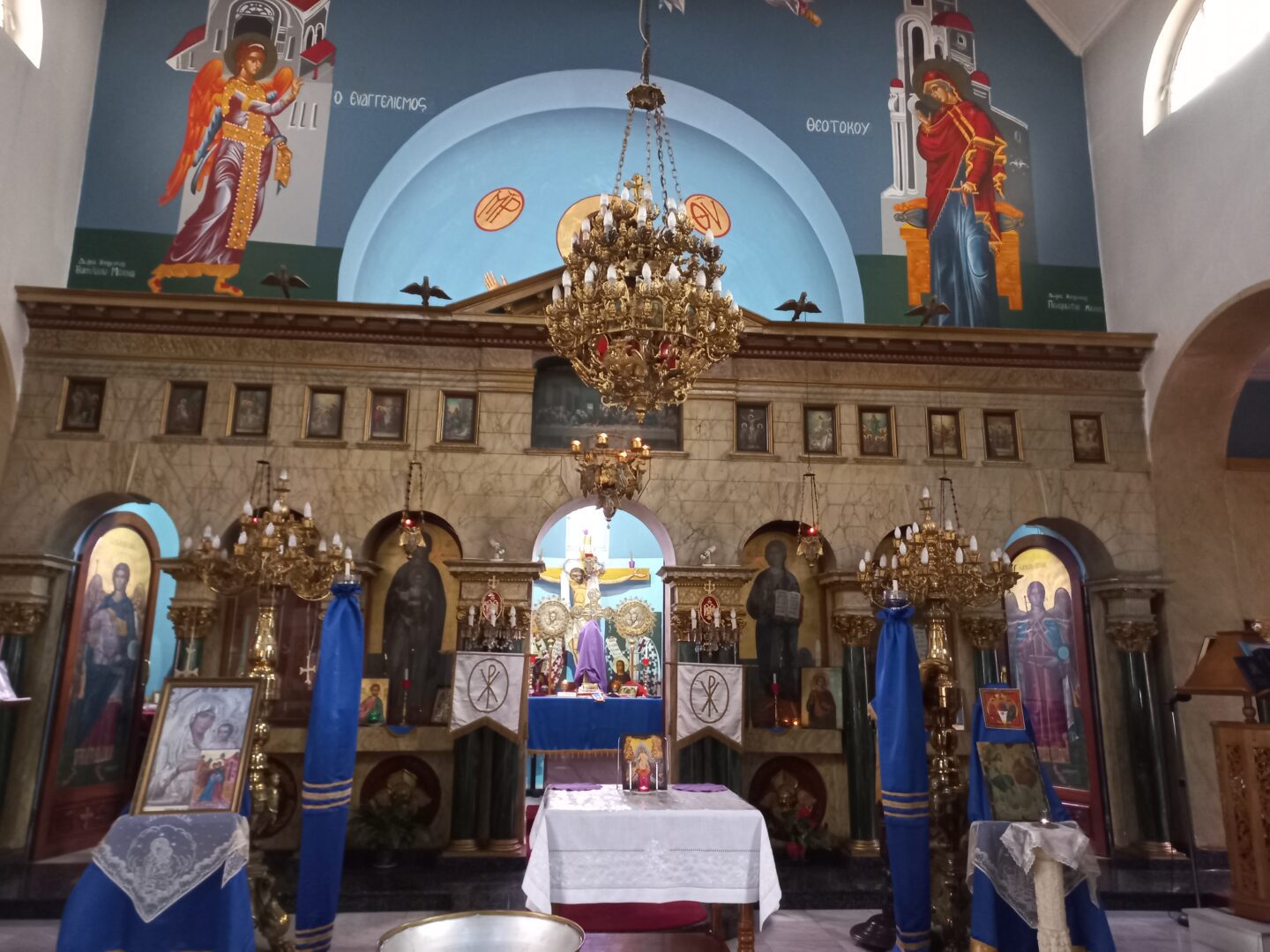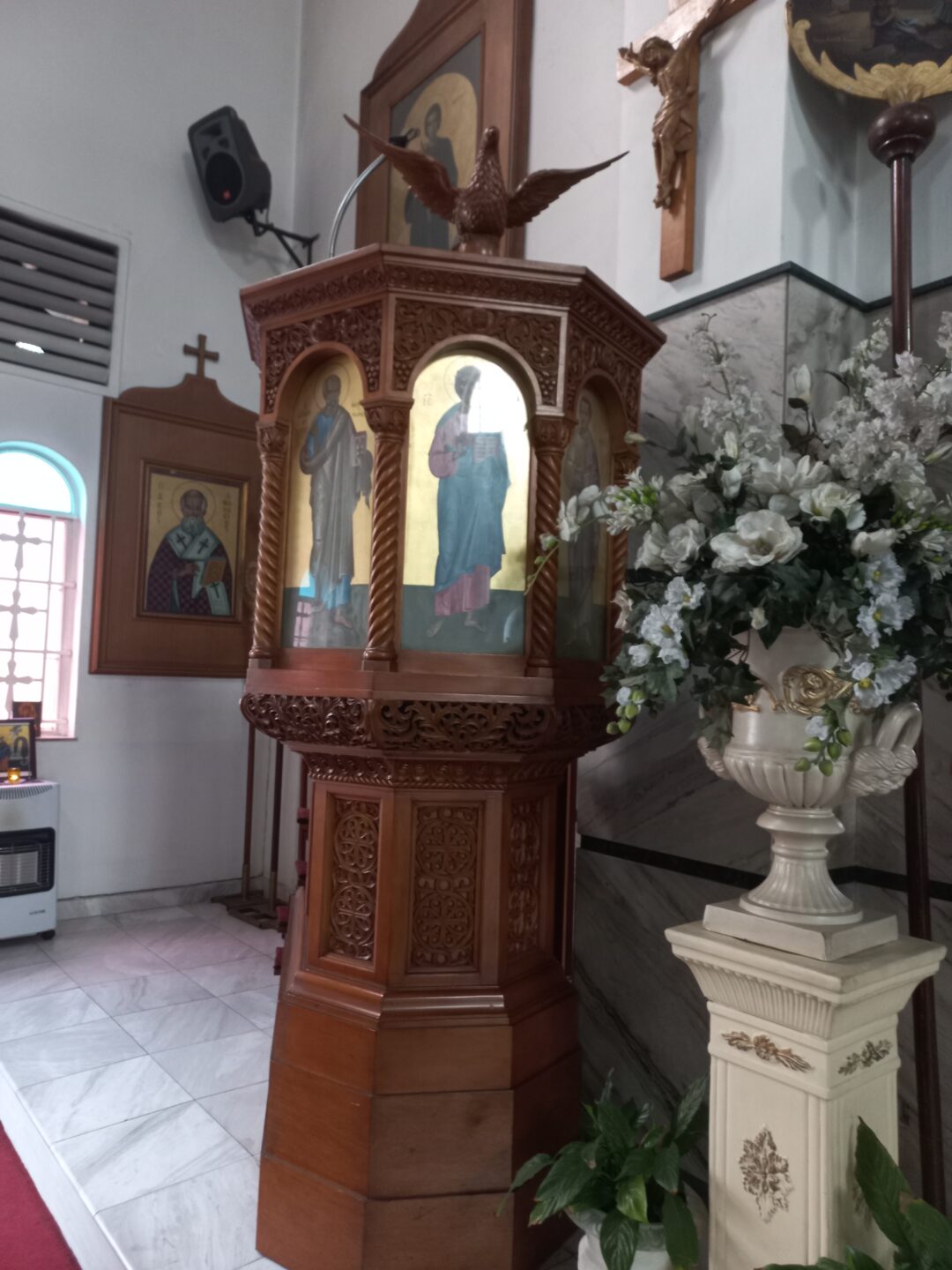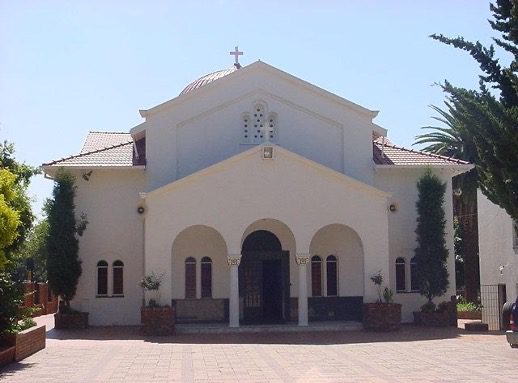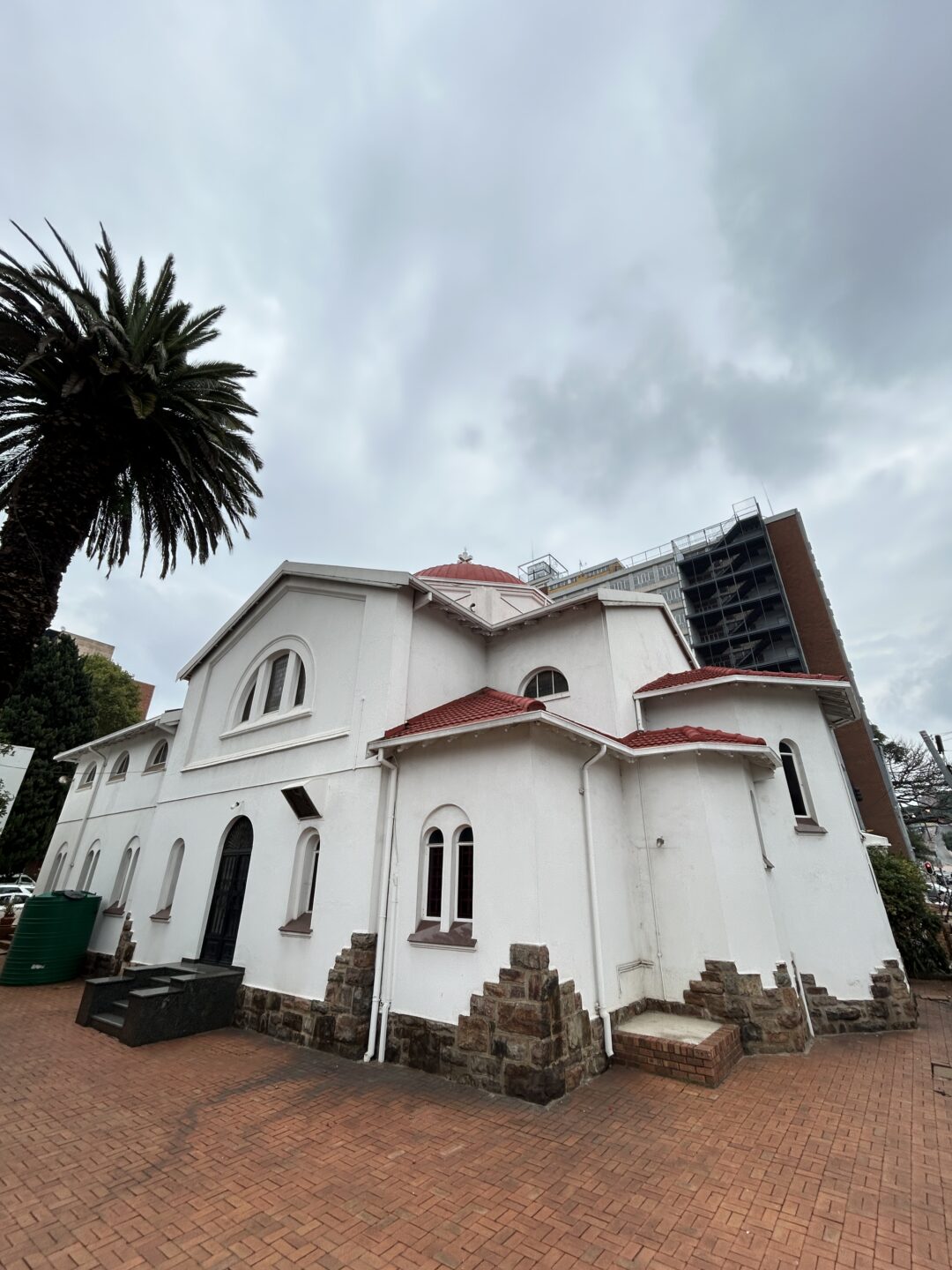
The domed, Byzantine Greek-orthodox-styled church is modelled on the Hagia Sophia in Istanbul. The classic Greek church exterior features four levels of differently angled domes. In contrast to the relative simplicity of the exterior, the interior of the church is richly decorated, including a carved wooden pulpit and bishop’s chair, green marbled columns across the three-metre high Parthenon-shaped altar, and brass chandeliers suspended from the high ceiling. The ornamentation is set off against crisp white walls lined with religious icons, and the blue painted dome above.
Adjacent to the Cathedral of Saints Constantine and Helen is situated the Hellenic Cultural Centre, which was built in 1967. The Hellenic Cultural Centre occupies stand number 4540 and is used for church functions.
In the years before the Cathedral was built, the Greek community in Johannesburg numbered around 2000 persons, many of whom worshipped in Anglican churches. It was only when monk Archimandrite Nicodemos Sarikas arrived in 1907 that an active campaign was launched to raise money for the church and adjacent community hall, and to secure the services of the architect Hermann Kallenbach.
The cathedral opened in January 1913, designed by Kallenbach. It was the first example of a building with a penden tive dome in South Africa.
Hermann K allenbach was a close friend and supporter of M K Gandhi. While guiding the work on the Greek Cathedral, Kallenbach lived with Gandhi and other residents at Tolstoy Farm, from 1910 to 1912. A Lithuanian- born Jew, Kallenback trained in Germany, before establishing a successful architectural practice in Johannesburg.
For many years, the church drew a large congregation which was drawn from Greek immigrants living in surrounding areas such as Hillbrow, Berea and Yeoville. Worshippers also came from further afield on the Witwatersrand. The large parking was often overflowed, particularly on Easter celebrations, with cars parked right around the block.
More recently, many members of the Greek community moved away from the inner city, and a number emigrated, some returning to Greece. Currently, the church draws a combination of new congregants together with old ones (some of whom travel from a wider area). With new migrant communities settling in the inner city, some Ethiopians of the Coptic Faith have recently come to worship here.
Nowadays the congregation has dwindled to up to 50 people, with more on holy days. They come from far afield – the west rand, down south of the city, and the northern suburbs.
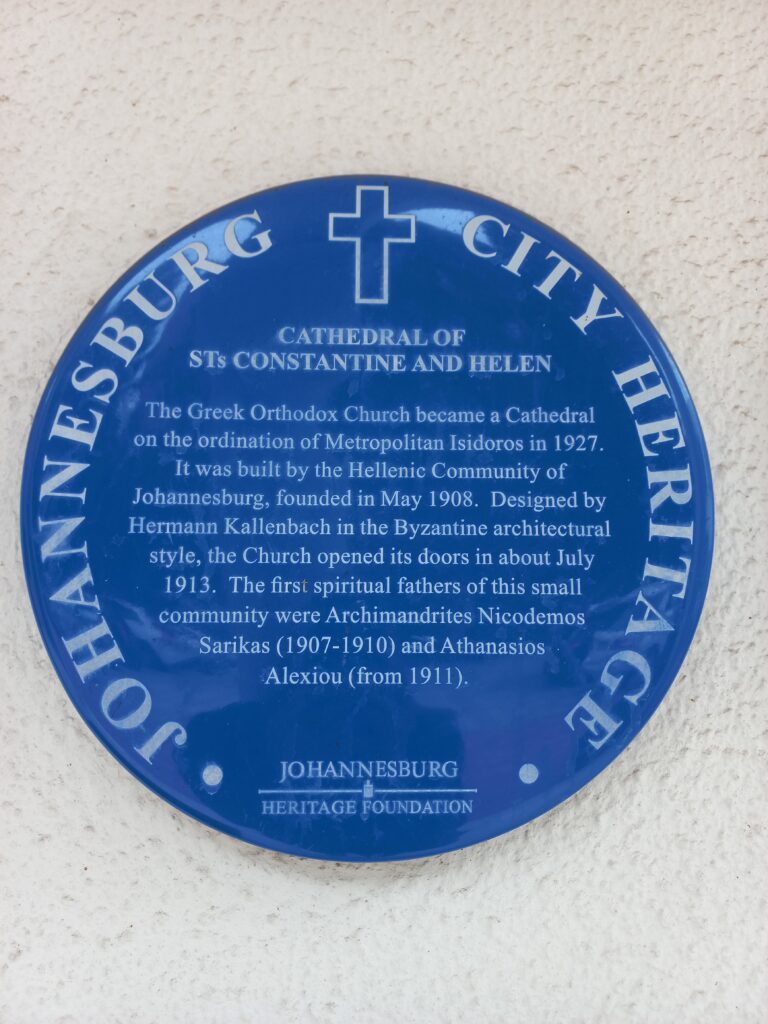
Provisional Protection under Section 29 of the National Heritage Resources Act (NHRA, 1999). Provincial Gazette Extraordinary vol. 18, no. 164, 13 June 2012.
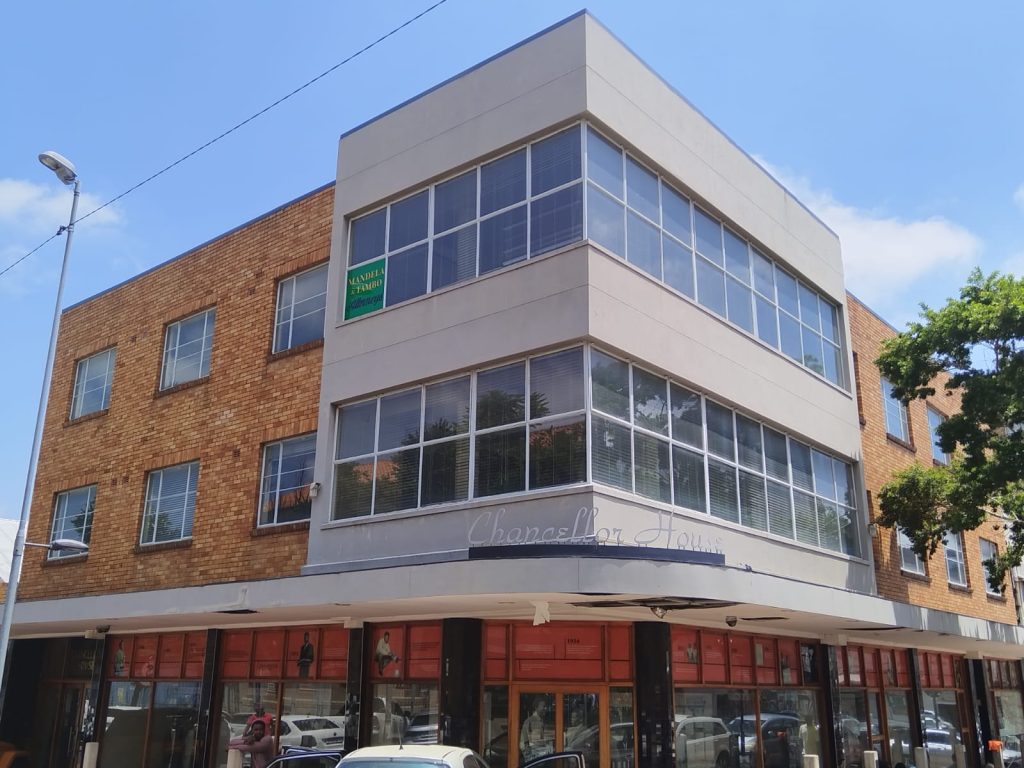
A culmination of research gathered over many years, the Online Johannesburg Heritage Register is being launched on Nelson Mandela Day 18 July 2025.
Among the many heritage sites featured is Chancellor House, the downtown offices of Mandela and Tambo Attorneys in the 1950s. After having been vacant and shuttered for more than a decade, this iconic building is being revived and brought to life once again as offices for the Community Development Department, which oversees the City’s Arts, Culture & Heritage Services.