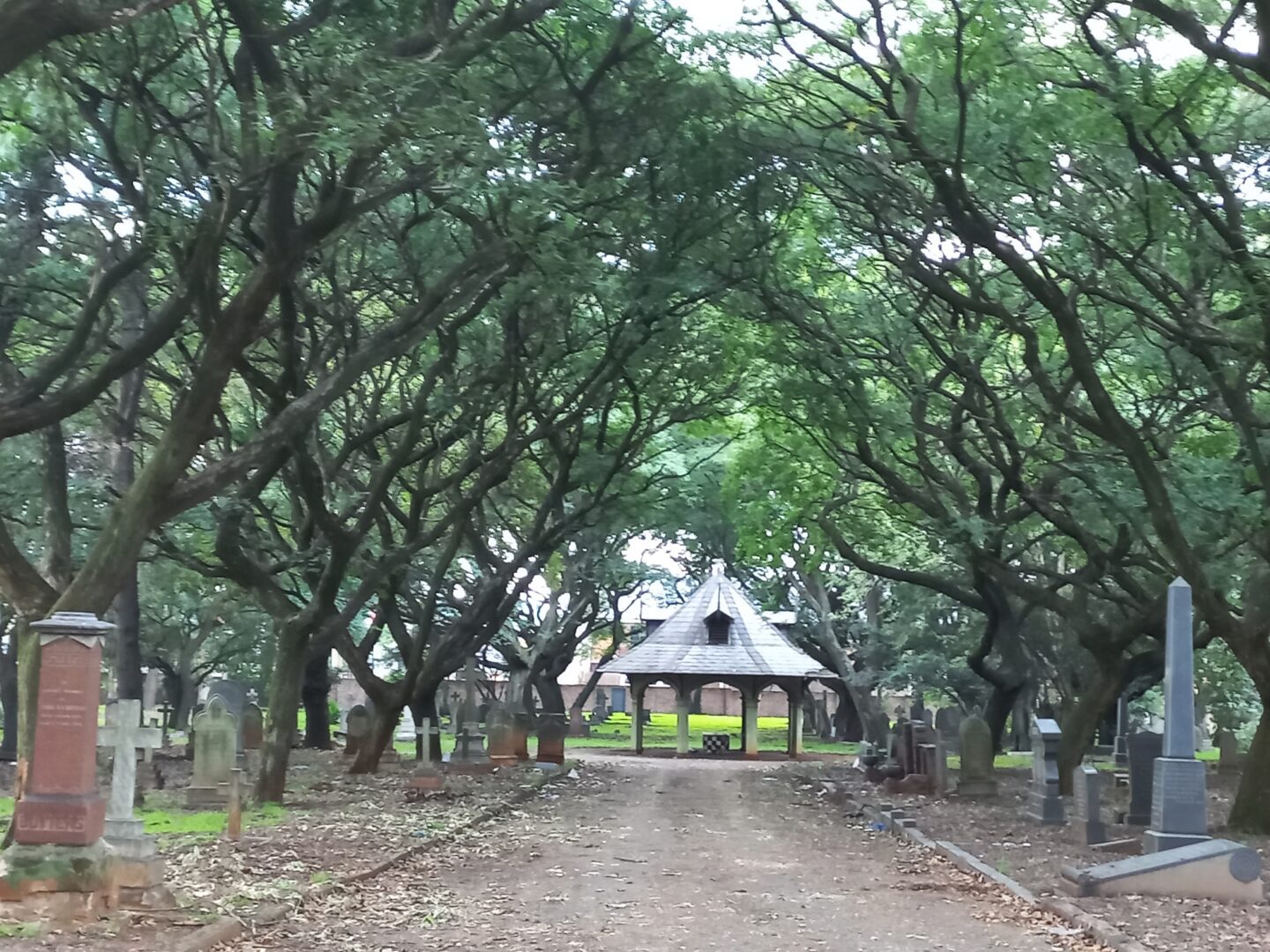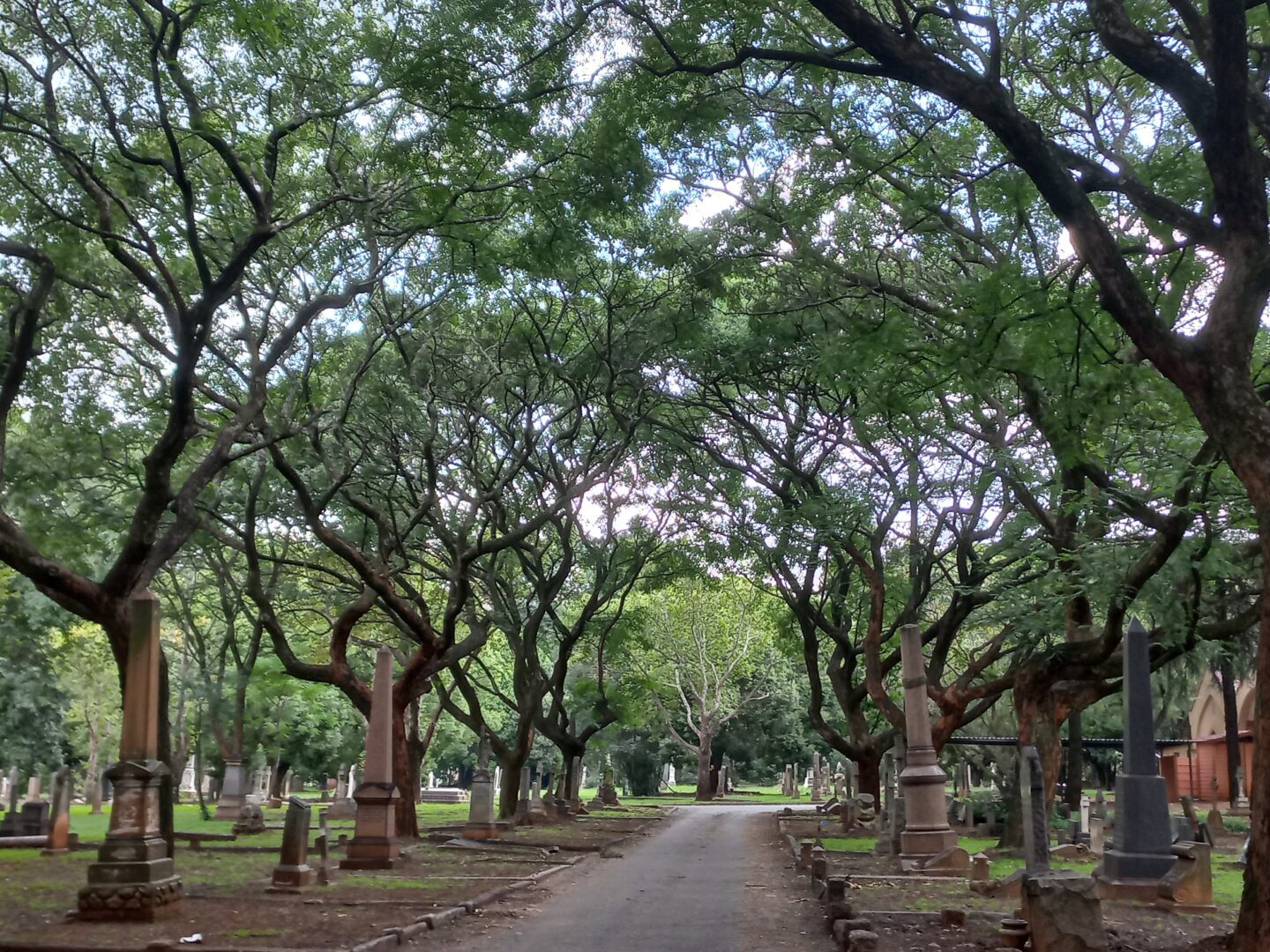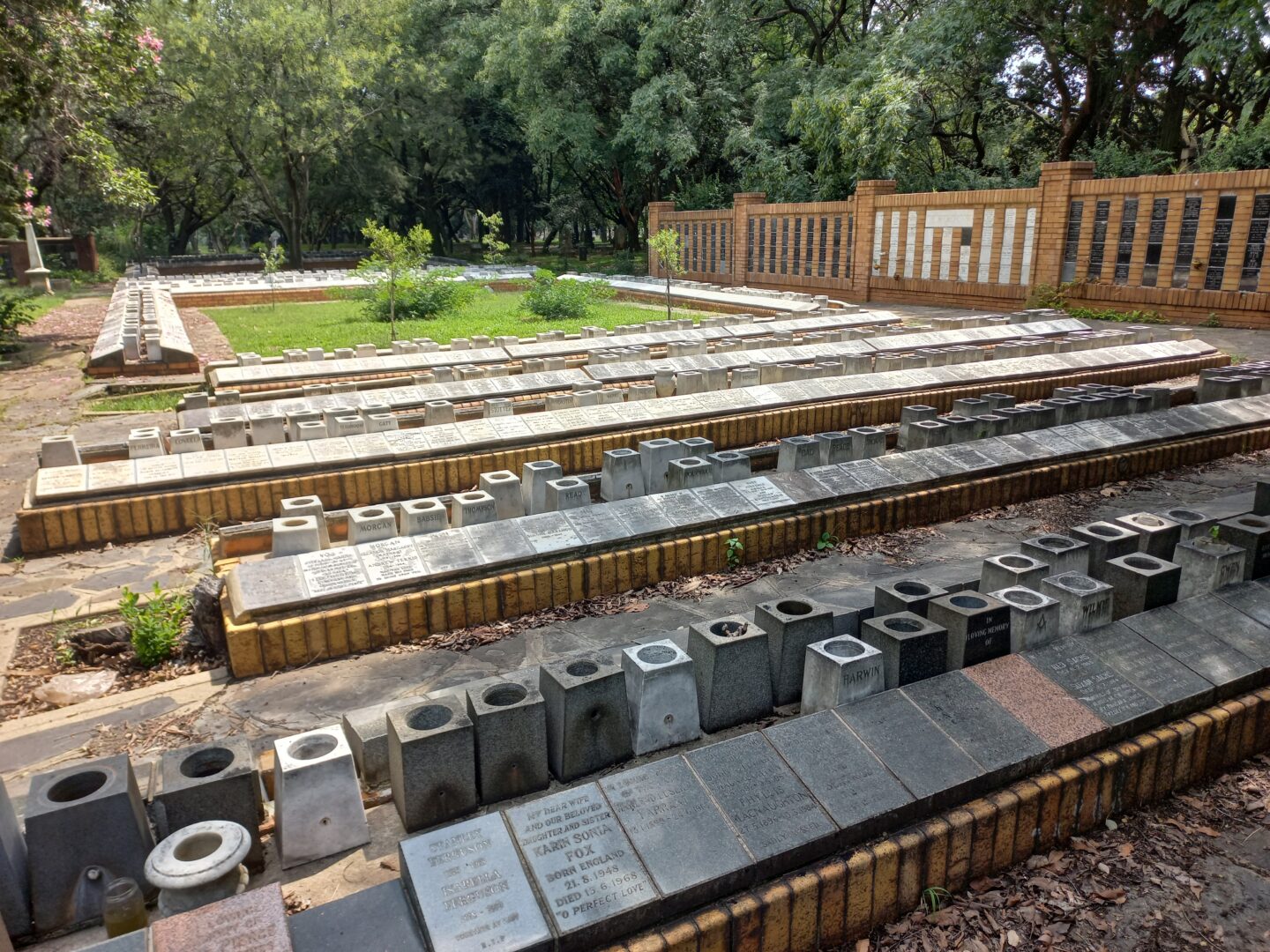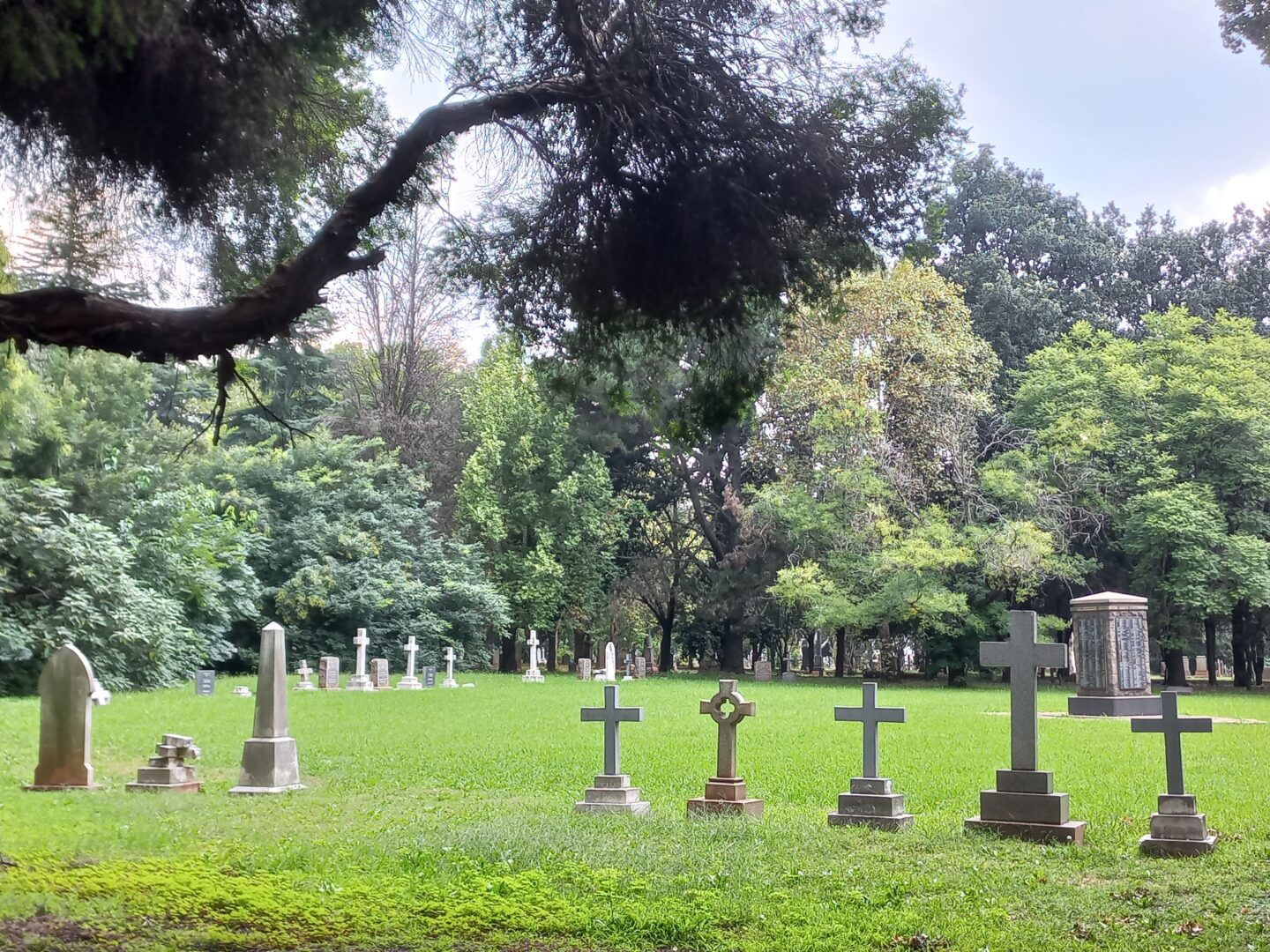
Surrounded by fencing and weathered stone walls, Braamfontein Cemetery features towering angelic statues, intricately designed crosses, and large granite headstones. Established in 1888, the cemetery is organized into neat rows according to religion and race, and includes graves of WWI and WWII soldiers, Indian and Chinese martyrs from the passive resistance struggle, black miners, early Johannesburg founders, and Enoch Sontonga, the composer of the national anthem “Nkosi Sikel iAfrica,” among others.
The cemetery is planted with tall eucalyptus trees and lush grass, serving as a majestic green space rich in history. The stories of the different sections are preserved through gravestones and maps that detail the cemetery’s layout. City Parks describes Braamfontein Cemetery in its Cemeteries and Crematoria handbook as “a lovely old cemetery with long lanes of trees,” noting its peaceful, regal atmosphere and its connection to the city’s early history.
The main entrance is on Graf Street, where graves of the city’s founders line the road, marked by tall headstones, many featuring angels or crosses carved from granite, with inscriptions that have faded over time. Near the entrance, at the archway offices, hand-drawn maps in wooden frames display different cemetery sections, plot numbers, paths, and fences, along with old leather-bound registers from the cemetery’s early days.
The cemetery is arranged in orderly straight roads with sections designated for various religious groups, including Dutch Reform, Church of England, Roman Catholic, Hindu, Muslim, and Jewish, as well as a non-white and non-conformist section north of the entrance. The Jewish and Muslim sections, added later, each have their own entrances, and a crematorium built in 1932 is located at the cemetery’s south-east corner.
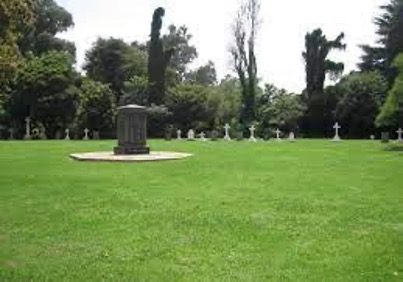
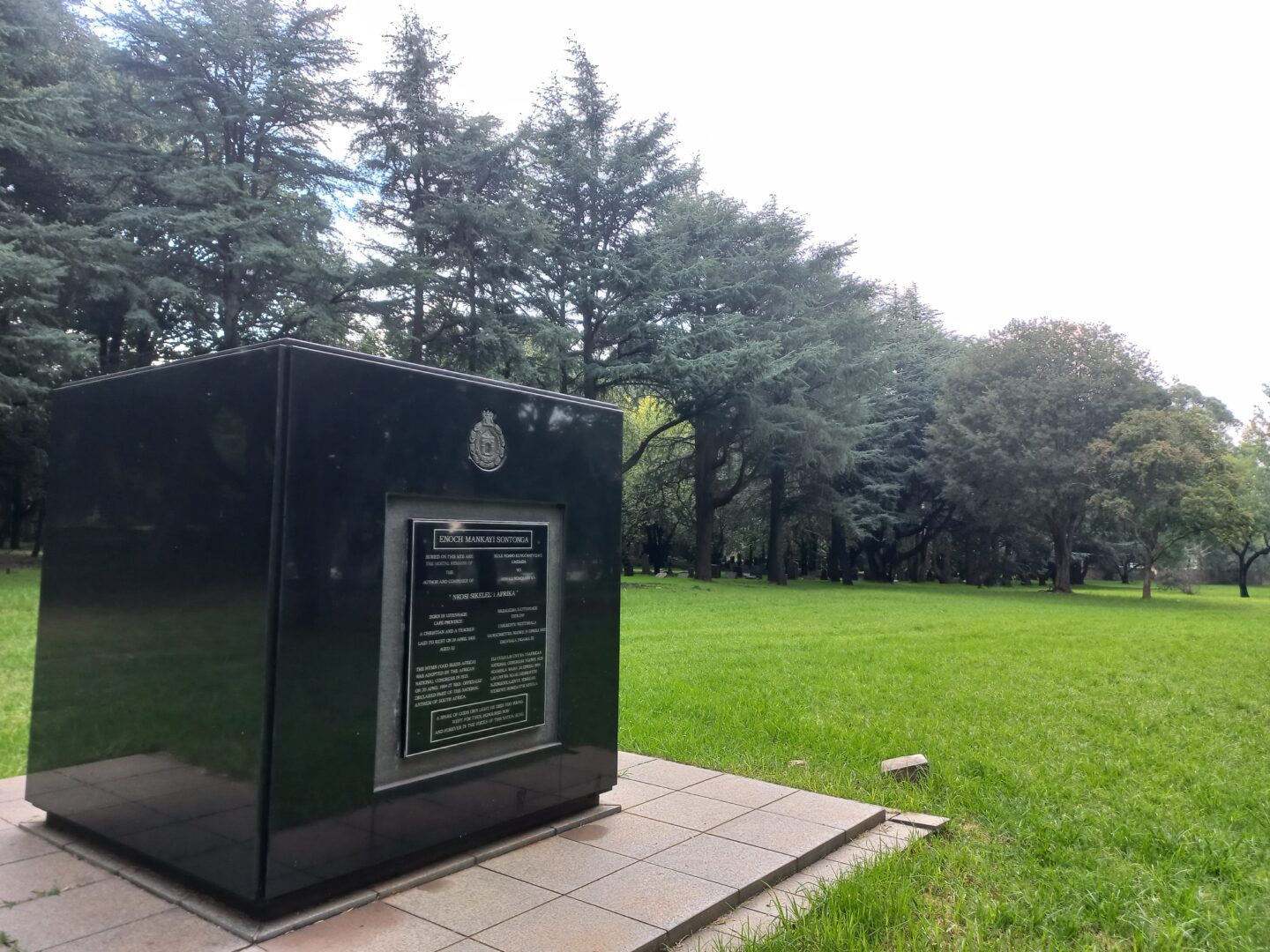
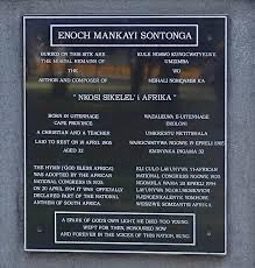
To the west, near the Chinese section, a grassy area under large eucalyptus trees features a massive black granite cube commemorating Enoch Sontonga. Beneath this section lie the graves of numerous black individuals, including those from the School of Mines, now known as the Enoch Sontonga Memorial Park.
The cemetery also includes 77 Commonwealth burials from the Second World War and 11 from the First World War.
Before gold was discovered, the early cemeteries were small farm cemeteries where farmers buried their families and workers. Over 25 of these cemeteries remain, with notable examples at Bezuidenhout Park (Bezuidenhout family) and Hill Road in Emmarentia (Geldenhuys family), as well as several single grave sites in Linksfield and Bryanston, mostly from the mid-to-late 1800s.
When Johannesburg was first planned, the city was densely packed with stands to maximize income, leaving little open space and no public parks. In January 1887, following the deaths of miners Thomas Gray and Charles Johnson, twelve stands were designated for a small cemetery between Bree, Harrison, Diagonal, and De Villiers Streets, but it proved inadequate. The burial locations of Gray and Johnson are unknown. The first recorded burial was of 45-year-old Mary Dearlove on March 29, 1887. As Johannesburg expanded rapidly, the small cemetery became congested, with graves being damaged by wagons. By August 1887, the council allocated land in Braamfontein for a proper cemetery.
Braamfontein Cemetery, now a prominent site, is surrounded by ageing fencing and stone walls and features towering angelic statues, intricately designed crosses, and large granite headstones. Established over 130 years ago, it contains the remains of the city’s founders, ordinary citizens, and notable figures like Enoch Sontonga, the composer of the national anthem Nkosi Sikelel' iAfrika. The cemetery’s roads, once used by horse-drawn hearses, are now narrow pathways accommodating students and visitors interested in its historical significance.
The first burial at Braamfontein Cemetery occurred in 1888, and over the years, it has become the final resting place of many key figures, including diamond magnate Thomas Cullinan, mining pioneers George Goch and Julius Jeppe, and Sontonga. In 1994, Nelson Mandela requested that Sontonga's grave be declared a national monument. The search for Sontonga's grave was challenging, involving historical records, aerial photography, and archaeological digs. His grave was finally located and a memorial was unveiled on September 24, 1996.
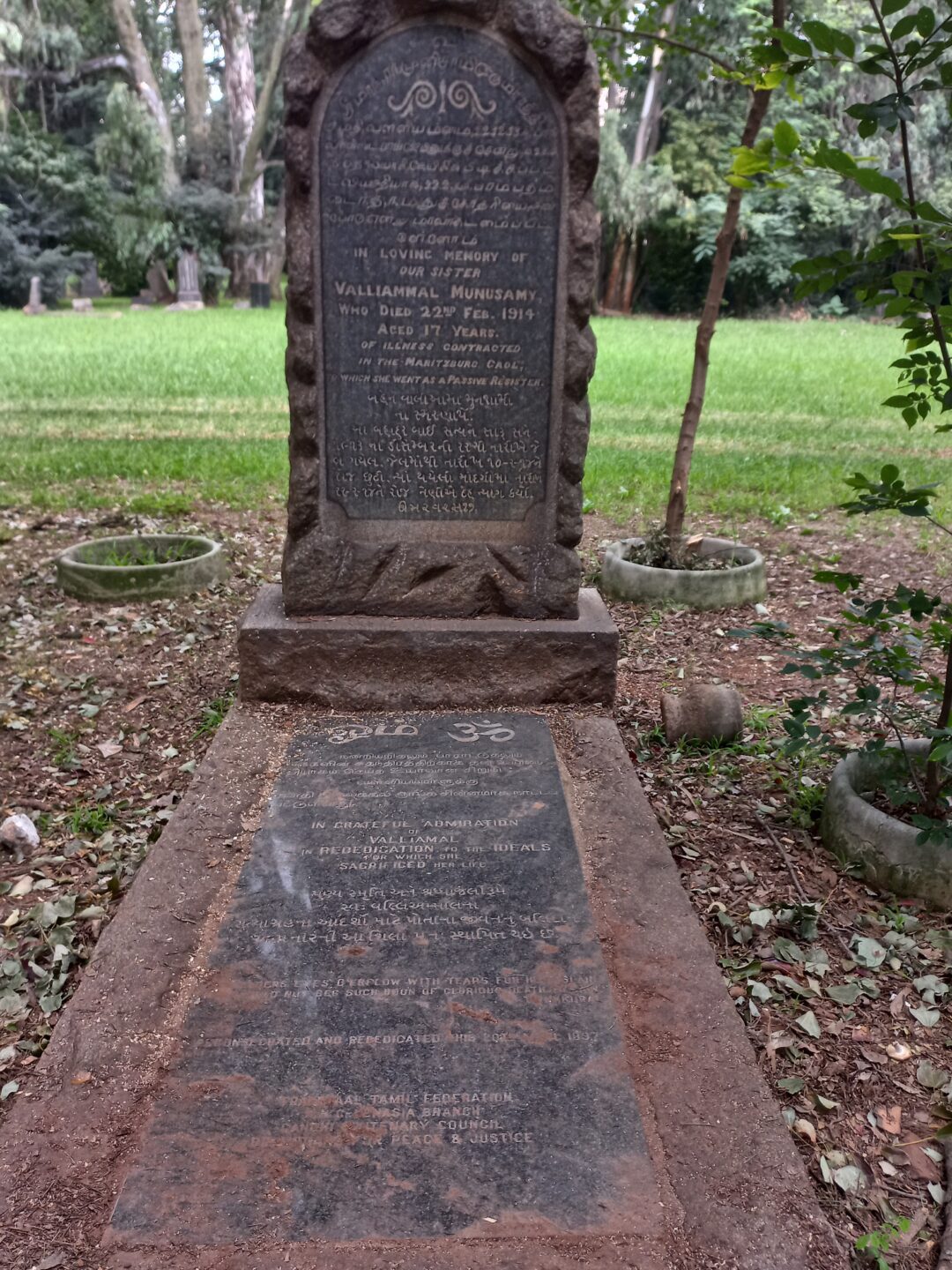
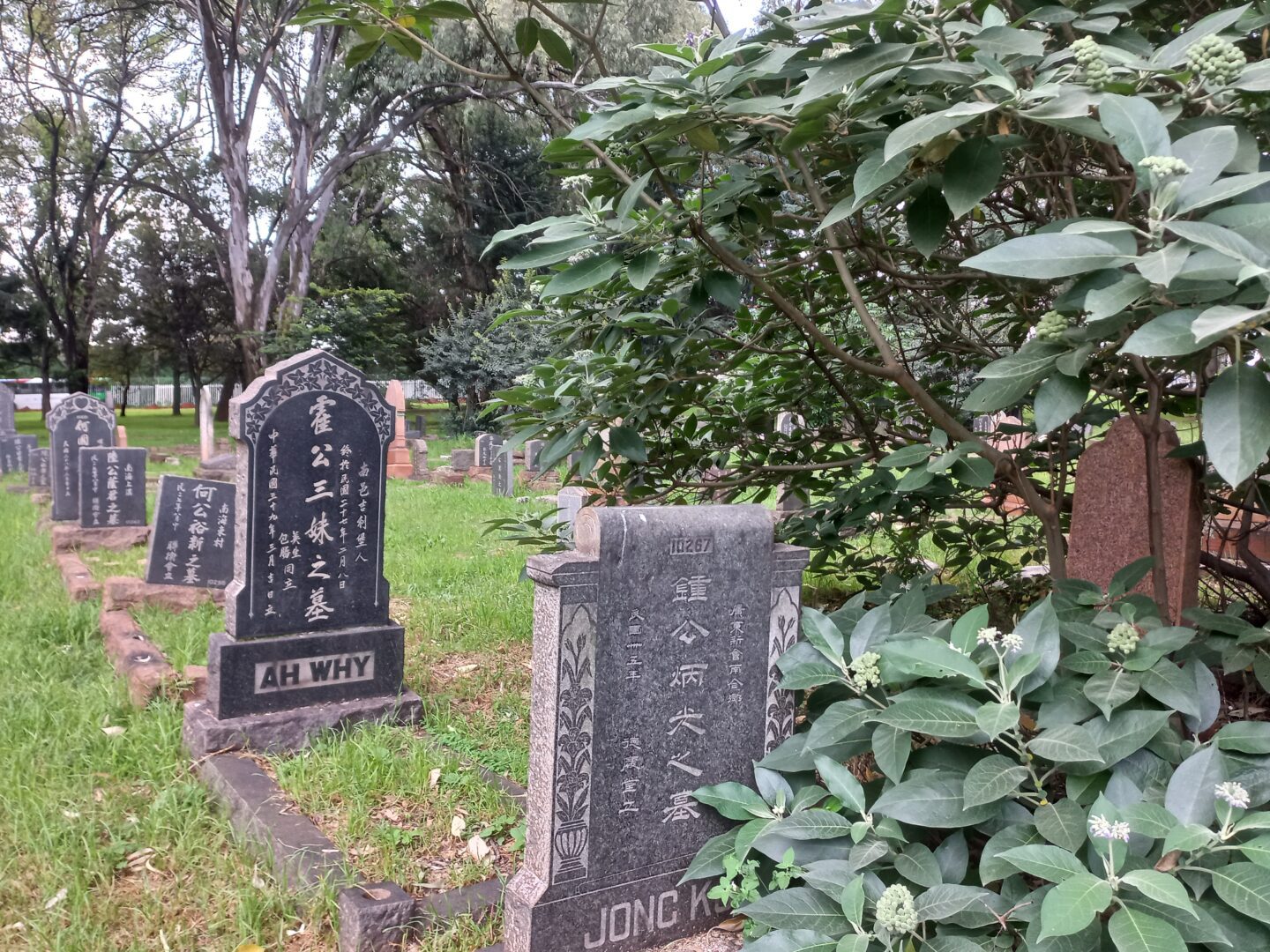
The cemetery also features a memorial spire for the 1896 Dynamite Explosion, commemorating the 75 victims of the explosion at Braamfontein Station. Valliamma Munusamy Moodaliar and Swami Nagappen, passive resistance martyrs, are buried here, with Moodaliar’s grave being visited by Gandhi in 1914. Nearby, Chow Kwai For’s grave in the Chinese section marks a poignant story of remorse and redemption.
The cemetery includes several distinct sections: a Muslim section with notable figures like Mahomed Remzi Bey, a Jewish section with historical significance including a part for marginalized individuals, and a Parsee Cemetery for members of the Zoroastrian religion. The southern quadrant holds the graves of firemen, policemen, priests, and nuns, while the crematorium, built in 1931-32, serves as a historic site with notable figures like former Prime Minister Jan Smuts being cremated there. Other graves include victims of the South African War, concentration camp survivors, and a reference to a Titanic disaster victim.
A culmination of research gathered over many years, the Online Johannesburg Heritage Register is being launched on Nelson Mandela Day 18 July 2025.
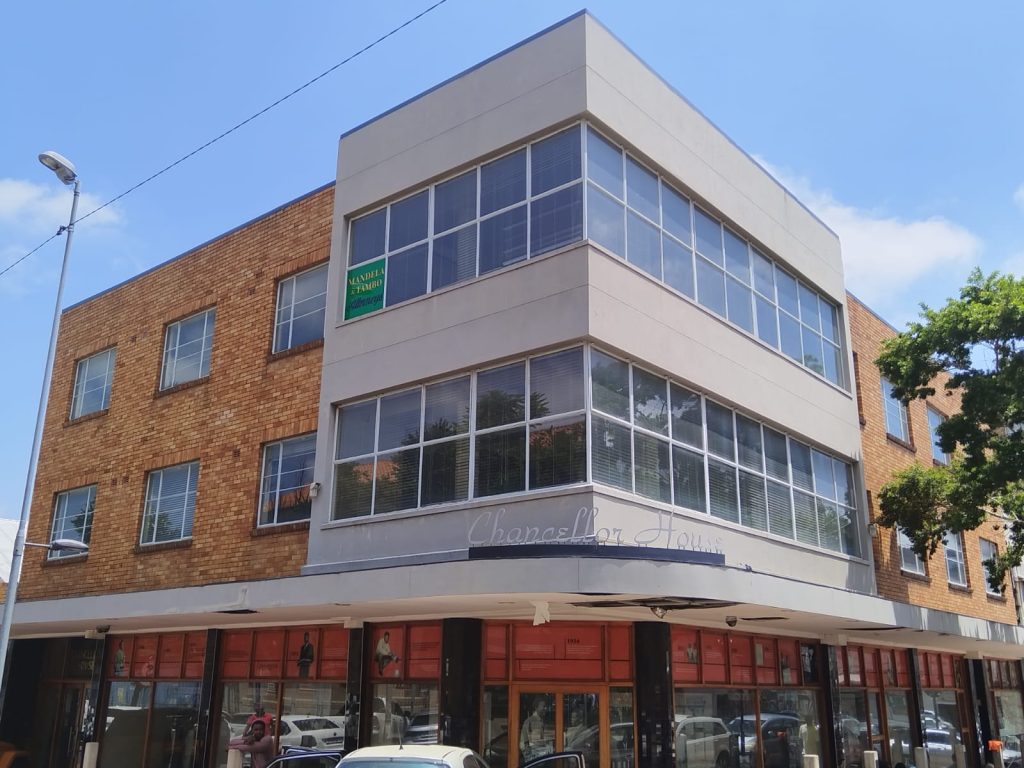
Among the many heritage sites featured is Chancellor House, the downtown offices of Mandela and Tambo Attorneys in the 1950s. After having been vacant and shuttered for more than a decade, this iconic building is being revived and brought to life once again as offices for the Community Development Department, which oversees the City’s Arts, Culture & Heritage Services.