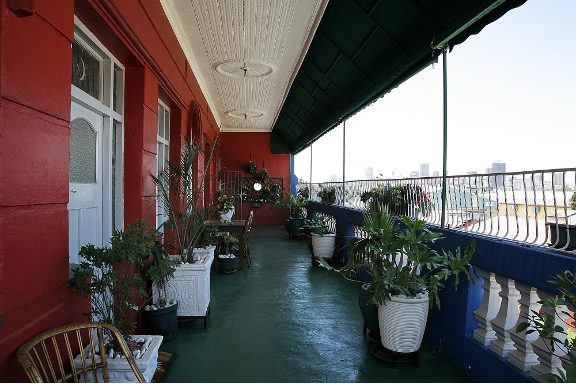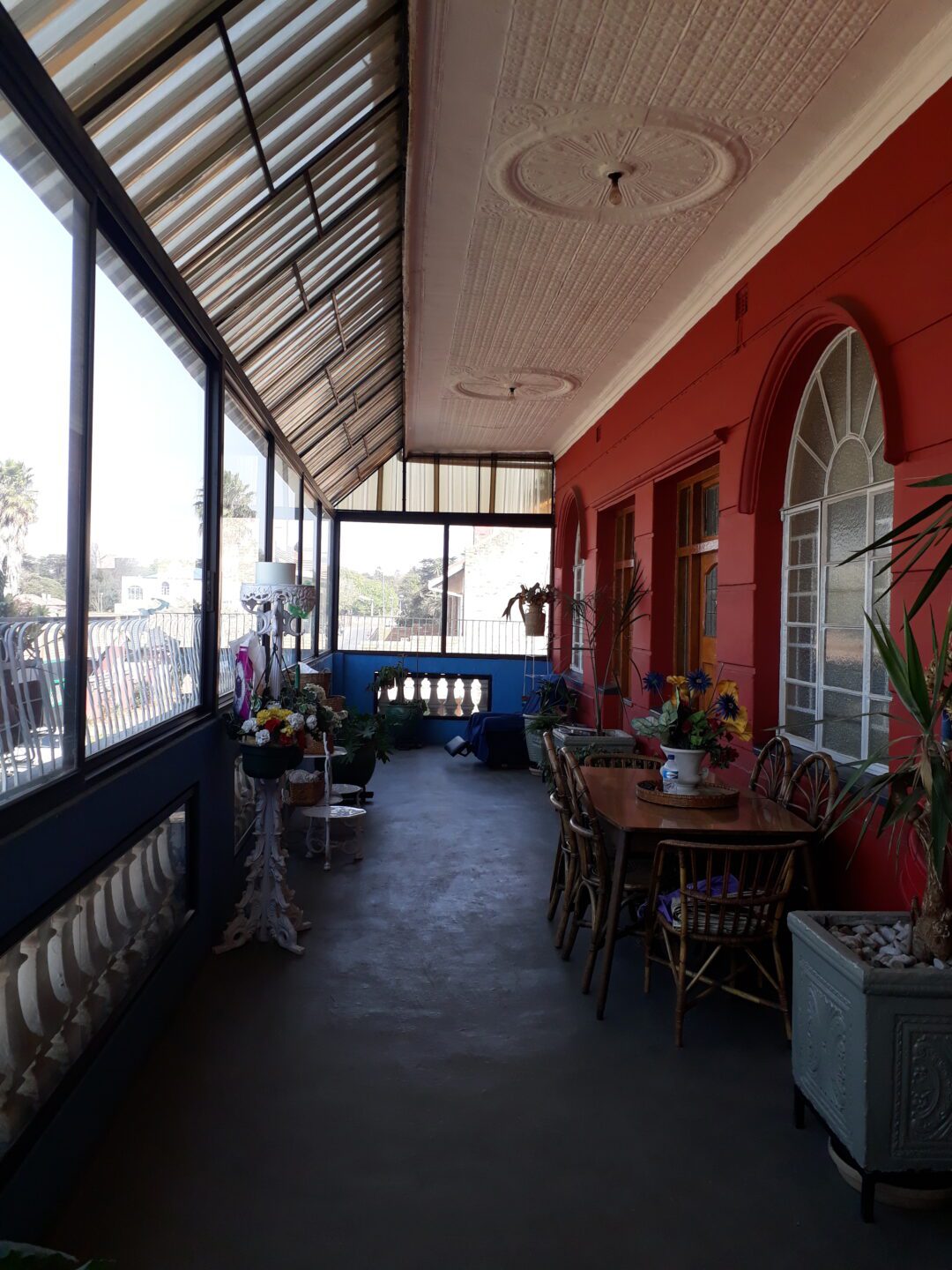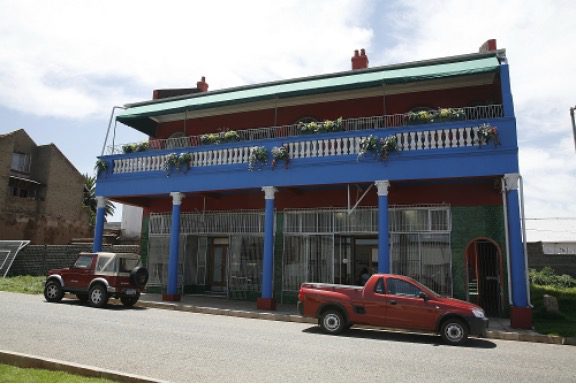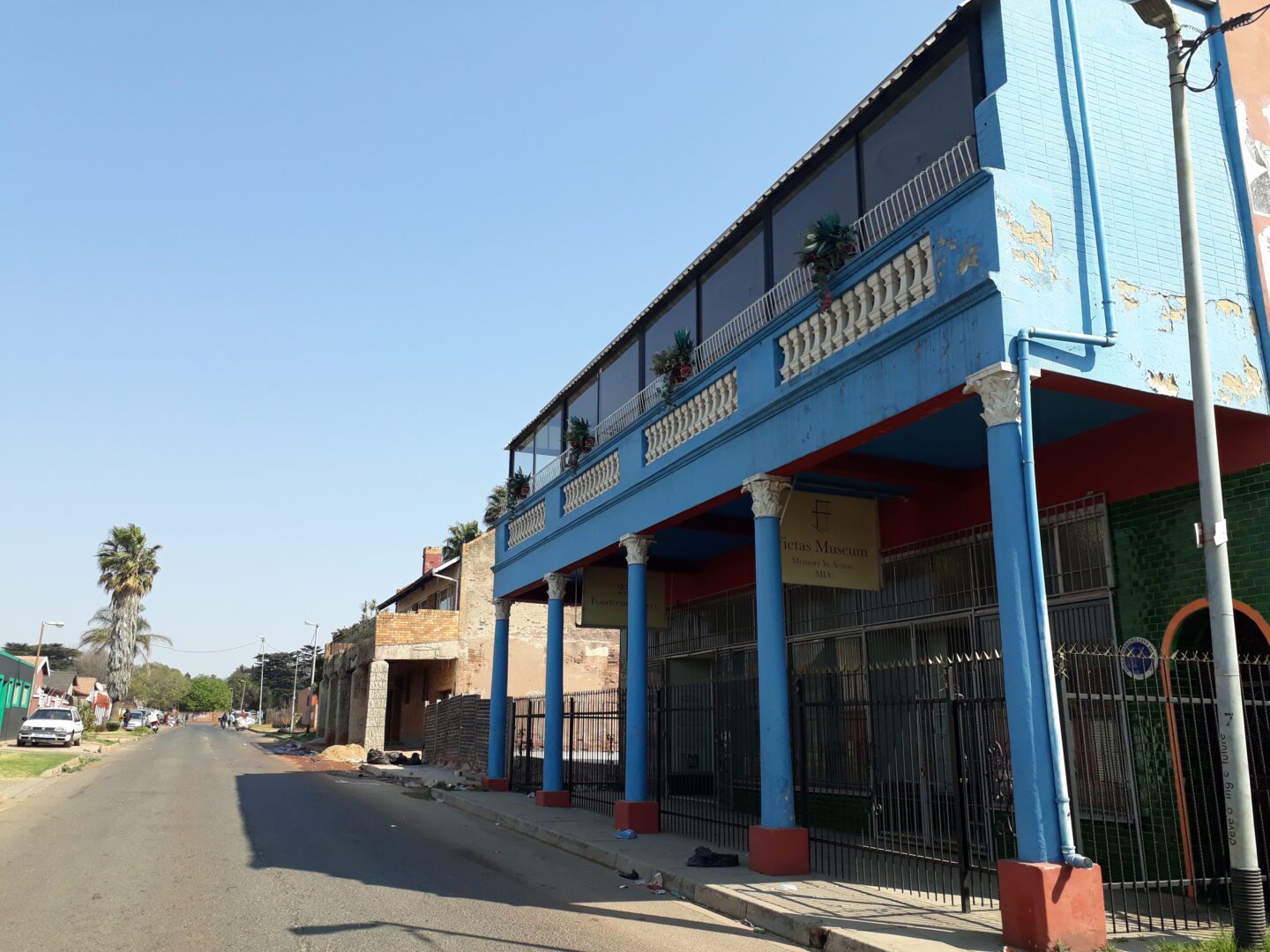
A two-storey shop-and-residence with an upstairs balcony supported by columns at street level, adhering to the traditional style of historical 14th Street. No 25 stands out prominently on the south side of the otherwise largely derelict street, flanked by empty plots where buildings were demolished during the forced removals. The house overlooks rows of low-cost housing built in later years for white families who replaced the former residents.
Founded by the Transvaal’s Kruger Government, what is now known as Pageview originated as the Malay Camp in 1893/4, with a predominantly Coloured and Malay population. The transition to a mainly Indian population began around June 1904, when Indians displaced from ‘Coolie Location’ started returning to the urban center. Following a bubonic plague outbreak in March 1904, the authorities burned Coolie Location to the ground, relocating the population to Klipspruit, 13 miles southwest of Johannesburg. Many of these displaced Indians soon resettled in Malay Location, one of the few areas in Johannesburg that permitted legal ‘non-white’ occupation. Within a few years, Indians became the majority population in the area.
Pageview was a vibrant, multicultural neighbourhood, characterized by its strong community life and accommodating a diverse population, including Coloureds, Africans, and some Chinese. Its main trading hub, the renowned 14th Street, was known for its bustling eastern-style bazaar that catered to a cosmopolitan and multi-racial clientele, including African mineworkers, bargain-hunters from white suburbs, and international tourists. The narrow street was lined with shops on both sides, and the pavements were cluttered with goods on racks and display stands. Many families lived in flats above their shops, with family members taking turns working behind the counter.
The building at 24 14th Street dates to the 1930s, though the architect remains unknown. Many buildings on this street share a uniform architectural character from this period, featuring upper-storey verandahs supported by columns. These ready-made columns, with capitals decorated in Doric or Corinthian styles, and standard pre-cast concrete elements contributed to the street’s architectural unity and consistency.
After the National Party government came to power, Pageview was declared a whites-only area under the Group Areas Act of 1950. According to apartheid policy, Indians were to move to Lenasia, Coloureds to Eldorado Park and Western Coloured Township, and Africans to Soweto. By 1967-68, the first eviction notices were served on Pageview residents, leading to a decade-long struggle as authorities sought to expel the unwilling residents.
To compensate for their lost businesses, the Johannesburg City Council developed the Oriental Plaza in Fordsburg for the displaced Indian traders. By 1975, with the Plaza nearing completion, house demolitions began under the guise of ‘urban renewal’. In 1977, officials evicted the last traders from 14th Street, supported by riot police and dogs. The 14th Street bazaar traders were among the last to resist, but they were eventually relocated to the Oriental Plaza.
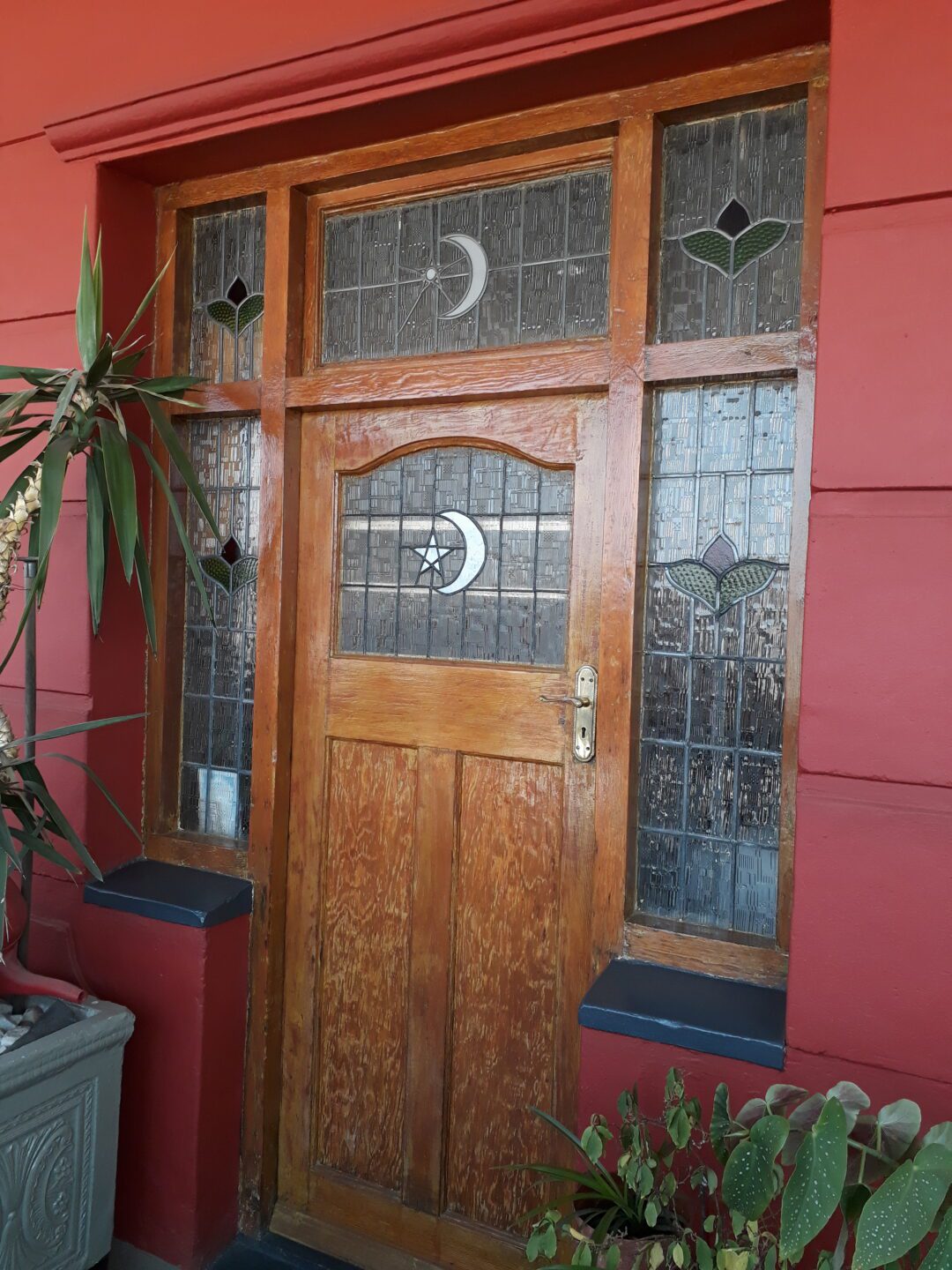
The house at 25 14th Street, known as Karachi’s Building until the 1970s, was home to the well-known political Cachalia family, including Firoz Cachalia, the former MEC for Safety and Security in the Gauteng Provincial Government, and his brother Azhar, a retired judge of the Supreme Court of Appeal . As children, Firoz and Azhar lived there with their grandparents. The Surtee family moved to Fordsburg and relocated their business next door to No 23 14th Street before 1977. Subsequently, the Kara family bought the building and moved in, eventually leaving in December 1986. The Patel family moved in in August 1987, having a longstanding friendship with the Kara family and almost six decades of residency in the area. The building now houses the Fietas Museum at ground level, established by Salma Patel (born 1956), whose father managed the neighboring Surtees Silk Store.
General Protection: Section 34 (1) Structures under the National Heritage Resources Act, 1999.
Archival status: Provisional Protection Status under Section 29 of the National Heritage Resources Act (Provincial Gazette Extraordinary vo . 18, no 164, 13 June 2012). Provisional protection lapsed after 2 years.
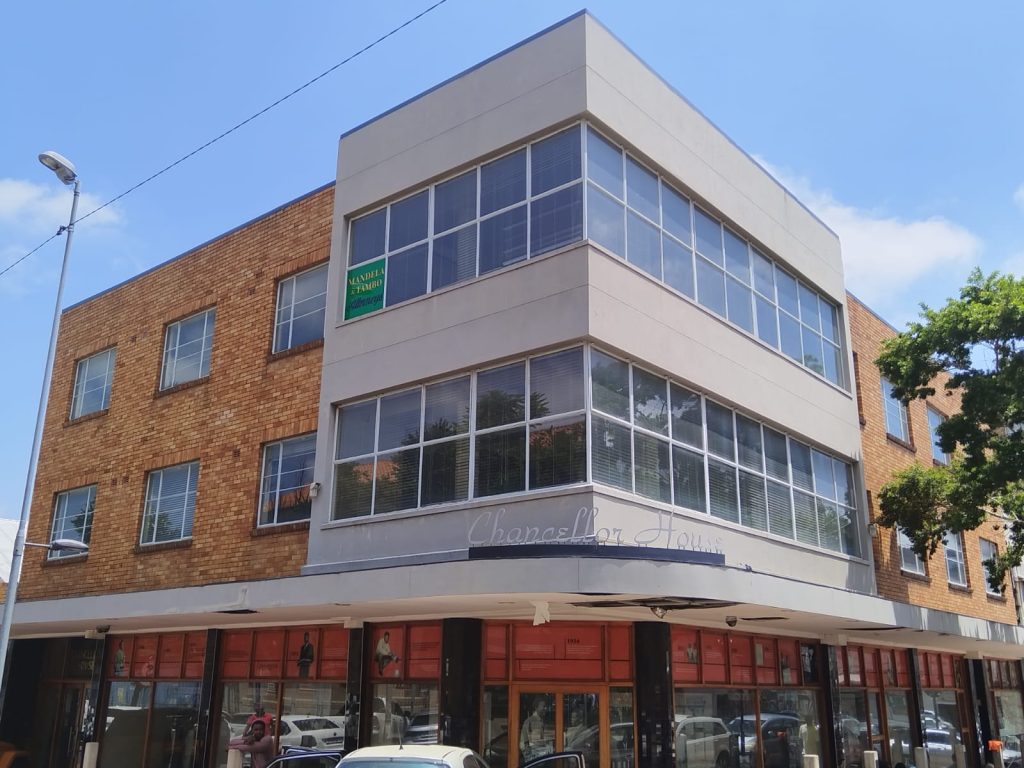
A culmination of research gathered over many years, the Online Johannesburg Heritage Register is being launched on Nelson Mandela Day 18 July 2025.
Among the many heritage sites featured is Chancellor House, the downtown offices of Mandela and Tambo Attorneys in the 1950s. After having been vacant and shuttered for more than a decade, this iconic building is being revived and brought to life once again as offices for the Community Development Department, which oversees the City’s Arts, Culture & Heritage Services.