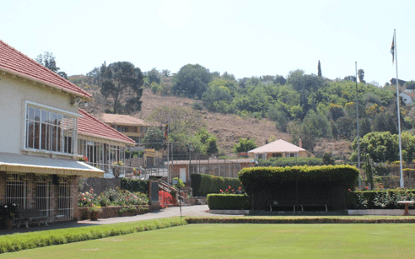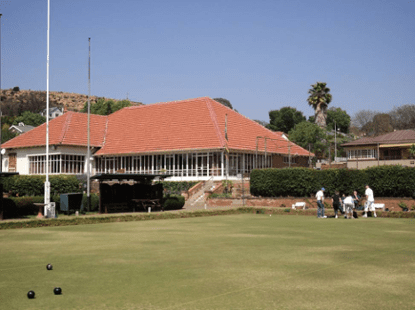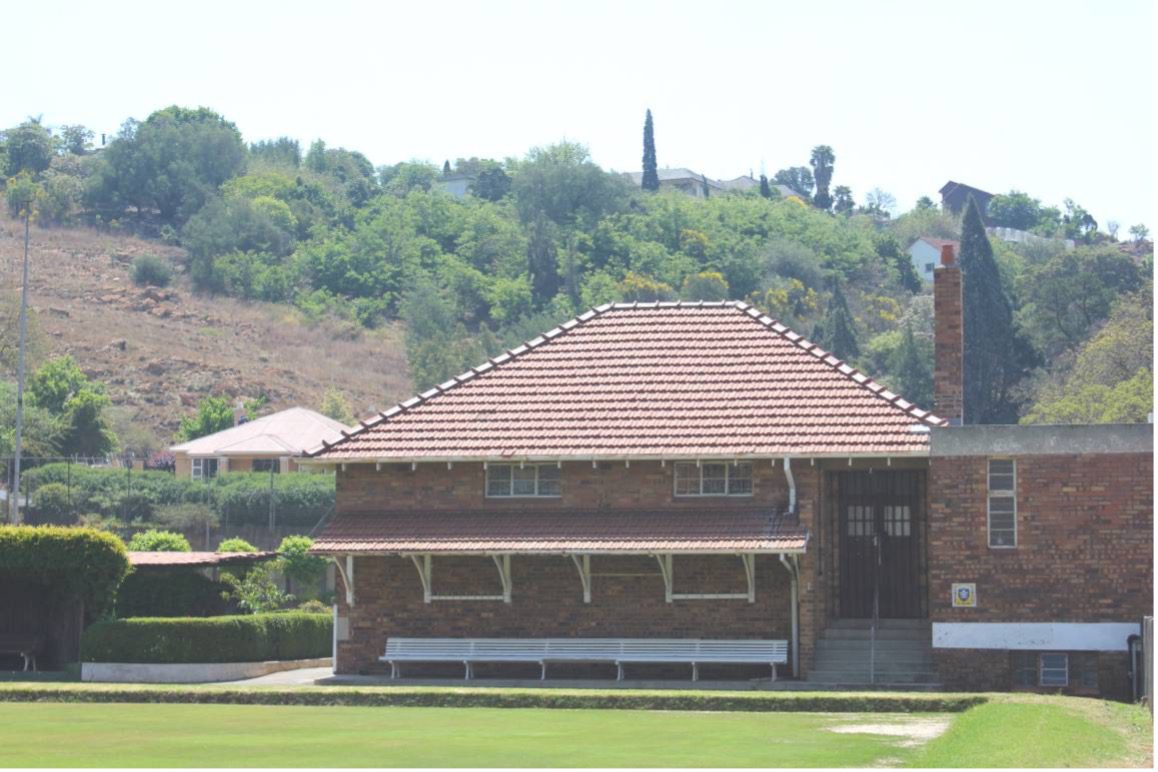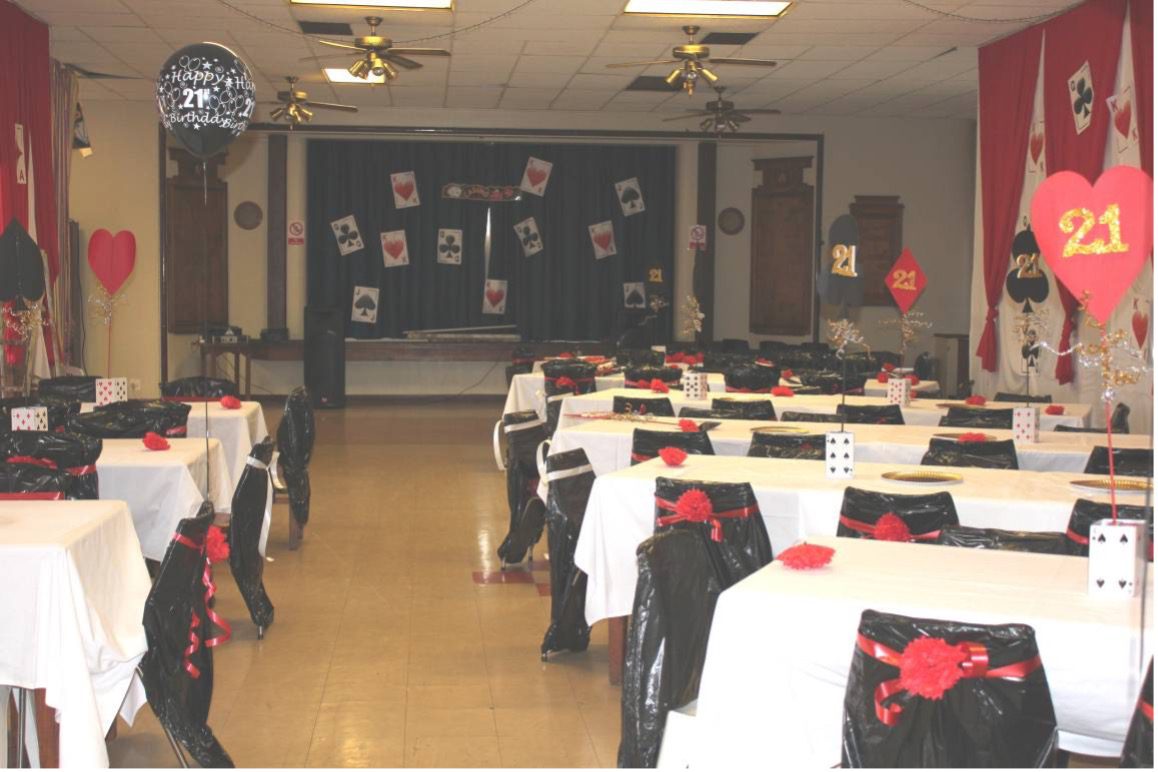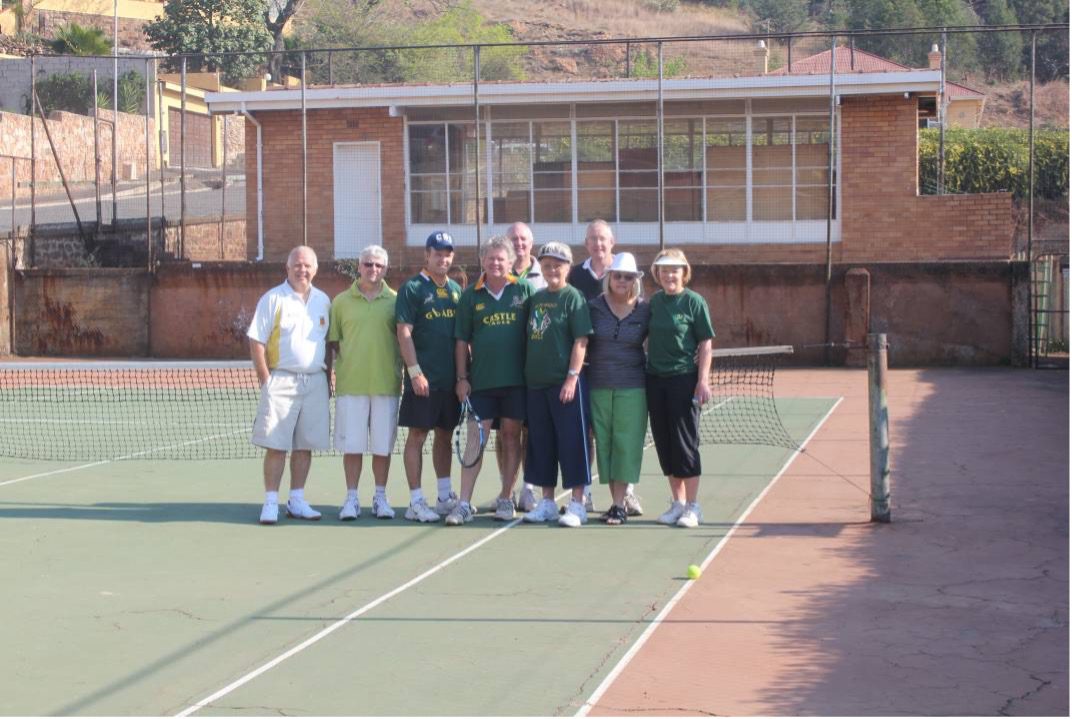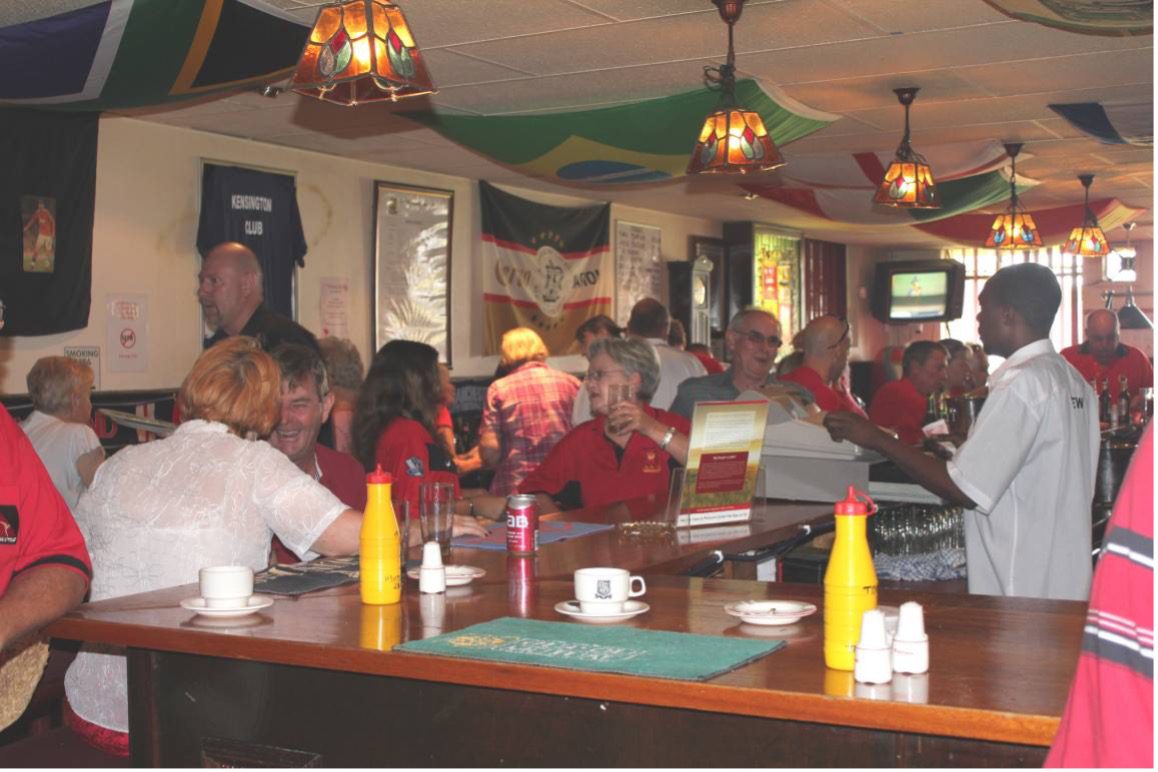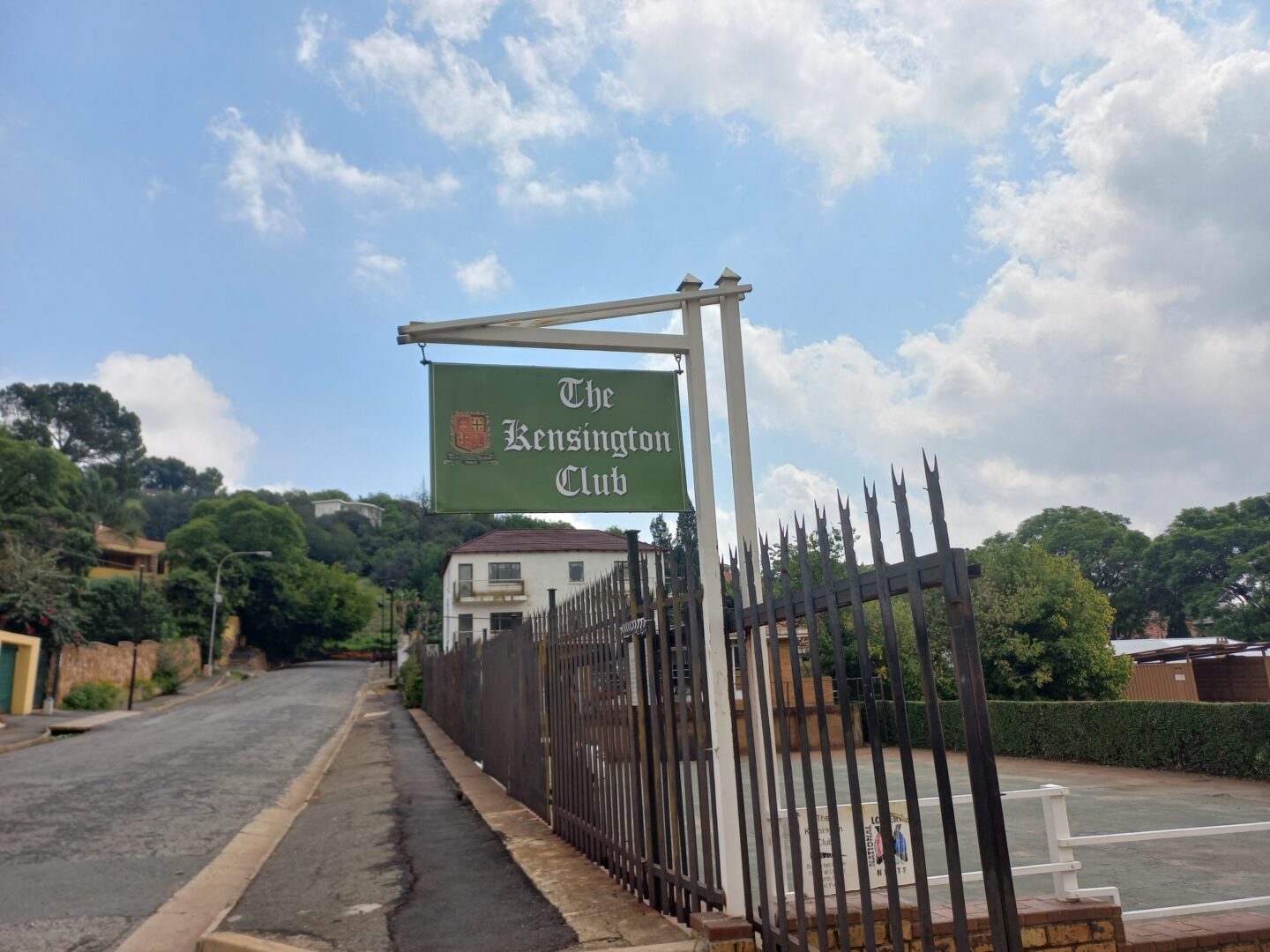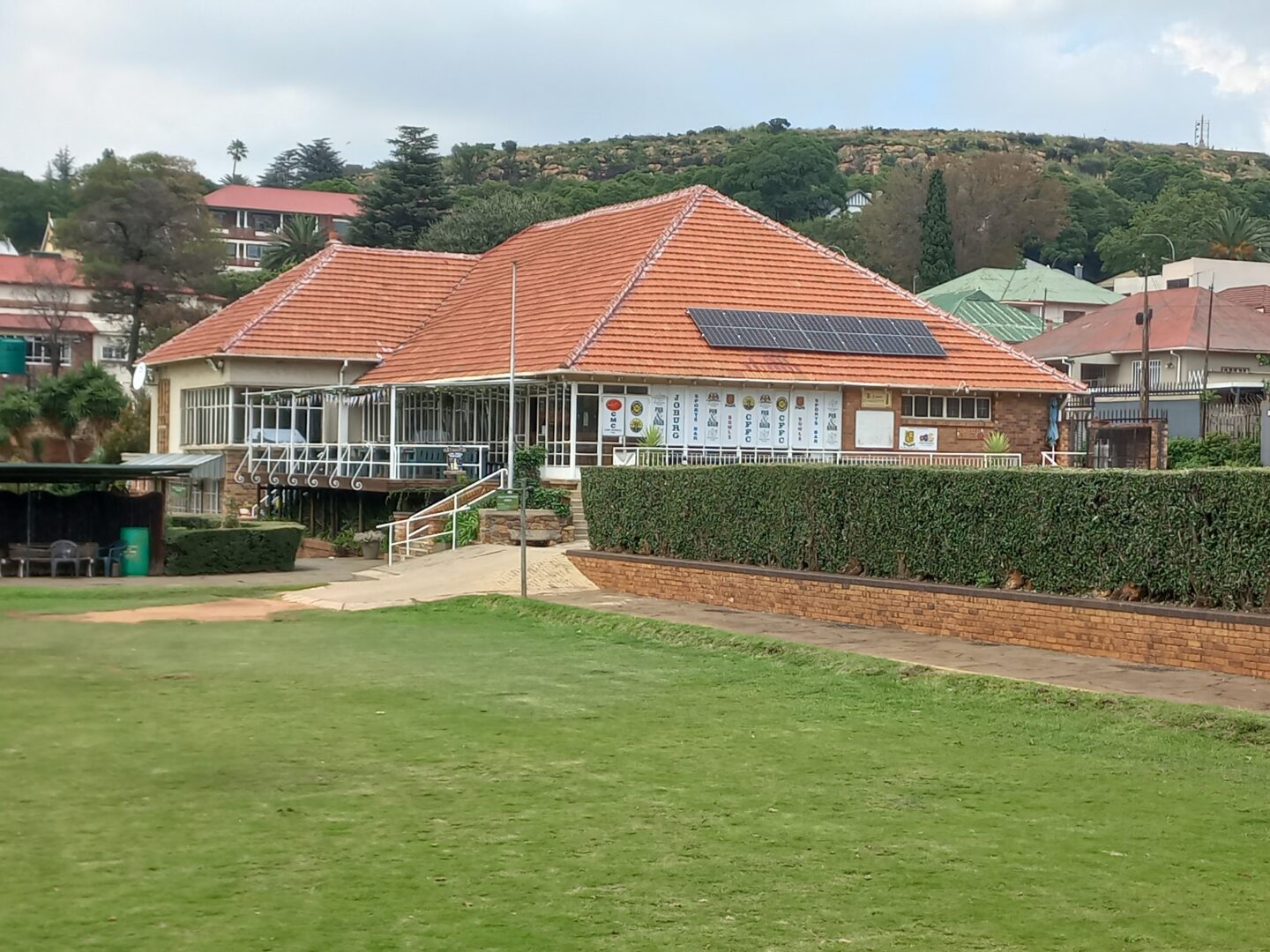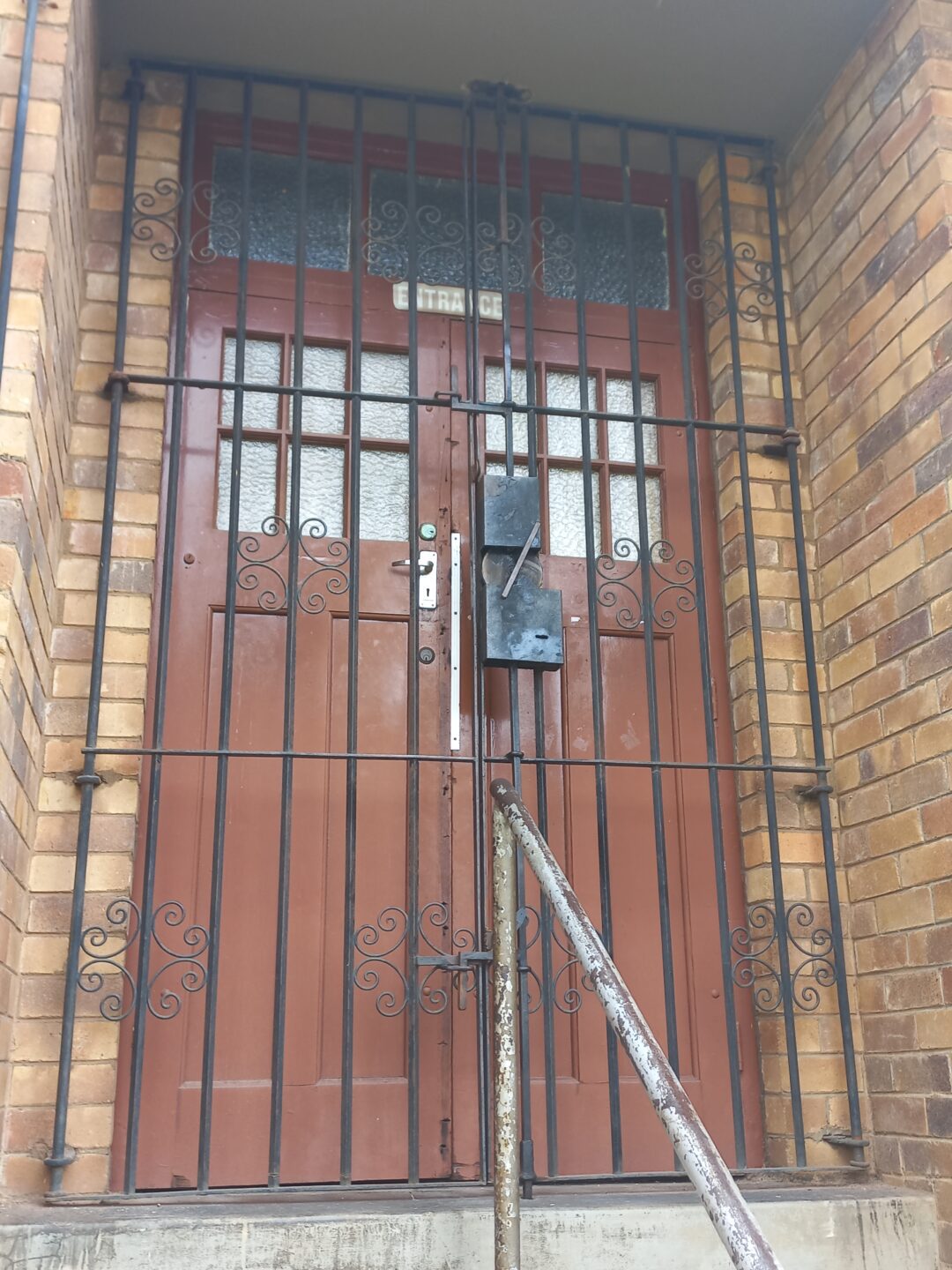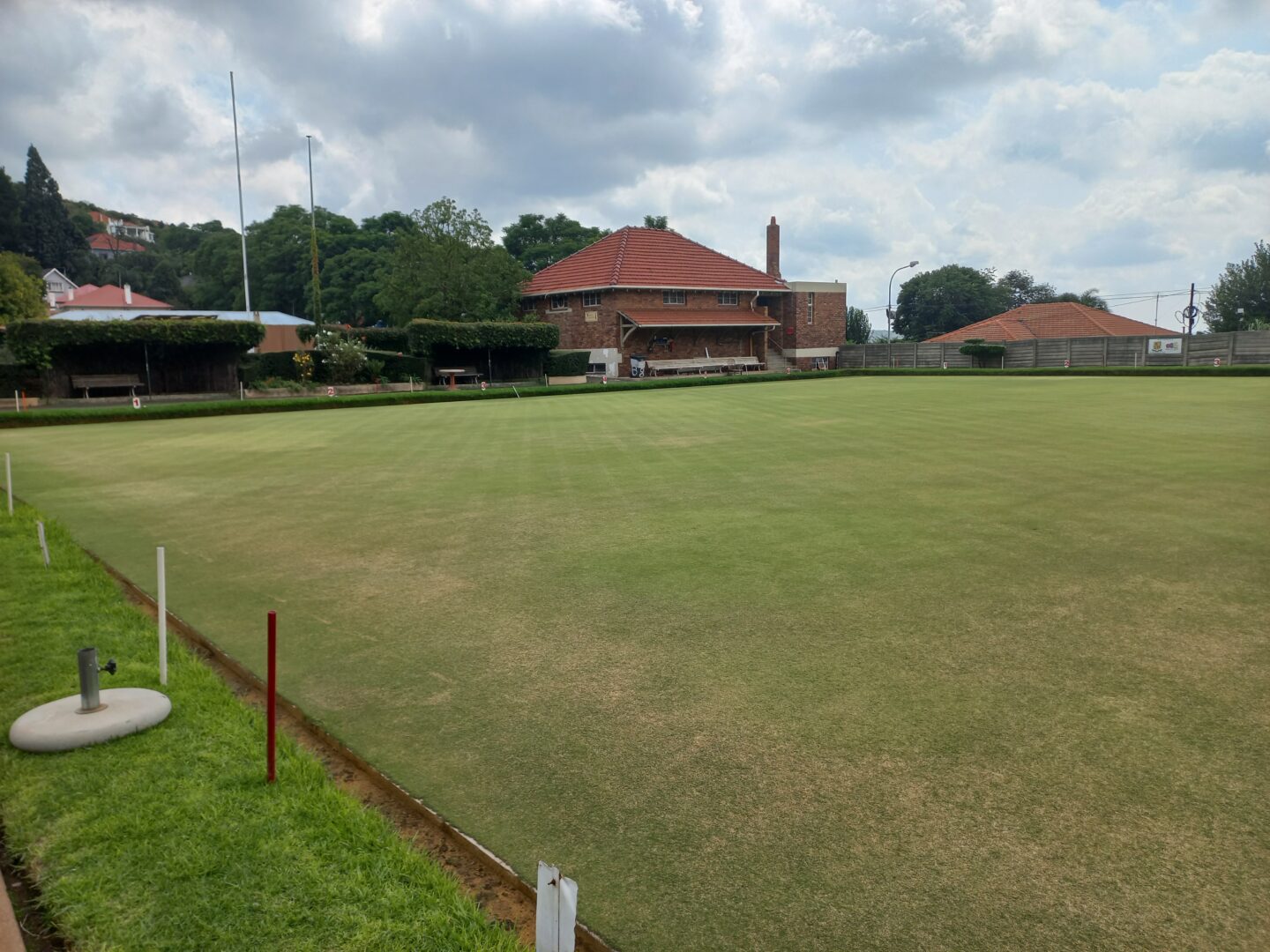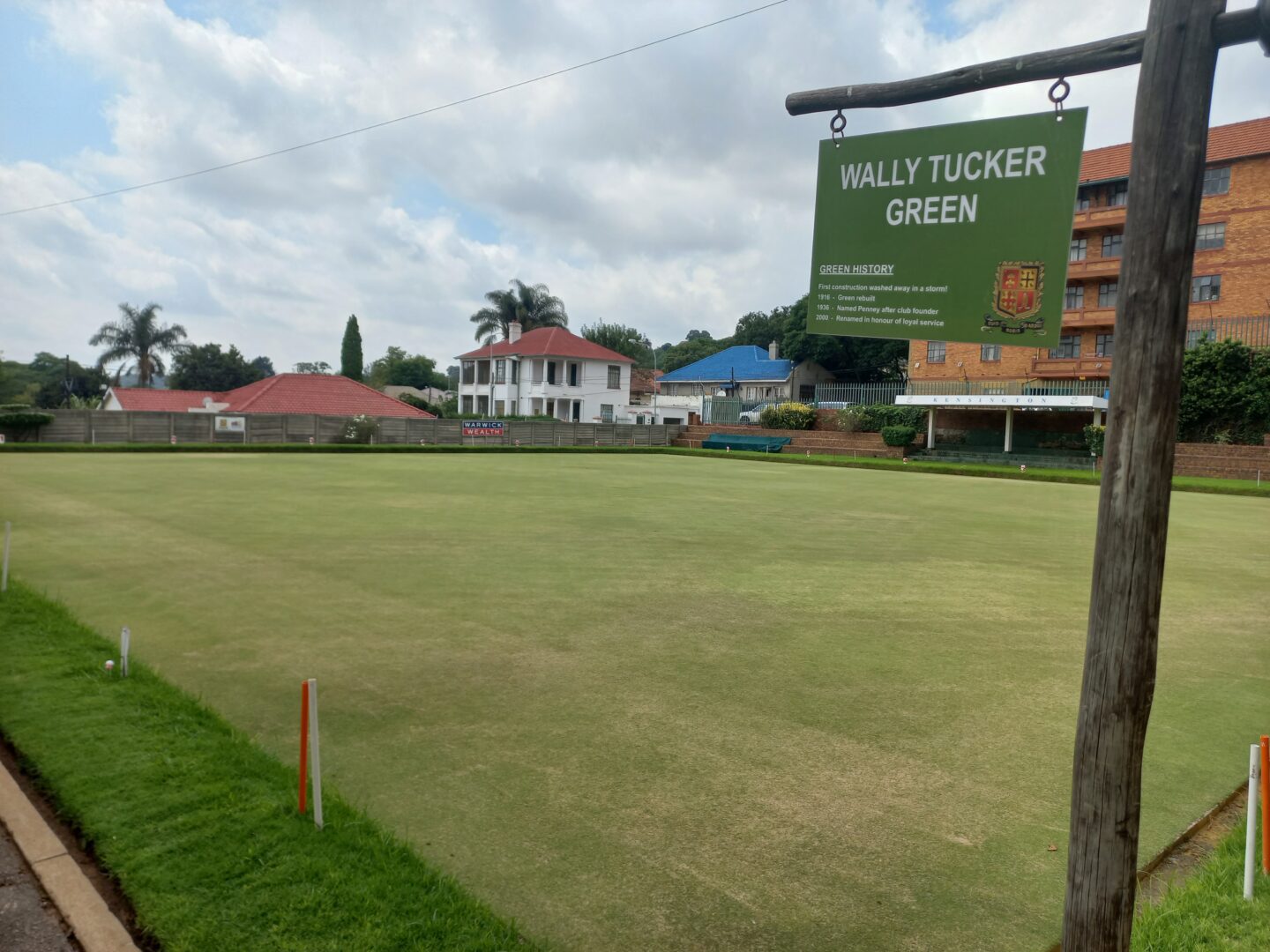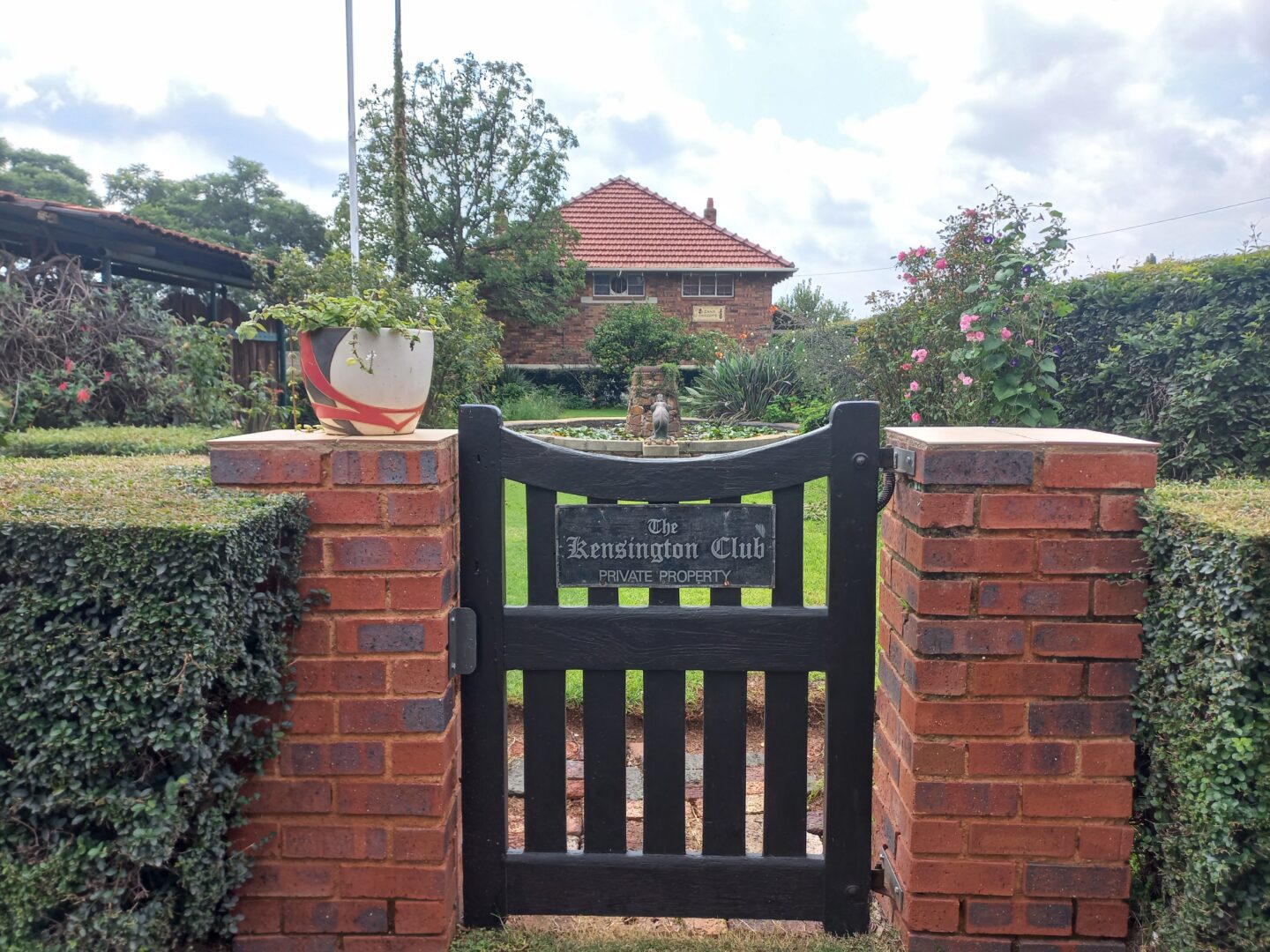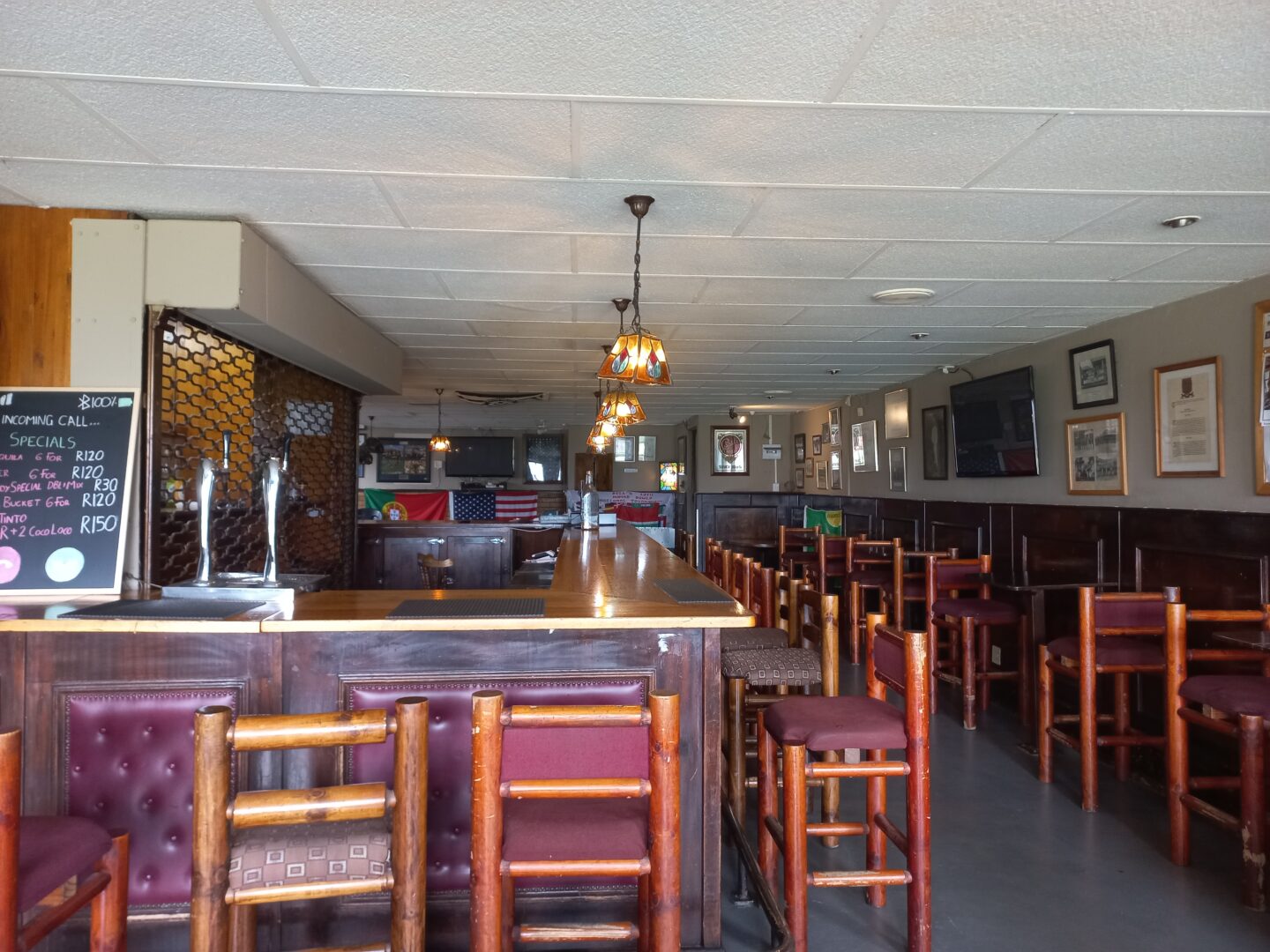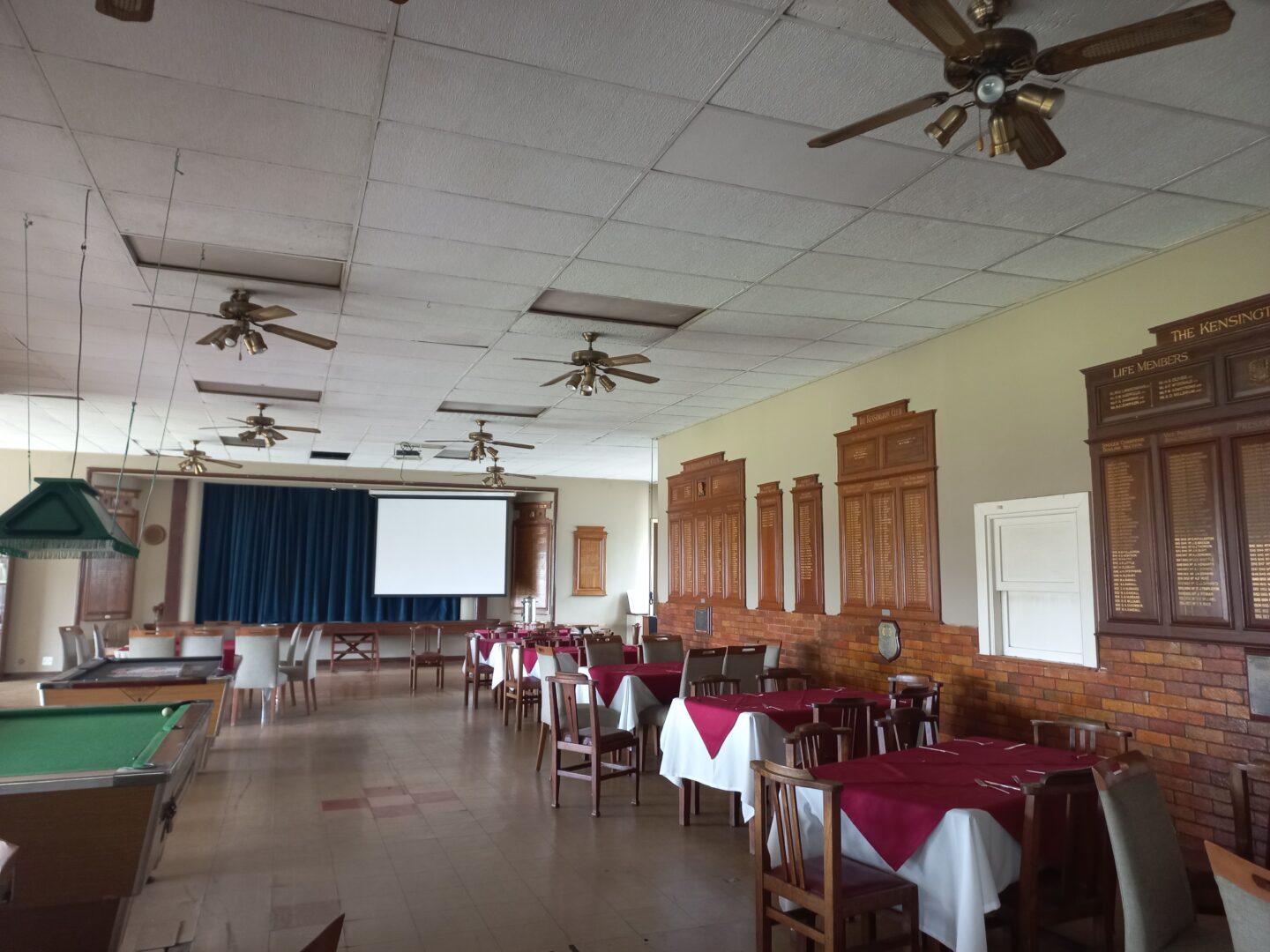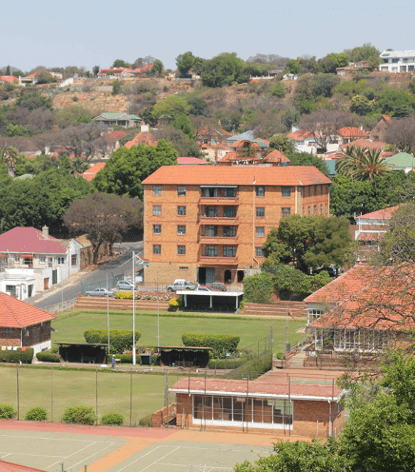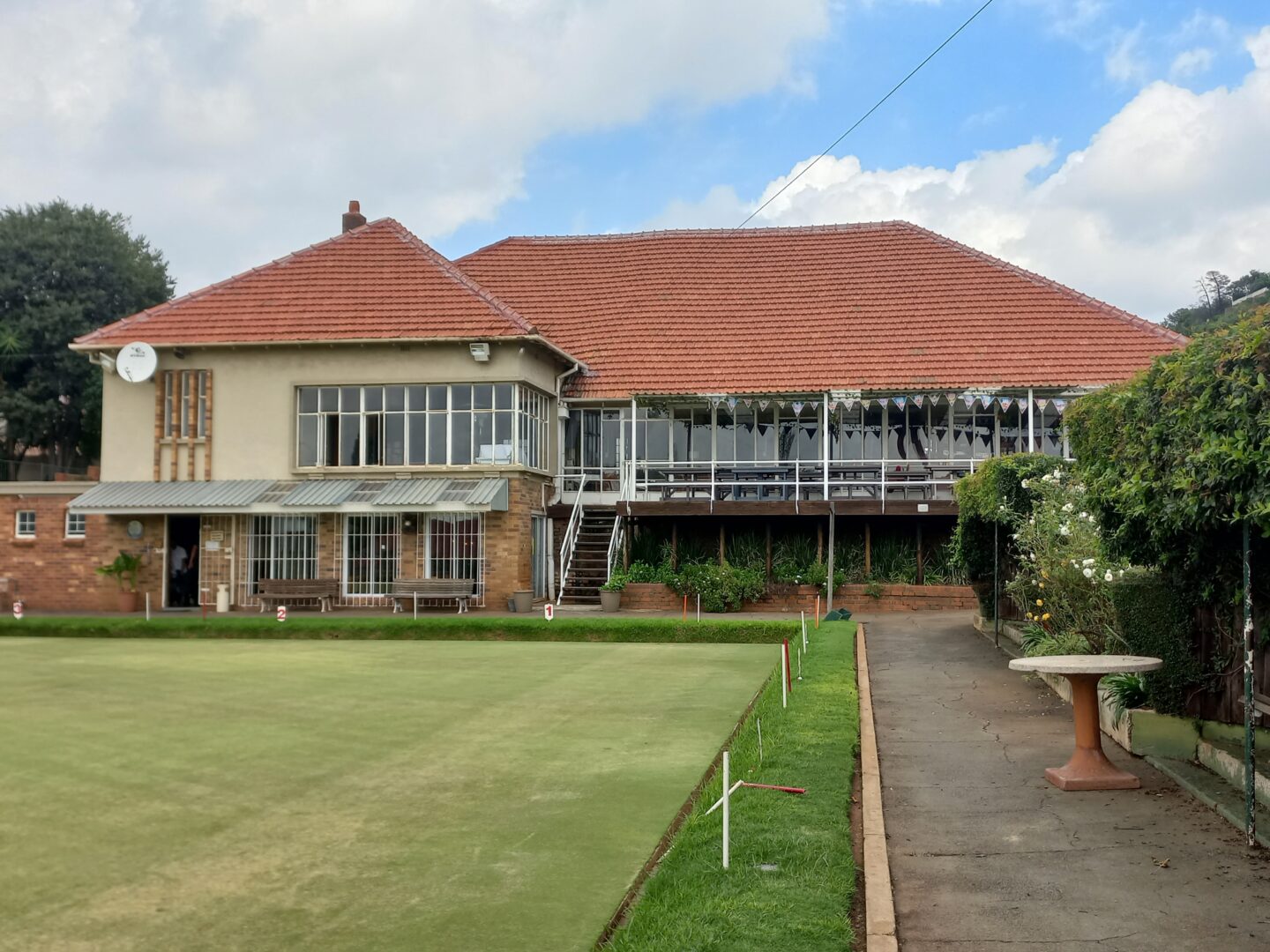
The Kensington Club is nestled in the valley between the Highland Road ridge and the south side of Langermann’s Kop. It is situated behind the Roberts Avenue Mansions, approximately halfway up the Roberts Avenue hill. It is somewhat hidden away, with the main entrance being in Ivanhoe Street, a cul-de-sac leading off of Roberts Avenue.
The property’s breadth spans the block and is bordered on its e astern side by Juno Street. The pathway between the Ivanhoe Street entrance and the Juno Street entrance is in fact a declared public thoroughfare.
Despite the facilities clearly being part of the built environment, the club is valued as being a refreshing and essential ‘open space’ within the urban environment. It is further complemented by the adjacent southern slope of Langermann’s Kop, which provides a valuable ‘hedgerow’ function to the entire suburb of Kensington. The koppie is still home to wild Guinea Fowl which can often be heard by those quietly playing bowls below.
The discovery of gold and the founding of Johannesburg in the late 19th century led to the influx of settlers particularly from the United Kingdom. They brought with them not only their expertise but also links with their homeland as evidenced by the names of suburbs like Mayfair, Belgravia and Kensington. These suburbs were the choice of mainly professional immigrants to Johannesburg who sought their recreation in the sports and activities associated with their country of origin.
The founders of the club met on the site in 1914 at the foot of the koppie which had become a famous landmark because of the nearby cave which gave refuge to the notorious Foster Gang. At the meeting, they resolved to form a club consisting of two sections – tennis and bowls. This is effectively the year in which the club was constituted.
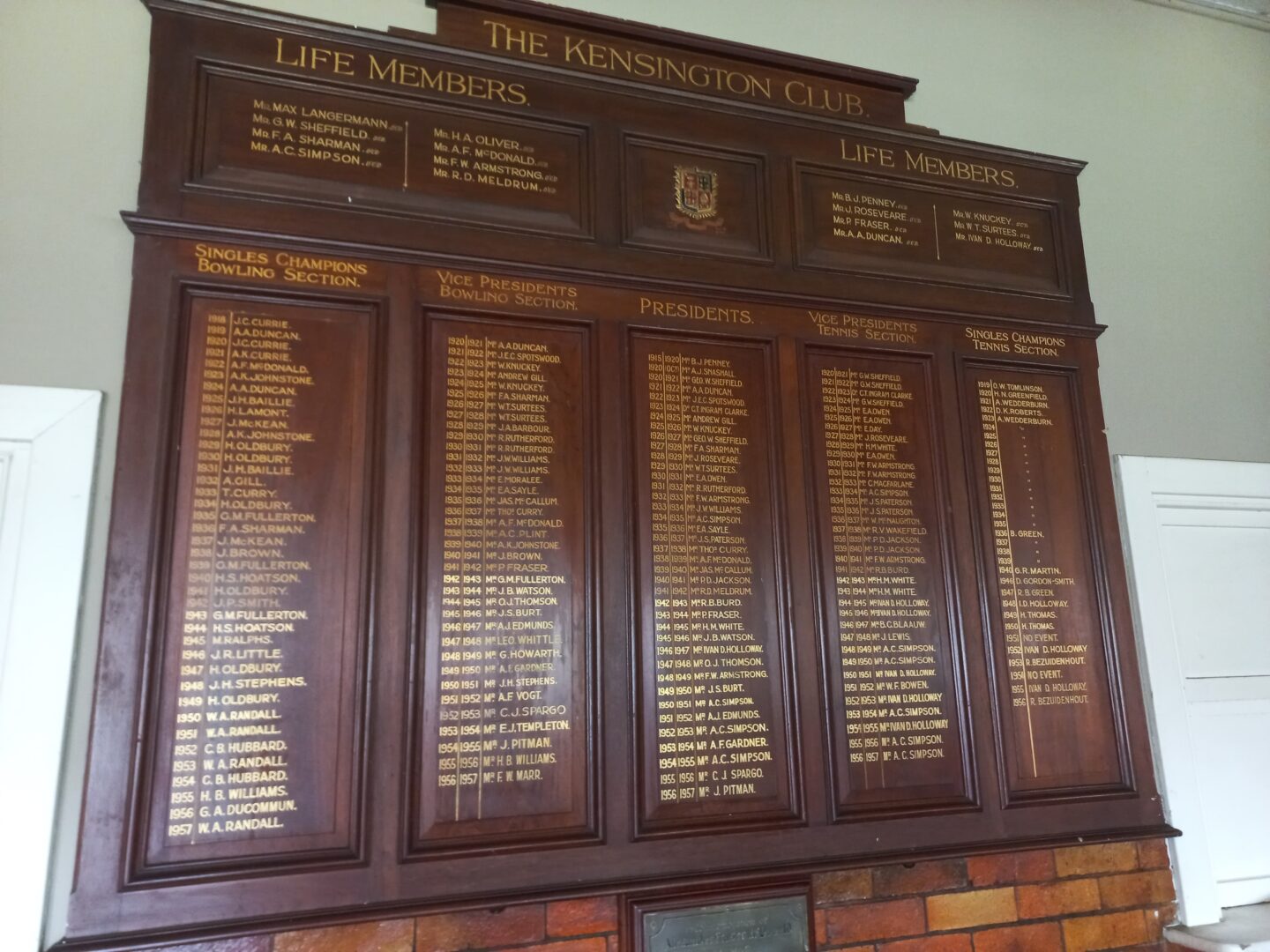
The group of men included W Knuckey and B J Penney - the two men who had the foresight to establish the club, as well as Max Langermann. Both B J Penny and Max Langermann were to subsequently serve as Mayors of Johannesburg.
Club badge and colours
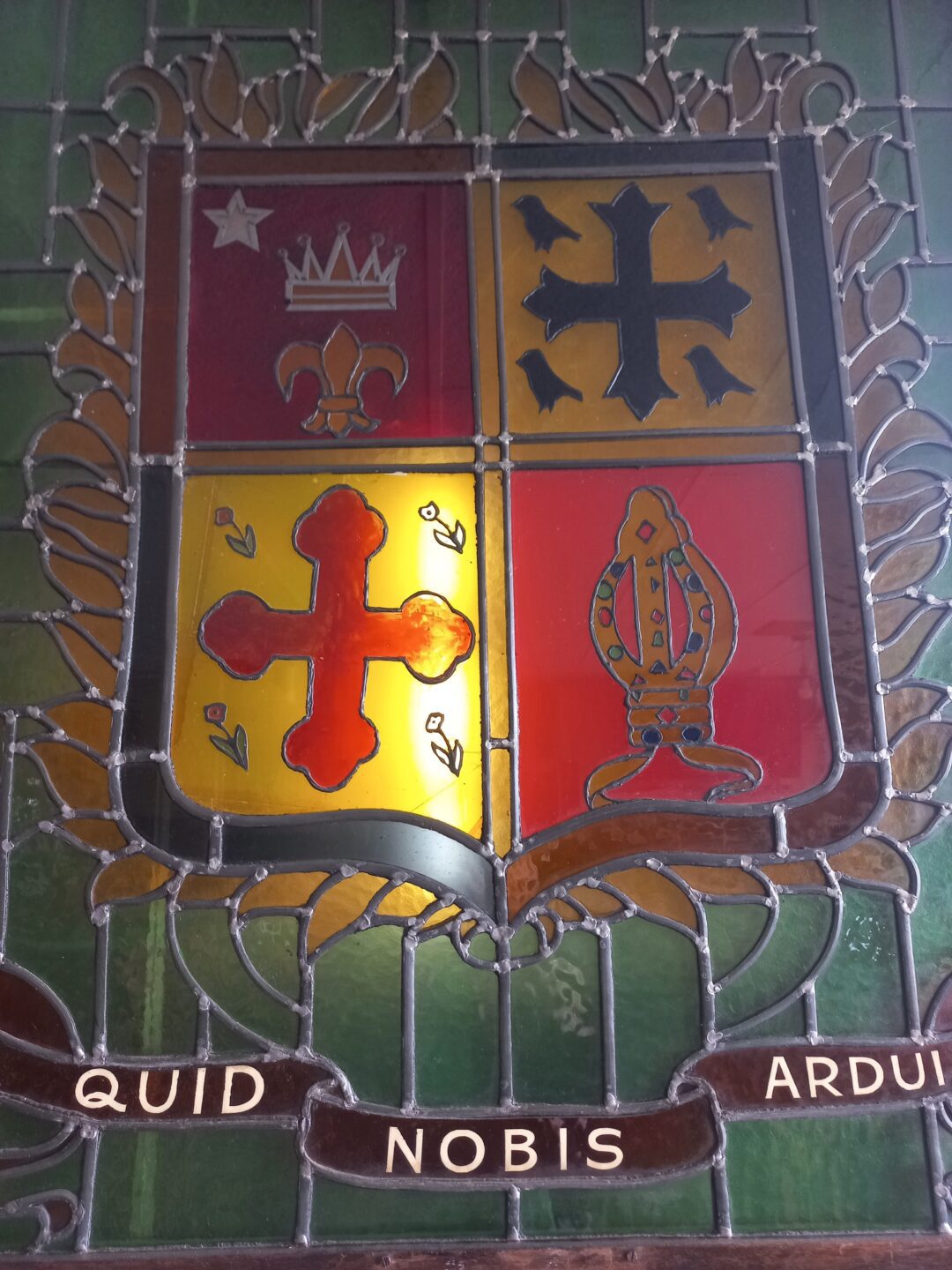
The choice of a name was obvious from the name of the suburb. Permission was then sought from the Royal Borough of Kensington in London for the use of their crest and the colours in the crest to be the official club badge and colours. The request was granted by the then Borough Council of Kensington.
In heraldry, which is the system by which the coats of arms are devised, described and regulated, no heraldic crest is complete without a motto. This is usually a short sentence or phrase chosen to encapsulate the beliefs or ideals guiding the individual, family, or institution, in the club’s case the Royal Borough of Kensington in London. The motto is usually in Latin or the language of the person whose crest it is. The club inherited the crest and the motto that is part of the crest.
The motto “Quid nobis ardui” is in Latin and loosely translates into English as
“What is hard (or difficult) to us”.
Continued development
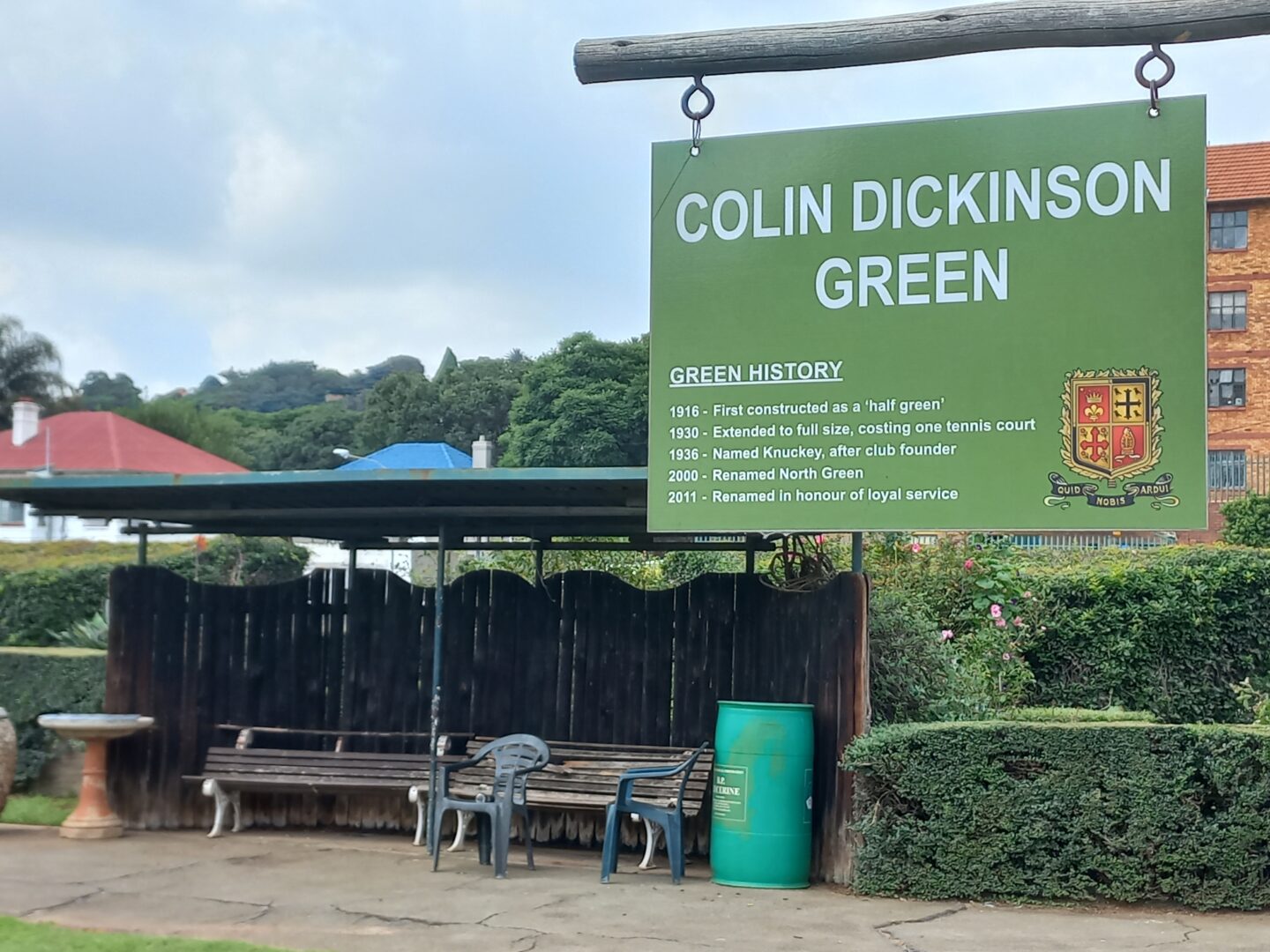
The suburb of Kensington in the post World War I years was developing rapidly. It was soon found that due to the growth of the suburb, and an increase in membership, that one green was not sufficient. This, despite the additional establishment of a new bowling club, Kensington Polytechnic (formed in 1932), situated in the park. As there was little ground available, the tennis section was prevailed upon to give up one court that was situated adjourning the present Court 1 to facilitate the construction of the second green. This was agreed to and the work commenced early in the 1930 s.
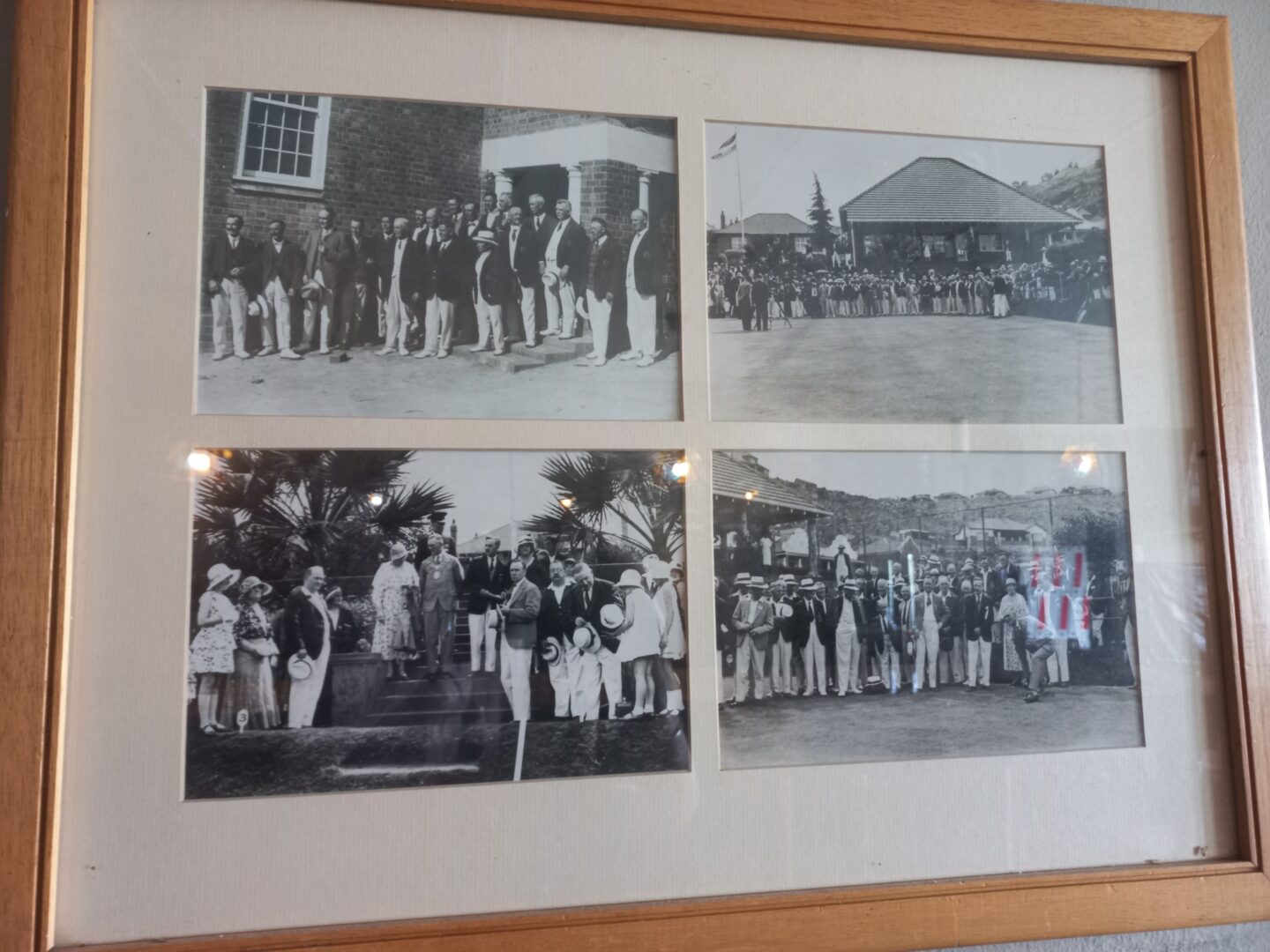
The two greens were named in 1936 by the then mayor of Johannesburg, Councillor Freeman, after the two visionaries that had established the club – Mr B J Penny and Mr W Knuckey (now the Wally Tucker and Colin Dickinson greens, subsequently re-named to honour members who have served the club with distinction).
The memento presented to His Worship the Mayor at the 1936 occasion took the form of a solid silver replica of a bowl, mounted on a stand and suitably engraved. This artifact is under the curatorship of MuseuMAfricA (formerly the Africana Museum ) in Newtown.
Green-keeping expertise
It has been claimed that before green-keeping became an art in South Africa, the greens at Kensington were held up to the bowling fraternity as an example of what greens should be. Indeed, it was another of the Kensington fathers - Peter Fraser - who nurtured the hallowed playing surfaces at the club.
He was of Scottish descent and a horticulturalist in the employ of the City of Johannesburg, based in Rhodes Park who brought his considerable expertise for the benefit of the club.
Peter fostered the formation of Green-keepers’ Associations as well as establishing a tradition upheld by a succession of green-keepers at the club including Ken MacKenzie, Jack Pitman and Ted Cockrell, to ensure the almost perfect playing surfaces.
The club has also been fortunate to have had loyal staff working under these guardians of the greens, assisting in maintaining this long-standing tradition.
General Protection: Section 34 (1) Structures under the National Heritage Resources Act, 1999.
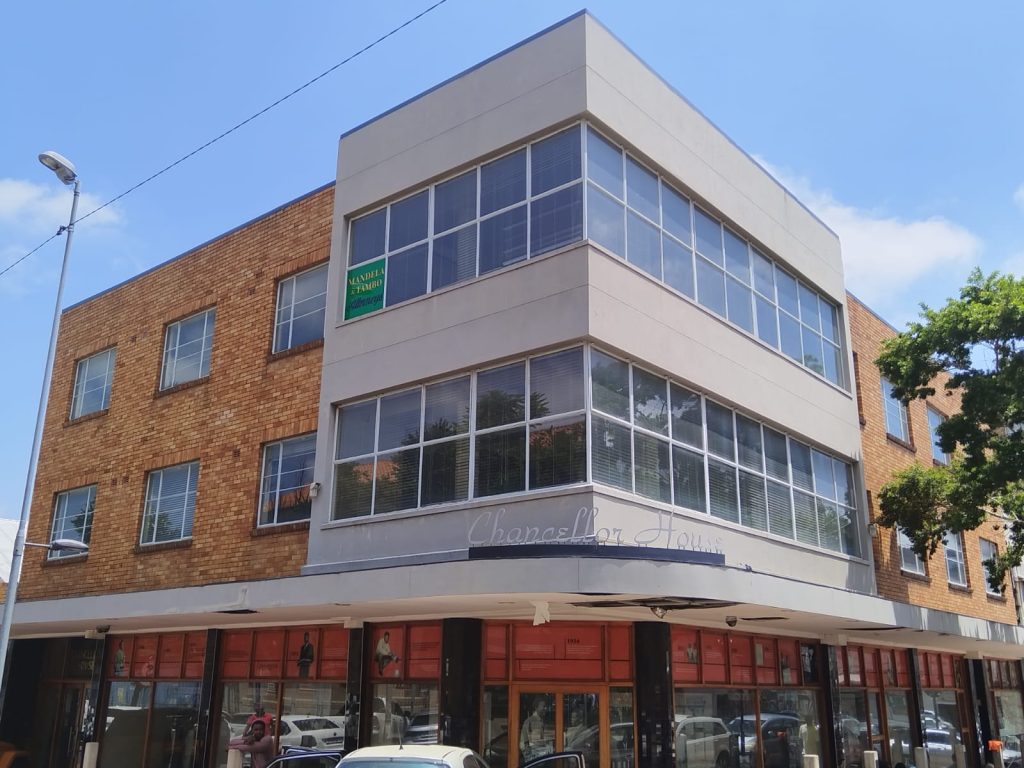
A culmination of research gathered over many years, the Online Johannesburg Heritage Register is being launched on Nelson Mandela Day 18 July 2025.
Among the many heritage sites featured is Chancellor House, the downtown offices of Mandela and Tambo Attorneys in the 1950s. After having been vacant and shuttered for more than a decade, this iconic building is being revived and brought to life once again as offices for the Community Development Department, which oversees the City’s Arts, Culture & Heritage Services.