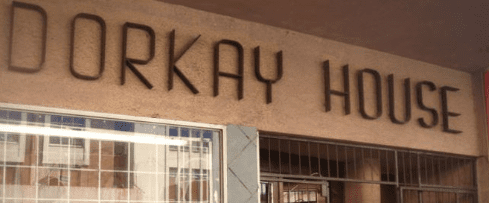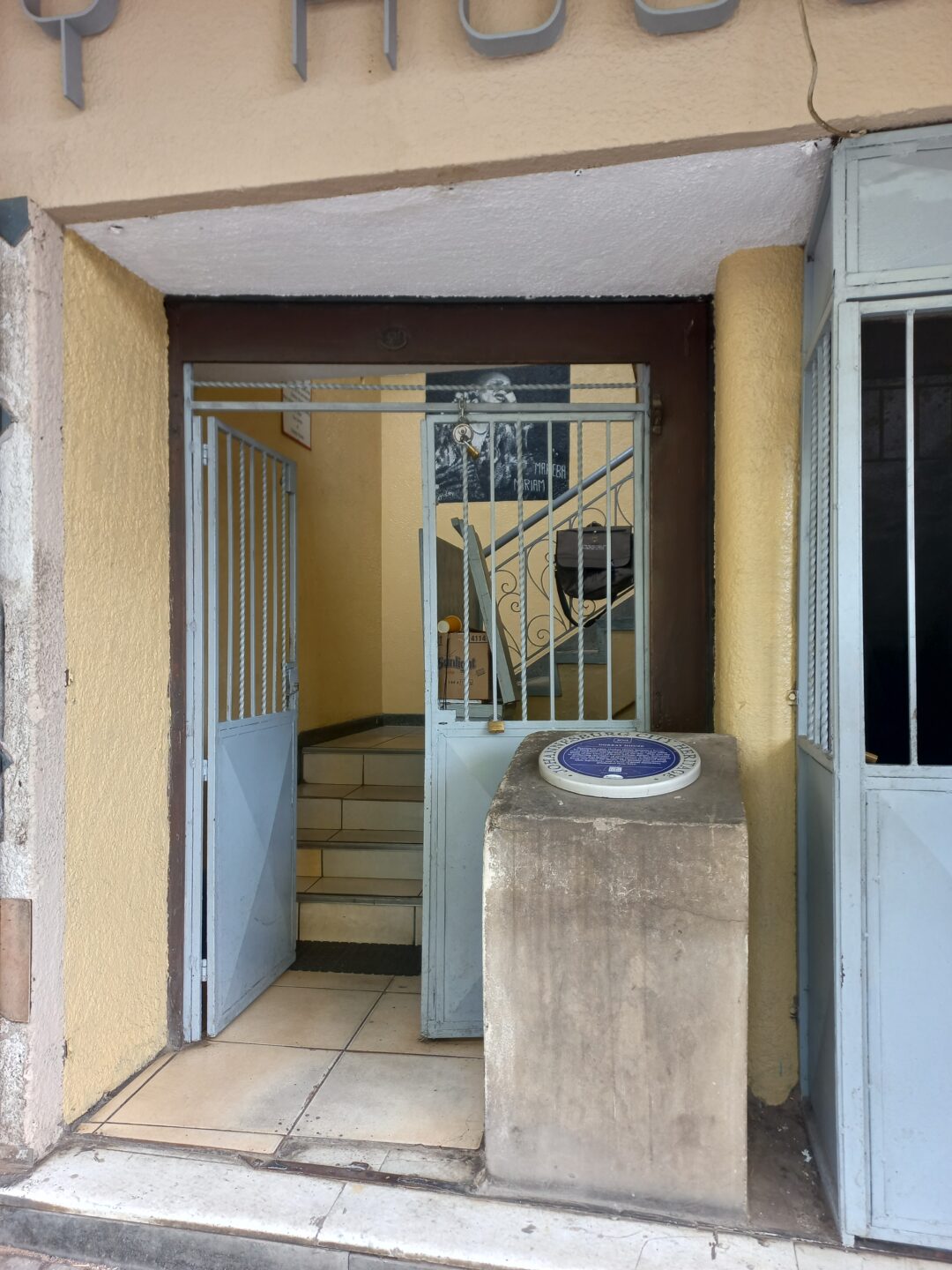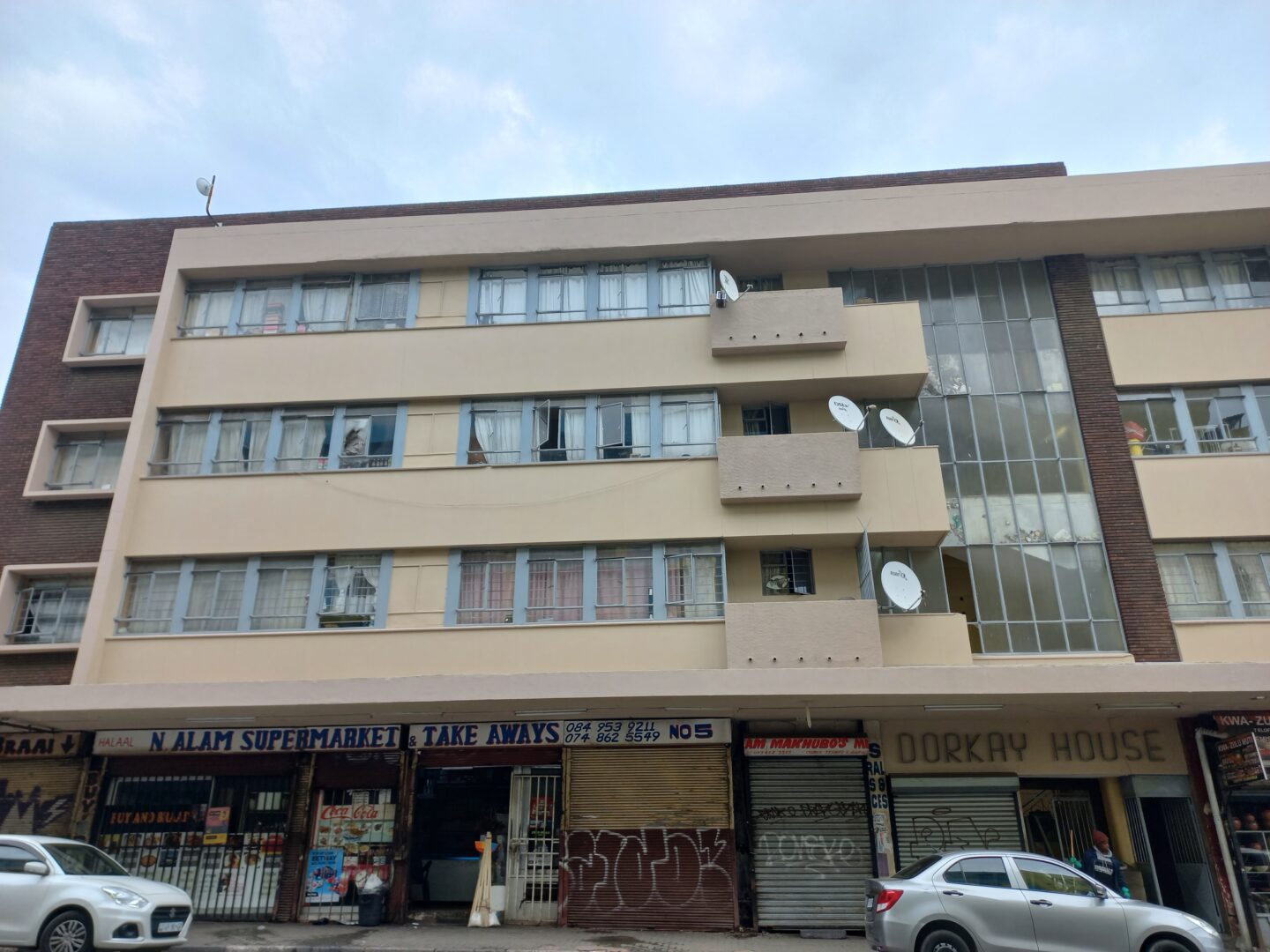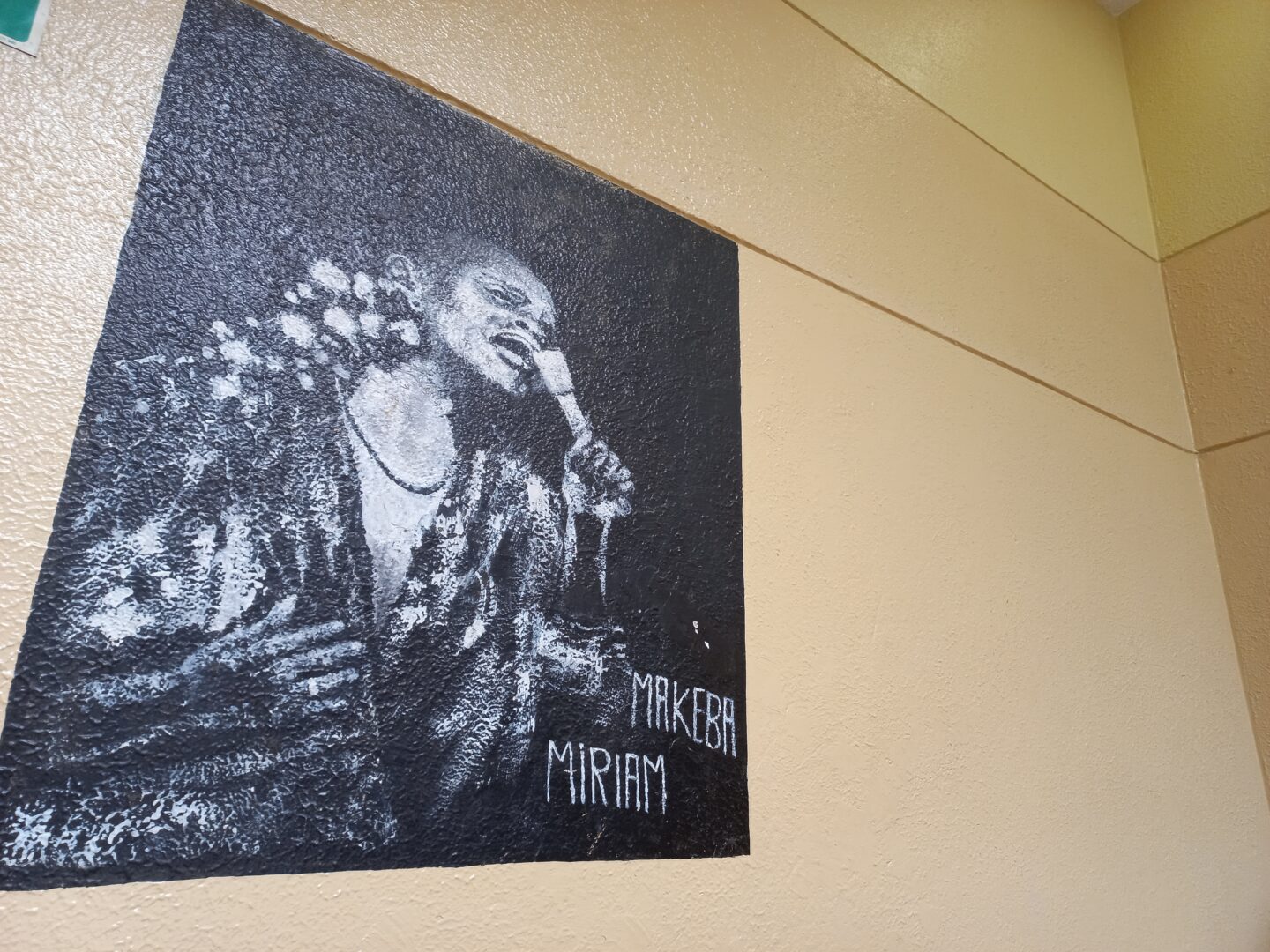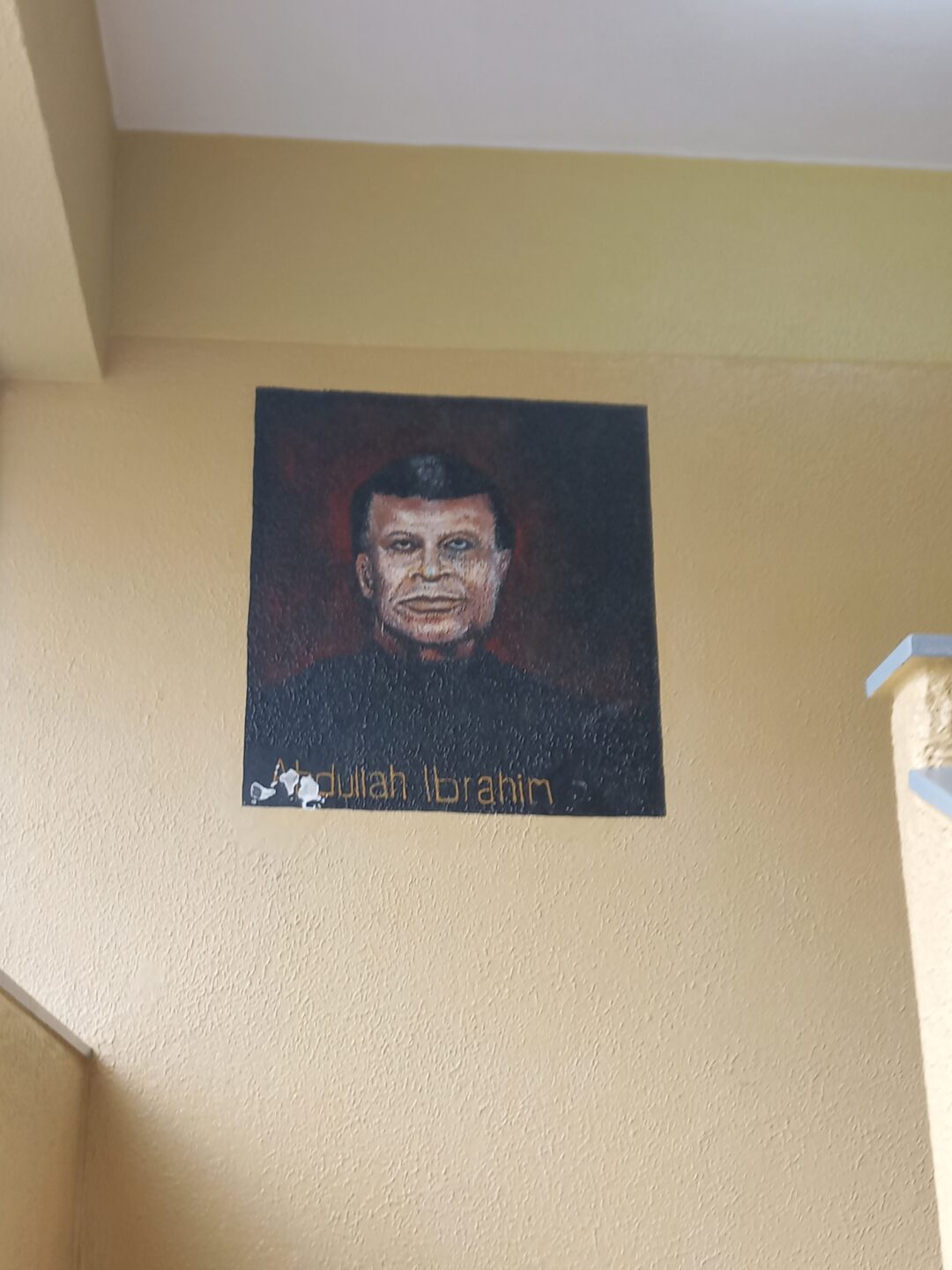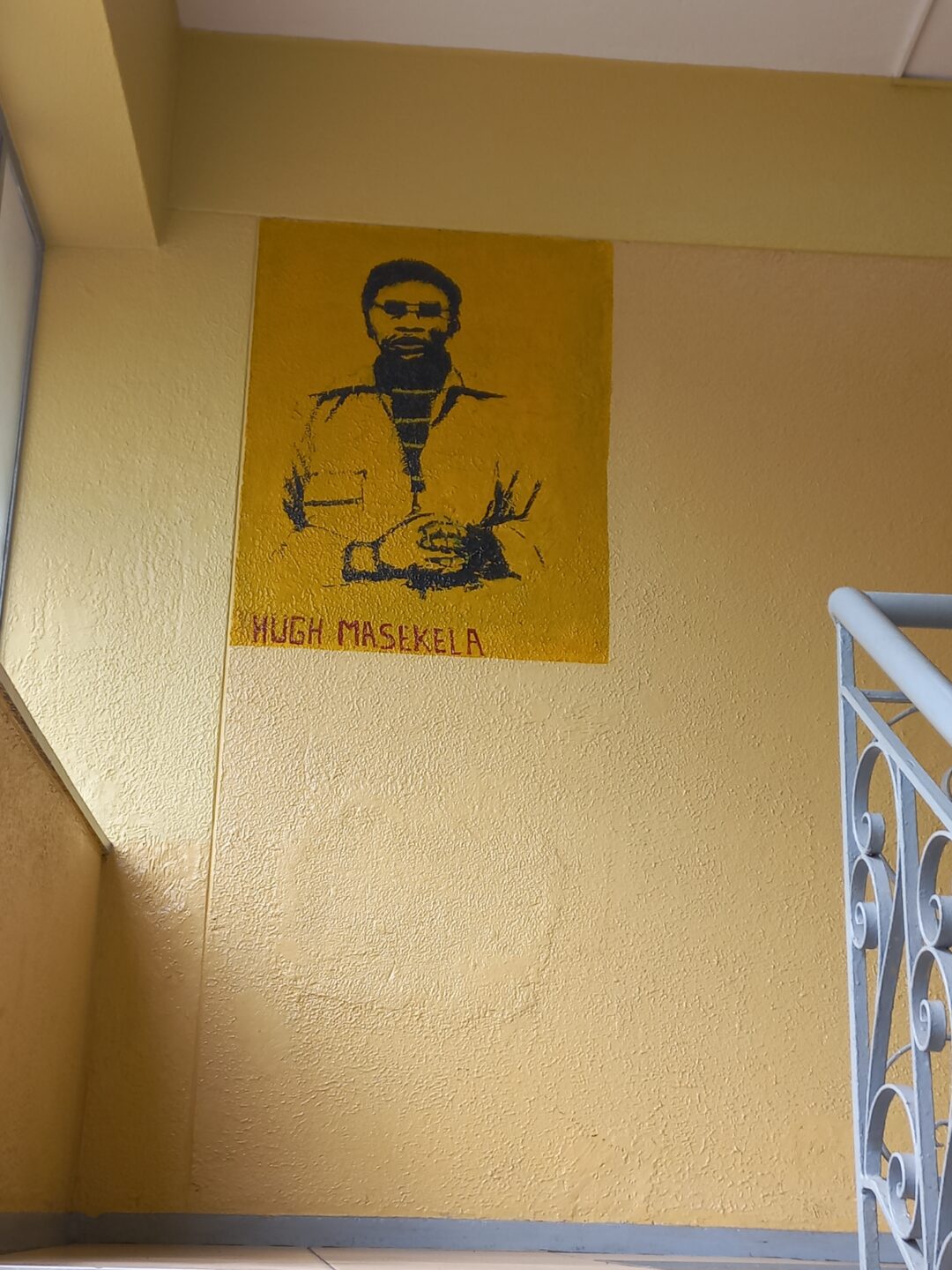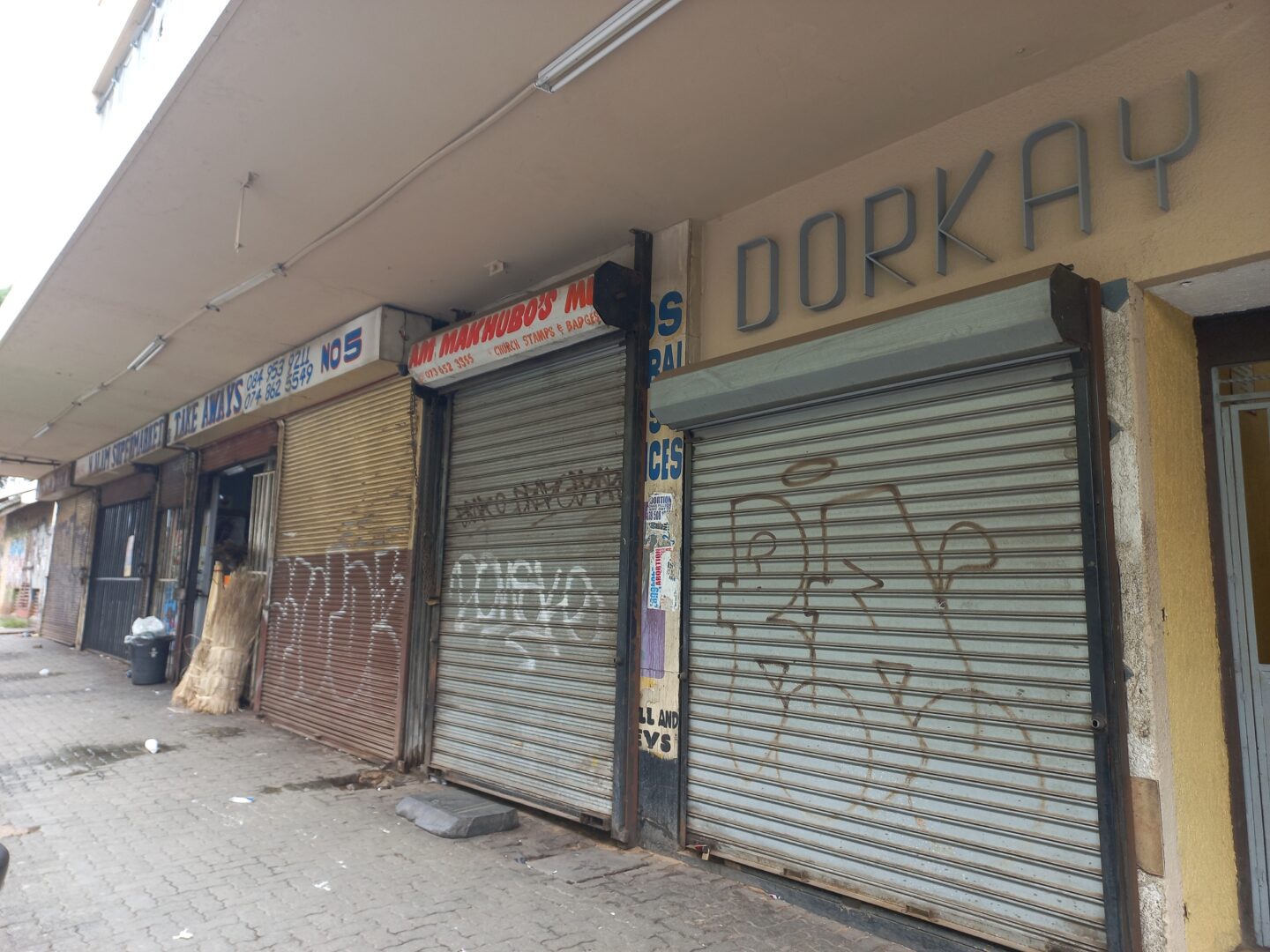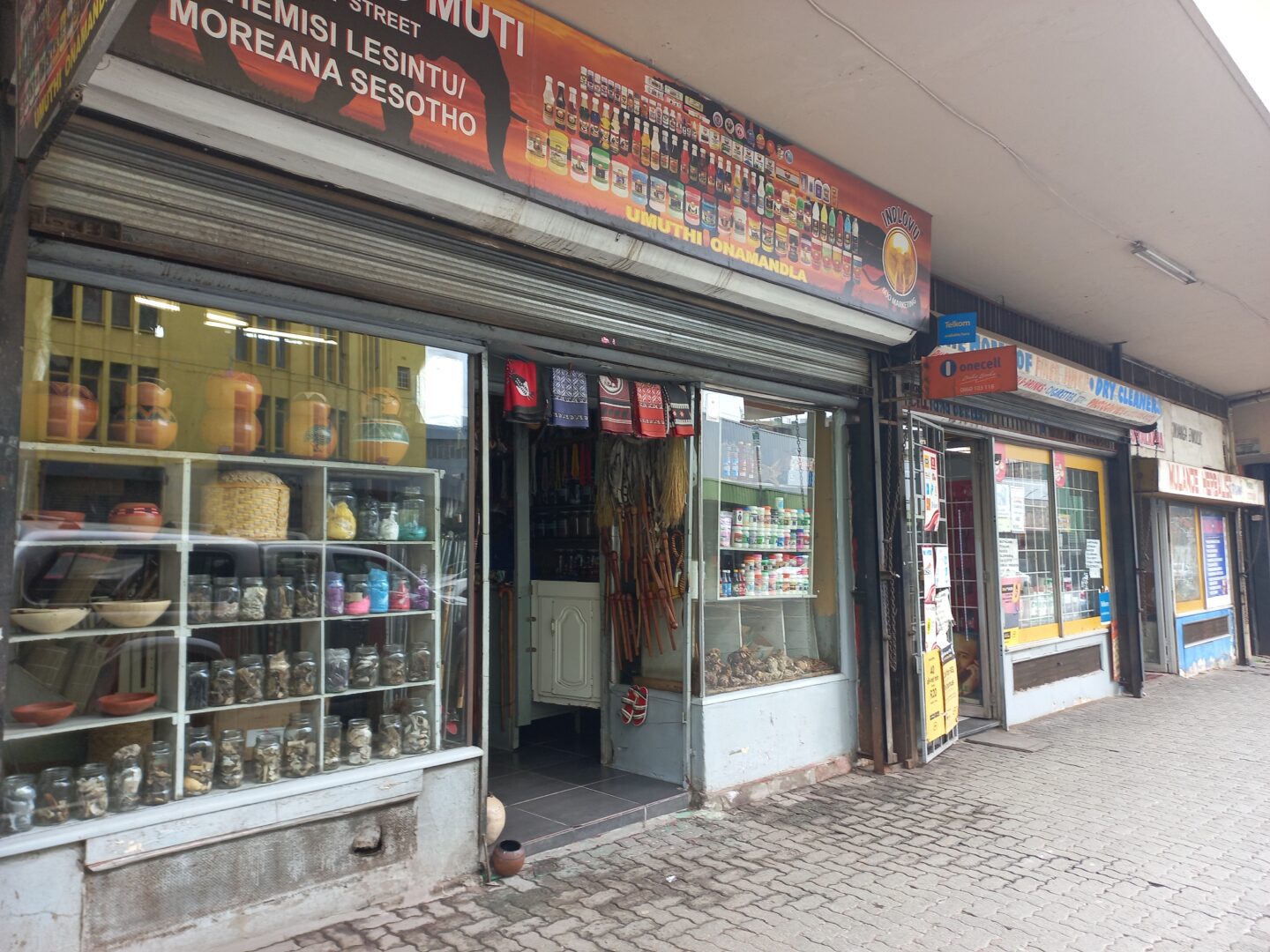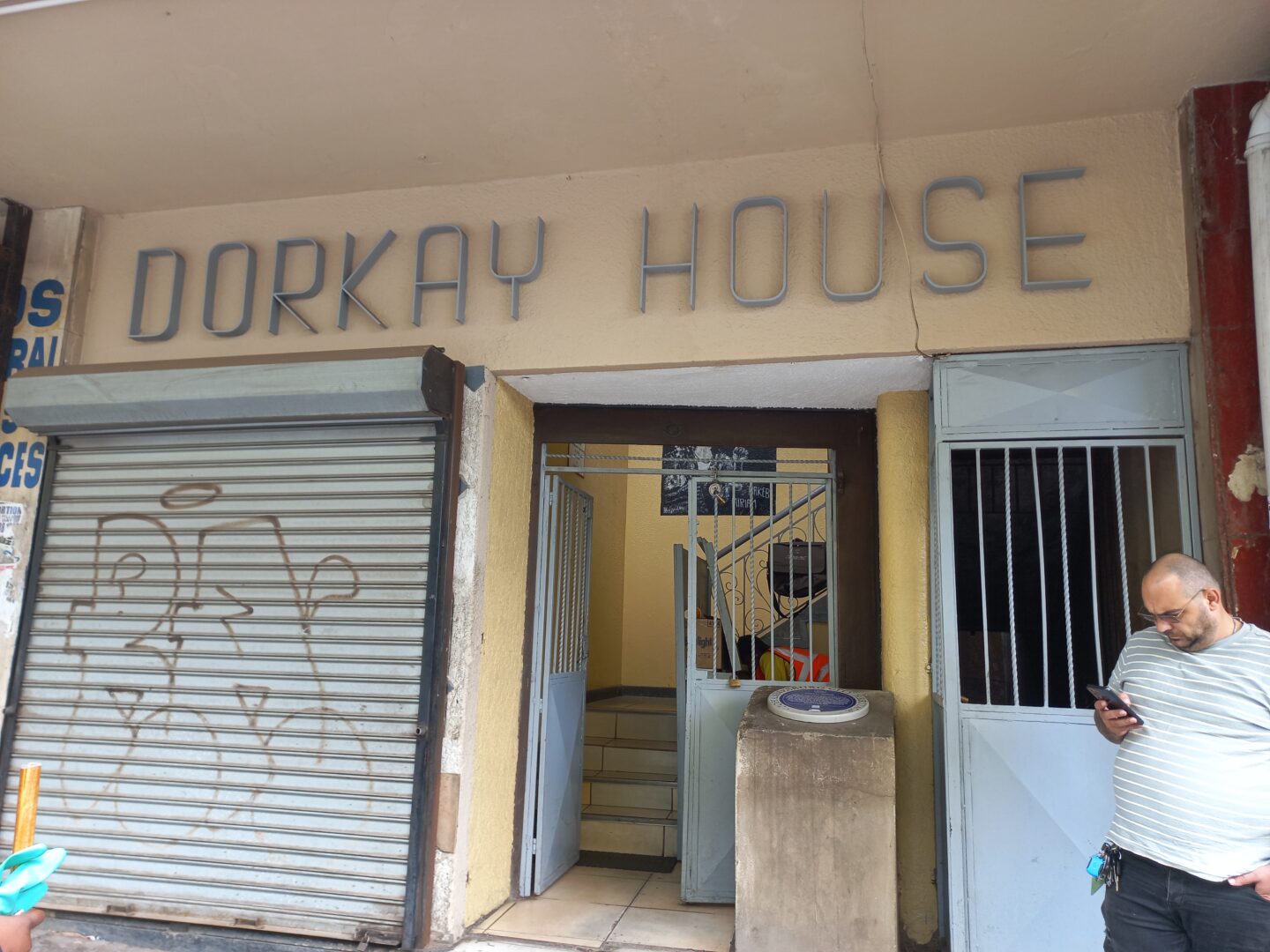
Dorkay House is a four-storey building situated at no 8 Eloff Street Extension, located on the southern fringes of the Johannesburg CBD. The building is not of special architectural quality, but some features of interest still include murals of Miriam Makeba and other musicians on the staircase which used to lead to the first floor rehearsal room.
Originally a clothing factory, Dorkay House later became a haven for black musicians and actors, giving them access to stage and other facilities at a time when exclusion and denial were the order of the day.
The story of Dorkay House began with the Union of South African Artists (USAA), formed to protect the interests of black artists. Ian Berhardt, impresario and campaigner for the rights and creative development of black performers, took over the leadership of the USAA in 1954.
One of Berhardt’s first projects was to organise a farewell concert for the anti-apartheid cleric Father Trevor Huddleston, held at the Bantu Men’s Social Centre (BMSC). Proceeds from the farewell concert were sufficient to secure Dorkay House, next door to the BMSC, as a permanent venue for the USAA
Dorkay House also housed the offices of the African Musical and Dramatic Association (AMDA). At this venue in Eloff Street, they continued the work of promoting black theatrical development, started by Herbert Dhlomo and the Bantu Dramatic Society in the 1930s. Gibson Kente’s The Train was staged here circa 1974. Around the same time, The Island by Anthol Fugard, John Kani and Winston Ntshona was also staged at Dorkay House.
Dorkay House provided a venue for the young Fugard, later to become South Africa’s most performed and celebrated playwright. In the words of Kathy Sturgison:
“One of the most important events in Dorkay’s history was the arrival, from Port Elizabeth, of a young unknown playwright named Athol Fugard. As a writer of what became termed “protest theatre”, his plays were consider so politically volatile they could only be performed at Dorkay House and at private residences, as it was illegal to have either a cast or audience of mixed colour”.
The 1950s culminated in the successful Dorkay House musical King Kong, based on the tragic story of Boxer Ezekile Dhlamini. Starring Miriam Makeba and Nathan Mdledle in the lead roles, King Kong went on to tour England in 1959/60.
During the 1980s Dorkay House enjoyed something of a revival when members of the African Jazz Pioneers decided it was time to get many of those musical legends back on stage at Dorkay House. The Dorkay House Trust was formed to revive the cultural centre, and the place was refurbished through the energies of Queeneth Ndaba, Ntemi Piliso and others.
Dorkay House was privately owned for many years by members of the Kotzen family. According to David Kotzen, Dorkay House was built by his grandparents around the late 1940s or early 1950s. In recent years, the Kotzens tried for several years to negotiate with the National Department of Arts and Culture (DAC) to purchase the building so that its heritage would be protected, but without success. By 2009 the Kotzens sold the building to the developer Mark Steele, proprietor of Boost properties, who is the current owner.
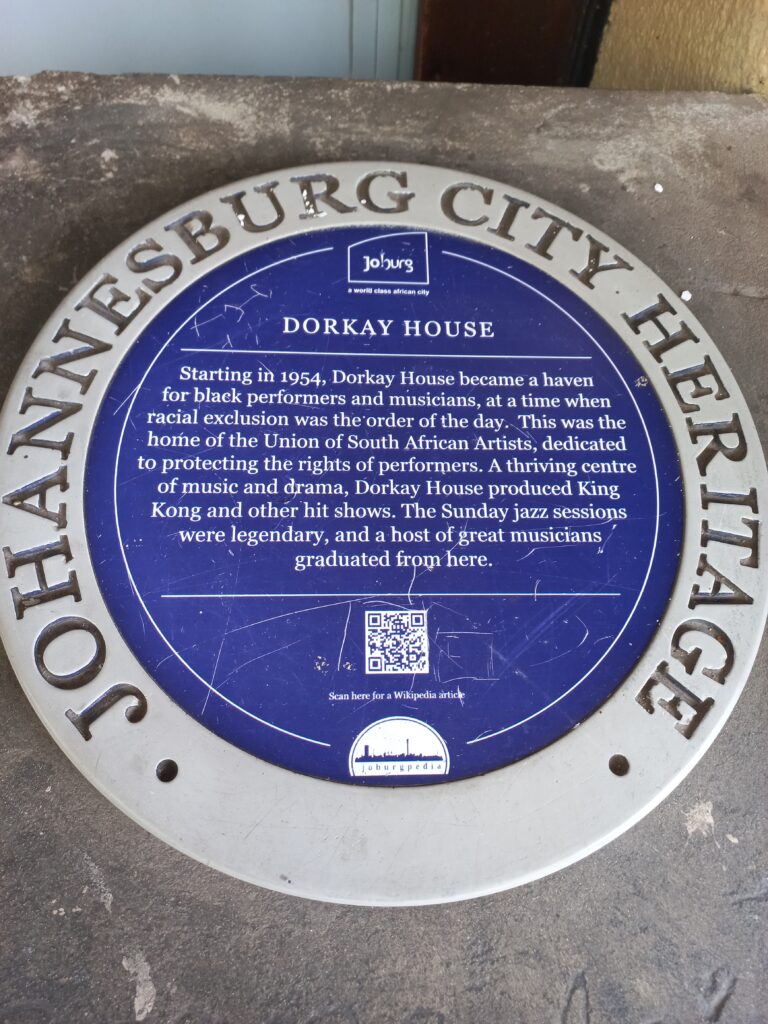
Dorkay House has general protection under the National Heritage Resources Act (NHRA) of 1999. Section 34 of the NHRA provides that:
“No person may alter or demolish any structure or part of a structure which is older than 60 years without a permit issued by the relevant provincial heritage resources authority”.
In a move by the Provincial Heritage Resources Authority–Gauteng (PHRA-G), the site was further protected in July 2012, when it was Provisionally Declared under Section 29 of the NHRA. This provisional protection is a temporary measure for a maximum of 2 years, which has expired.
A culmination of research gathered over many years, the Online Johannesburg Heritage Register is being launched on Nelson Mandela Day 18 July 2025.
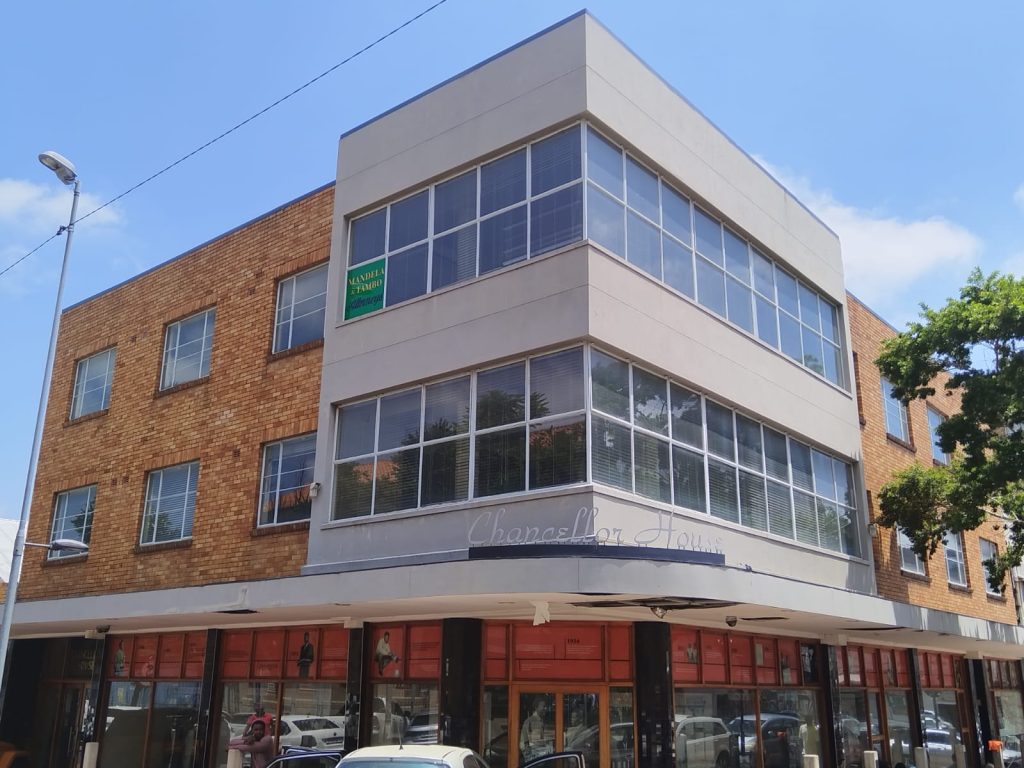
Among the many heritage sites featured is Chancellor House, the downtown offices of Mandela and Tambo Attorneys in the 1950s. After having been vacant and shuttered for more than a decade, this iconic building is being revived and brought to life once again as offices for the Community Development Department, which oversees the City’s Arts, Culture & Heritage Services.