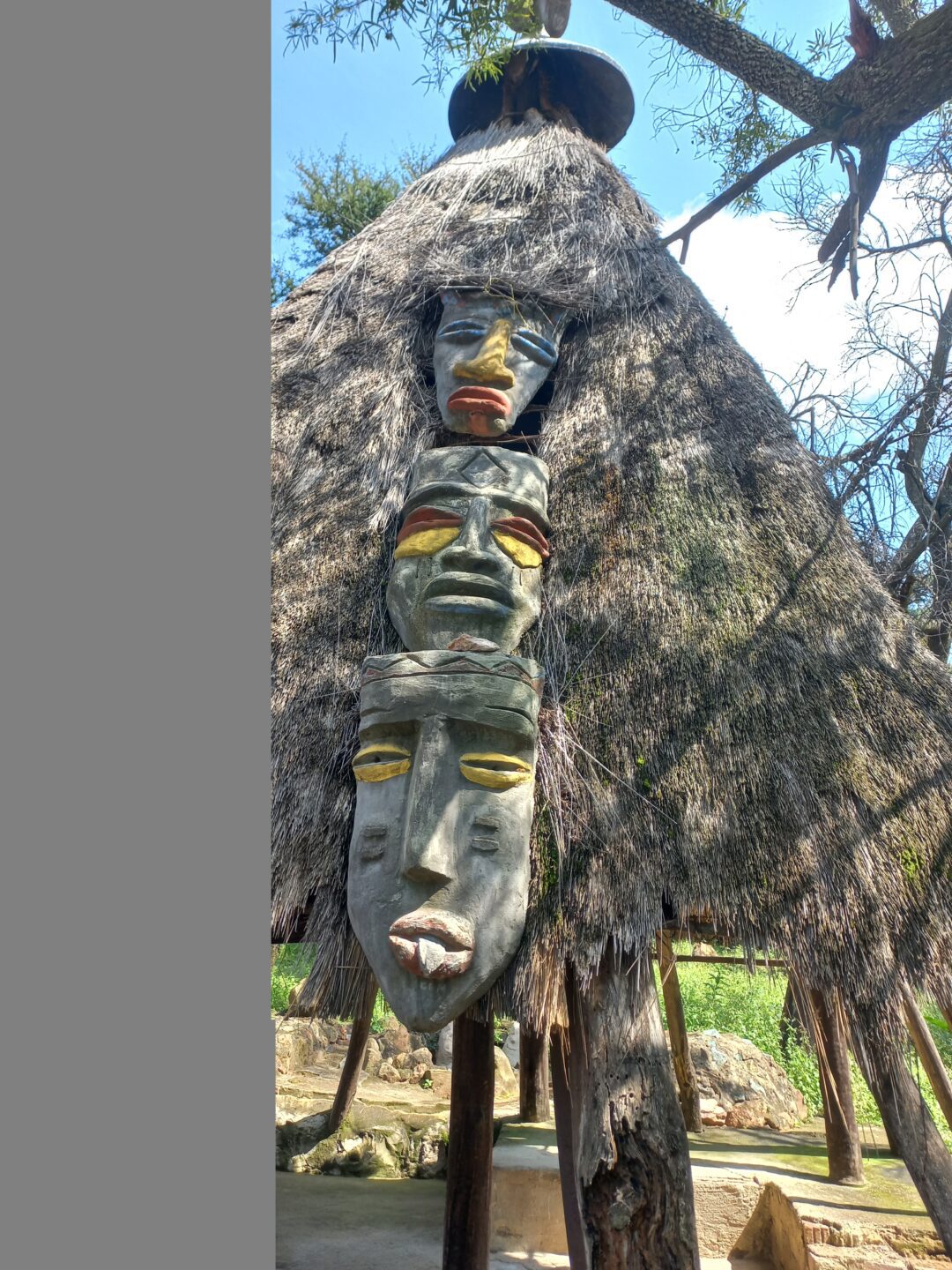
Located in the heart of Soweto, the Credo Mutwa Cultural Village, also known as Kwa Khaya Lendaba Cultural Village, features a remarkable collection of mythological sculptures and buildings. The site comprises four “villages”: The Arab Village, Thaba Lesedi, Kwa-Dukuza, and Kwa Khaya Lendaba. These villages, which are in need of maintenance, offer an outdoor museum of African art, culture, and folklore, showcasing sculptures of human and animal figures, and dwellings inspired by various African architectural styles.
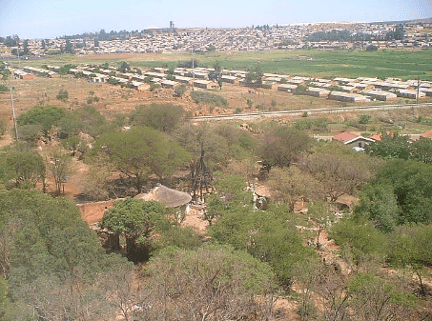
Adjacent to the historic Oppenheimer Tower, which provides a panoramic view of Soweto, the sculpture garden is surrounded by gardens that had a variety of indigenous plants used in traditional medicine, but are no longer growing on the site.
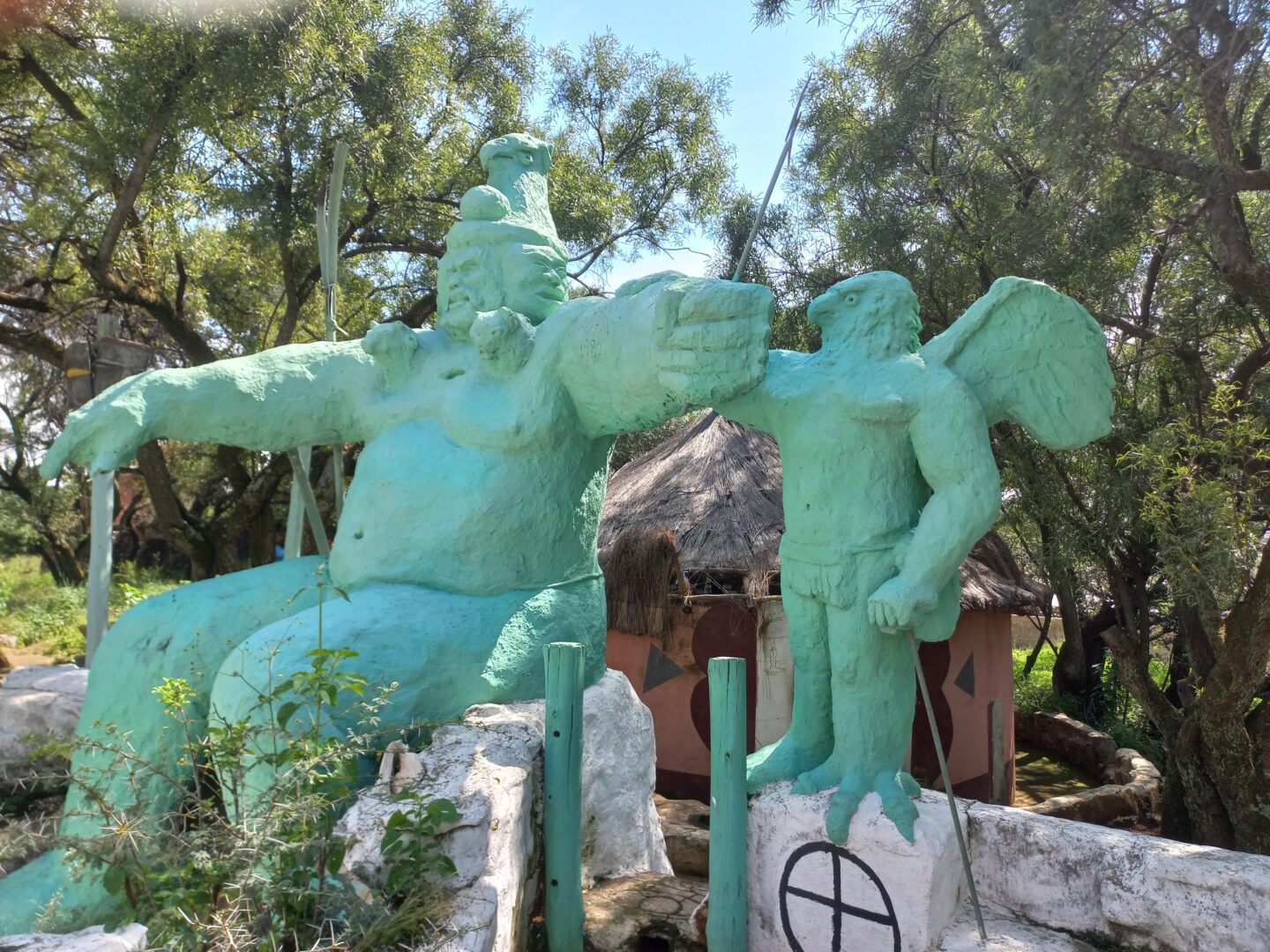
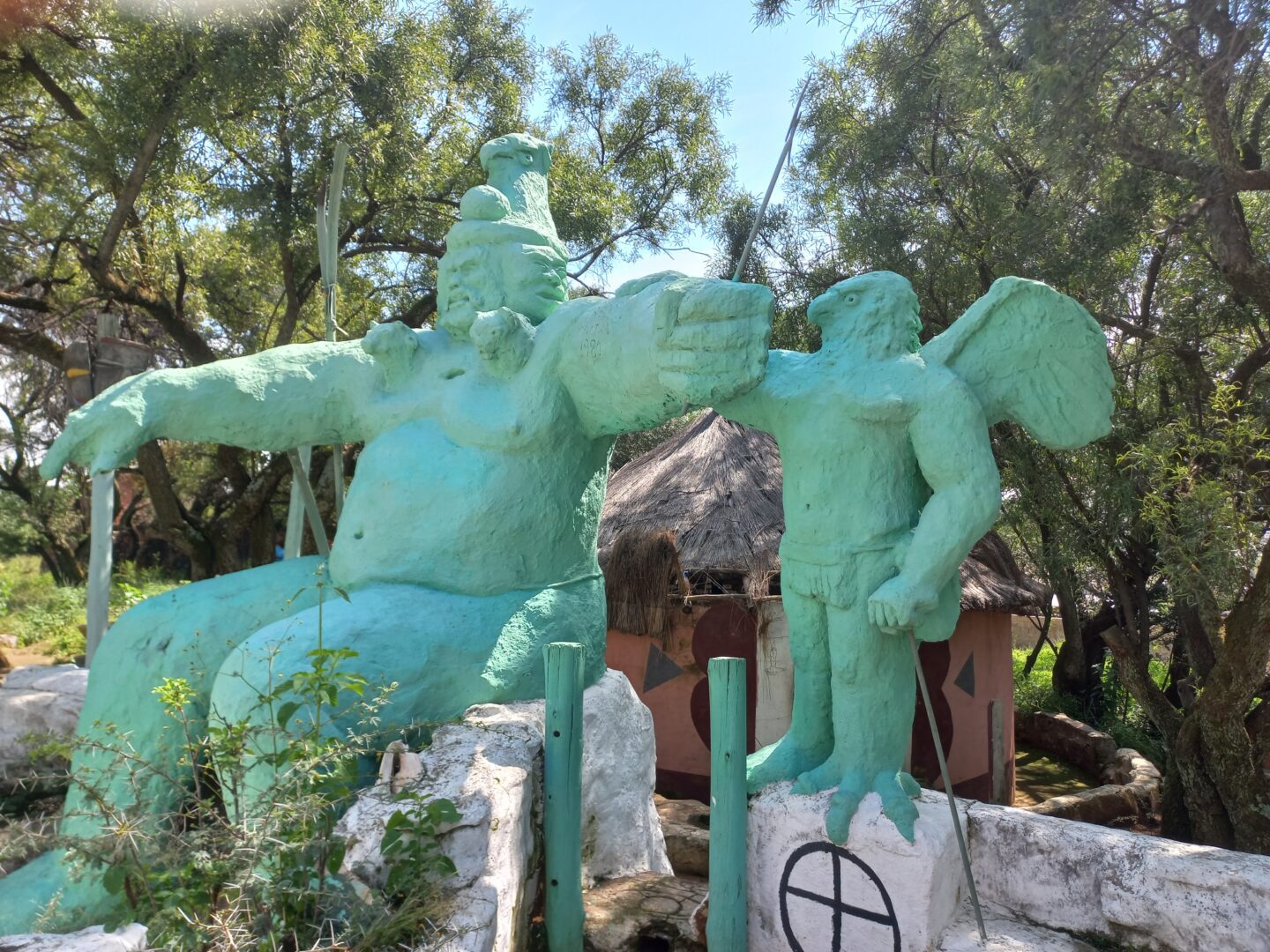
This is the only place in the country where you will find Shaka, the Zulu warrior, standing shoulder to shoulder with Moshoeshoe, the Basotho strategist, both paying homage to Mveliqangi, the Zulu deity, with the tower built by mining magnate Ernest Oppenheimer overlooking the pre-colonial villages below.
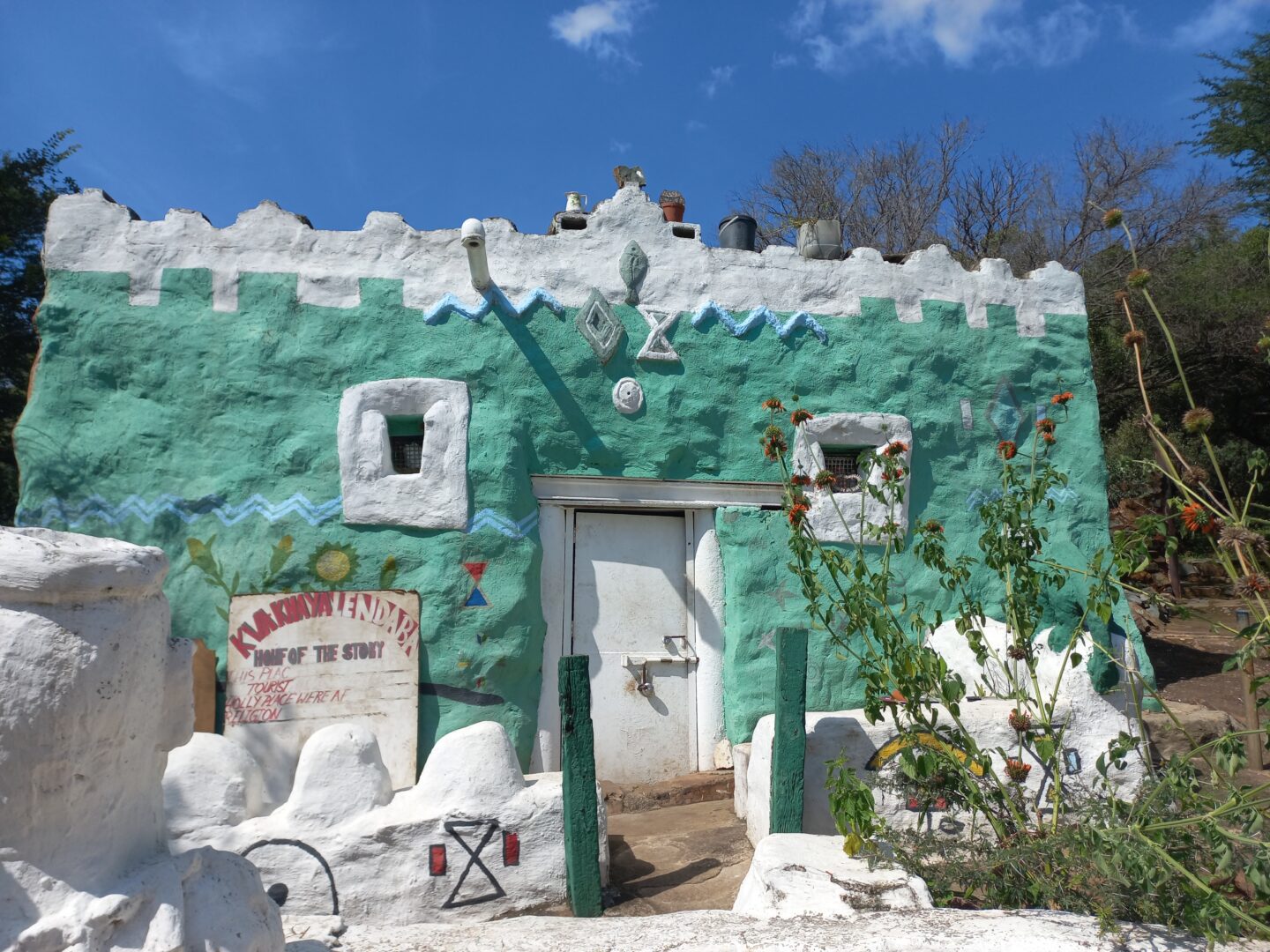
The Credo Mutwa Cultural Village, also known as Kwa Khaya Lendaba Cultural Village, has always been associated with story-telling, rituals and ceremonies, plays and other cultural activities.
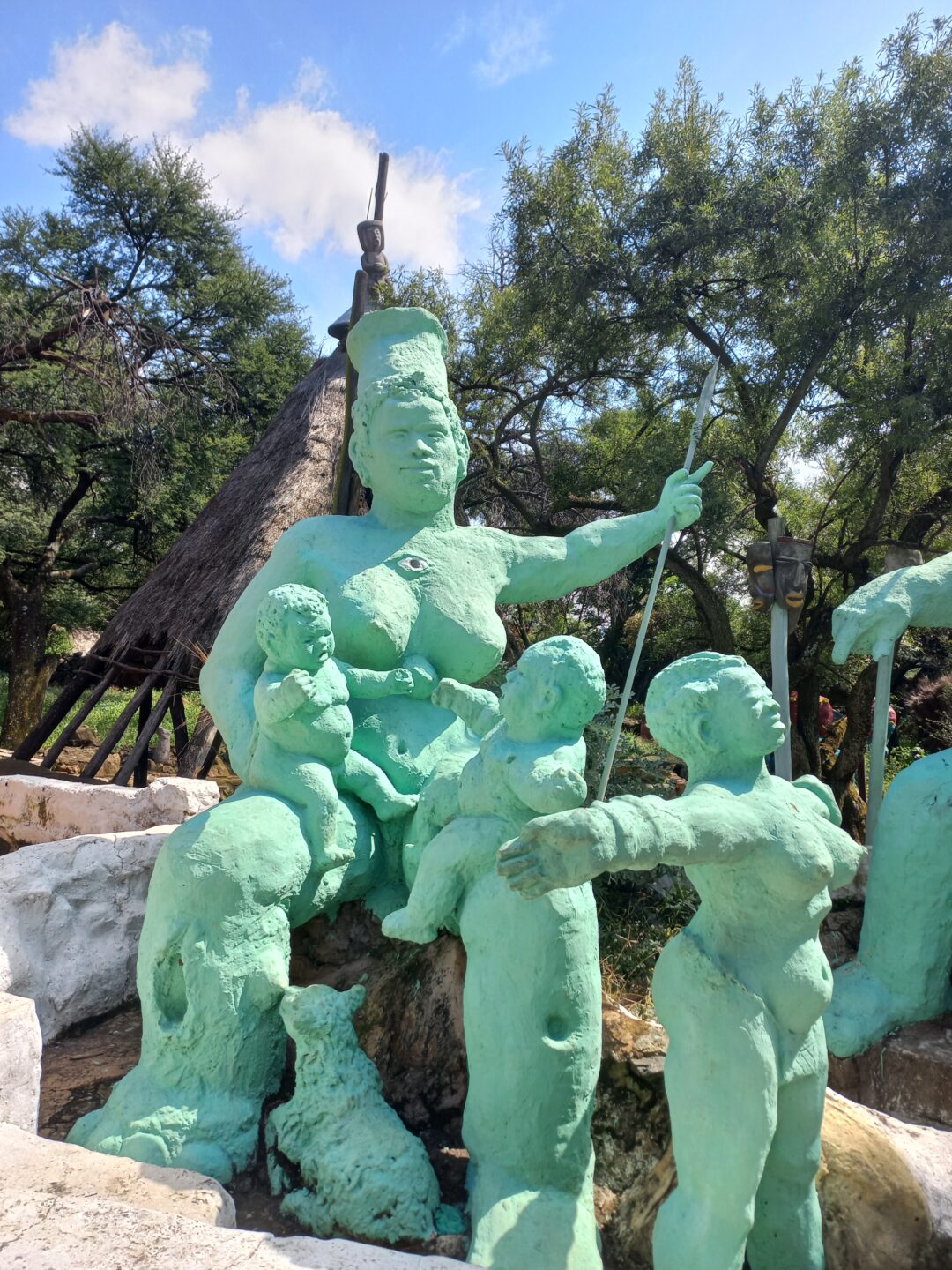
The village, consisting of clay sculptures and buildings in the Oppenheimer Gardens in Central Western Jabavu, was created by artist, author and traditional healer Credo Mutwa, in 1974. The large painted sculptures of human and animal figures have a mythical and, in some cases, fearsome quality, depicting African culture and folklore. The buildings were constructed in a variety of African building styles.
Mutwa, who was born in KwaZulu-Natal, used to practise as a healer at his house in Diepkloof in the 1970s. He met Gilbert Briscoe, manager of parks at the time, and between them, they decided to create the village. Briscoe arranged for Mutwa to be employed by the West Rand Administration Board as supervisor of the gardens. Mutwa was creating sculptures and making figures out of recycled metal at his home at the time, in addition to healing and putting on plays.
The village, consisting of symbolic clay sculptures and buildings on a site of several hectares in Central Western Jabavu, was left incomplete when he vacated the site in 1986.
The village sits alongside the conical Oppenheimer Tower, built in 1957 and named after mining magnate Ernest Oppenheimer, who donated money for the demolition of shacks and construction of houses, in Moroka. The tower is built from the bricks from demolished houses belonging to people who were moved to Moroka from newly declared white areas closer to the city. Surrounding the tower were attractive landscaped gardens filled with indigenous, medicinal plants and herbs, but now gone.
The large sculptures of human and animal figures depict African culture and folklore, together with a number of thatched huts, constructed in a variety of African building styles.
The village was restored in 2006 by Musa Ntanzi. A photographic record consisting of 180 slides of the early development of the village exists, and had been used to guide the reconstruction process. The figures were constructed using a variety of techniques and materials: cement and mud mortars, stone and brick masonry and recycled metals.
Ntanzi was a successful 20-year-old artist back in 1978 when he was invited by Mutwa to join the project. Ntanzi was allowed to construct some of the structures on his own, making them his own creations.
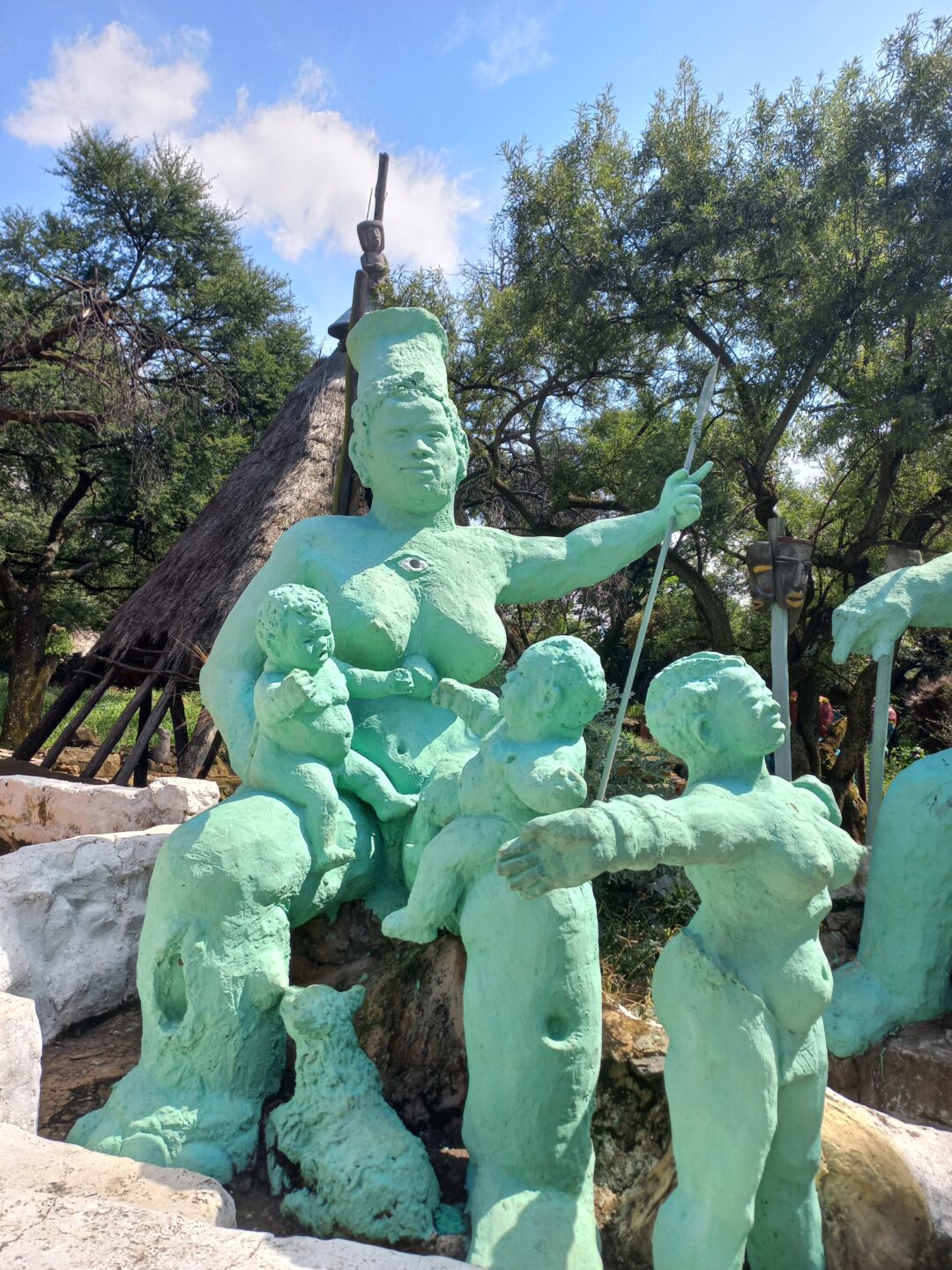
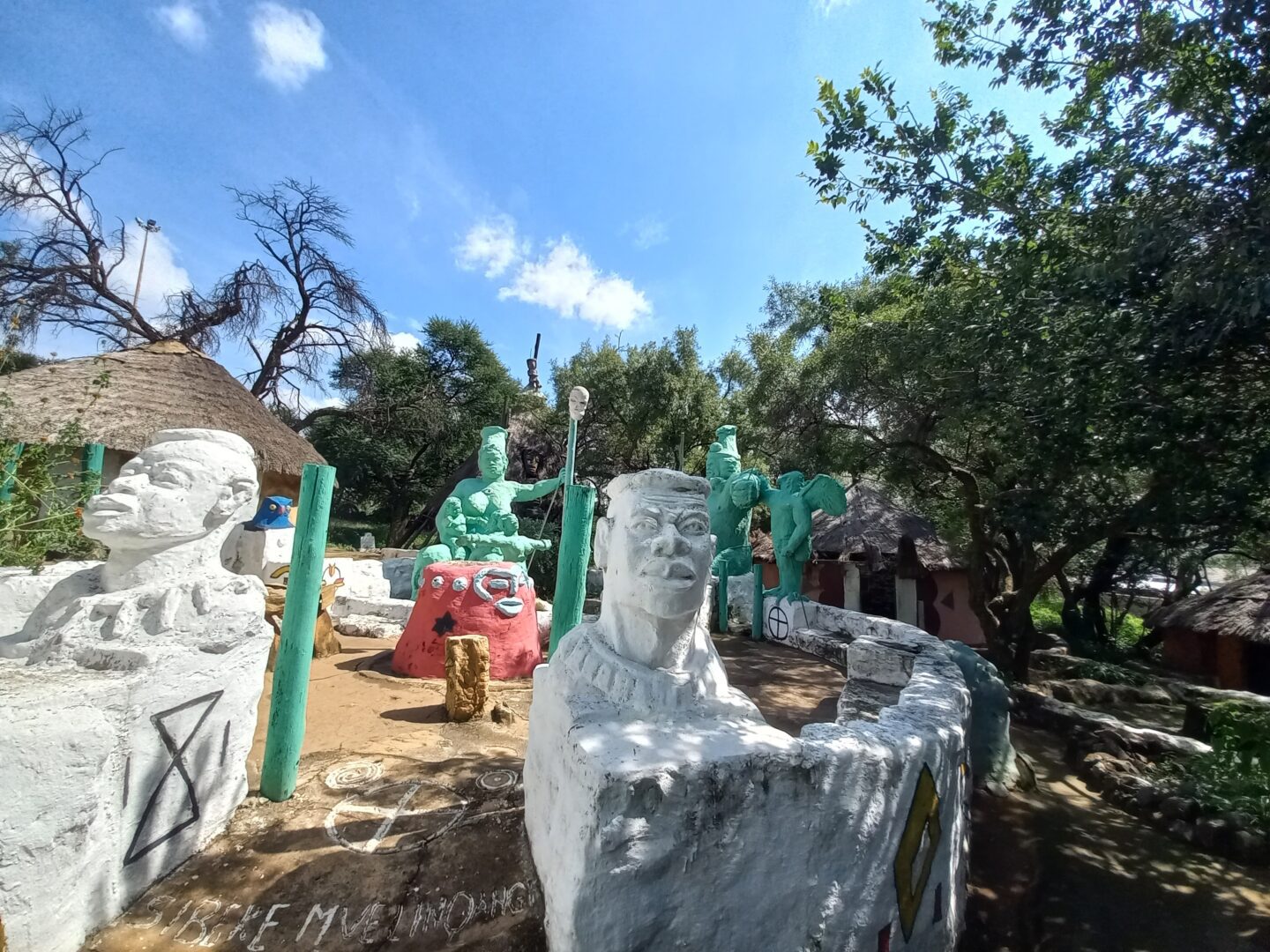
The site consists of a number of different areas, the central one containing the oversize figures of Nkulu Nkulu, God the father and the chief of creation, and Nokhubuwana, God the mother, and three smaller figures. Alongside Nkulu Nkulu, who has four faces representing an African, a San, a Chinaman and a European, is the figure of Umvelingangi, sun god of Africa, with a striking eagle face.
They are encircled in a one-metre high wall, the entrance of which is guarded by two busts – one of Shaka, the Zulu king, and the other chief Ngungunyani of the Tsonga. Both have dramatic, whitewashed faces which stare forcefully ahead.
The western section of the site contained a number of thatched huts used for healing, as well as several graves, three alien figures and a small dinosaur park. There is also a North African Islamic area on this side of the site.
The eastern section originally contained a queen’s hut, a king’s hut, a sangoma’s hut and a cattle kraal. These need to be largely reconstructed now.
Ntanzi completed a tokoloshe in 2006, positioned on the outside of the circular wall. It was a structure that he worked on 20 years ago, but never finished. It has a round face looking skywards, not the fearful figure often portrayed in African culture.
The gardens beyond the Credo Mutwa area were planted with traditional African medicinal plants, like several varieties of aloe, cabbage tree, wild olive, plumbago, canary creeper, coral tree, Cape honeysuckle, and a number of thorn bushes. A number of sangomas lived near to the village, and they often came and collect herbs from the gardens for use in their practices. There is no sign of these plants now.
After the 1976 Soweto uprising, Mutwa gave a statement to the Cillie Commission of Inquiry into the riots at Soweto. His statement was taken as being in “direct conflict with the anti-apartheid movement”, write Ali Hlongwane and Tara Weber in a chapter in Falling monument, reluctant ruins, the persistence of the past in the architecture of apartheid (2021). Subsequently, the village and Mutwa’s home in Diepkloof were set on fire in 1976, and he left Soweto, and moved to Mafikeng, where he established another culture village. In 1994 when the homeland Bophuthatswana was incorporated into South Africa, he moved to Kuruman.
Mutwa published a number of books, including: Indaba My Children (1966), Africa Is My Witness (1966), and My People: writings of a Zulu Witchdoctor (1969). He died in March 2020 in Kuruman in the Northern Cape, where he had lived for a number of years. He was 98 years old.
National Heritage Resources Act, 1999: Provisional Protection status, July 2011.
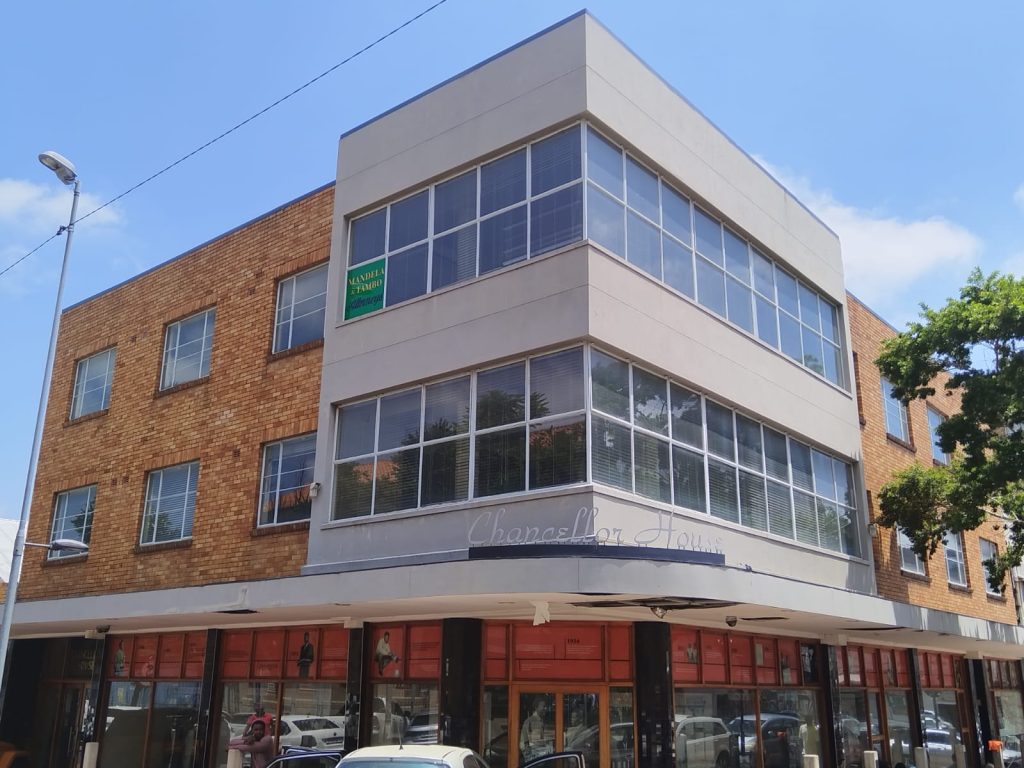
A culmination of research gathered over many years, the Online Johannesburg Heritage Register is being launched on Nelson Mandela Day 18 July 2025.
Among the many heritage sites featured is Chancellor House, the downtown offices of Mandela and Tambo Attorneys in the 1950s. After having been vacant and shuttered for more than a decade, this iconic building is being revived and brought to life once again as offices for the Community Development Department, which oversees the City’s Arts, Culture & Heritage Services.