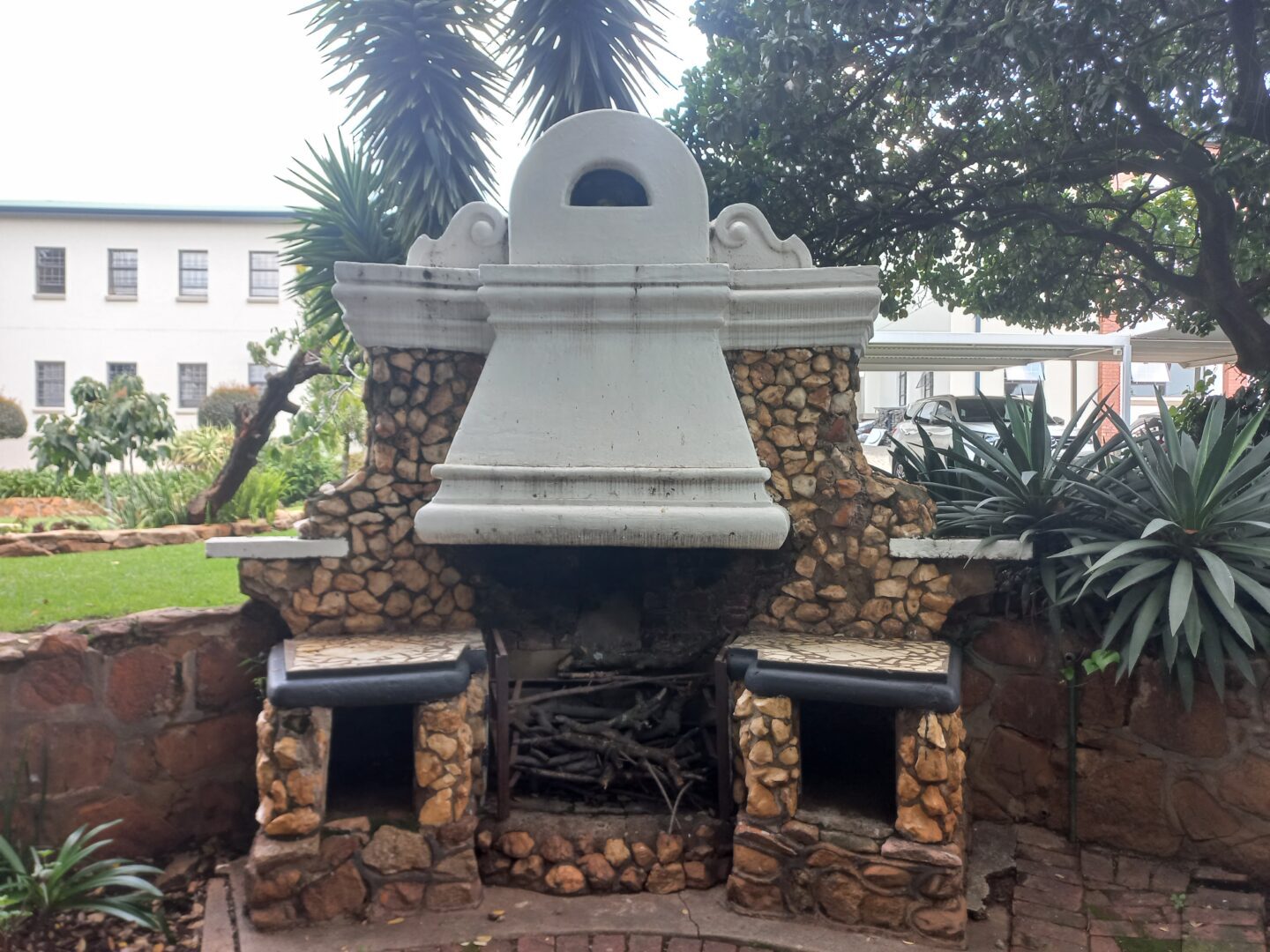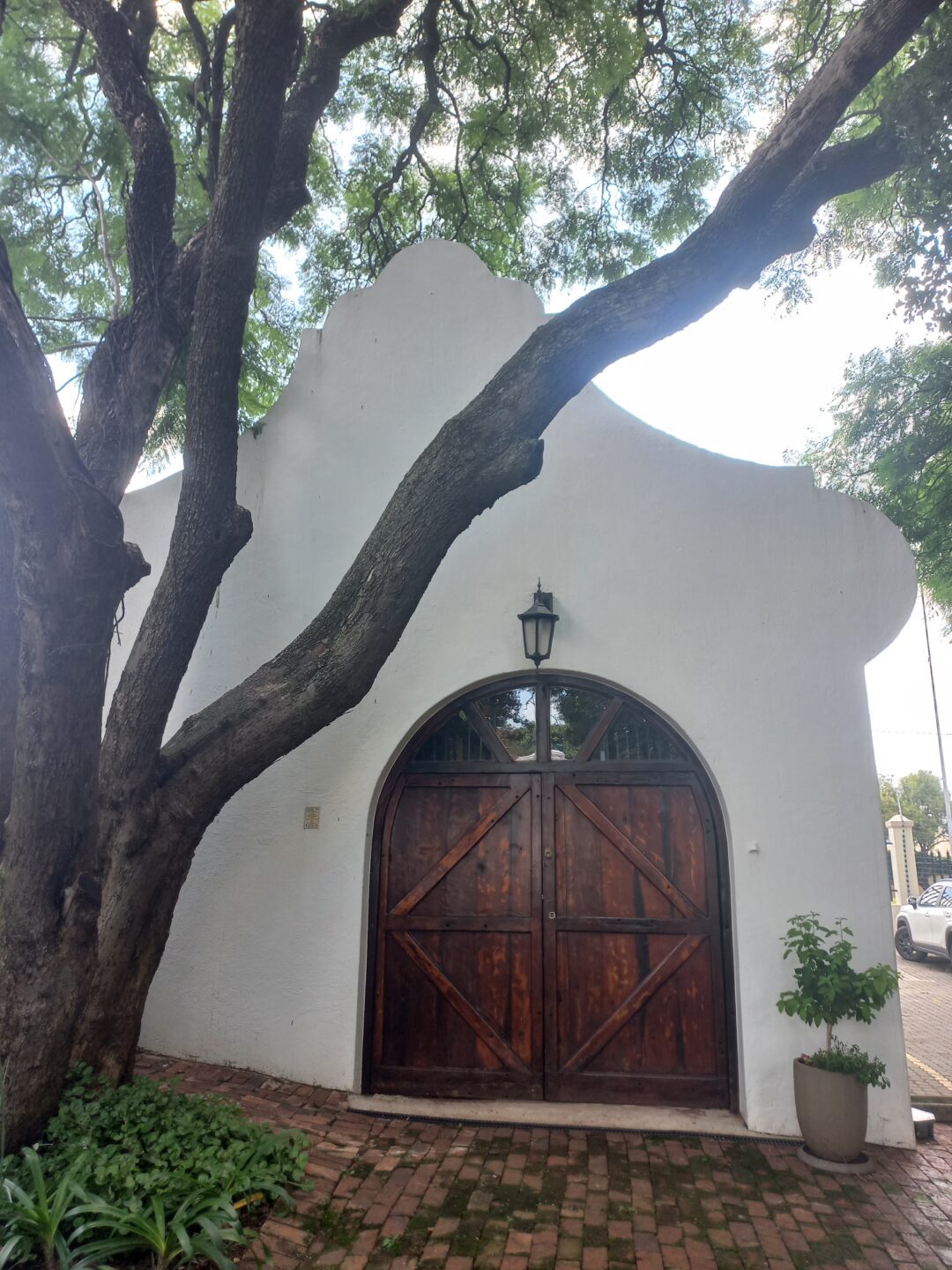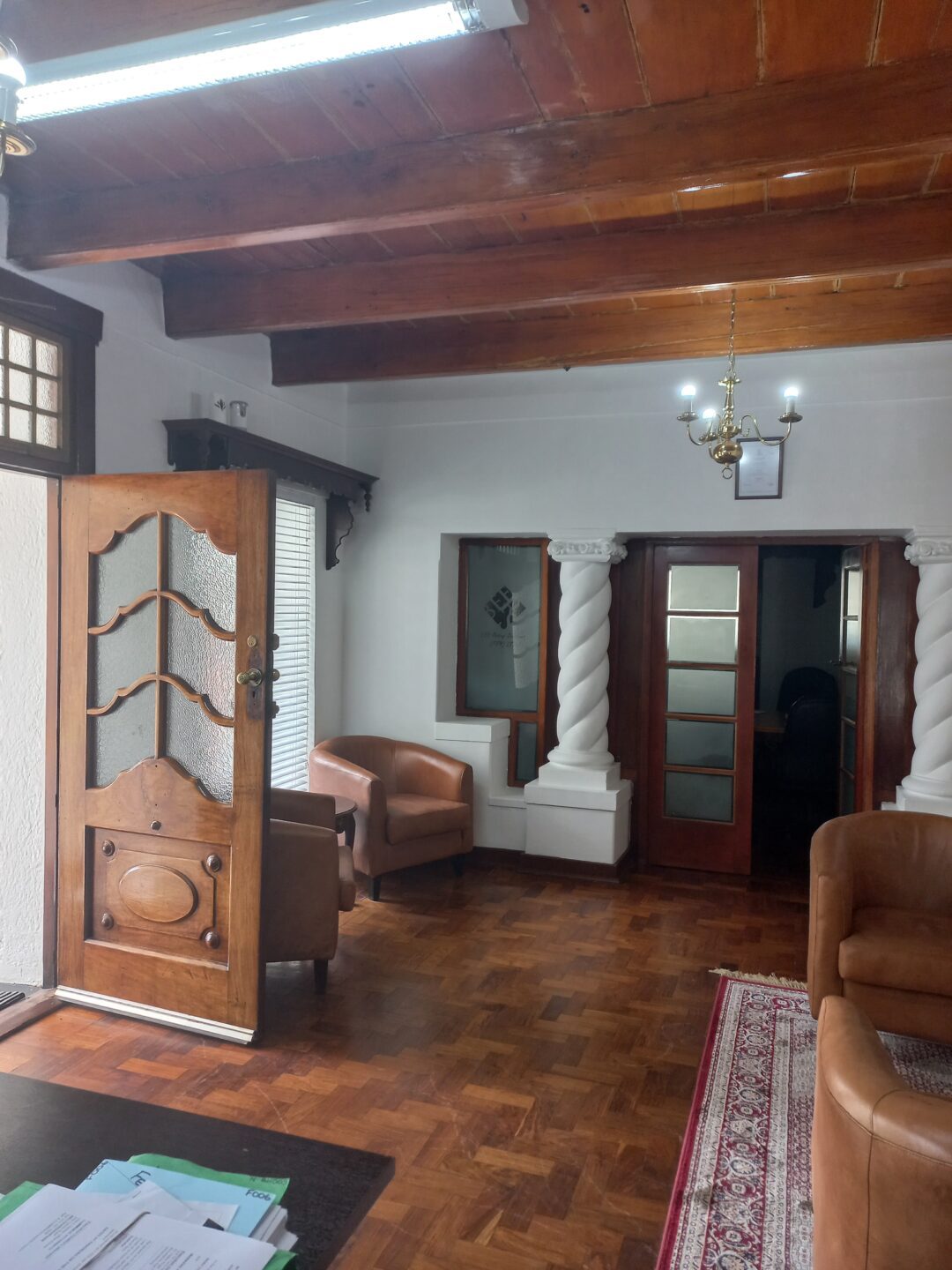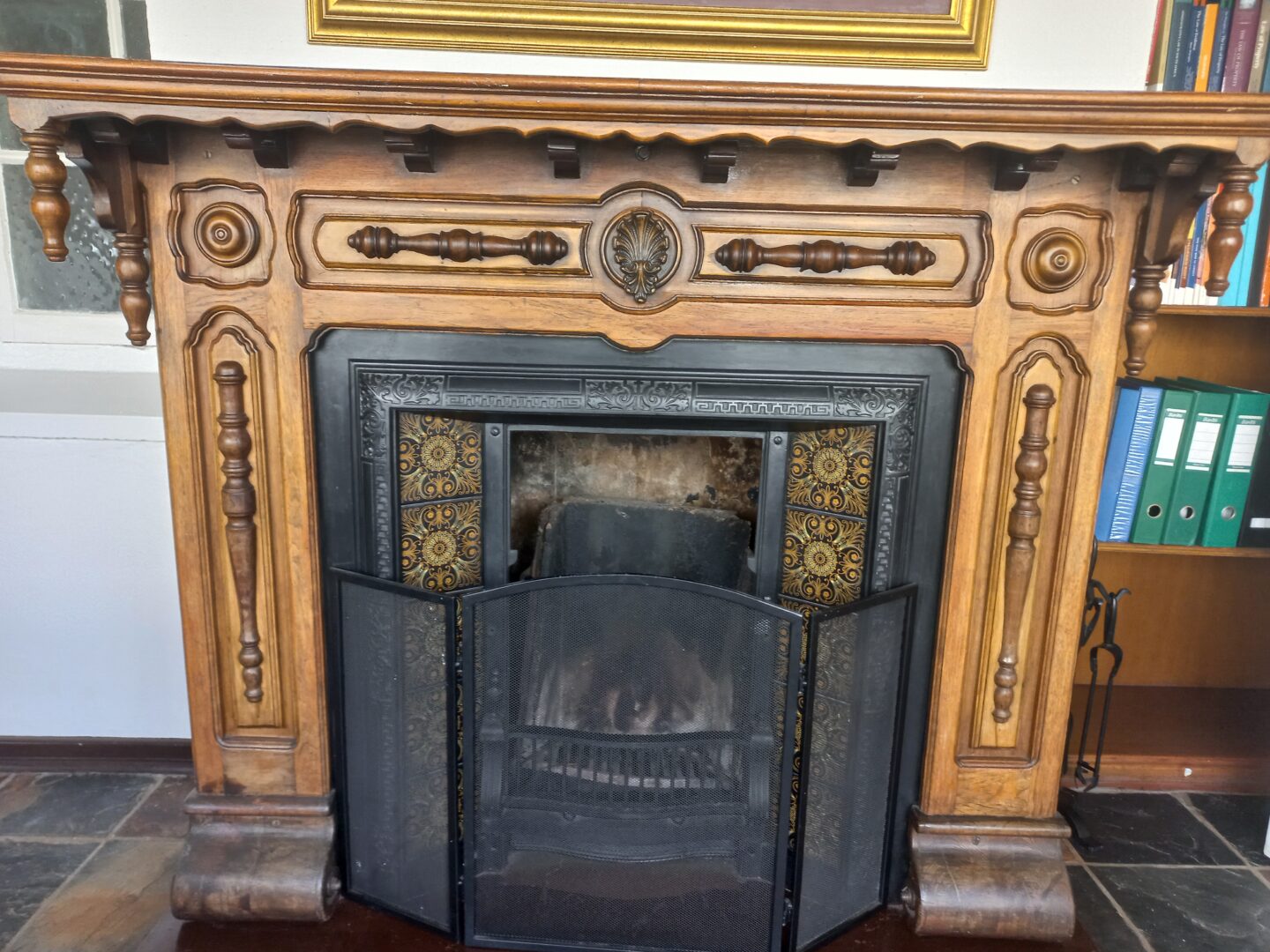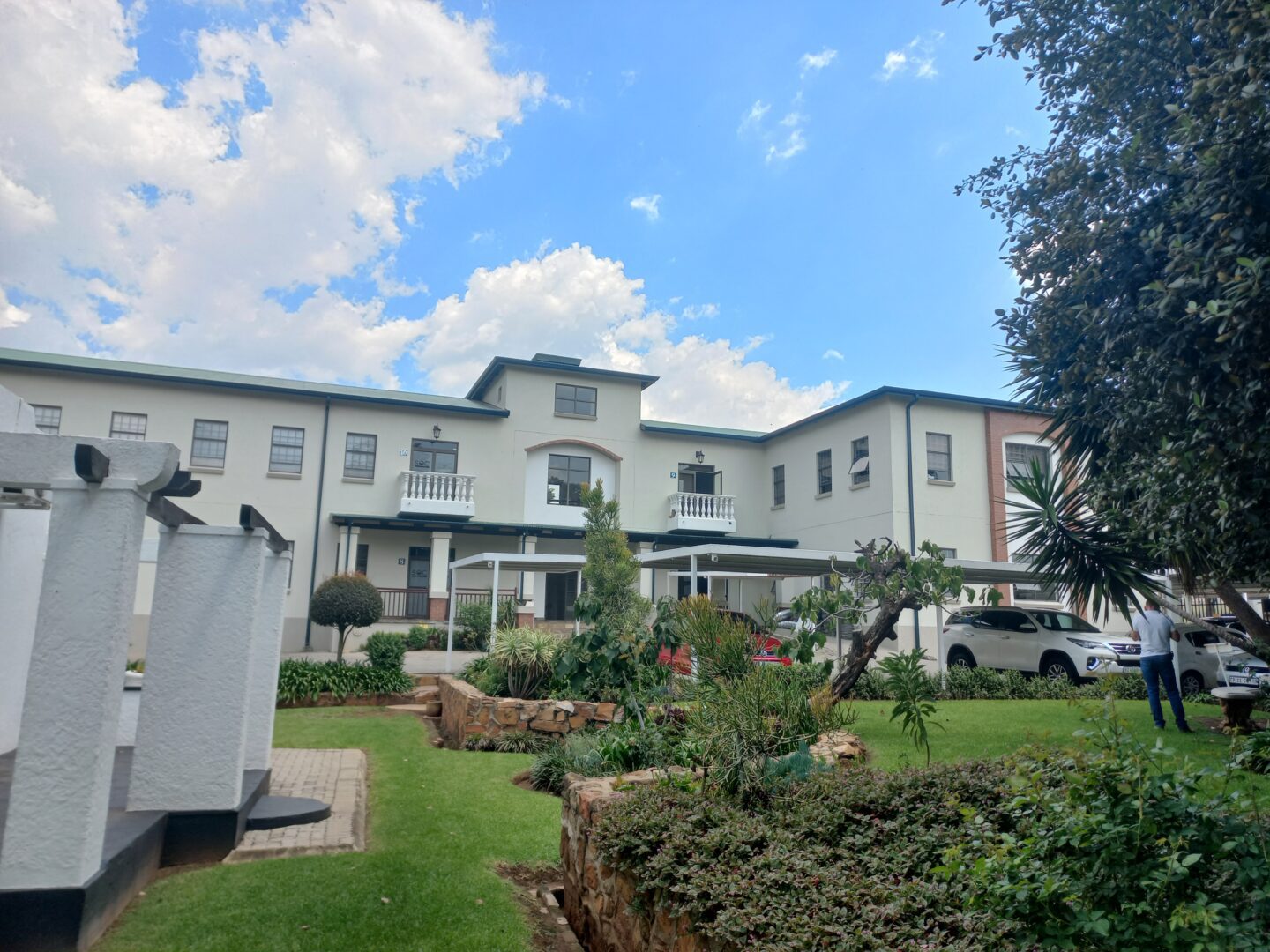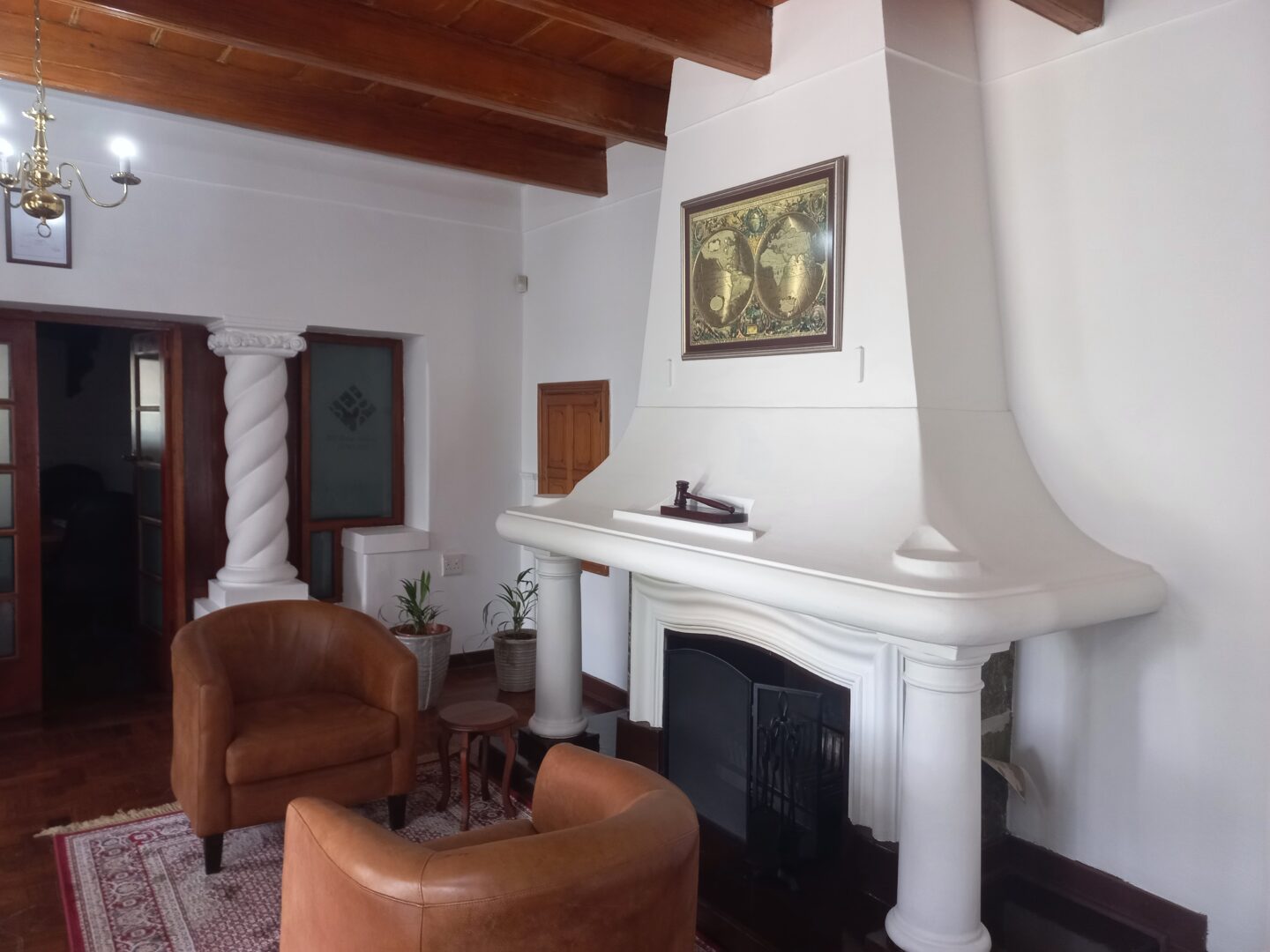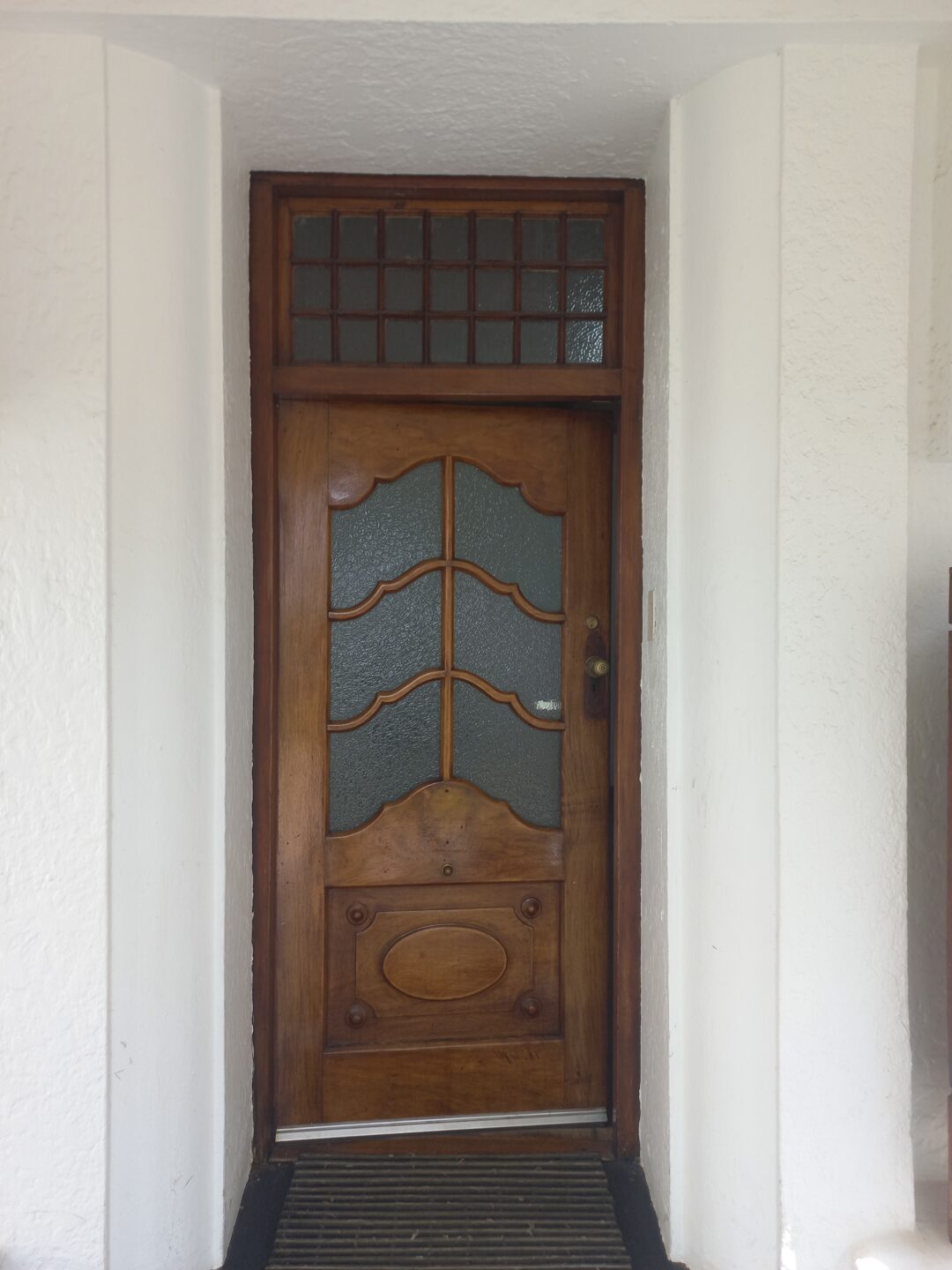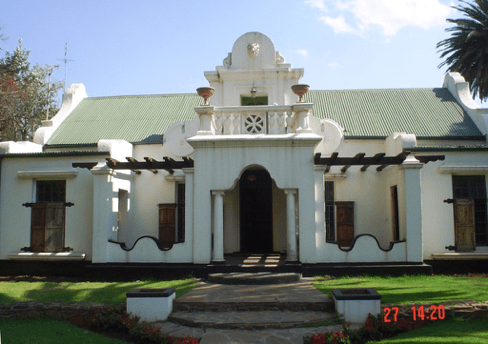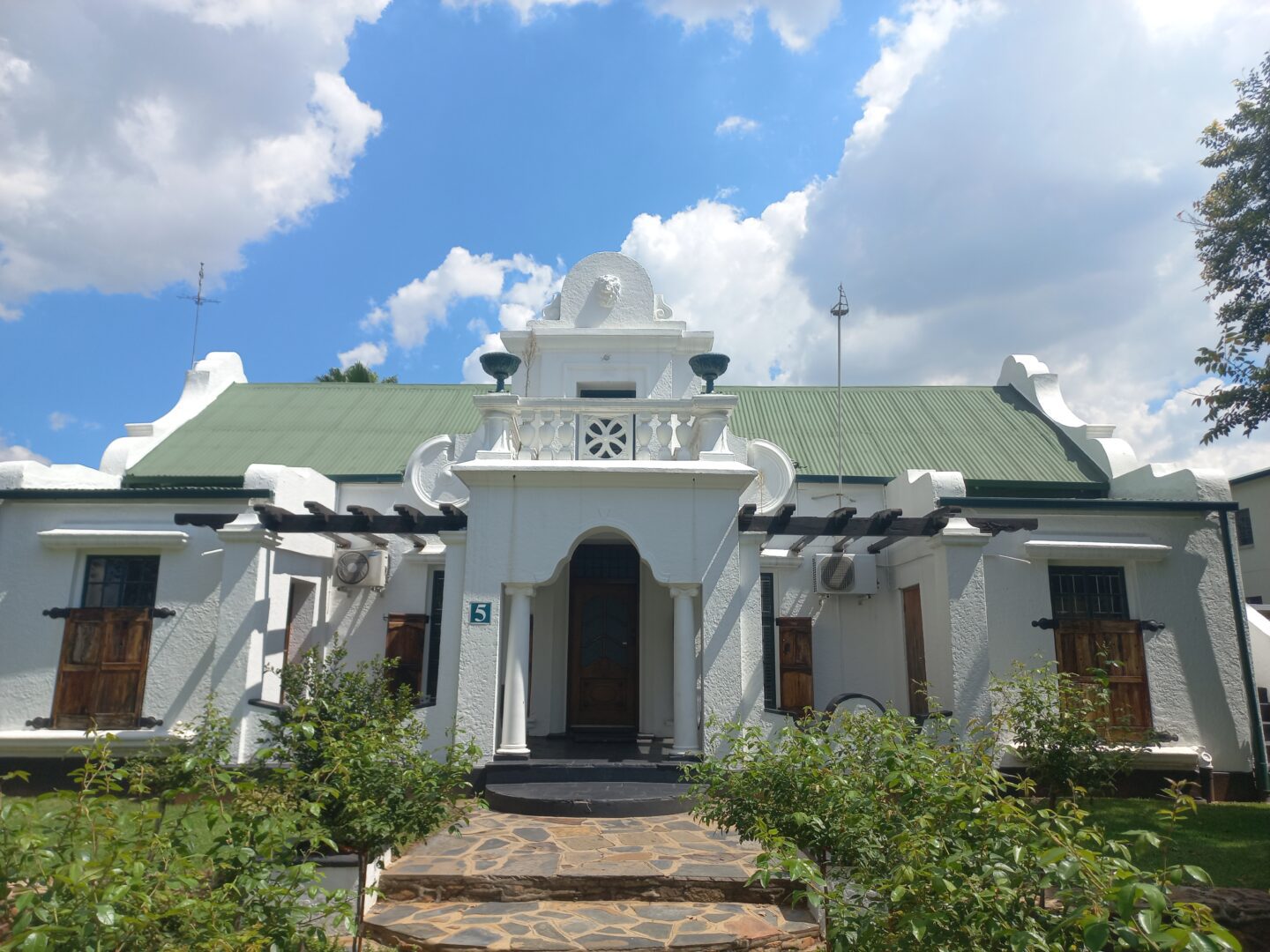
The overall site is approximately 7 107 m² and it consists of a dwelling with several outbuildings. The property is bound by JG Strijdom Road on the west and Tennis Road to the north, erven 3542, 3552, 3553 and 3554 to the east and erf 4832 on the south. The Weltevreden Farmstead in its current state consists of the farmhouse and several outbuildings. The original farmhouse, erected in circa 1872, was extended and altered over the years by different owners from the same family.
The proposed development of the Gables Office Estate on Erf 3828 will incorporate the farmhouse, waenhuis and garden in the new development. A new two-storey office block with six units will be erected north of the farmhouse on the area currently used as car parking for visitors to the pub. A second similar office block will be erected south of the farmhouse on the area between the garden edge and the south border of the property.
The area of the Witwatersrand was originally inhabited by the Batswana. Remains of the iron ore smelting ovens were found on the farm in Cornelius Street, Panorama, now Weltevreden Park (Mason, R. “Origins of the African People of the Johannesburg area”, p9) A tarred street covers the Batswana iron ore smelting ovens in Cornelius Street today, whilst a retirement village, next to the street, was built over these historic ovens.
When the first hunters and Voortrekkers settled in the area between 1830 and 1845 the Batswana people had left the area to settle in the Cashan Mountains, also known as the Magaliesberg. Wild animals like lions, elephants, buffalo and eland were spread across the Witwatersrand at the time.
The farm Weltevreden 202IQ was on 24 July 1861 allocated as “burgerrecht compensation” to:
Eventually CJ Smit would also include part of Boschkop No 2 and 900 morgen of the south eastern part of Wilgerspruit No 3, as well as the remainder of Weltevreden No 4, to his portion.
Information on the two Badenhorst cousins is limited. HJJ Badenhorst requested the government in 1892 to be compensated for his “burgerrecht” with a farm in the Bushveld between “Wildebeestenkuil” and “Schuinsdraai”. In 1900 during the Anglo-Boer War he requested permission from the military government to travel to the Free State. No further information on his whereabouts could be traced for purpose of this study.
When CJ Smit bought the farm Weltevreden No 4 from Badenhorst in 1872, there was already a “hartebeeshuis” and “waenhuis” on the farm. The house consisted of three rooms, built with sun dried mud bricks (mixed with lime) and a reed roof. The three rooms still form part of the existing farmhouse. It can easily be distinguished by the thickness of the walls and yellow wood ceiling. It is also the only part of the house with an attic.
Cornelius Johannes Smit added some rooms to the house, probably the kitchen and bedrooms on the southern side of the original house. These additions do have a flat roof which can be clearly distinguished from the pitched roof of the original house. It is not clear when these additions were made, but it should have been before 1891 when he passed away.
A tornado raised the reed roof in 1879. Smit subsequently replaced it in the 1880 s with a corrugated iron roof. The corrugated sheeting was imported from England and transported by ox wagon from the coast to Weltevreden. Some of the sheets were stamped with the ‘Wolverhampton Corrugated Iron, Emu Brand” and some of the other sheeting are stamped “C° Delagoa Bay ‘97”.
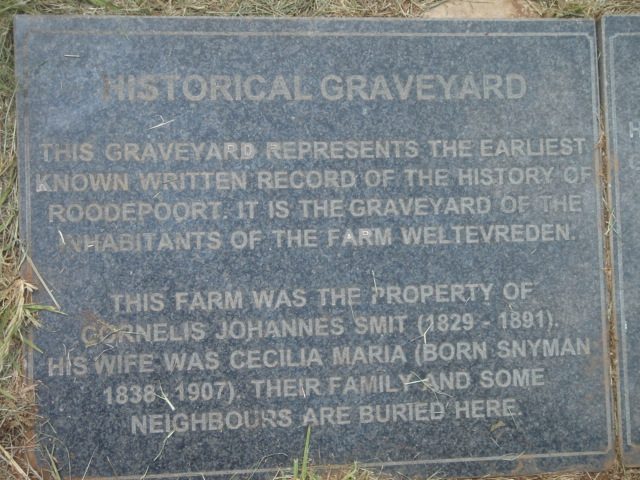
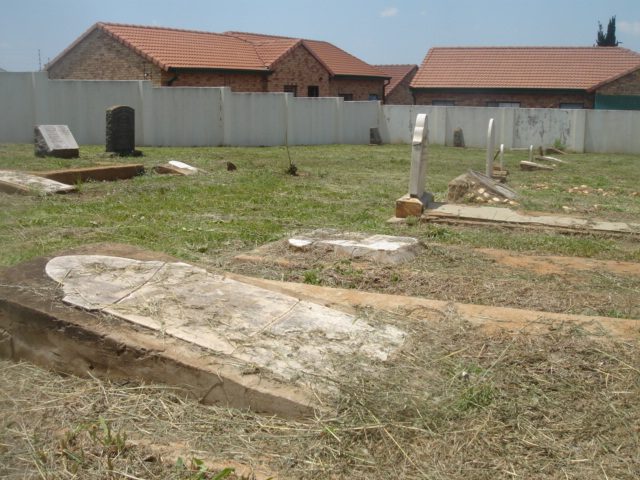
The farmhouse was struck by lightning in 1880. The north eastern corner of the house was damaged at the time. Two of Smit’s daughters died tragically at the time. As a result, Smit added a very impressive lightning conductor to the house, which is still on the roof. One of the added rooms on the stoep was at the time converted into a mortuary, and later used for this purpose by the neighbourhood. The Weltevreden Cemetery on the southern side of the farmstead (north of the Hillfox Centre) was used as burial place by the neighbourhood.
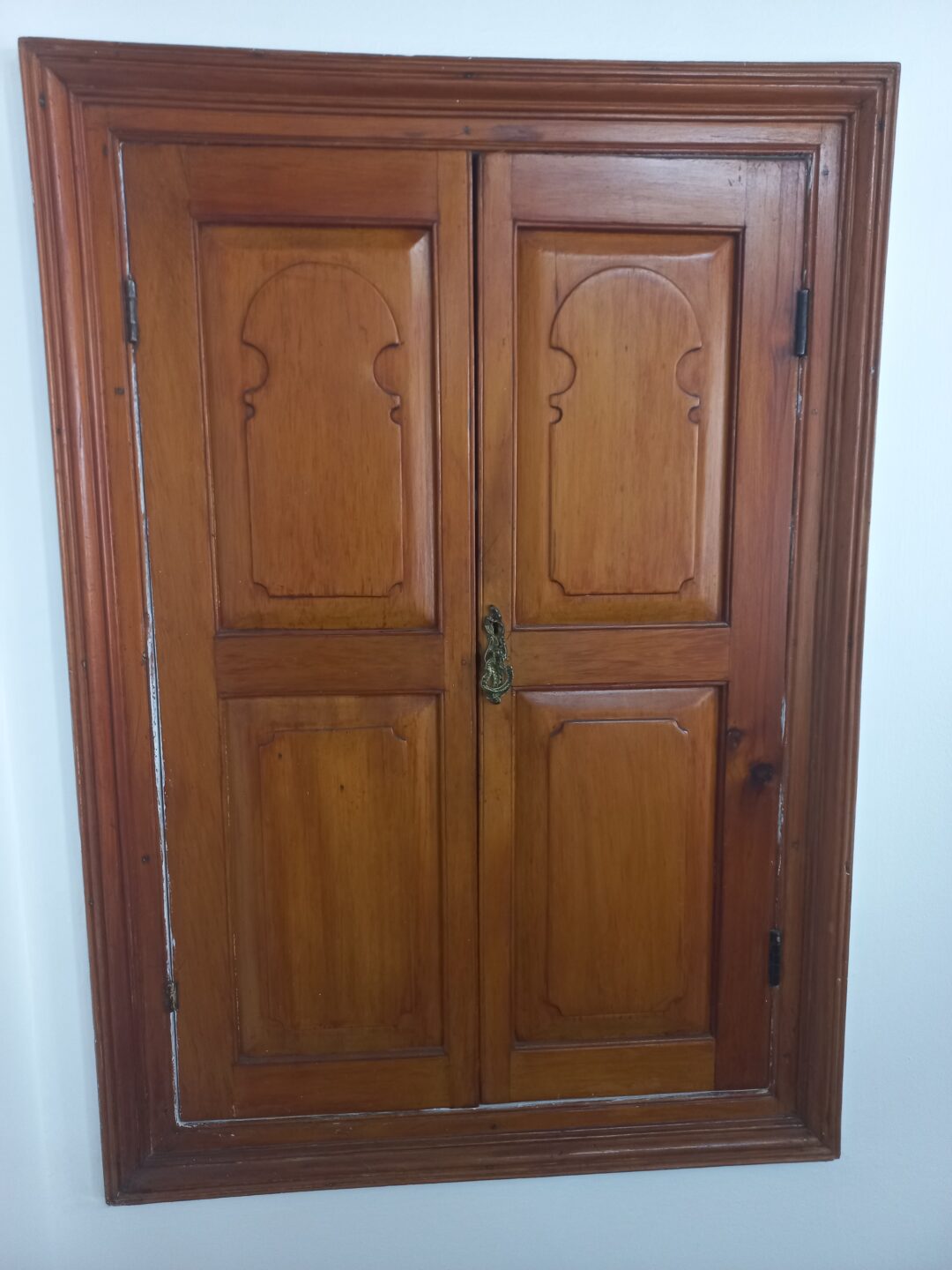
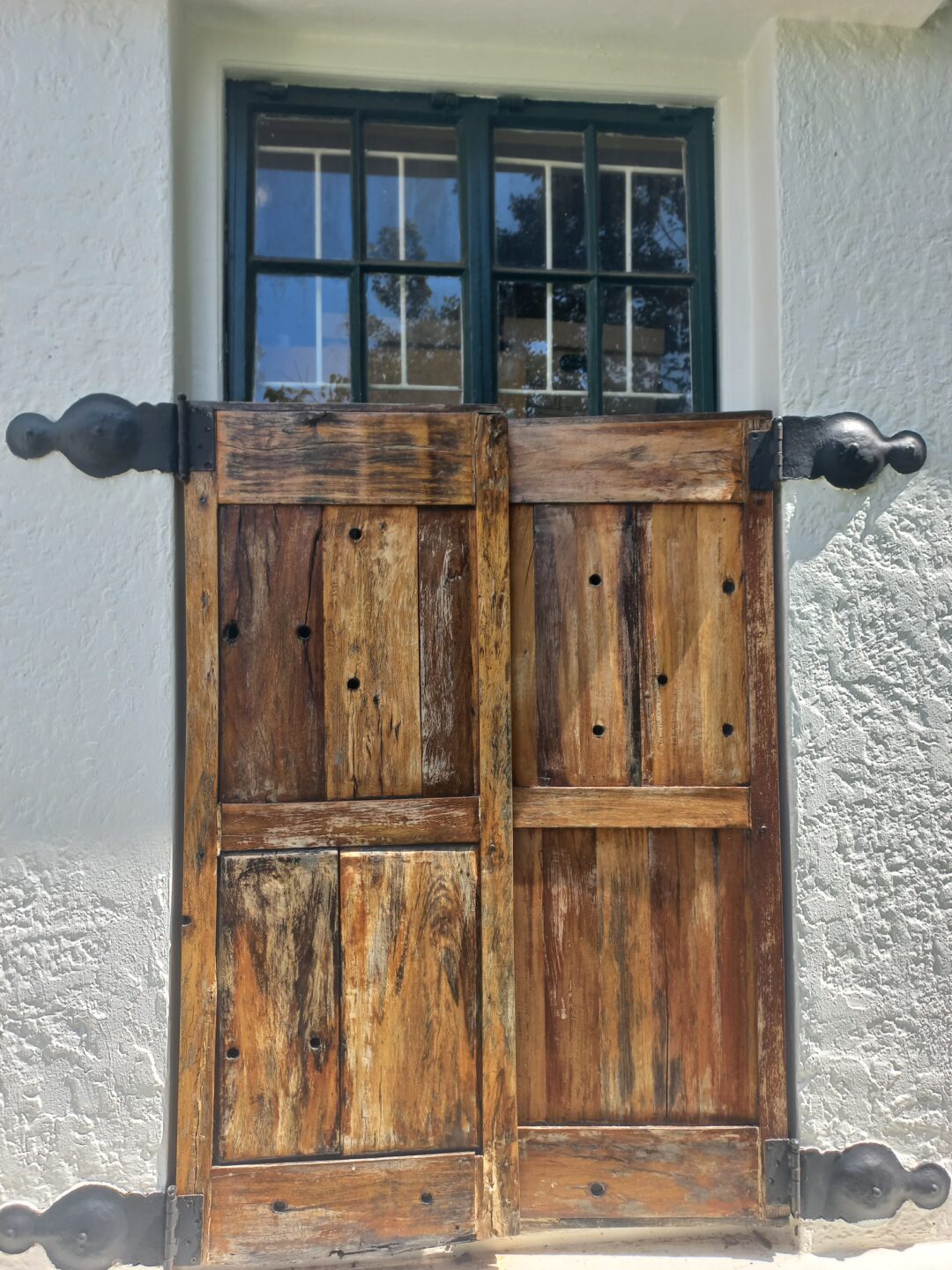
Cornelis Johannes Smit was born in 1829 and worked as a wagon-maker and metal-smith in the Wagenmakers Valley before he moved to the north. He speculated with cattle on the farm Weltevreden. The yellow wood shutters before the windows, as well as the hinges were made by him. He also installed two small wall units in the “voorkamer” (lounge) with yellow wood doors.
CJ Smit died in 1891. His three children inherited the farm, namely:
The cattle on Weltevreden were in 1896 affected by the “rinderpest” as indicated by a veternery report at the time (National Archives of South Africa: TAB, Archive of the State Secretary, Vol. 0, Ref.7906/96). The impact of the “runderpest” on the speculation with cattle by Smit is however not clear from the report.
During the first years of its existence Johannesburg obtained its water from various nearby fountains and streams. The water was transported by a cart drawn by two oxen. The first pipe water was provided in June 1888 by the Johannesburg Waterworks, Estate and Exploration Company, whom had built a reservoir on the hill next to Harrow Road. ( “Johannesburg Eenhonderd Jaar, 1983”, Chris van Rensburg, Mellville, p 253). Only a part of the new town was provided with “pipe water” at the time. The Johannesburg Waterworks, Estate and Exploration Company entered into a lease agreement with the owners of Weltevreden for the use of water from certain fountains and other sources of water. (National Archives of South Africa: TAB, Archive of the State Attorney, Vol 107, Ref. SPR 5000/96).
The Weltevreden farmstead was spared during the Anglo Boer War and not burnt down. Rumour had it that CJ Smit was a “joiner” and a “hanskakie” and that this was the reason why the farmhouse was not burnt down. No confirmation of this rumour could be found.
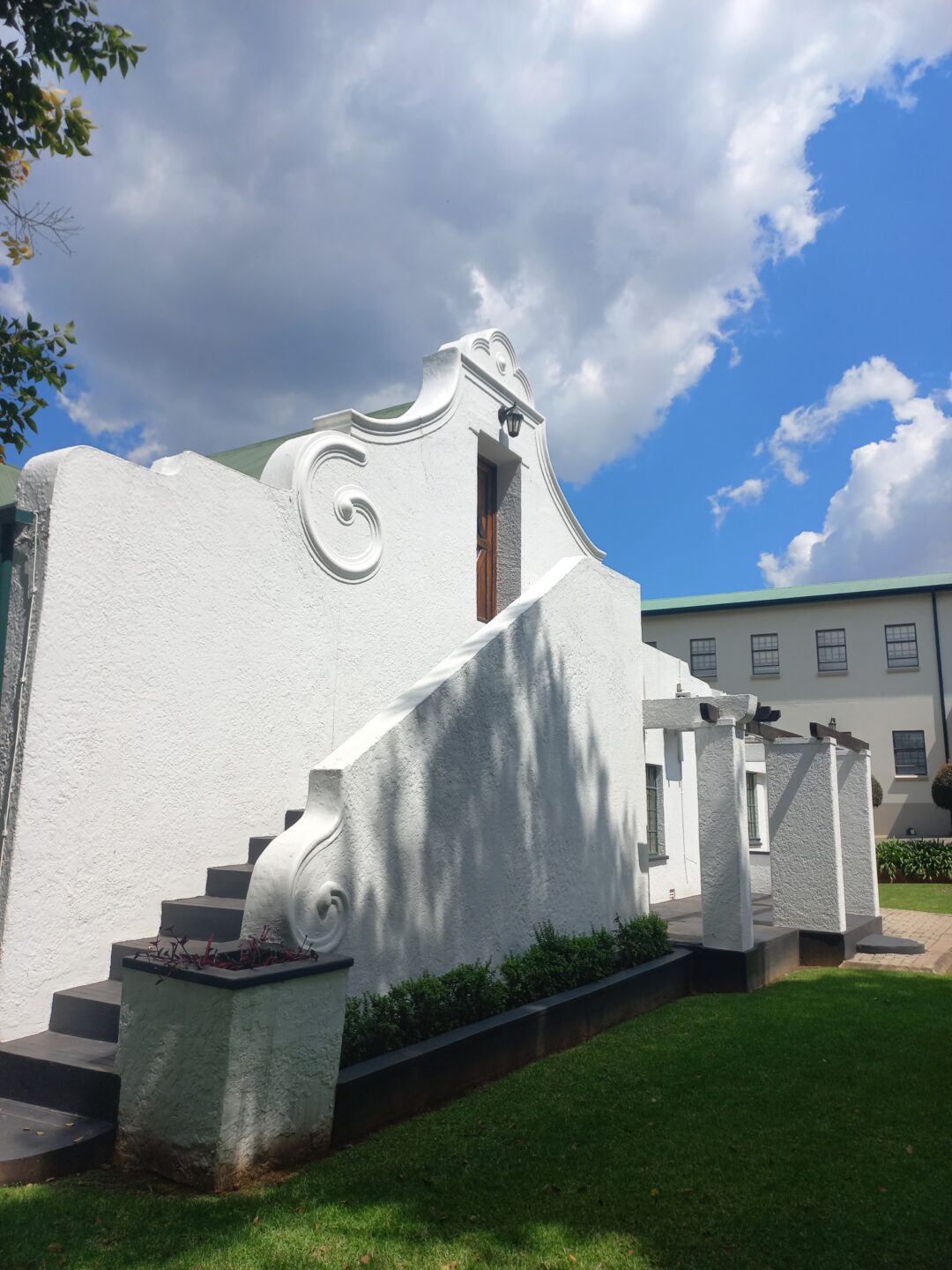
Martha Christina Erasmus (nee Smit) died in 1918-1919 during the Great Flu epidemic. Her husband and their children inherited according to her will the portion of Weltevreden with the farmhouse. Theunis Erasmus left with the children shortly after her death to settle in Potchefstroom. The family returned to Weltevreden in 1934 and as the children were now of age, they each received a portion of the farm. Martha Christina’s namesake and daughter inherited the portion with the farmhouse. Martha Junior married J Lodevikus Kruger. Vic Kruger brought about many changes to the house, i.e. The Cape Dutch gables and the enclosure of the stoep. Waterborne sewerage system was also installed at the time, which resulted in the conversion of one of the rooms on the stoep into a bathroom. A second bathroom was later installed in the middle of the house. Vic Kruger was probably also the “architect” of the garden with its repe titive gable pattern.
The children of Martha Christina and Theuns Erasmus started to sell their inheritance to various developers since the 1970 s.
Vic Kruger died in 1979 and his son Louis inherited the portion of the farm with the farmhouse. The subdivision of the farm into agricultural holdings and later into erven resulted in the establishment of the suburb Weltevreden Park (National Archives of South Africa: CDB, Vol 8838, PB 4/9/2/30/562) and the allocation of stand no 3828 to the farmstead. The zoning of the property was changed in 1996 from “Residential 2” to “Business 1” in terms of the Roodepoort Town Planning Scheme of 1987, No 1048. Since then the property was used to house a cleaning service and as accommodation to a pub and a restaurant.
Louis Kruger sold the property in 2005 and with this, the last part of CJ Smit (Senior)’s legacy fell into the hands of strangers.
Provisional Protection status under the National Heritage Resources Act, 1999. Gauteng Provincial Gazette Extraordinary , vol 17, no 213 of 15 September 2011. Notice 2409 of 2011.
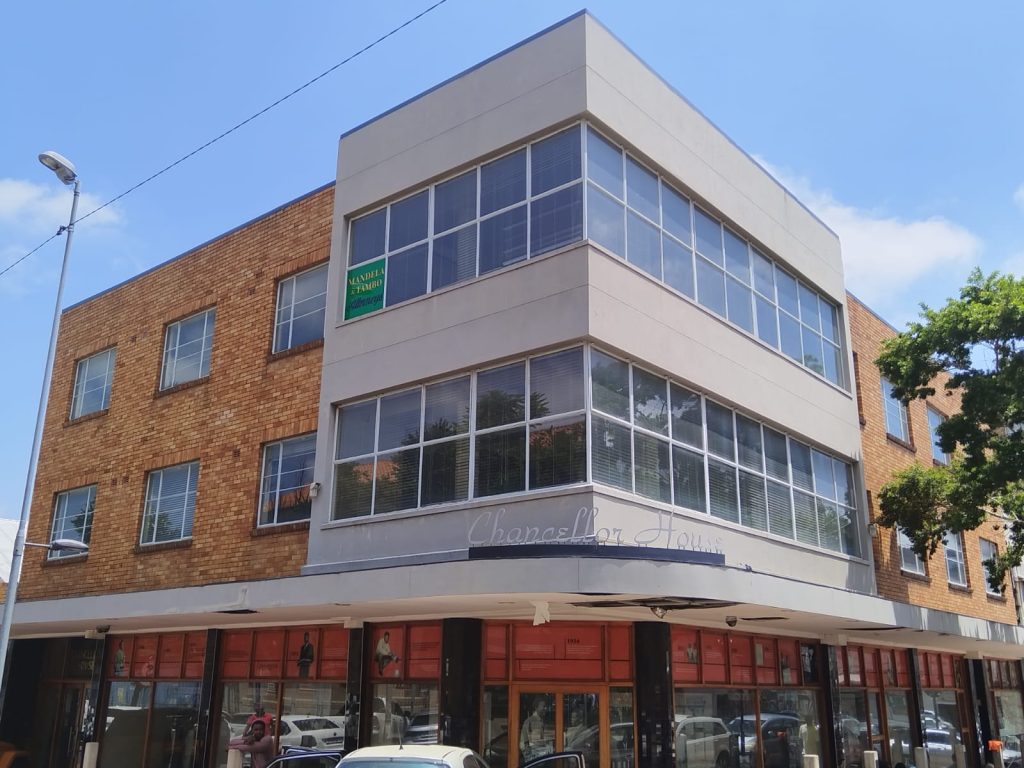
A culmination of research gathered over many years, the Online Johannesburg Heritage Register is being launched on Nelson Mandela Day 18 July 2025.
Among the many heritage sites featured is Chancellor House, the downtown offices of Mandela and Tambo Attorneys in the 1950s. After having been vacant and shuttered for more than a decade, this iconic building is being revived and brought to life once again as offices for the Community Development Department, which oversees the City’s Arts, Culture & Heritage Services.