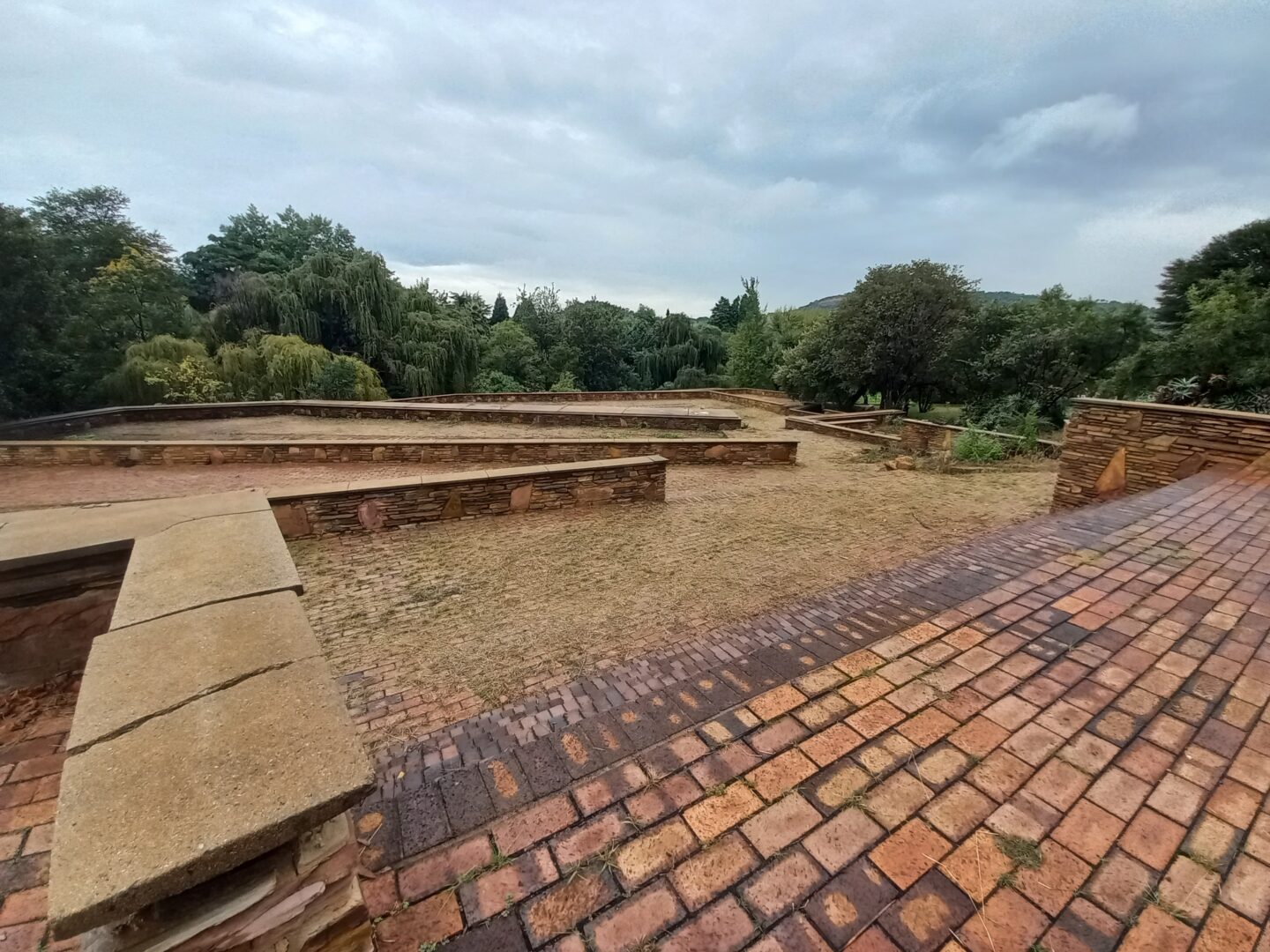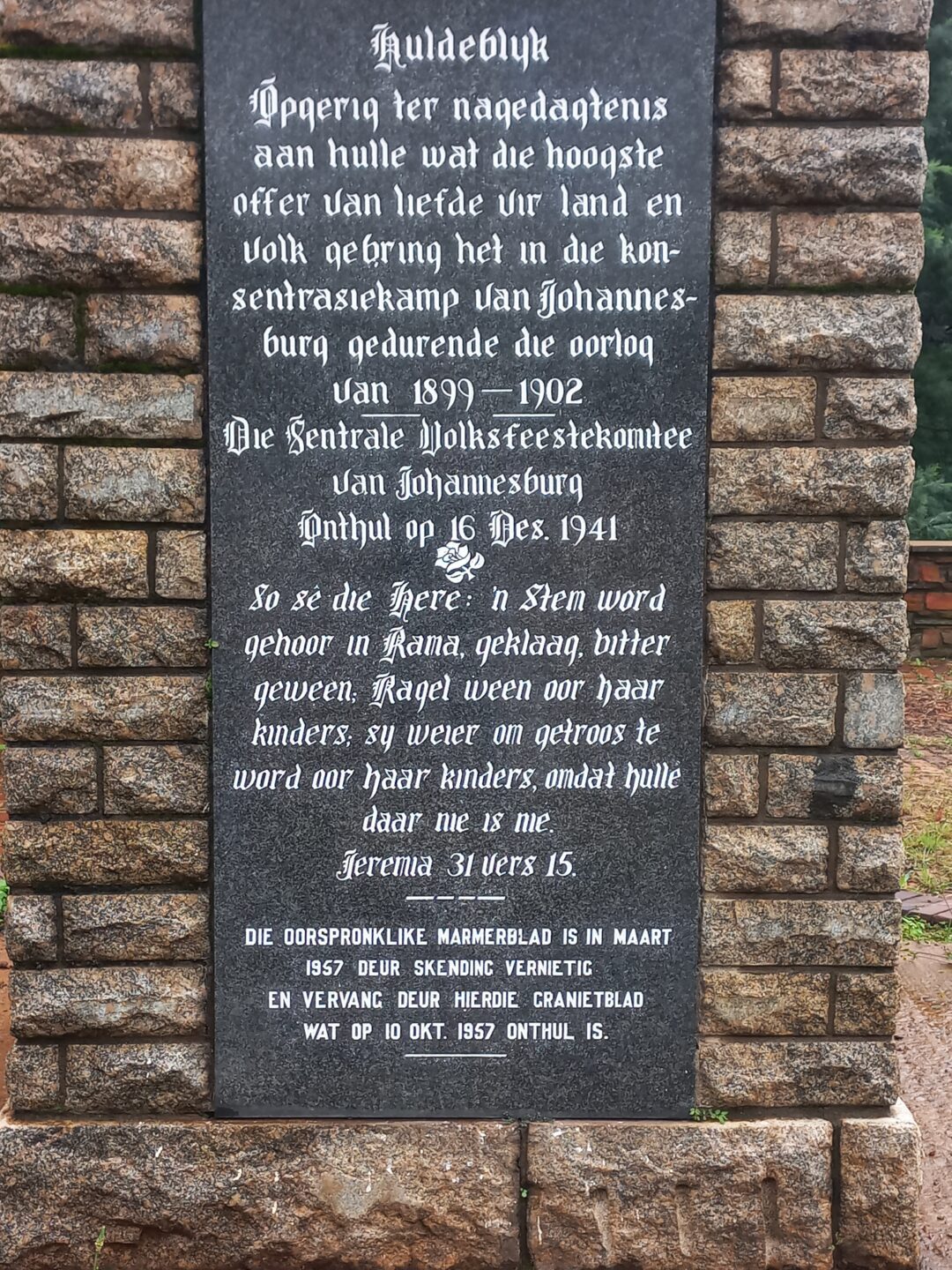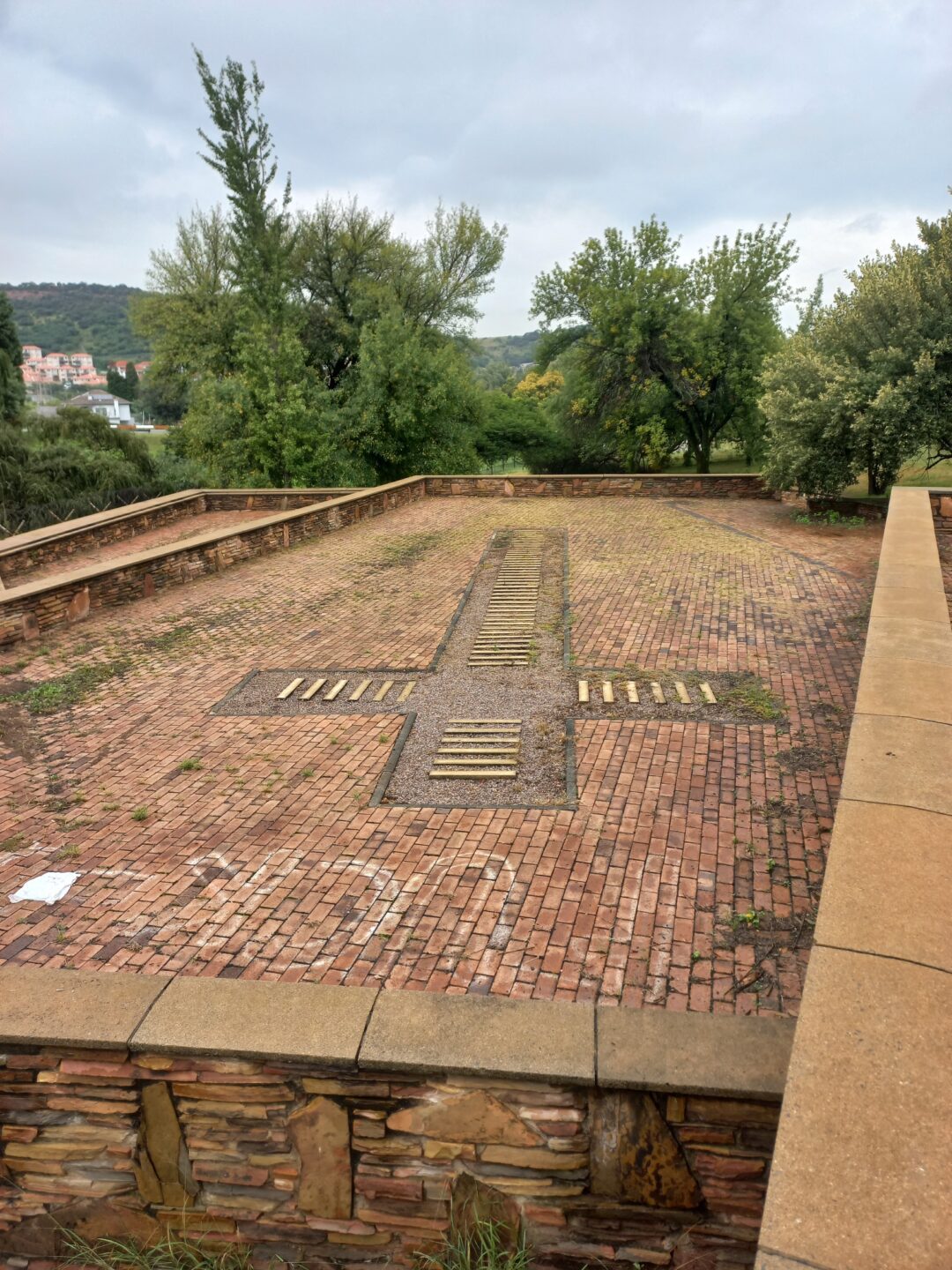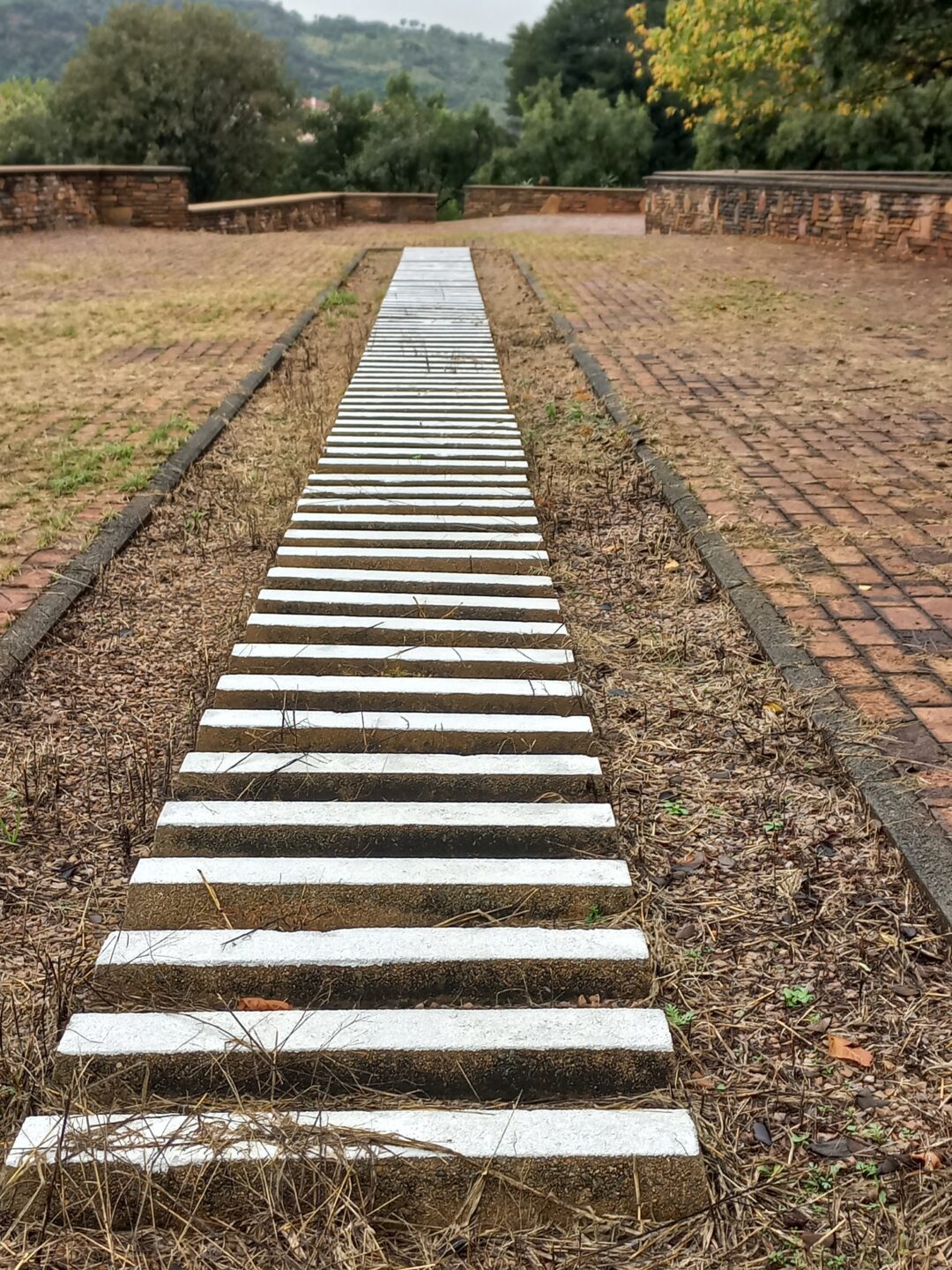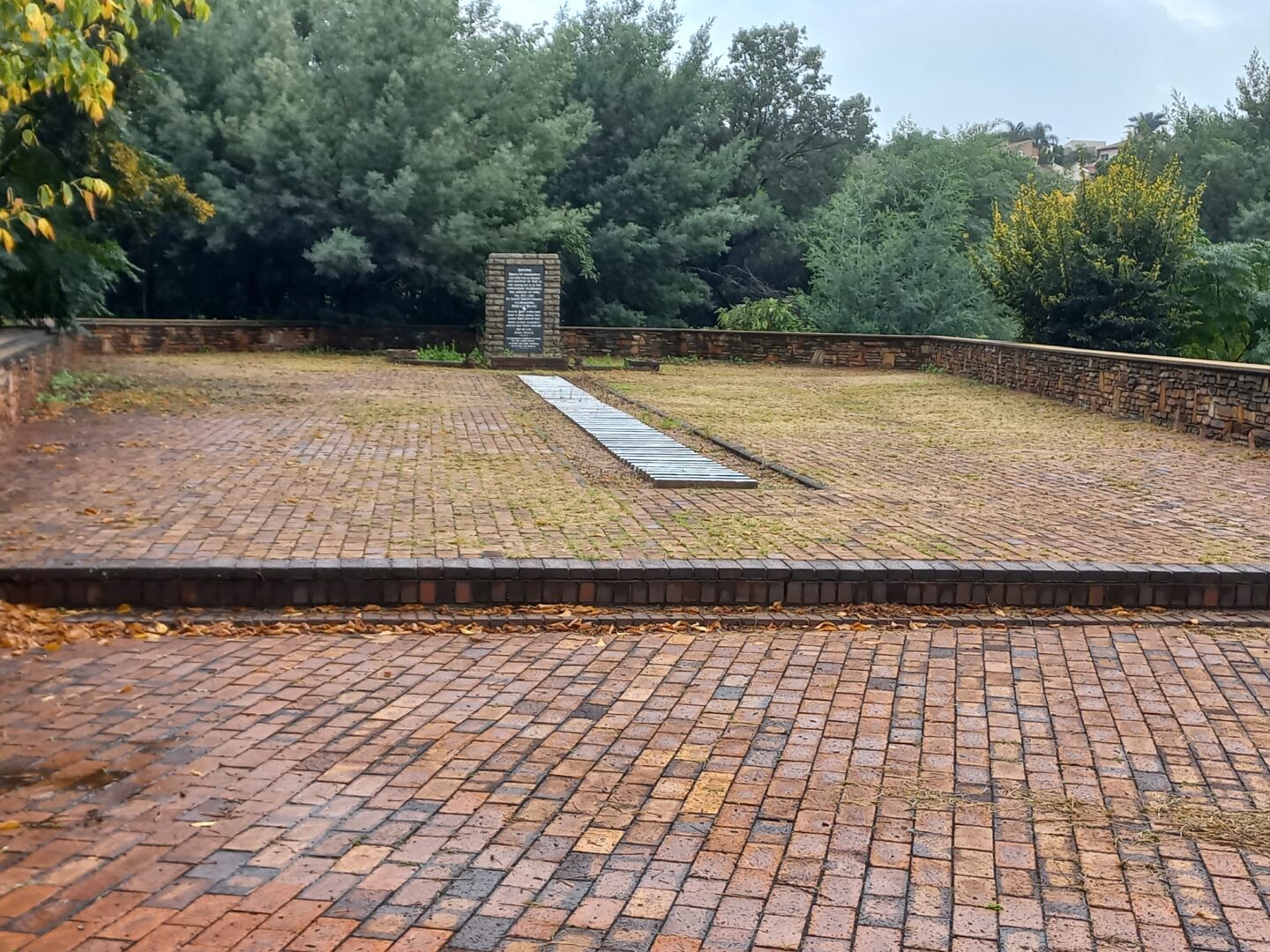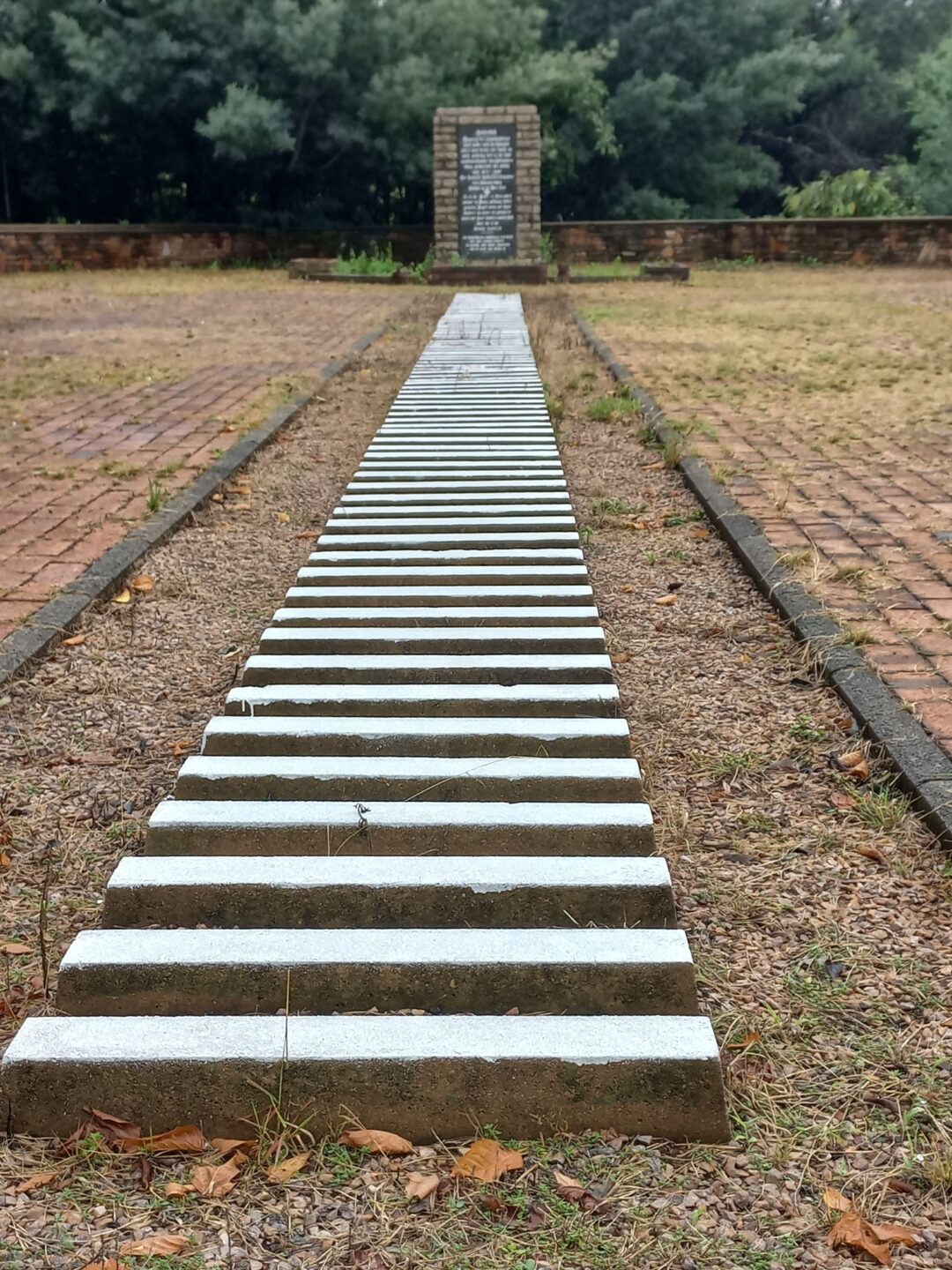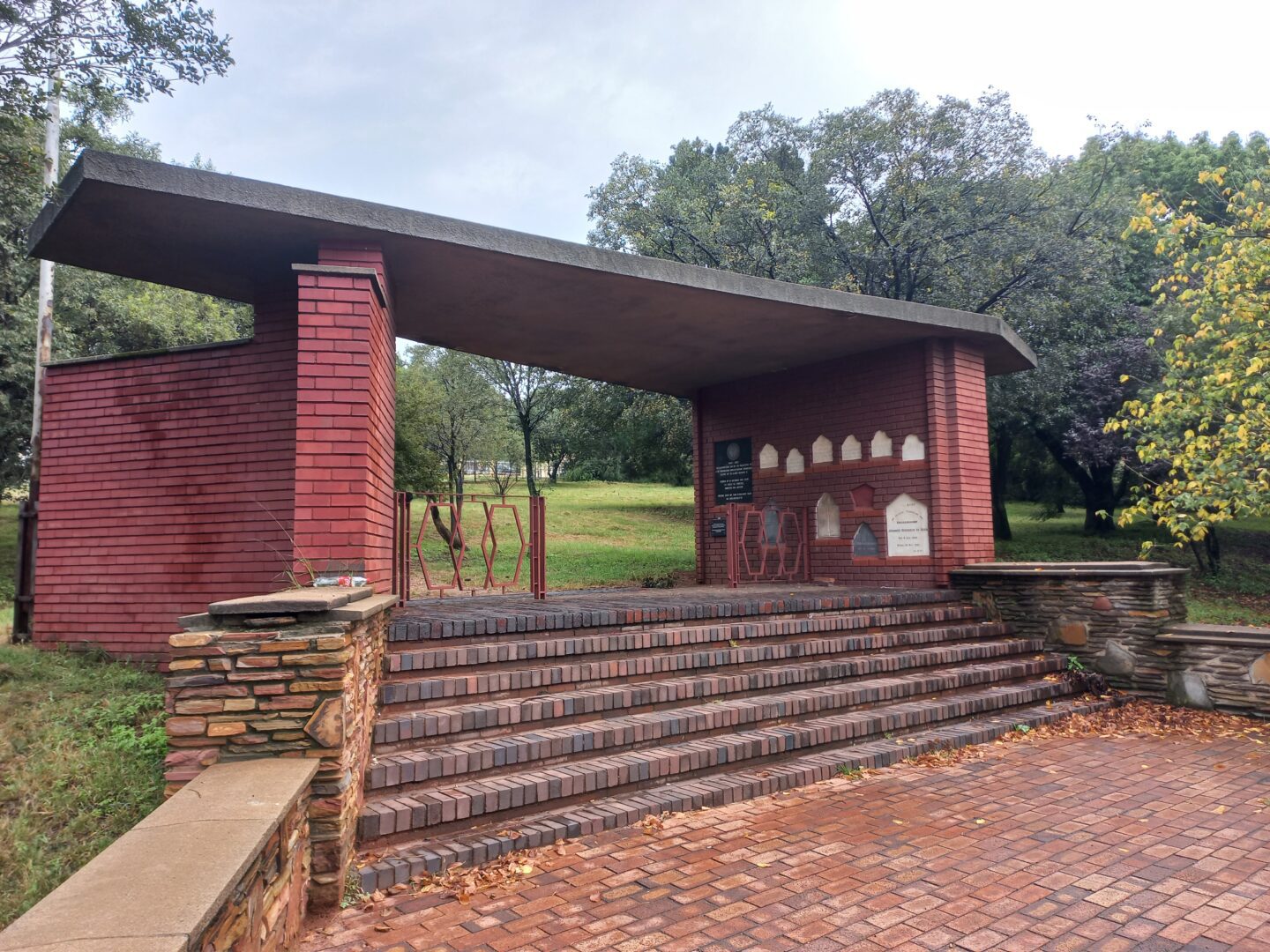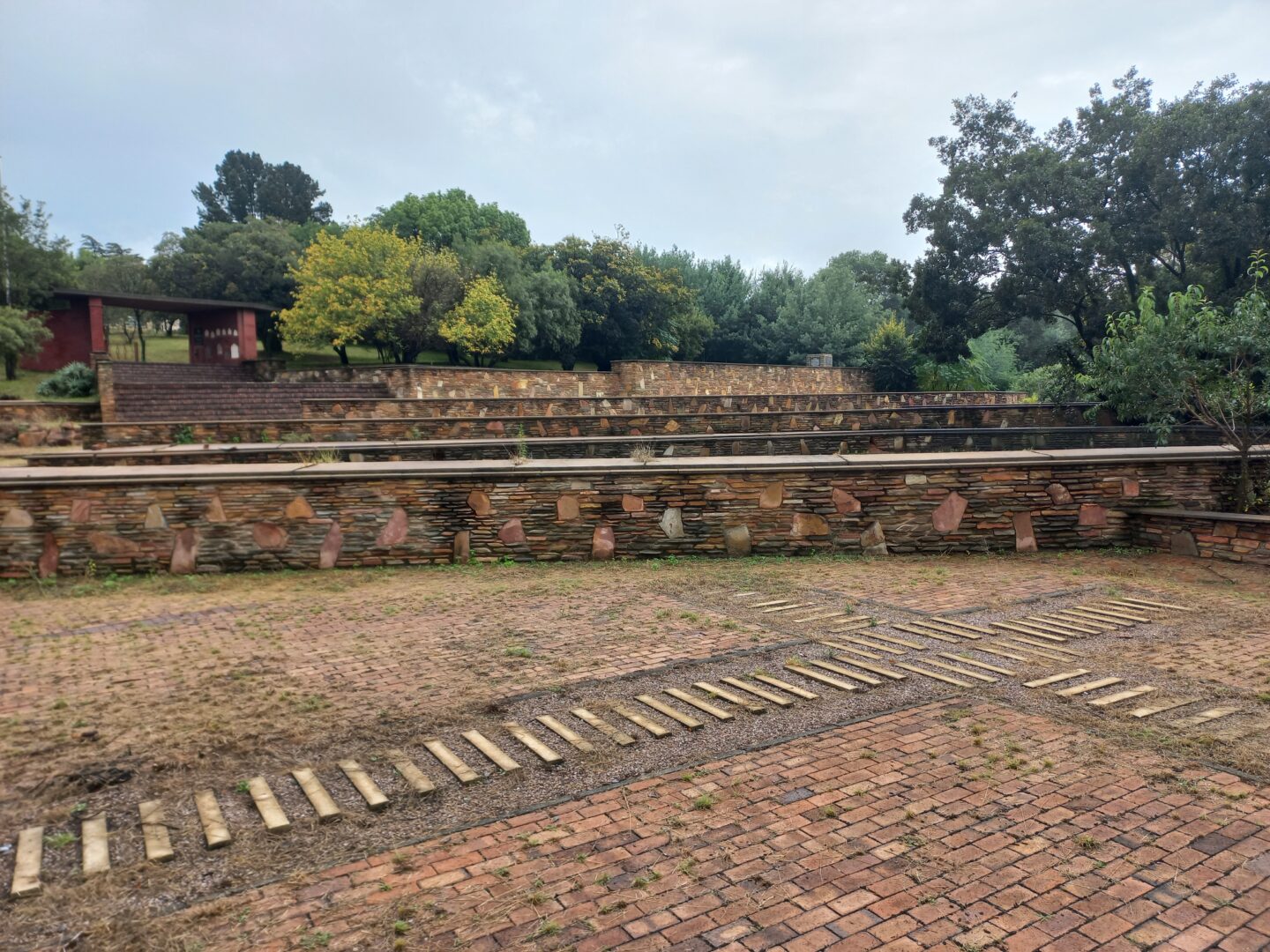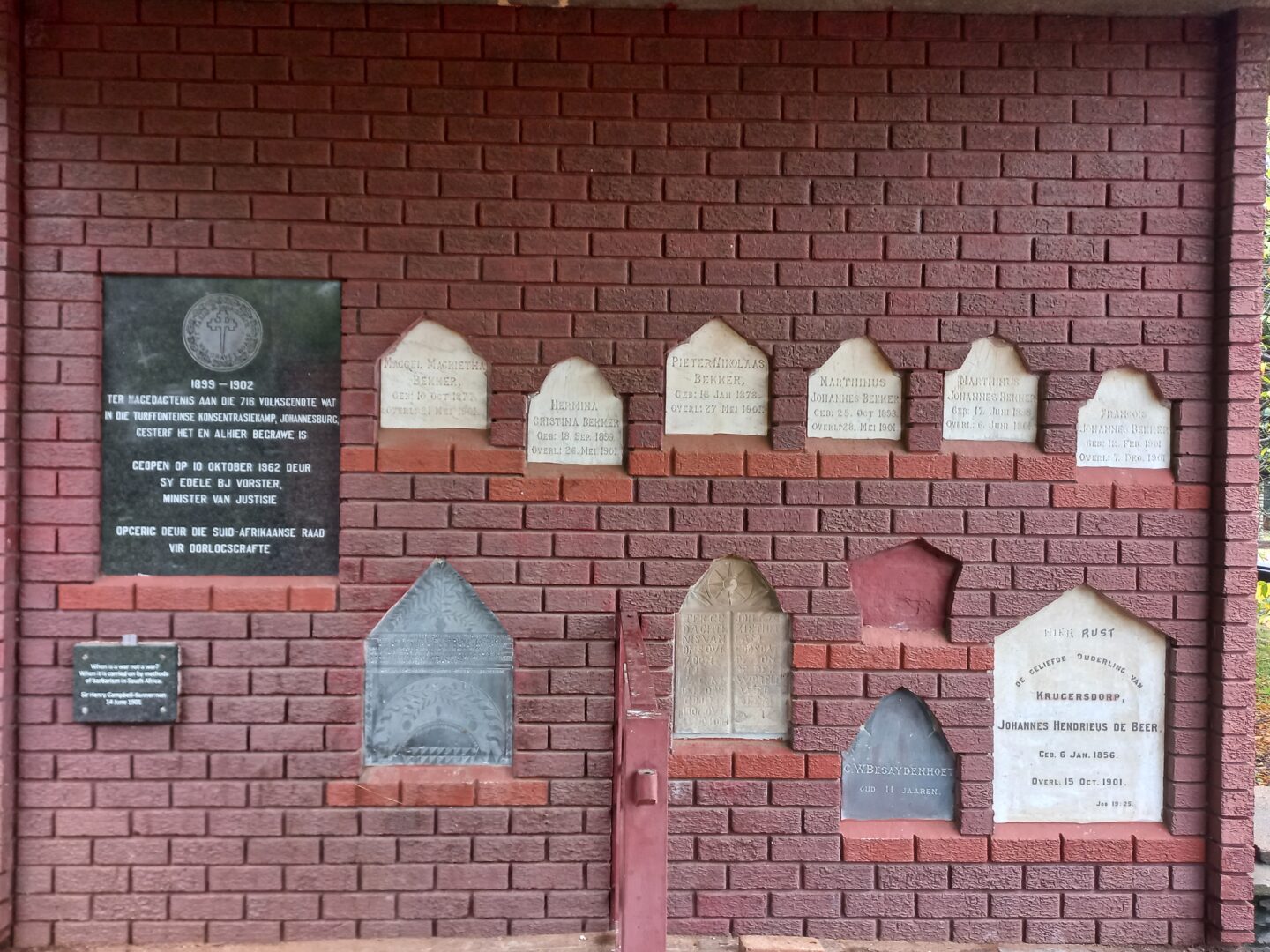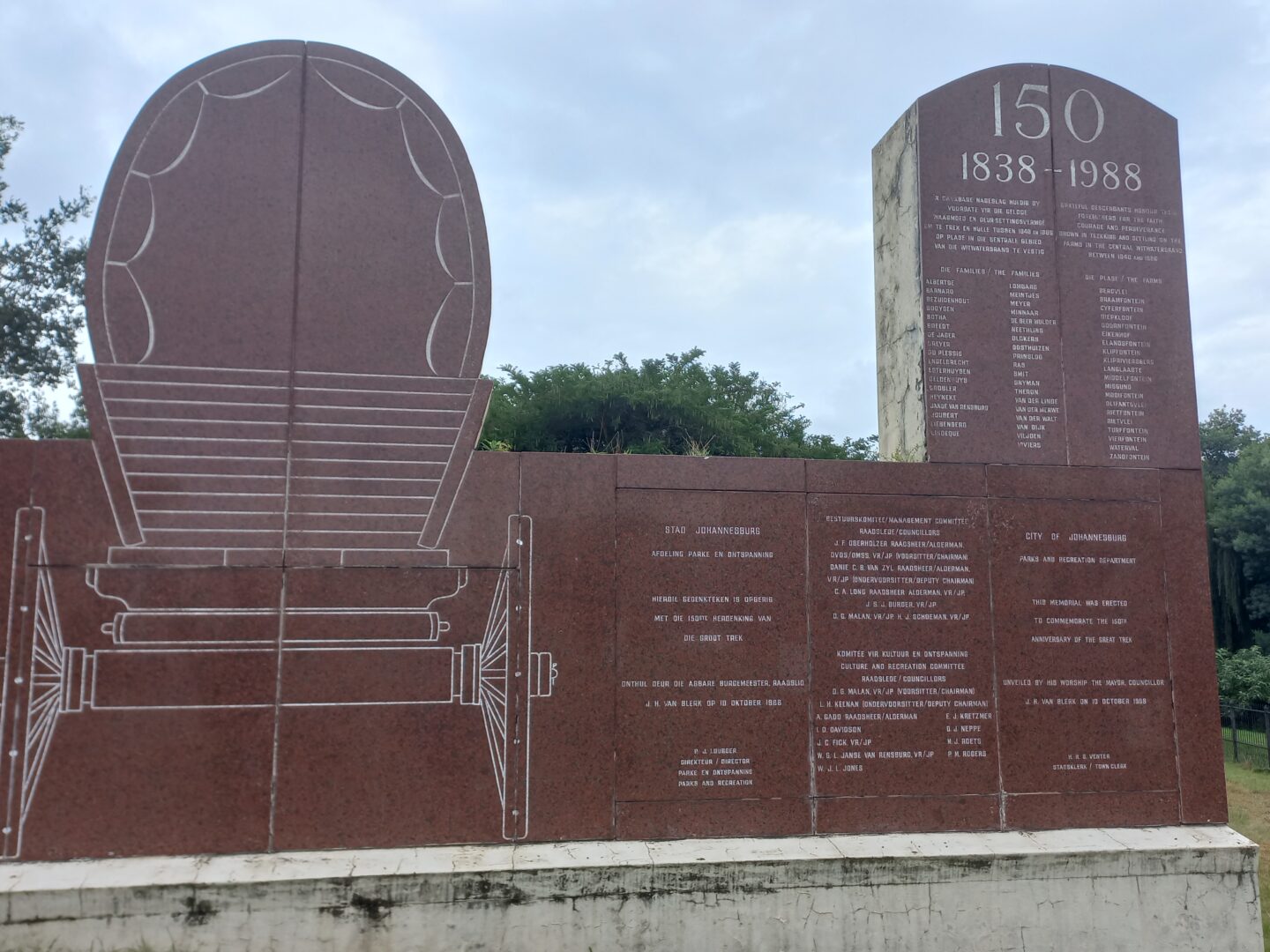
As seen from the air, the memorial site is designed in the shape of seven coffins. Original headstones appear under the gantry as you enter. It now consists of a number of coffin-shaped terraces, with a memorial structure listing the names of the dead. It also contains the graves of in mates who died at the South African War Concentration camp at the Turffontein Racecourse, southern Johannesburg. At the entrance there are a number of the old grave headstones cemented into the wall, indicating amongst others, the death of a baby of eight months.
During the South African War of 1899-1902, there were 115 white concentration camps around the country, most of which were in the old Transvaal. The biggest in Johannesburg was at the Turffontein Race Course, which originally started as a camp at the Mayfair School, but soon ran out of space. It housed around 5000 people, of whom 700 died and were buried in Maluti Street, Winchester Hills, on a farm called Klipriviersberg, belonging to Piet Meyer.
This cemetery was vandalized by an anti-Ossewa Brandwag group during the Second World War. The monument was desecrated three times by vandals but was repaired before the official opening by the Minister of Justice B J Vorster on 10th October 1962. The Germiston Mutual Funeral Society donated a marble slab and incorporated in the monument was a list of the names of the deceased.
Groups of women and children from surrounding farms began arriving as refugees in Johannesburg in early December 1901 . As the camp at Turffontein had not yet been completed, the new arrivals were temporarily accommodated in other parts of town. The Turffontein camp began to receive its first occupants in mid-December, but only opened officially in February 1901.
The camp consisted of wood and iron sheds laid out around the Turffontein race-track. Along the race-track itself there were tents. July 1901 was the month when the camp accommodated its largest number of in-mates: 3 666. Those who entered the camp voluntarily initially enjoyed better rations than those brought there by force. In terms of camp deaths, the worst month experienced by in mates at the Turffontein Concentration Camp was April 1901, when 90 deaths were recorded. A former child inmate and camp survivor, Mrs M C van Zyl, recalled that the dead were brought to the camp mortuary, where coffins were made. These were loaded onto a wagon for transportation to the cemetery. On one day alone, fifteen coffins were loaded on the wagon.
On list of Gauteng Declared Heritage Sites: War Grave; site reference status: 9/2/228/0146.
Further protected under Section 37 of the National Heritage Resources Act: Public Monuments and Memorials. “Public monuments and memorials must, without the need to publish a notice to this effect, be protected in the same manner as places which are entered in a heritage register …”.
A culmination of research gathered over many years, the Online Johannesburg Heritage Register is being launched on Nelson Mandela Day 18 July 2025.
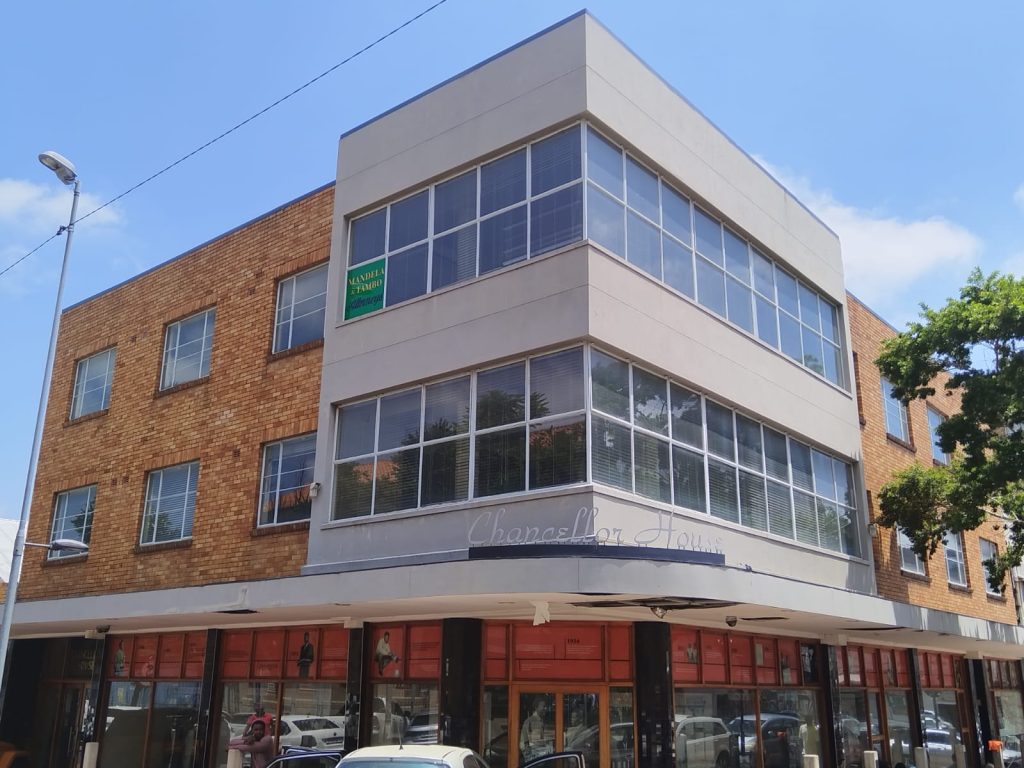
Among the many heritage sites featured is Chancellor House, the downtown offices of Mandela and Tambo Attorneys in the 1950s. After having been vacant and shuttered for more than a decade, this iconic building is being revived and brought to life once again as offices for the Community Development Department, which oversees the City’s Arts, Culture & Heritage Services.