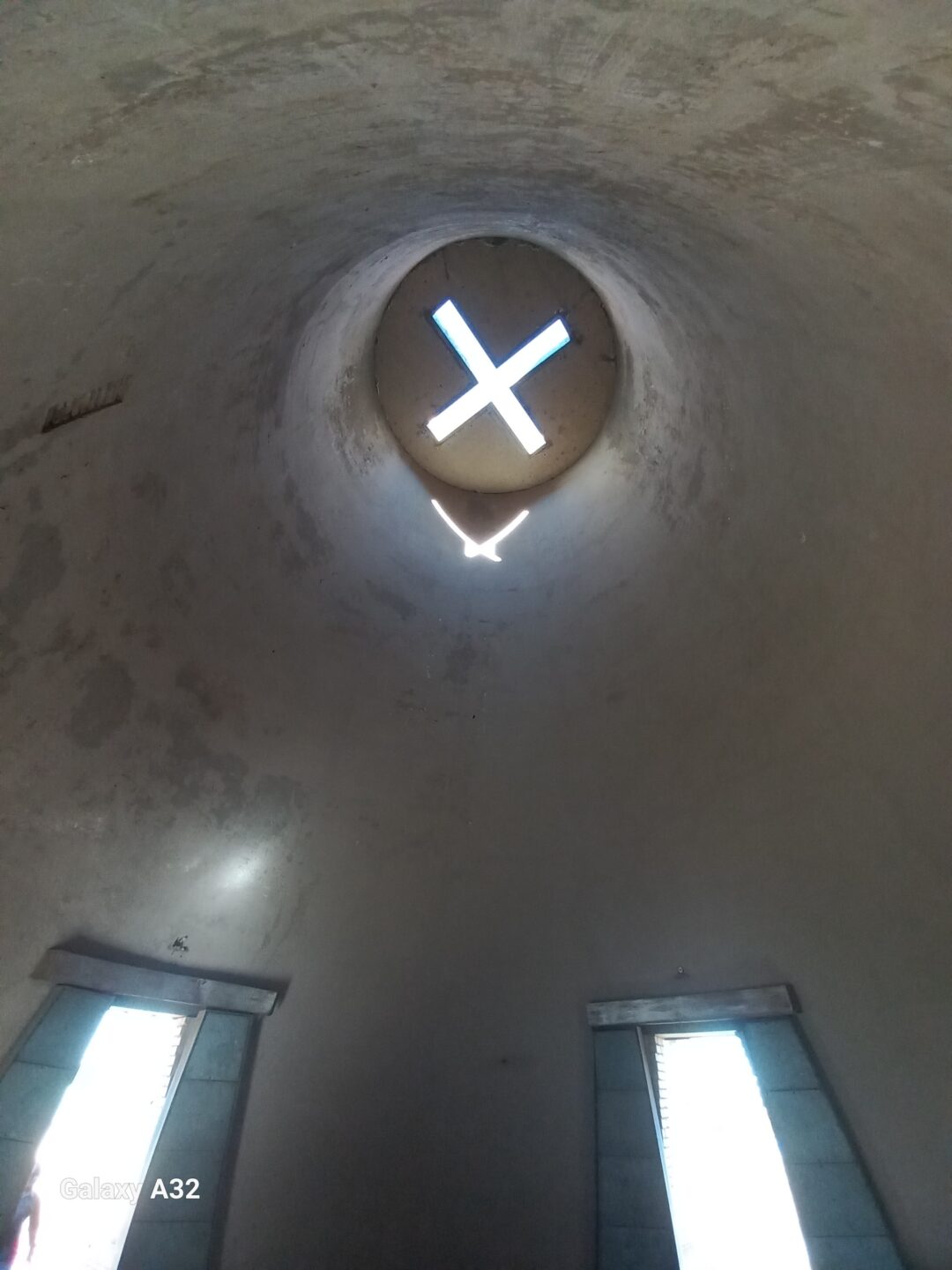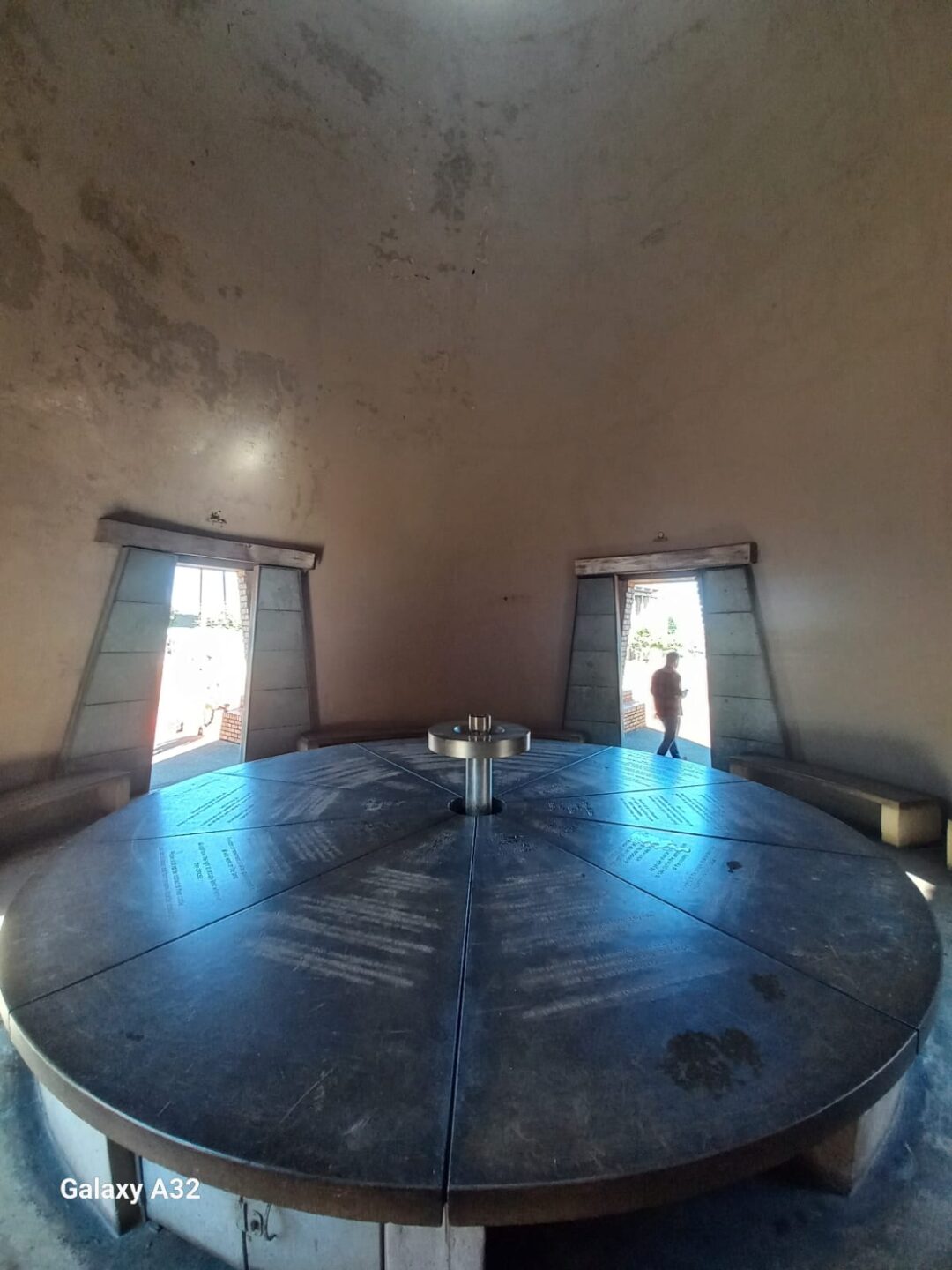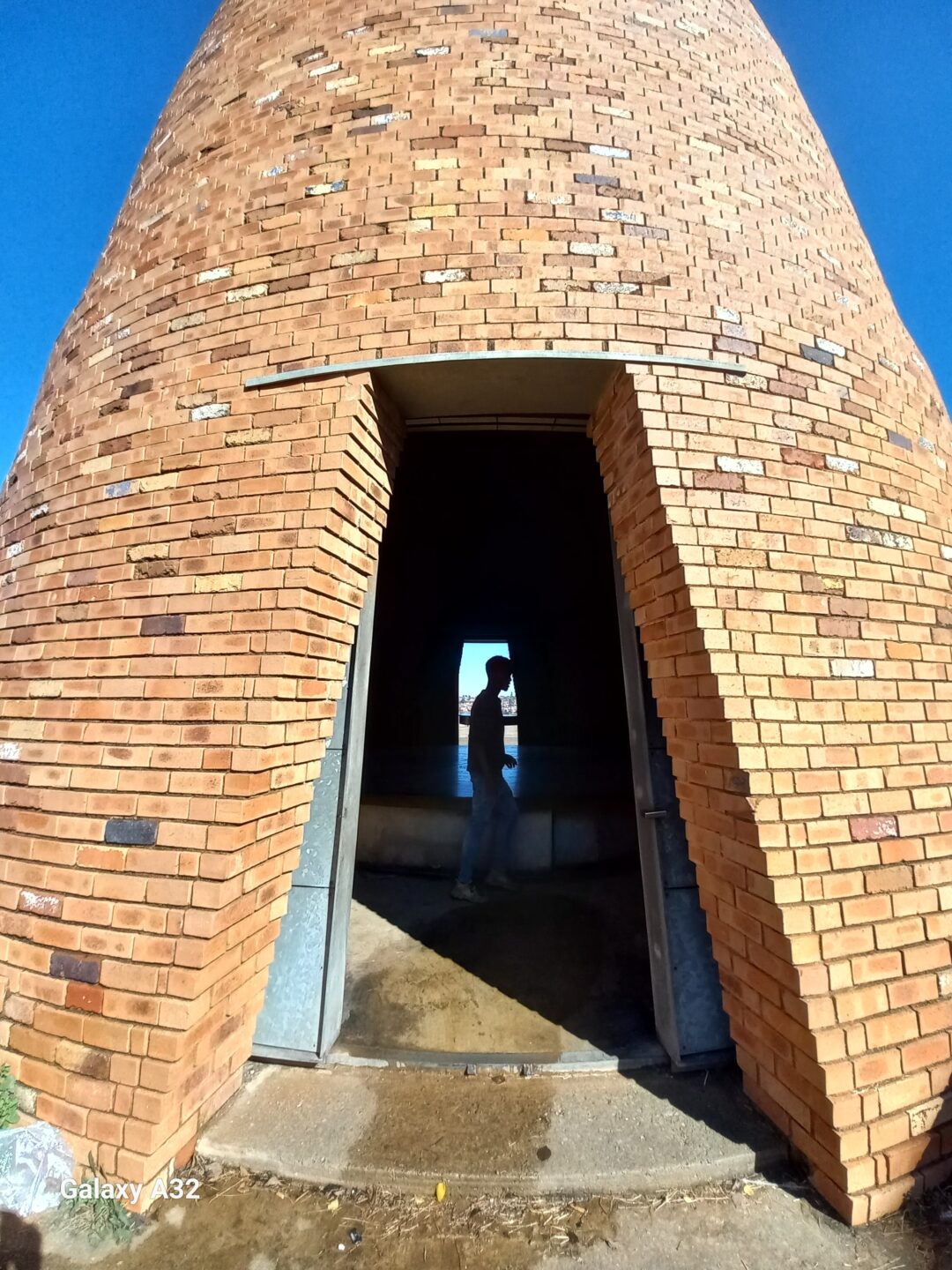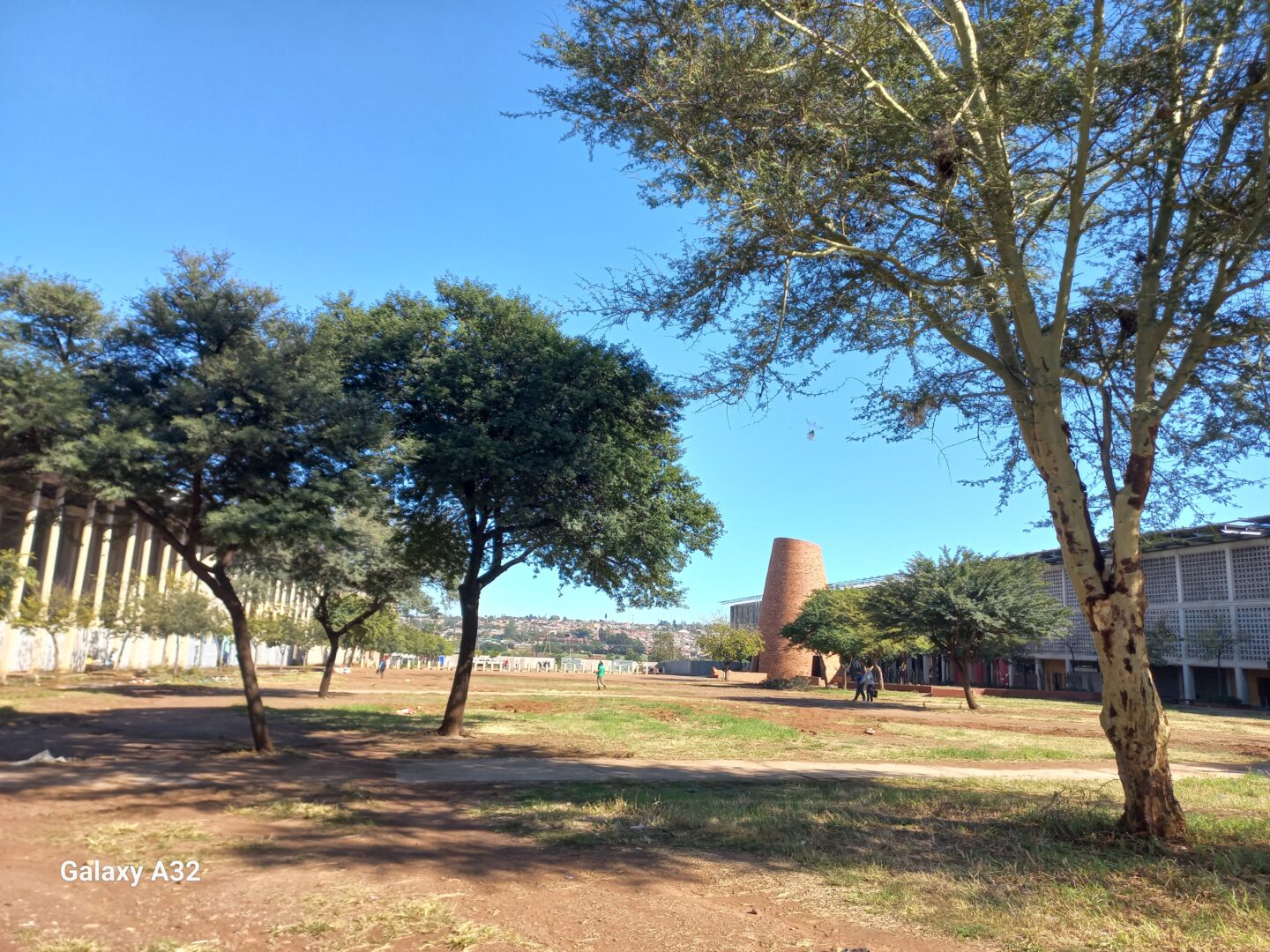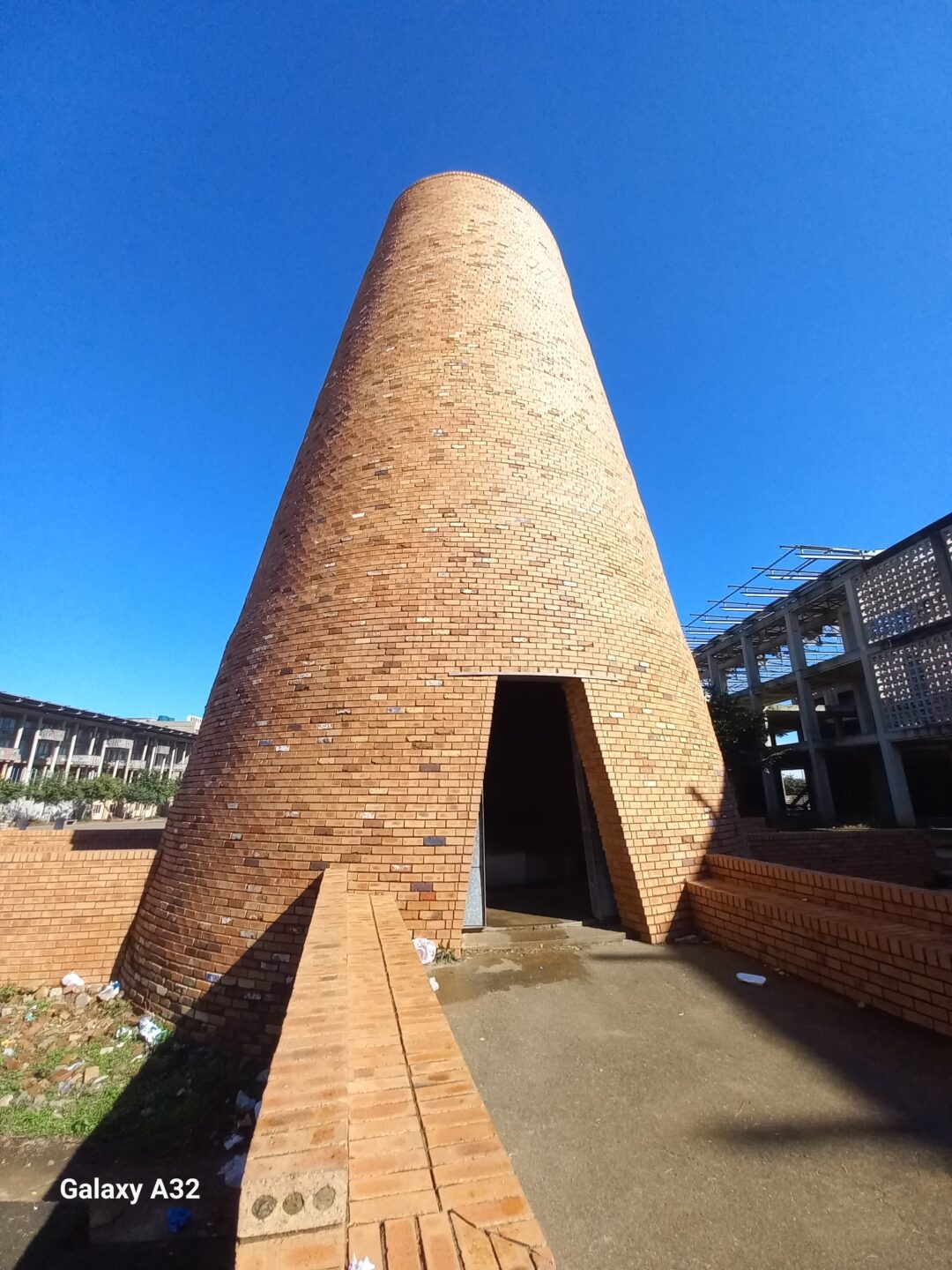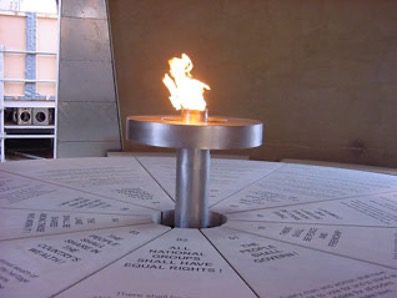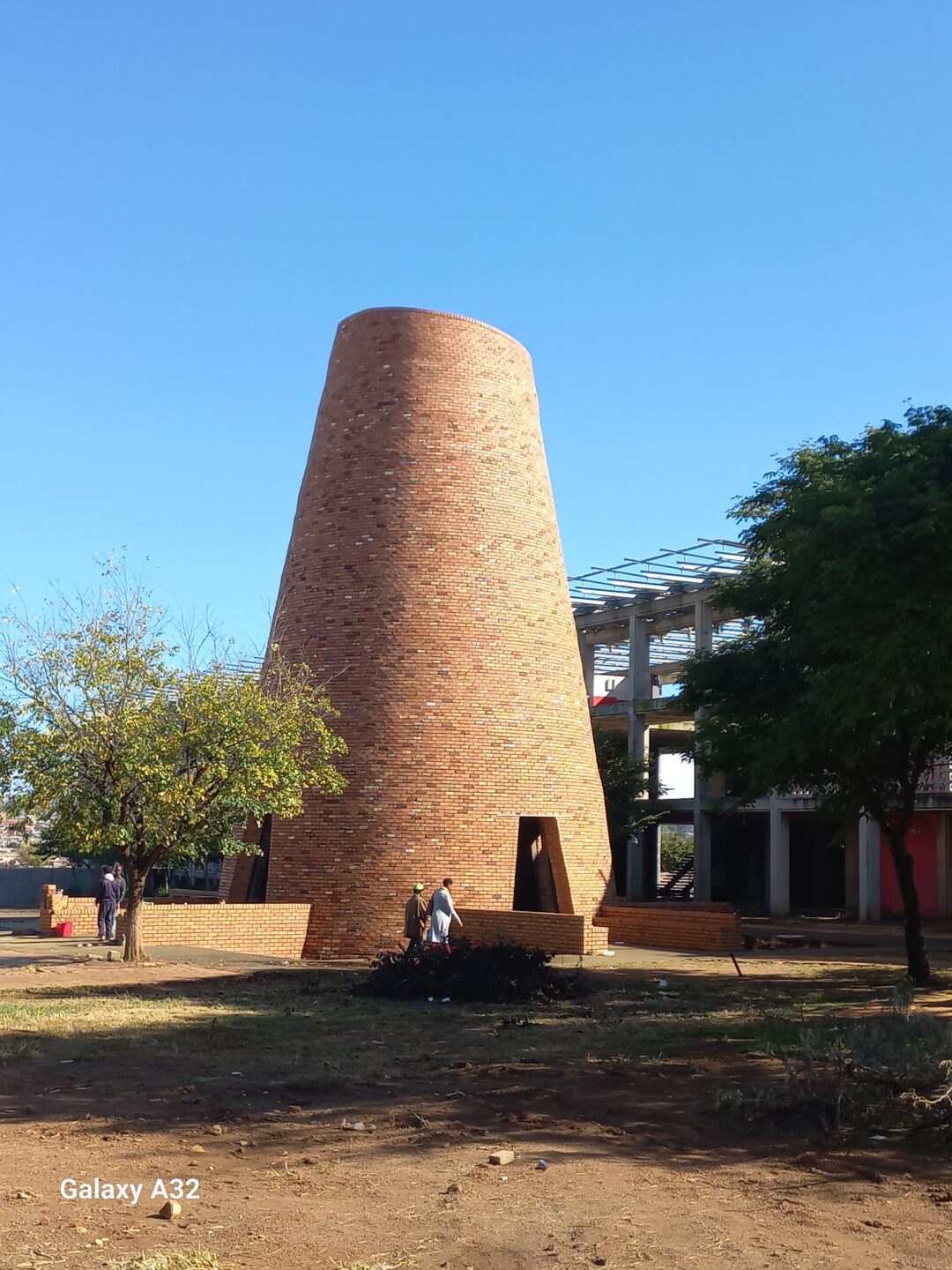
It is a tall tower situated on the northern side of the square. Inside the monument is the Flame of Freedom and an X shape cut into the roof of the tower, the “mark of freedom”. The purpose of the light is to make the tower visible and act as a beacon of light to guide people to the Square. The tower is built in a conical shape, a “universal form”, like those of Great Zimbabwe ruins, or Native American tents. It also resembles traditional African fishing baskets.
Freedom Square, as it is widely known, is a site in Kliptown where the approval of the historic Freedom Charter by anti-apartheid organizations in the form of the Congress of the People, took place in 1955. During the massive upgrade project, which was aimed at reviving the Kliptown area (2004/2006), it was named the Walter Sisulu Square of Dedication in 2002, in honour of the then 90-year-old African National Congress stalwart and veteran of the liberation struggle, Walter Sisulu.
This square hasn’t always been such a monumental place. In the early 1900s, it was open veld around a dairy farm that served the burgeoning town of Kliptown. In 1955, it was a small patch of dusty open land that held one of the biggest multiracial gatherings ever, attended by some 3 000 people from around the country. After that historic gathering, the square remained simply an open field providing space for soccer matches over the weekend. |The Charter was signed a year later by Chief Albert Luthuli, then President-General of the ANC.
In 2002, The Johannesburg Development Agency (JDA) announced a public competition, calling on architects to submit designs for a monument on Freedom Square. The new design was to become a central part of this massive development project. The judges were looking for a design that best captured the memory of the square and served as a fitting tribute to the meeting that took place on the patch of veld, organised by the Congress of the People. The brief for the design was open-ended, but entries were expected to encapsulate the participatory nature of the Freedom Charter. The briefing document read: "Entries should communicate concepts for the design of the Freedom Square precinct and for any building on the site. The ideas should be creative and responsive to the historic event that happened when the Congress of the People met in Soweto on the 26 June 1955 and to the nature of the place in which this occurred."
The development was completed by Sunday, 26 June 2005, when thousands of people gathered to commemorate the drafting of the Freedom Charter in a new square that will be the catalyst for the rejuvenation of the desperately rundown and poor Kliptown. Adelaide Tambo, who as a young nurse of 26, was present at the 1955 meeting, said, "We are standing on holy ground. Never before in the history of South Africa has there been such a gathering of the people [as in 1955]”. Then President Thabo Mbeki moved behind the podium to the tall, conical tower, the Freedom Charter Monument, and lit the flame of freedom that was intended to burn continuously. er burns.
General protection: Section 34 (1) of The National Heritage Resources Act, 1999
A culmination of research gathered over many years, the Online Johannesburg Heritage Register is being launched on Nelson Mandela Day 18 July 2025.
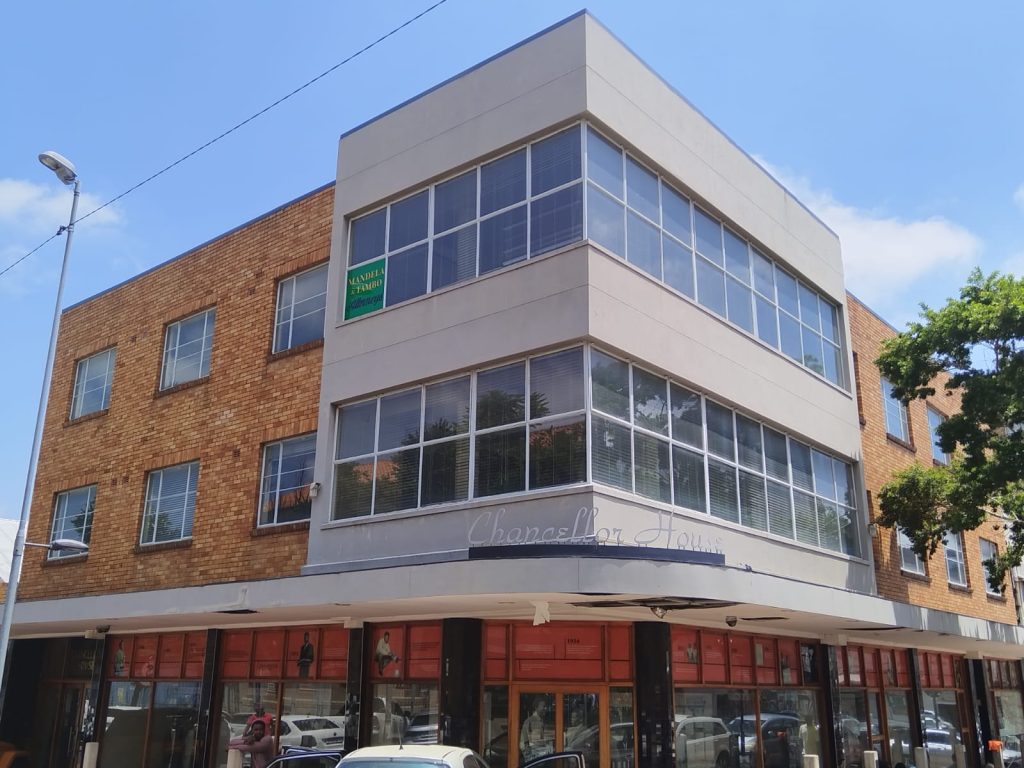
Among the many heritage sites featured is Chancellor House, the downtown offices of Mandela and Tambo Attorneys in the 1950s. After having been vacant and shuttered for more than a decade, this iconic building is being revived and brought to life once again as offices for the Community Development Department, which oversees the City’s Arts, Culture & Heritage Services.