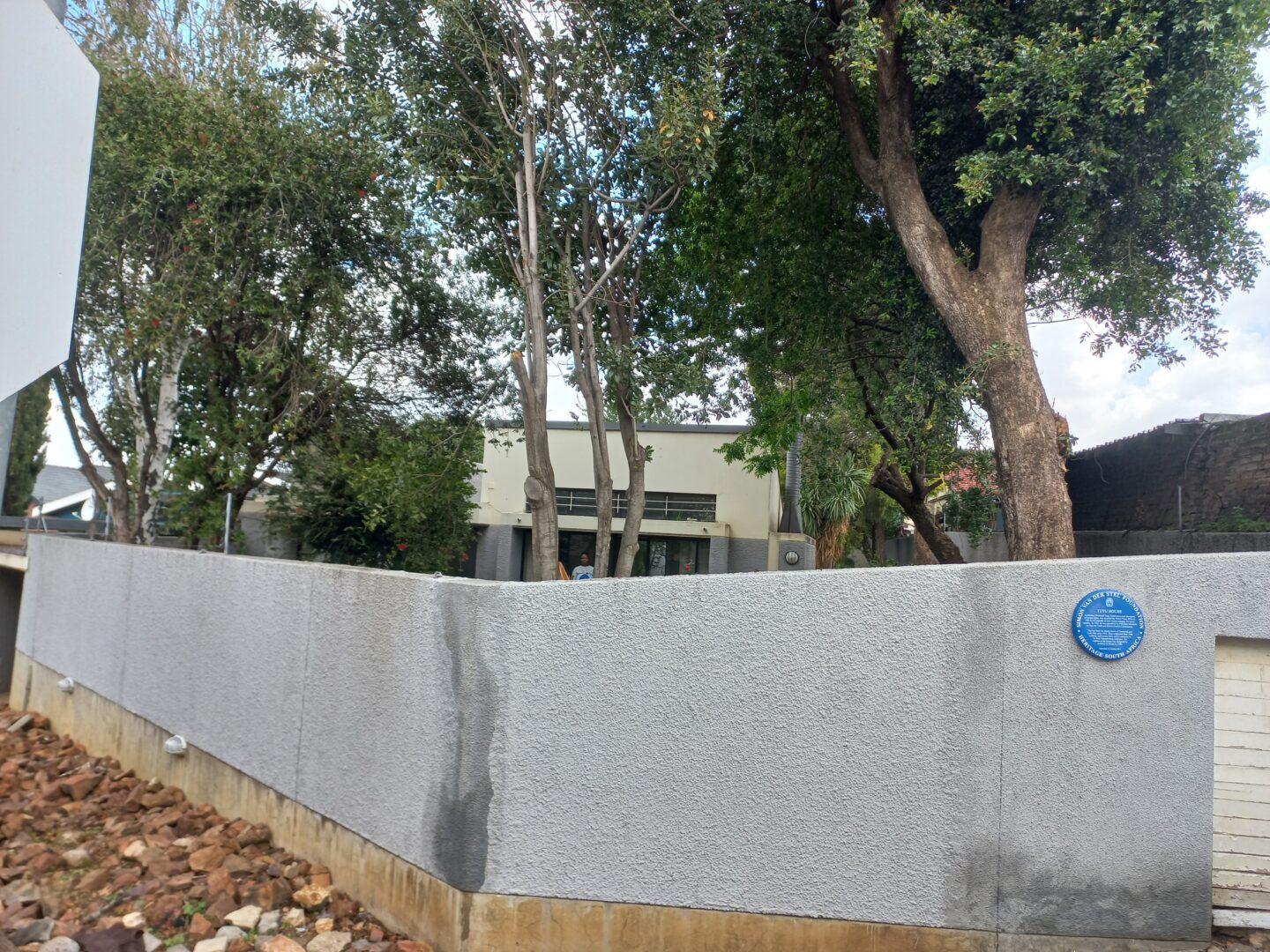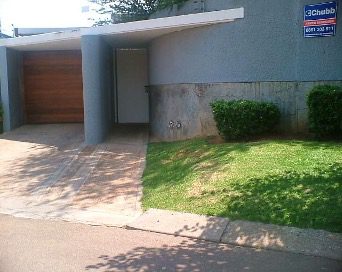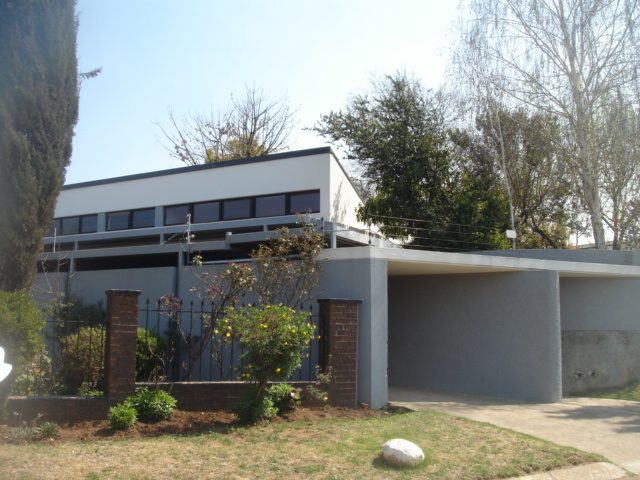
The house is comparatively luxurious, situated among middle class homes in a portion of Orlando West which other Sowetans dubbed “Beverly Hills”. The structure has been extended and renovated over the years. The property is surrounded by walls, making it difficult to view the house from the street.
A small chapel behind the house can accommodate 20-30 people and is still used for small church services from time to time.
“In a corner of the Tutu’s small backyard in Orlando West is a tiny concrete chapel of vertical proportions, stark angles and rich colours. Quiet and cool in summer amid the noise and heat of Soweto, it is a symbol of the constant pull Tutu has felt towards a life of silence and prayer” (Allen 2006).
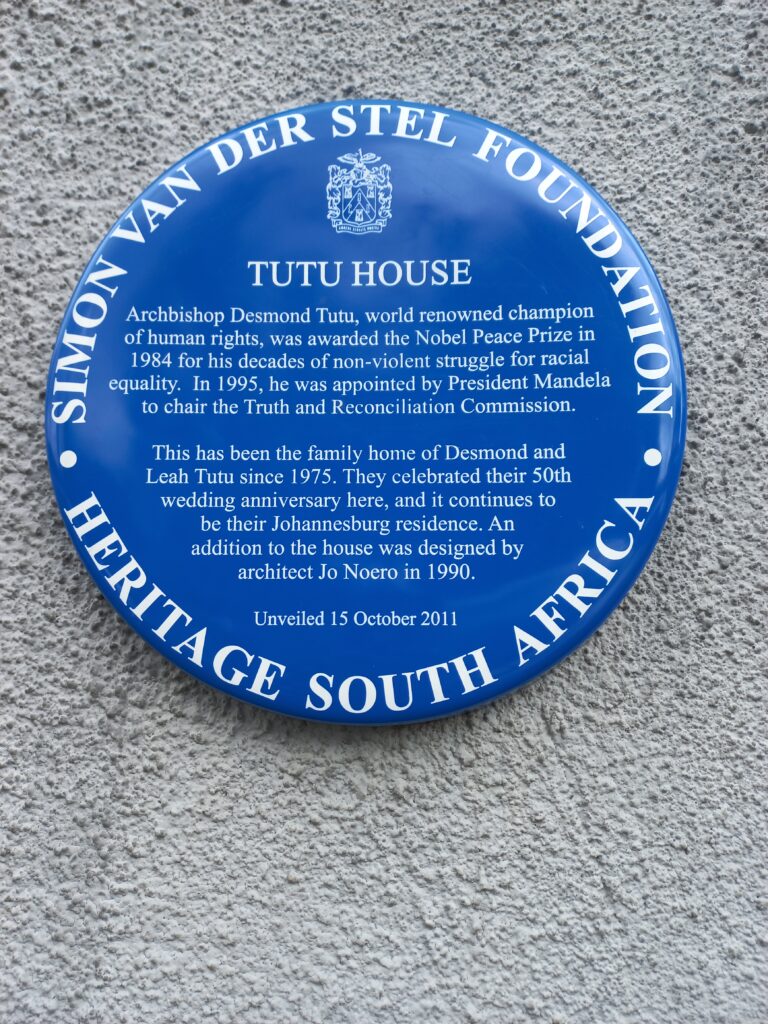
Desmond Tutu (1931-2021) is renowned as a churchman and human rights campaigner. A leading critic of apartheid, he was prominent in the post-apartheid reconstruction period as the head of the Truth and Reconciliation Committee.
Desmond Tutu married Leah Shinxani in 1955; they started their married life living in a garage on the East Rand. They had a son, Trevor, born in 1956, and three daughters: Thandeka Theresa, 1957; Naomi, 1960; and Mpho, 1963.
In 1975 Tutu was appointed Dean of St Mary's Cathedral in Johannesburg, the first black to hold that position, at which point he took up residence at the house in Vilakazi Street, Soweto. From 1976 to 1978 Tutu served as the Bishop of Lesotho. He returned to South Africa in 1978 to became the first black General Secretary of the South African Council of Churches (SACC). The SACC’S John Reece provided Tutu with R4 000 to help him buy the house in Soweto where he and Leah had lived when he was Dean of St Mary’s. The money, Reece said, came from a foreign donor who wished to remain anonymous but had earmarked it for that purpose.
Desmond and Leah Tutu returned to the home in Orlando West at a time of family transition. The house emptied, and soon they had four children in four countries. Trevor took a teaching post in London, Naomi attended a US school in Kentucky, Thandi went to study at the University of Botswana, and Mpho was in Swaziland. Desmond resumed his routine of leaving Soweto early to attend a 7am Eucharist at St Mary’s Cathedral, before going on to the office. Leah returned to the Domestic Workers’ and Employers’ Project and became an Assistant Director of the Institute of Race Relations.
Tutu resigned from the leadership of the SACC when he was appointed as the sixth Bishop of Johannesburg in 1984, the year in which he won the Nobel Peace Prize. Instead of living permanently in Soweto, as he had done when he was Dean, he and Leah made themselves more accessible to whites by splitting their time between their own home in Orlando West and the official Bishop’s residence in the northern suburbs.
Tutu was later elevated to the position of Archbishop of Cape Town, a position which he held until June 1996. He went on to chair the Truth and Reconciliation Commission (TRC) set up to investigate apartheid-era crimes. Once the TRC had completed its main report, Tutu took a two-year visiting professorship in the United States. Returning to South Africa in 2000, he and Leah divided their time between Cape Town and Soweto, where they remodelled their home in Orlando West. Desmond Tutu died in 2021, and his wife Leah still resides in Cape Town . On his death the house was bequeathed to the Anglican Church. Currently there are tenants in the house.
On 9 June 2007 the house was ransacked by burglars at a time when Tutu was out of the country. Five suspects were arrested by police the following day. Among the stolen goods recovered by the police were Tutu’s Nobel Peace Prize (a gold medal) and other prizes awarded to him including the Martin Luther King Junior Non-Violent Peace Prize.
General protection: Section 34 (1) of the National Heritage Resources Act, 1999
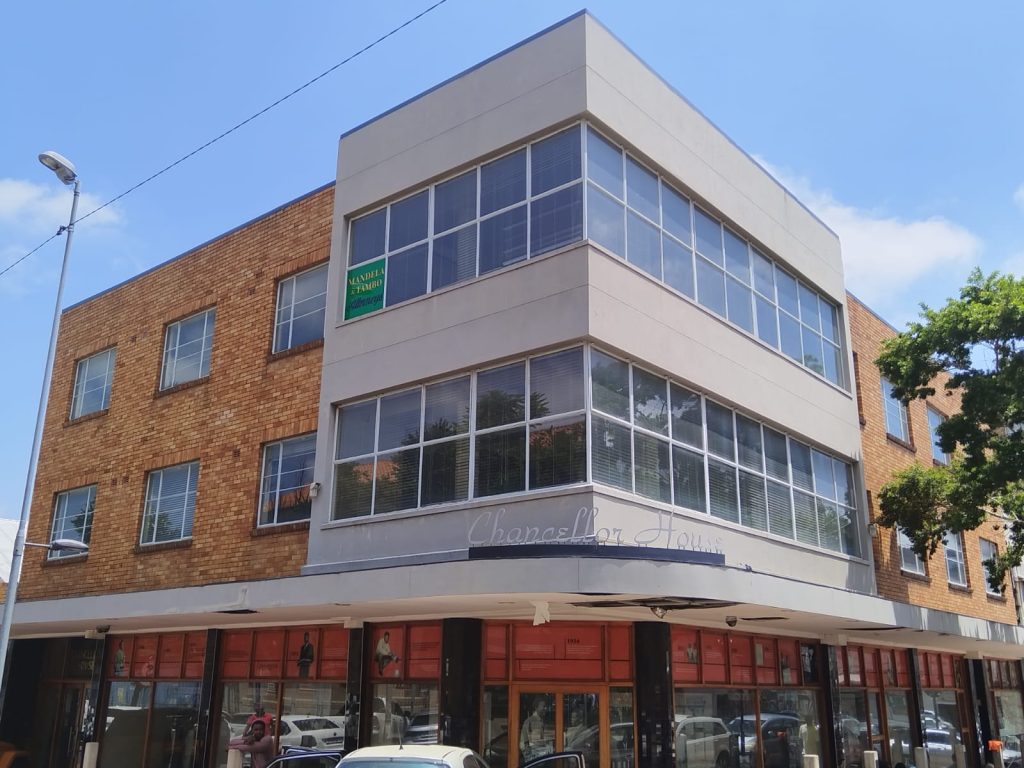
A culmination of research gathered over many years, the Online Johannesburg Heritage Register is being launched on Nelson Mandela Day 18 July 2025.
Among the many heritage sites featured is Chancellor House, the downtown offices of Mandela and Tambo Attorneys in the 1950s. After having been vacant and shuttered for more than a decade, this iconic building is being revived and brought to life once again as offices for the Community Development Department, which oversees the City’s Arts, Culture & Heritage Services.