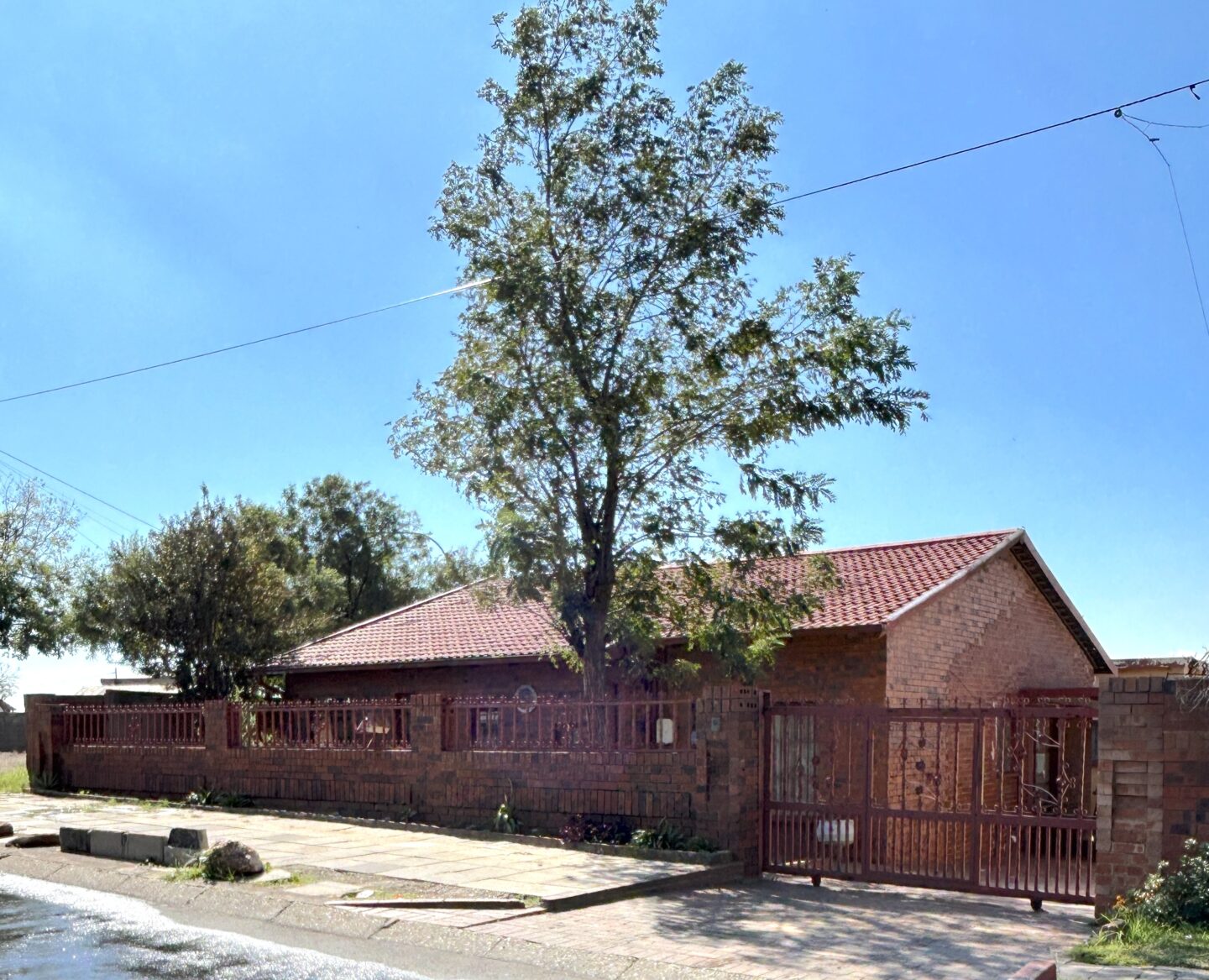
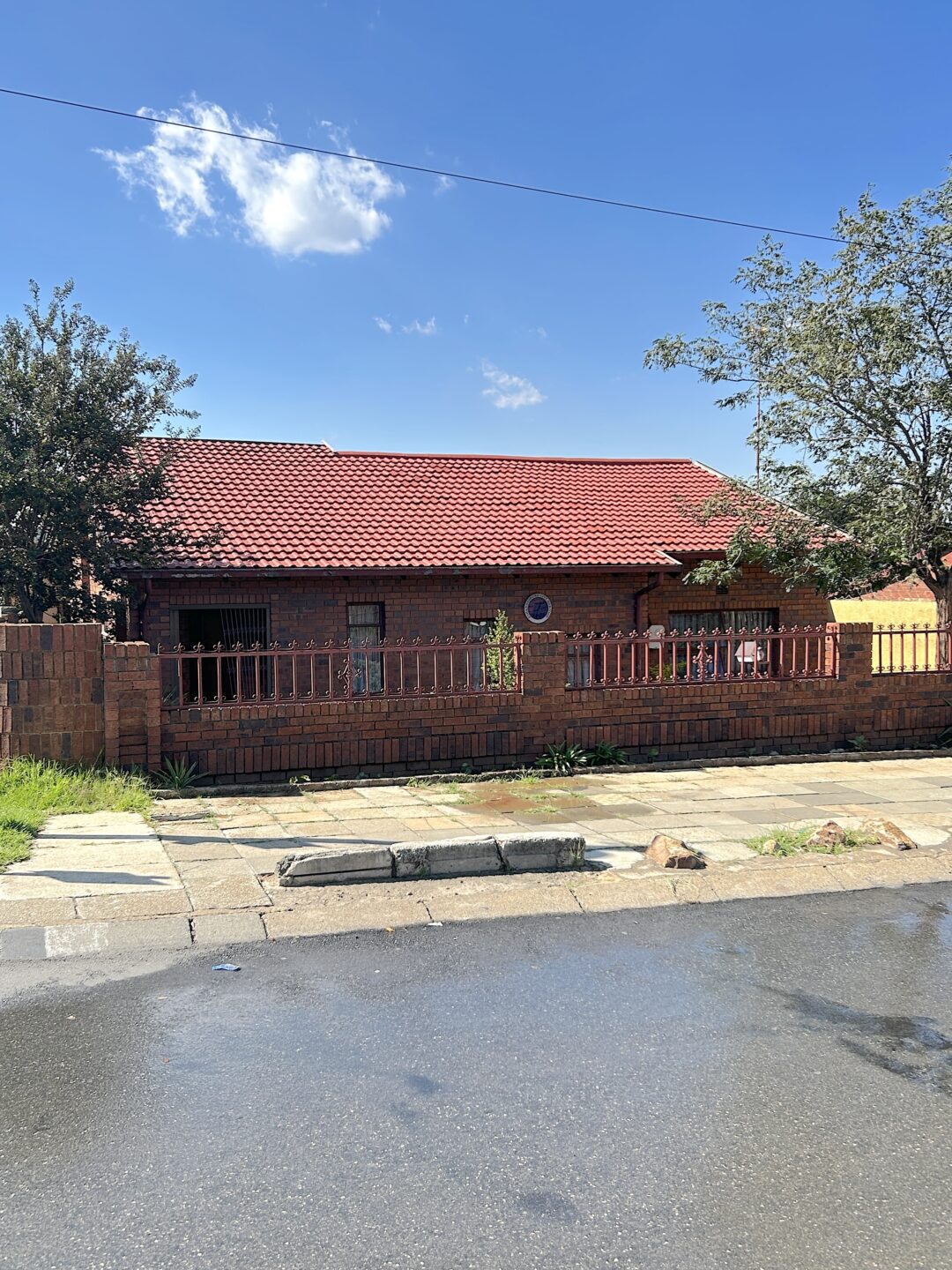
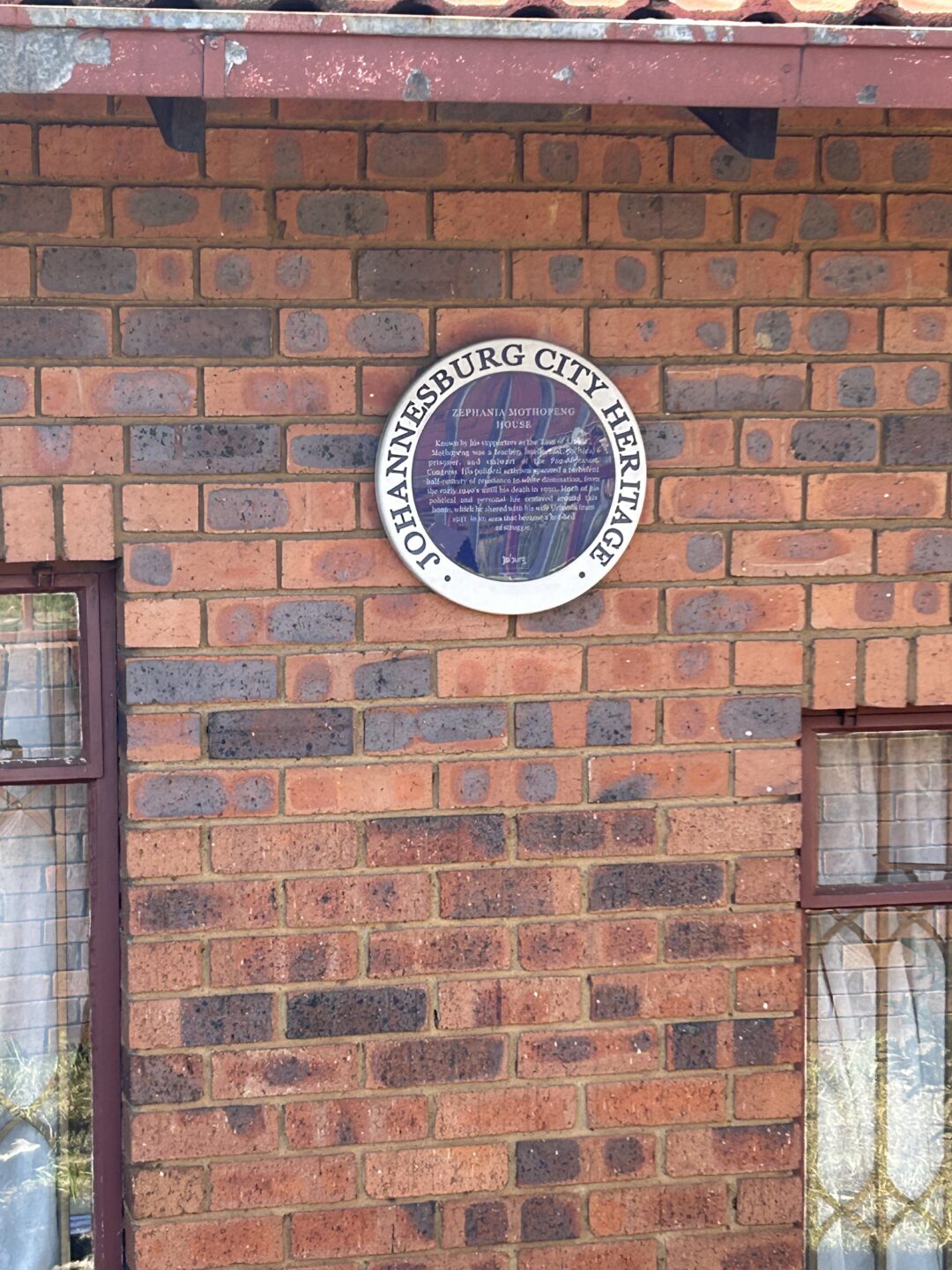
Zephania Mothopeng House comprises of a standard three-roomed township house with an outside toilet. The yard has been paved and a cottage added at the back.
Known by his supporters as the ‘Lion of Azania’, Zephania Mothopeng is remembered as an African nationalist stalwart and leader of the Pan Africanist Congress of Azania. Mothopeng’s political career spanned a turbulent half a century of black opposition to white domination from the 1940’s through to the start of the 1990s. Over this period, much of his political and personal life centered around his home in an area of Orlando West which became a hot-bed of anti-apartheid activity and a crucible of struggle.
Mothopeng was born in 1913 near the Free State town of Vrede, but soon moved with his family moved to the Transvaal. In 1933, he moved to Johannesburg and continued his studies until matriculation in 1937. After working for a short while in Johannesburg, he enrolled with the Adams College, Amanzimtoti in Natal where he was awarded a Post Matric Teacher’s Certificate. Mothopeng began teaching at Orlando Secondary School in 1941, at a time when the school had only two teachers.
In 1941 the newlywed couple of Zephania and Urbania Mothopeng secured a municipal house at the corner of Pela and Maseko Streets. This came just as they were expecting their first child, Loxley (born 1 January 1942). Another three children were added later during their stay at the house: John, born 1944; their only daughter Sheila, born 1946; and Lancelot, born 1949.
Orlando Township was established 1932, forming the first suburb of what became Soweto. Intended by the municipal authorities as a ‘model’ segregated African township, it developed into a sprawling mass of small detached houses of monotonously similar design, with development starting in Orlando East and then spreading to Orlando West. Rows of matchbox houses were reproduced a standard pattern designed to keep costs to the minimum.
The new accommodation in Orlando was stark, functional and low-cost:
“[Housing] consisted of two or three-bedroomed identical houses, packed close together and arranged in blocks alongside broad and red-earthed streets, which were quagmires in the rainy weather, and the home of dust-devils in the dry season. The houses were built cheaply and had neither floor nor ceiling, no water tap, and no separate cooking facilities. The backyard contained a water closet, and water was obtained at the street corner tap. In fact, the area was little different from those elsewhere in the country, except perhaps that they were more sturdily built” (French 1983).
The Mothopengs humanised their home through their musical activities. Zeph founded the Orpheus Choir, which used to rehearse in the house and his wife Urbania was the choir’s soloist. They had a piano which Zeph played on various occasions. Urbania would also engage in various community projects from this house. Close by is the Holy Cross Anglican Church, which the Mothopengs attended and where both were also active in the church choir with Zeph as conductor.
This house was to be a home for Zeph’s political activities, starting as a member of the Transvaal African Teachers Association, and the ANC Youth League. By 1940 Mothopeng had joined the Youth League, later aligning himself with the party's Africanist section, which was critical of engagement with White Liberals. In 1959 the Africanists broke away from the ANC and formed the Pan Africanist Congress (PAC). Mothopeng was elected member of the PAC's National Executive and National Working Committee.
Mothopeng became the Vice Principal of Orlando Secondary but lost his job for opposing the introduction of Bantu Education. He then moved to Maseru, Lesotho where he continued to teach before returning to Soweto in 1955. By this time Mothopeng was no longer working as a teacher, but was articled to a firm of attorneys in Johannesburg.
In 1960 Mothopeng was arrested and sentenced under the Suppression of Communism Act to two years for his role in organizing PAC campaigns. After his release he was rearrested in 1963 and convicted in 1964 for promoting the aims of the PAC. Whilst in detention, Mothopeng spent time in several prisons such including the Boksburg and Robben Island prisons. He was released in 1967 and immediately served with a banning order. He was banished to Witsieshoek, in the Free State. By the end of the year his banning orders were amended to permit him to live in his Phomolong home in Soweto.
In the 1970s Mothopeng continued doing underground work for the PAC. He visited Robert Sobukwe who was banished to Kimberly. Together with former Robben Island inmates a recruitment programme was established with the PAC in Swaziland. He was arrested again in 1976 and his trial commenced in 1978. He was charged with promoting the aims of the PAC and, together with his co-accused, refused to plea arguing that the court was illegitimate. He was sentenced to 15 years in prison.
President F W De Klerk released Mothopeng from prison in 1989. In February 1990, Mothopeng rejected calls to join other leaders in the multiracial negotiations with the National Party Government. On 23 October 1990 Mothopeng died at the age of 77. The PAC has since experienced declining fortunes, internal rifts and a loss of support in much of the country.

Provisional Protection status under the National Heritage Resources Act, 1999. Gauteng Provincial Gazette Extraordinary, vol. 17, no. 213, 15 September 2011. Notice 2407 of 2011.
A culmination of research gathered over many years, the Online Johannesburg Heritage Register is being launched on Nelson Mandela Day 18 July 2025.
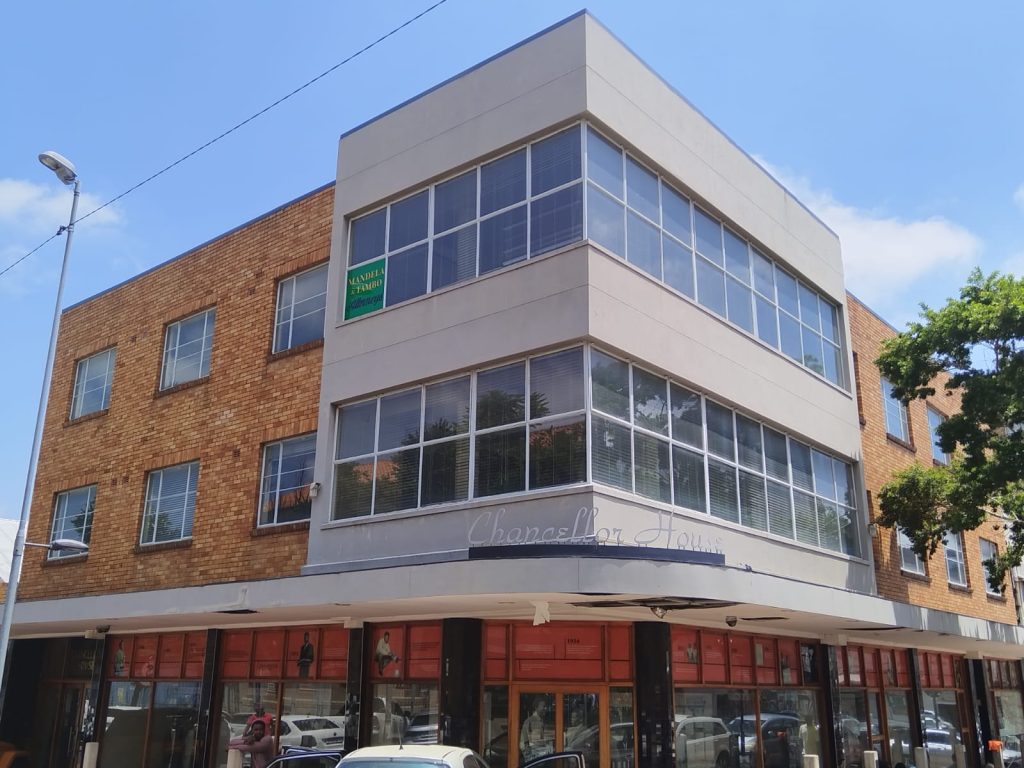
Among the many heritage sites featured is Chancellor House, the downtown offices of Mandela and Tambo Attorneys in the 1950s. After having been vacant and shuttered for more than a decade, this iconic building is being revived and brought to life once again as offices for the Community Development Department, which oversees the City’s Arts, Culture & Heritage Services.