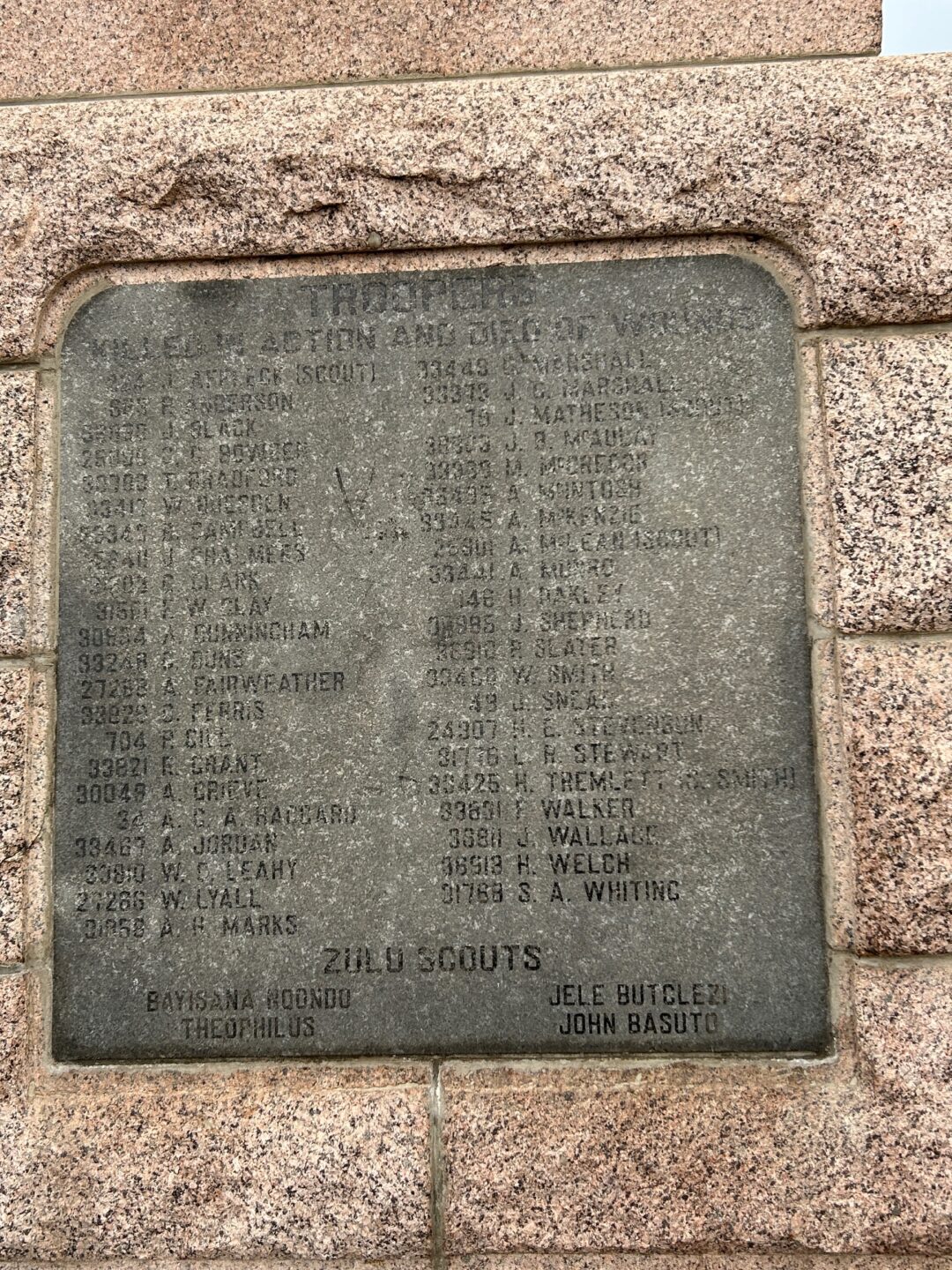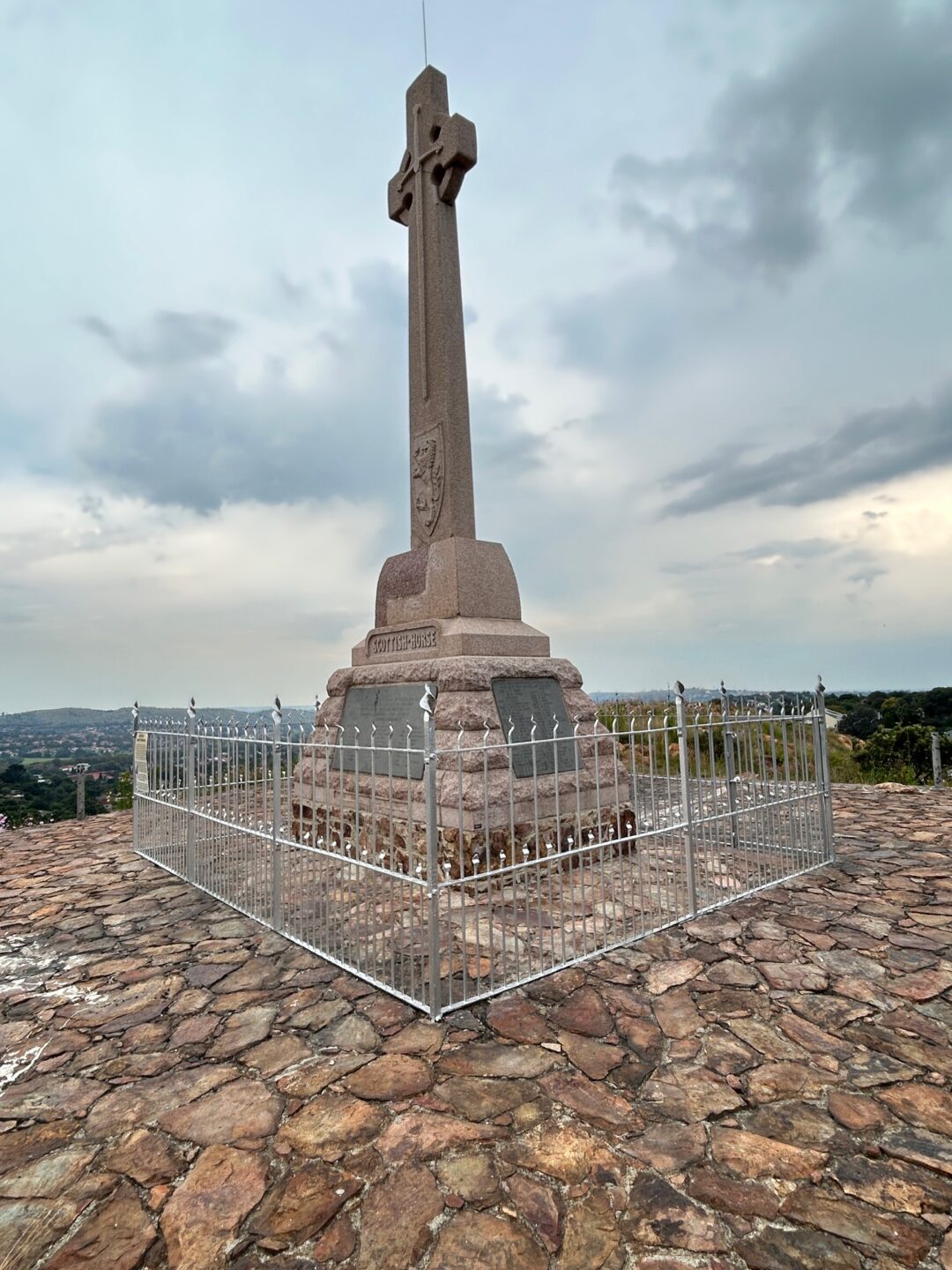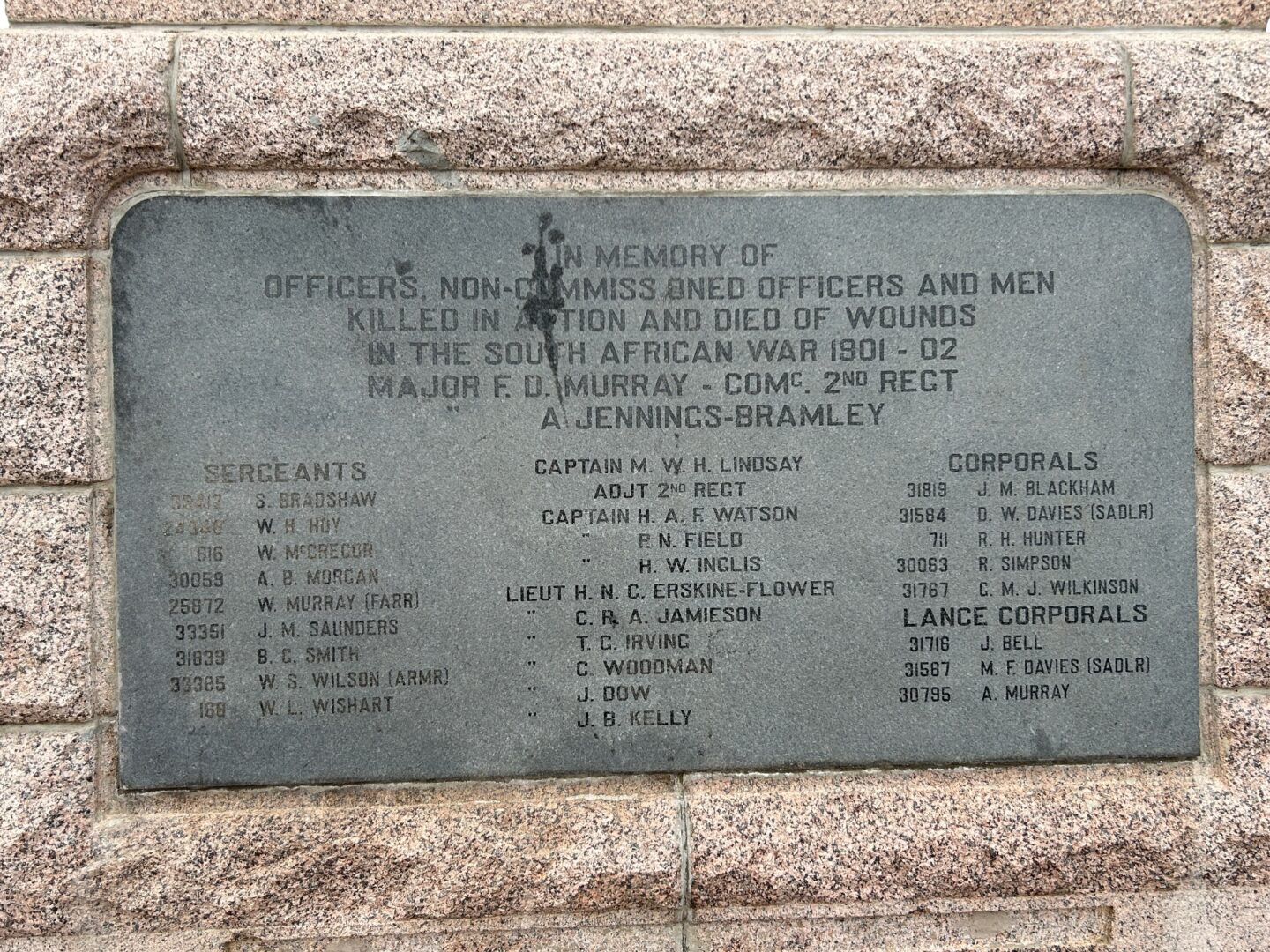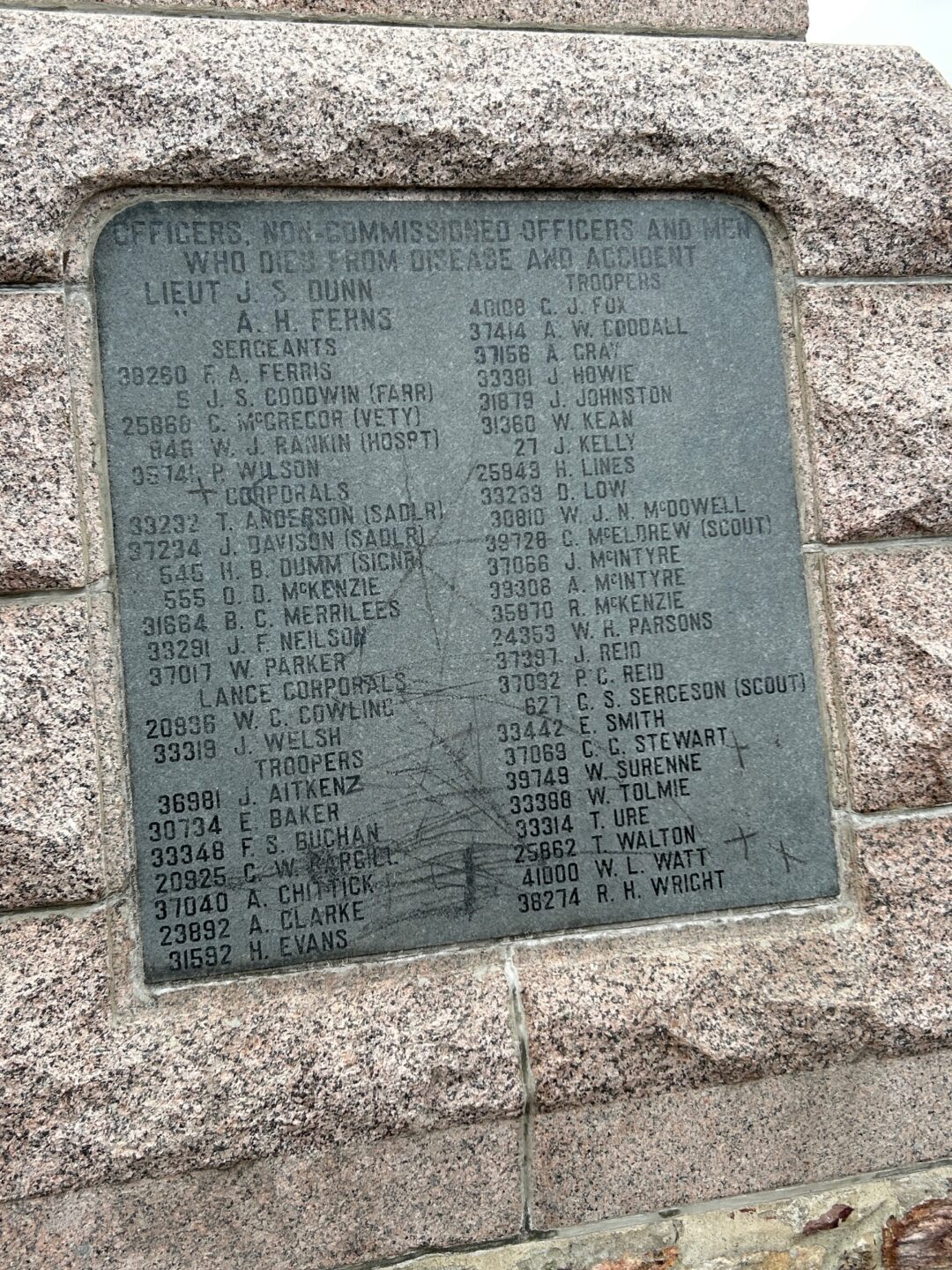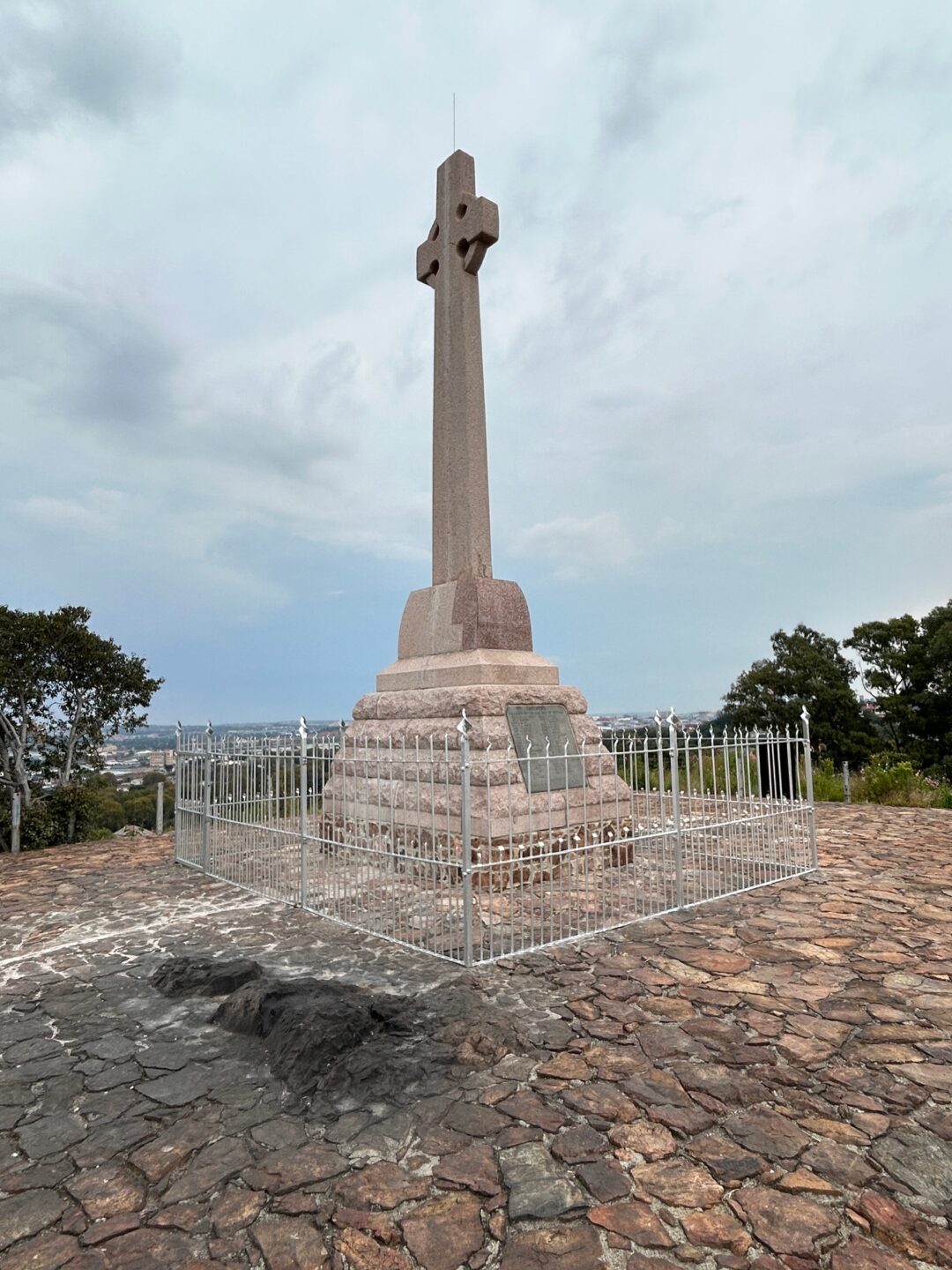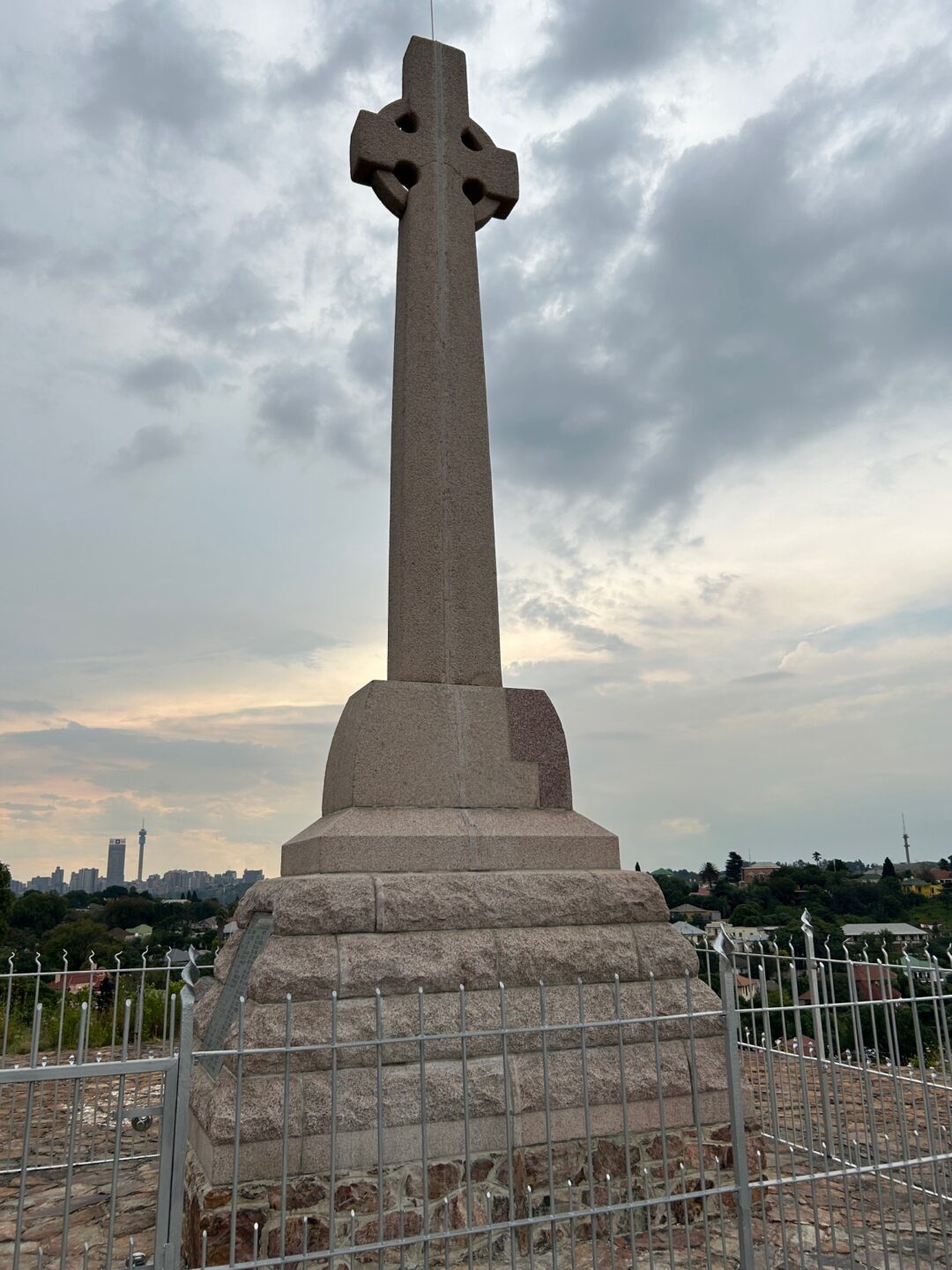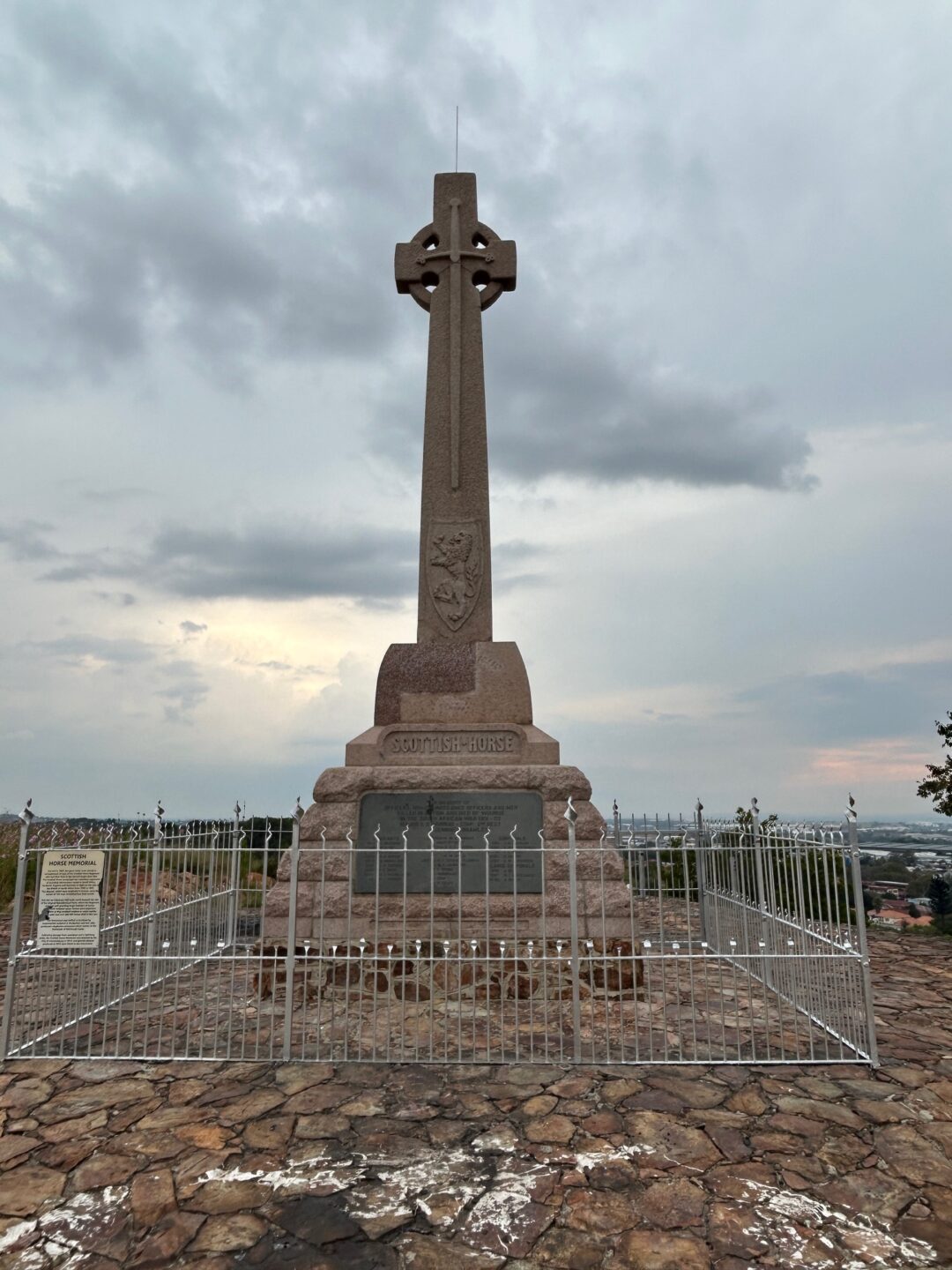
The Scottish Horse Memorial takes the form of a monumental Celtic cross, 26 feet high (7.9m), of red Scottish granite, partly rustic with (originally) bronze plaques. The base is 12 feet wide (3.6m), and surrounded by a rough cairn-like pile of quarry-dressed stones rising 6 feet (1.8m), from the ground. On the front and two sides of the cairn are inserted the plaques on which the inscription and names appear. Above the cairn rises the Cross proper resting on a pedestal consisting of a rounded hollow metal die and spreading granite plinth. On the plinth the name of the Regiment is carved in highly relieved letters and on the die above was originally a bronze casting of the Regimental crest, over which was a motto of the Order of the Thistle “Nemo me impune lacessit” and underneath “1900”. On the front of the Cross is carved a two-handed sword or claymore 10 feet long (3.0m), while at the foot of the blade is a shield bearing the Scottish Arms in relief.
The memorial stands atop the sharp rise of Caledonia Koppie, with magnificent views of Kensington and environs.
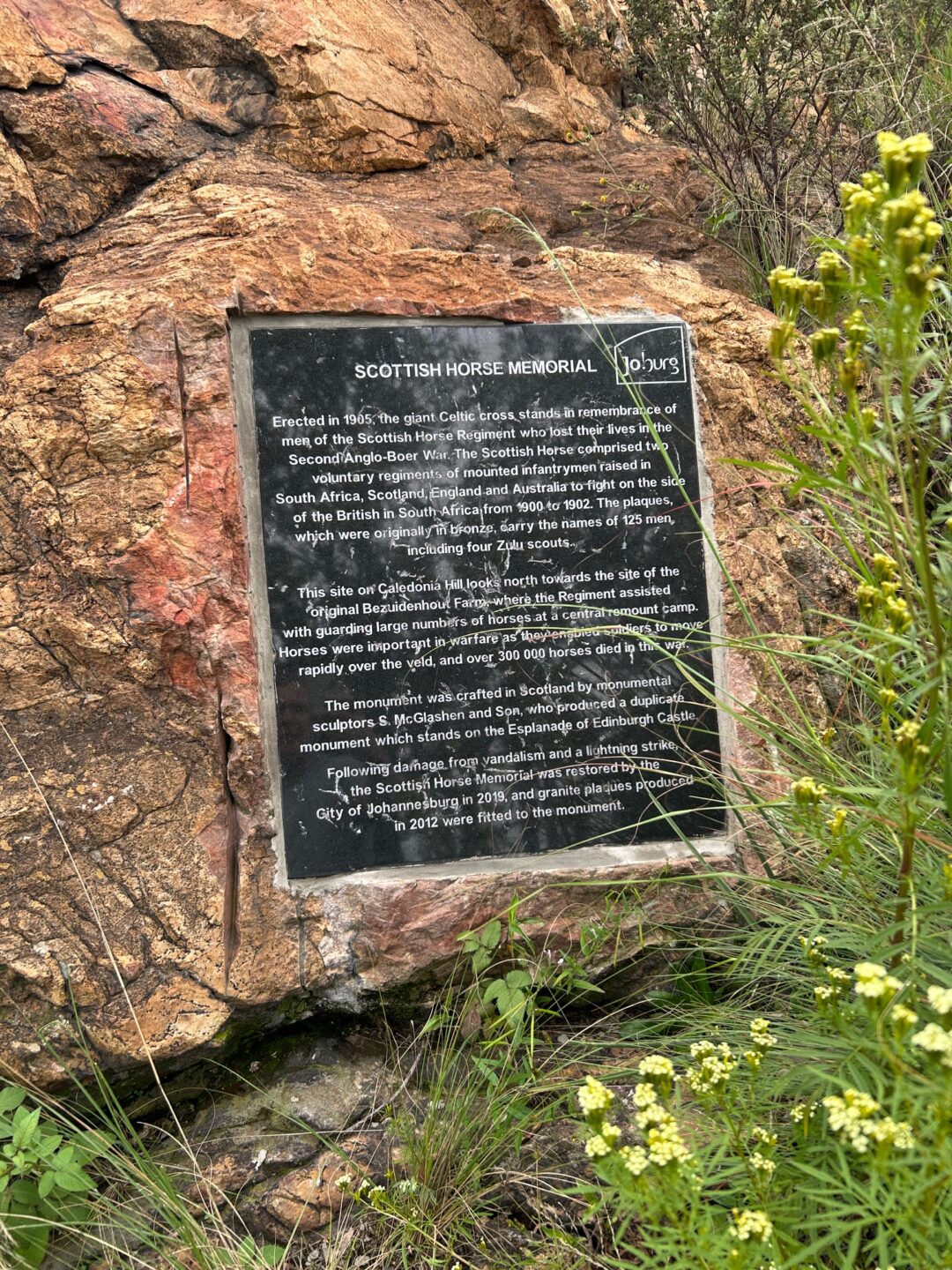
The monument commemorates the officers, non-commissioned officers and men killed in action and died of wounds, disease and accident, who were members of the Scottish Horse Regiment, during the South African Anglo-Boer War in 1901 - 1902. The Scottish Horse was a mounted infantry regiment financed and led by the Marquis of Tullibardine (later the 8th Earl of Atholl) during the War. After the War, the Scottish Horse, in South Africa, was disbanded but parented the Transvaal Scottish Regiment.
This memorial was erected in 1905 and is the same as that erected on the Esplanade of Edinburgh Castle in Scotland. The only original difference between the two being that the hollow metal die replaced the solid granite die of the Scottish memorial to facilitate transport to and erection in South Africa.
The position of the memorial was probably chosen as it overlooked the site of the Scottish Horse camp in Bezuidenhout Valley where the Regiment was involved with the guarding of the remount camp situated there during the war.
Protected under Section 37 of the National Heritage Resources Act (Public Monuments and Memorials). “Public monuments and memorials must, without the need to publish a notice to this effect, be protected in the same manner as places which are entered in a heritage register …”. Since the Scottish Horse Memorial is older than 60 years, it is also protected in terms of Section 34 of the same Act.

A culmination of research gathered over many years, the Online Johannesburg Heritage Register is being launched on Nelson Mandela Day 18 July 2025.
Among the many heritage sites featured is Chancellor House, the downtown offices of Mandela and Tambo Attorneys in the 1950s. After having been vacant and shuttered for more than a decade, this iconic building is being revived and brought to life once again as offices for the Community Development Department, which oversees the City’s Arts, Culture & Heritage Services.